Room 1008, Building 1, Cofco Yunjing, Martin Street, Heshui Kou Community, Guangming +86-13418798686 [email protected]
1. Introduction
Tin-cure silicone—also known as condensation-cure RTV silicone rubber—remains one of the most widely used elastomers for mold making, prototyping, casting, and industrial replication. Its affordability, forgiving curing behavior, and room-temperature crosslinking make it ideal for workshops, studios, and large-volume manufacturers.
This guide provides an industry-level explanation of how to properly mix tin-cure silicone at the standard 100:2–3 ratio, covering tools, procedures, troubleshooting, and expert-level optimization tips.
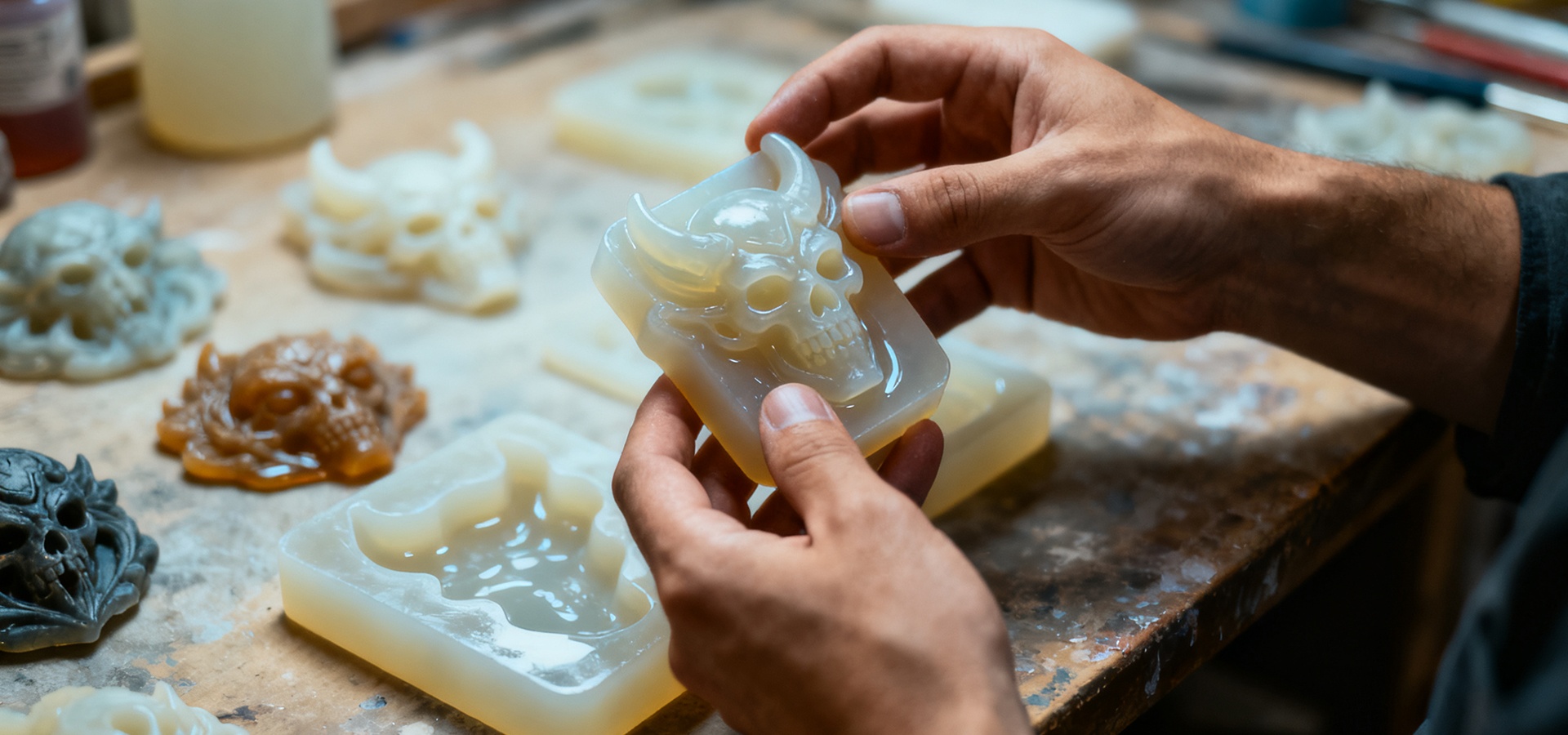
2. What Is Tin-Cure Silicone?
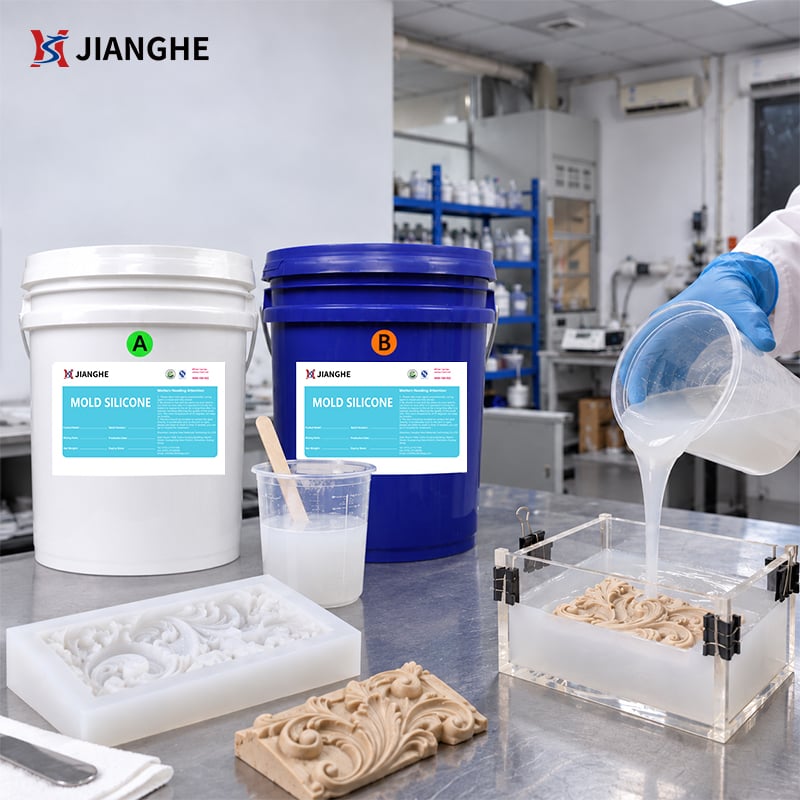
Tin-cure silicone is a two-component RTV elastomer that cures through a condensation reaction in which Part B (catalyst) reacts with hydroxyl-terminated silicone polymers in Part A.
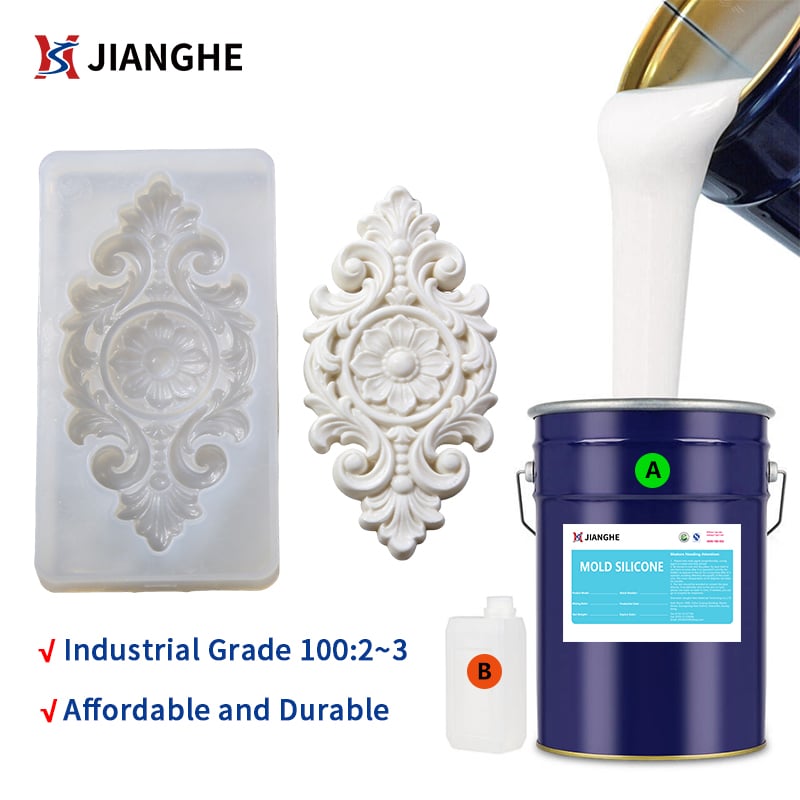
Tin-cure silicone is designed to cure optimally when mixed by weight at a ratio of:
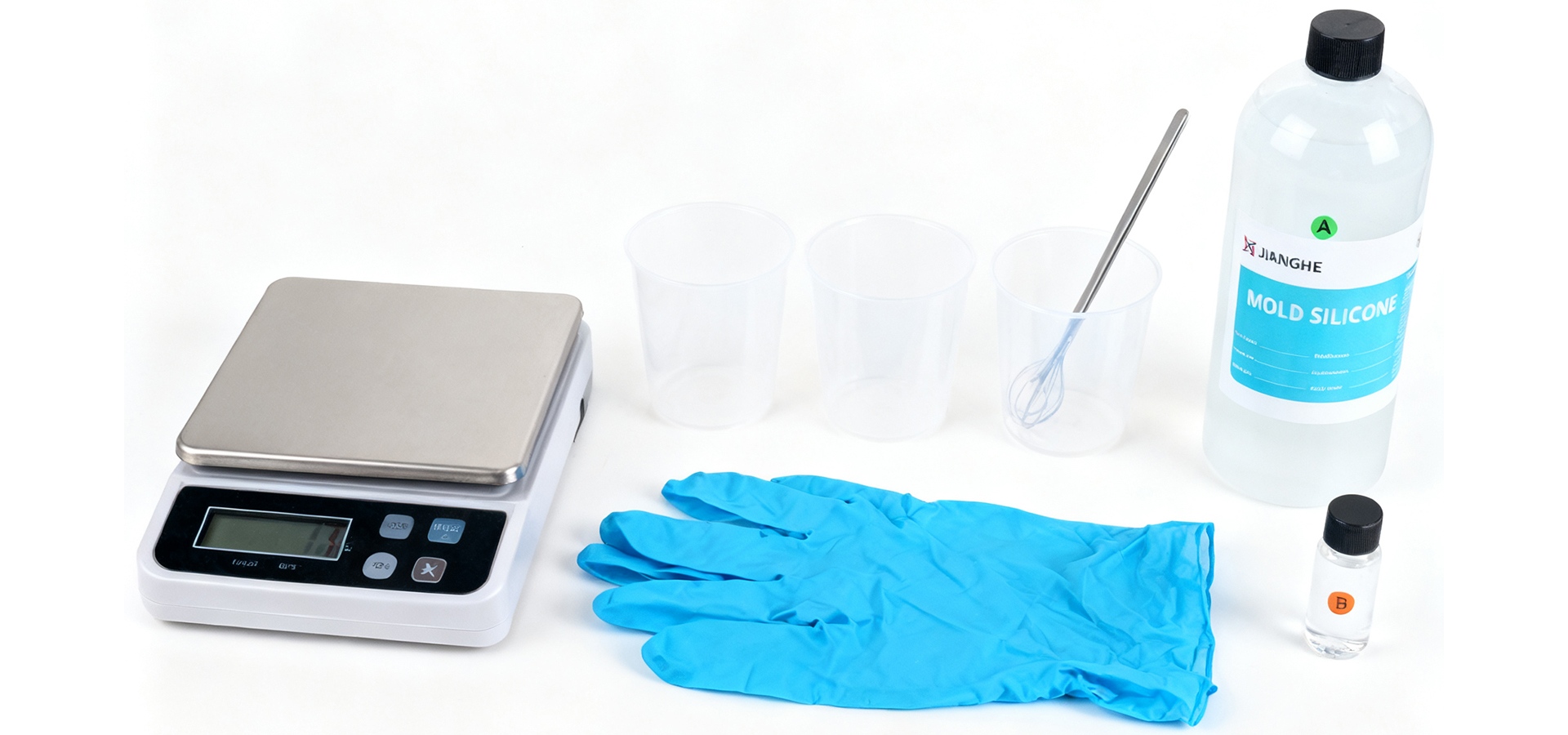
4. Tools and Safety Precautions
Essential Tools
Safety Notes:
5. Technical Parameters to Understand
| Parameter | Typical Range | Why It Matters |
| Viscosity | 5,000–40,000 cP | Affects flow, bubble removal |
| Hardness (Shore A) | 10–40 | Determines flexibility |
| Tear Strength | 15–28 kN/m | Influences mold durability |
| Shrinkage | 0.3–0.8% | Important for dimensional accuracy |
| Pot Life | 20–40 mins | Working time |
| Cure Time | 4–24 hrs | Production efficiency |
6. Step-by-Step Mixing Instructions
Step 1: Weigh Part APrecisely
Step 2: Measure Part B with Care
Step 3: Mix Until Flawless
Step 4:Degas for Premium Results (Optional)
Step 5: Pour and Cure
7. Common Problems & Solutions
❌ Problem 1: Silicone stays soft or sticky
Cause:ratio too low, humidity too high
Fix:ensure accurate 100:2–3 ratio, work in <60% humidity
❌ Problem 2: Bubbles inside the mold
Cause:fast stirring or high-viscosity silicone
Fix:mix slowly, pour thinly, degas if needed
❌ Problem 3: Shrinkage or warping
Cause:excessive catalyst (over 3%)
Fix:use max 3%
❌ Problem 4: Tear during demolding
Cause:wrong hardness or weak tear resistance
Fix:choose Shore A 20–25 for high undercuts
8. Advanced Tips for Optimal Results
9. Applications of Tin-Cure Silicone
10. How Tin-Cure Silicone Compares to Platinum Silicone
Property |
Tin-Cure |
Platinum-Cure |
Cost |
Lower |
Higher |
Shrinkage |
Slight |
Extremely low |
Tear Strength |
Medium |
High |
Food Safety |
No |
Yes |
Cure Inhibition |
Rare |
Sensitive to sulfur & amines |
11. Conclusion
Tin-cure silicone remains an excellent choice for cost-effective mold making, industrial prototyping, and general-purpose casting. Mastering the 100:2–3 ratio ensures consistent curing, minimal defects, and predictable mechanical performance.
By following this guide—accurate weighing, thorough mixing, proper curing conditions—you can achieve professional-grade results whether you are a manufacturer, artist, engineer, or OEM partner.
 Hot News
Factory-backed material solutions for manufacturers, brands and distributors worldwide. We specialize in liquid silicone rubber, epoxy resin, flooring materials and related products, providing reliable manufacturing, OEM customization and stable global supply.
Copyright © 2026 Shenzhen Jianghe New Materials Technology Co., Ltd.All rights reserved. Privacy Policy
 EN
EN