 EN

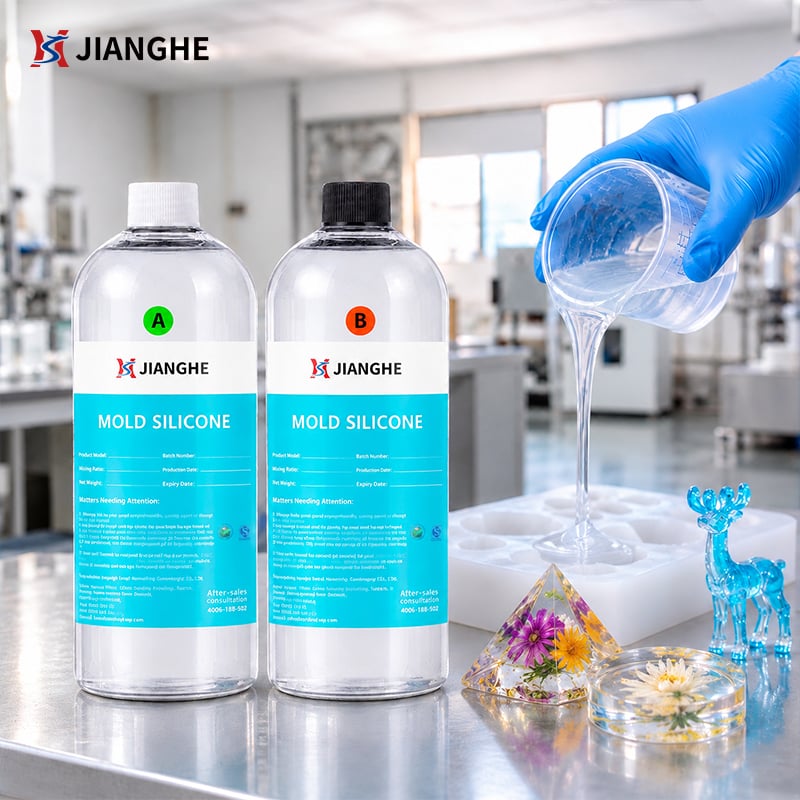
Platinum Cure Liquid Silicone Rubber for Resin Casting Molds
Model: Series 8 Mix Ratio: 1:1
717AB-F is a two-component platinum addition cure silicone rubber series for mold production. With a 1:1 A/B mixing ratio and multiple Shore A hardness options, it helps mold manufacturers balance mold flexibility, cavity support and demolding behavior for resin casting projects. Grade selection should be evaluated according to the casting resin, mold geometry, pouring depth and production conditions.
Key Features:
- 1:1 A/B Mixing Ratio
- Multiple Hardness Options for Mold Design
- Approx. 30-Minute Working Time
- Approx. 4-Hour Room-Temperature Cure
Perfect For:
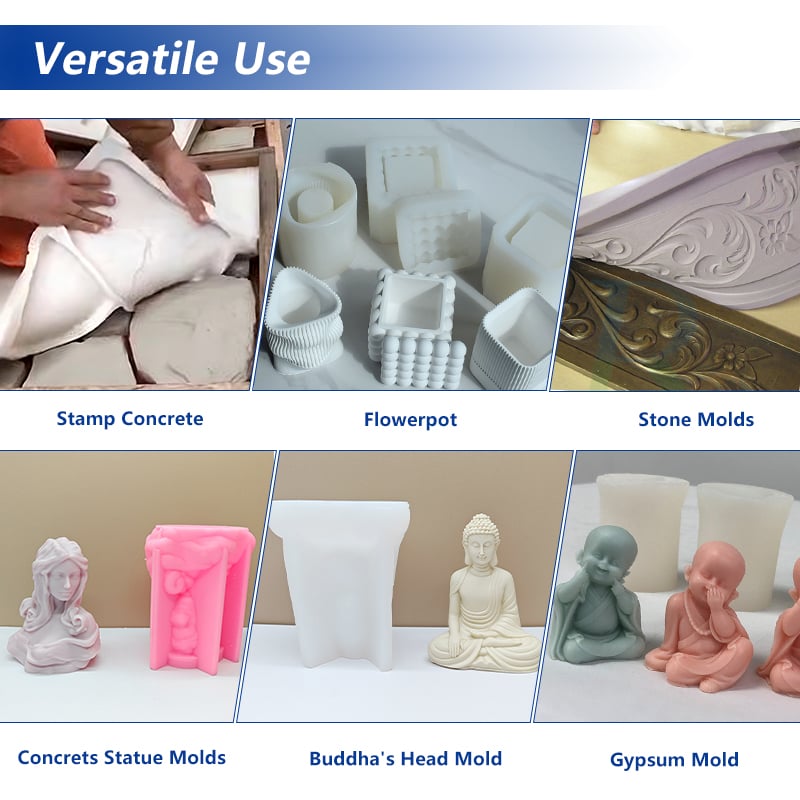
Epoxy Resin Casting Molds · Decorative Resin Parts · Small-Batch Resin Production · Custom Resin Components · Multi-Cavity Casting Molds

- Overview
- Recommended Products
Material: Two-component platinum addition cure liquid silicone rubber
Model: 717AB-F Series
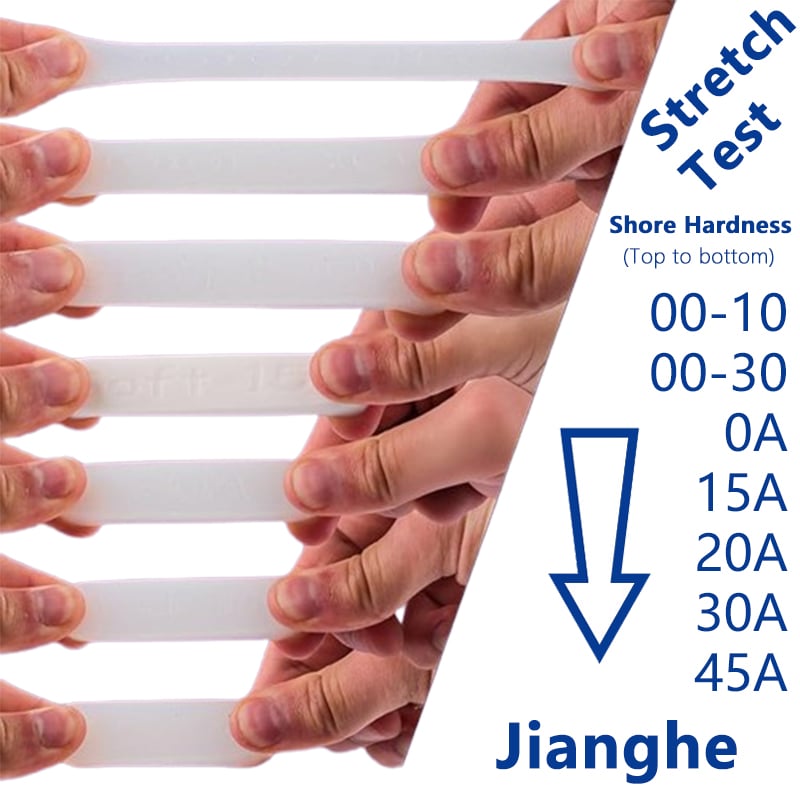
Available Hardness: Shore A 0–45
Mixing Ratio: 1:1
Working Time: Approximately 30 minutes under the applicable reference conditions
Room-Temperature Cure: Approximately 4 hours under the applicable reference conditions
Packaging: According to order requirements
Multi-grade product selection
Sample evaluation before bulk purchasing
Packaging and labeling requirements
OEM and private-label support
Repeat-order and supply coordination
Designed for Resin Casting Mold Production
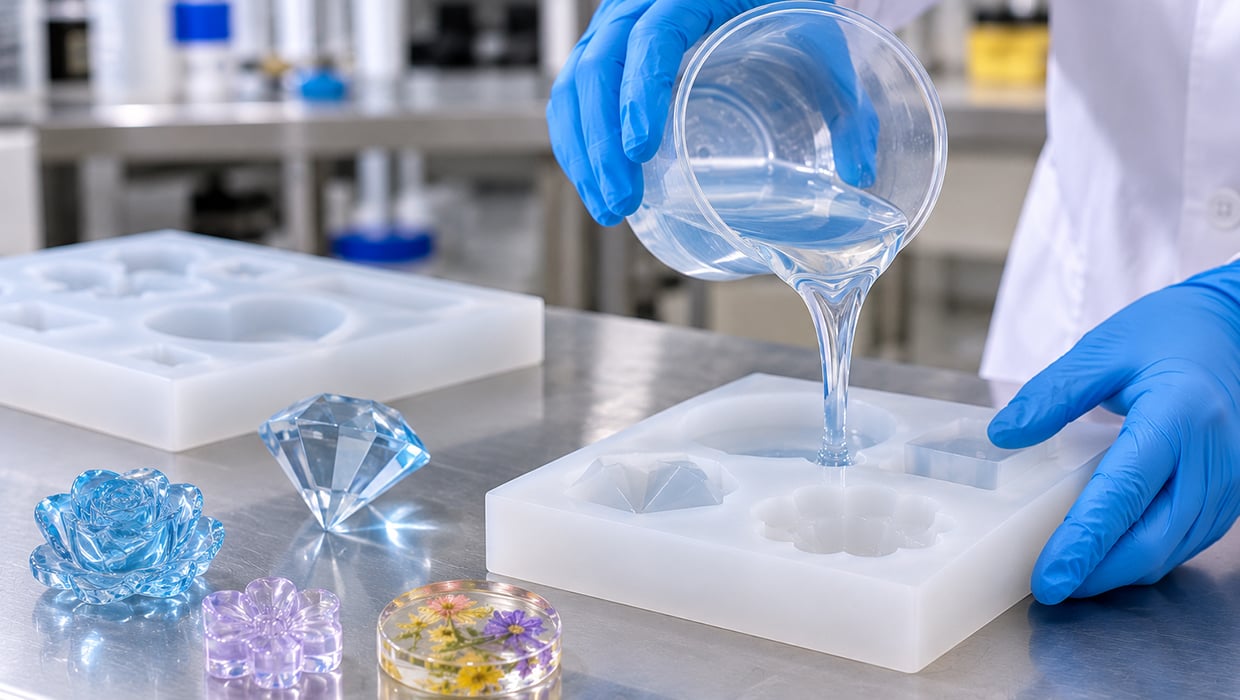
A resin casting mold needs to do more than reproduce the shape of a master pattern. It must maintain its cavity structure during filling, release the cured casting without unnecessary stress and remain practical to handle during repeated production cycles.
The mold design and the silicone grade work together. A flexible mold may be needed for complex shapes or undercuts, while a larger mold or one with deeper cavities may require greater structural support. The weight and volume of the resin being poured, the mold wall thickness and the planned demolding method should also be considered.
The 717AB-F platinum cure silicone rubber series offers multiple hardness grades for different mold structures. Instead of selecting a grade based only on its Shore A value, manufacturers should consider the master pattern, casting material, mold dimensions and production conditions together.
For resin applications, the selected silicone grade should be evaluated with the actual resin formulation before moving into regular production.
Key Requirements for Resin Casting Molds
Mold Surface and Shape Reproduction
The surface of the finished silicone mold follows the condition of the master pattern. Scratches, dust, surface defects and trapped air around the master can affect the final cavity. For resin components where appearance and surface consistency matter, master preparation and silicone pouring conditions should be controlled before the mold is produced.
Flexible and Controlled Demolding
Resin castings may contain recessed areas, raised details, narrow sections or undercuts. A mold that is too firm may be difficult to open around these features, while an overly soft mold may need additional support to maintain its shape. Hardness should therefore be selected according to the geometry of the casting and the expected demolding movement.
Cavity Stability During Resin Filling
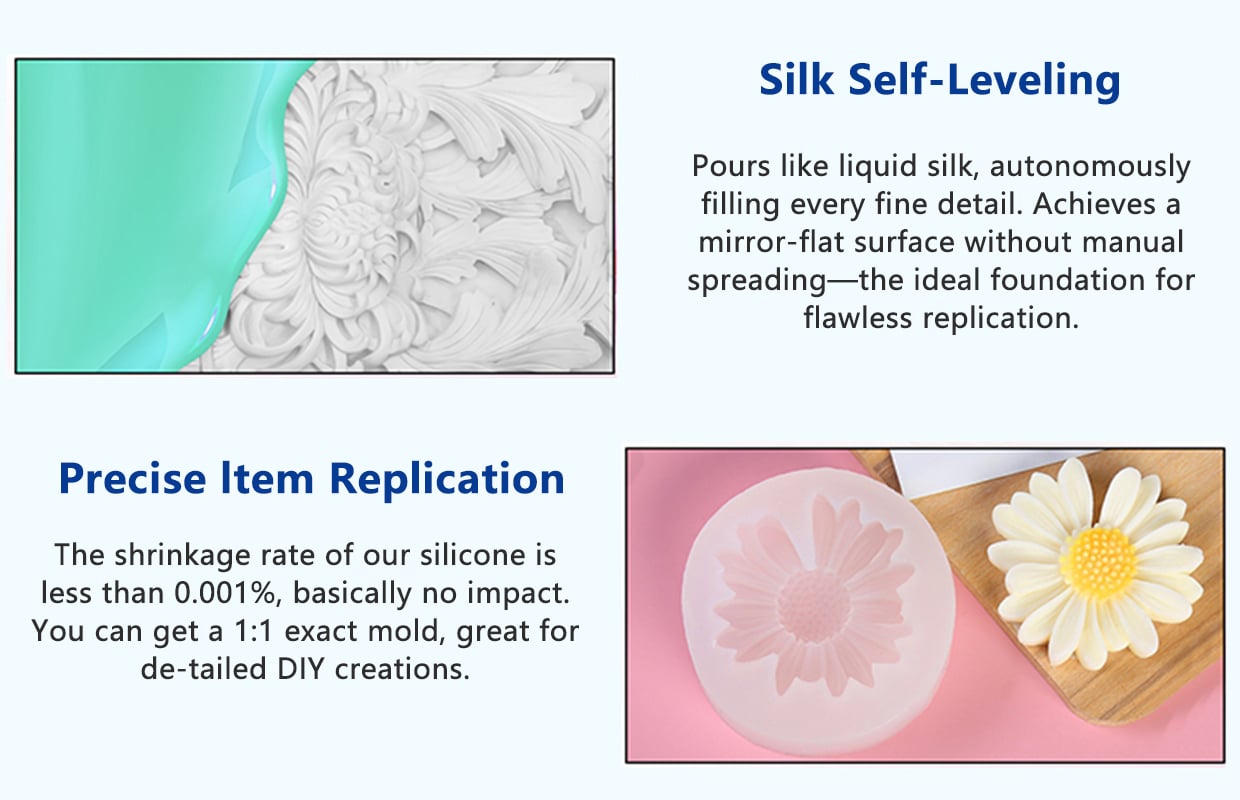
The mold needs to retain its intended shape while the resin is poured and cured. Large cavities, tall mold walls and heavier castings can place greater demands on mold support. Silicone hardness, wall thickness, mold dimensions and an external support shell should be considered as part of the same mold design.
Compatibility with the Casting Resin
Different casting resin systems can have different formulations, additives, curing speeds and heat generation profiles. A silicone grade should not be assumed to work identically with every epoxy, polyurethane or UV resin. A small trial using the intended resin is recommended to evaluate surface condition, release behavior and the effect of curing heat.
Repeatability for Production Use
For repeated casting, mold condition matters as much as the first successful demolding. The mold should be inspected for tearing, deformation, surface damage and changes around thin sections after trial cycles. The expected production quantity and demolding frequency should be considered when choosing the mold structure and silicone hardness.
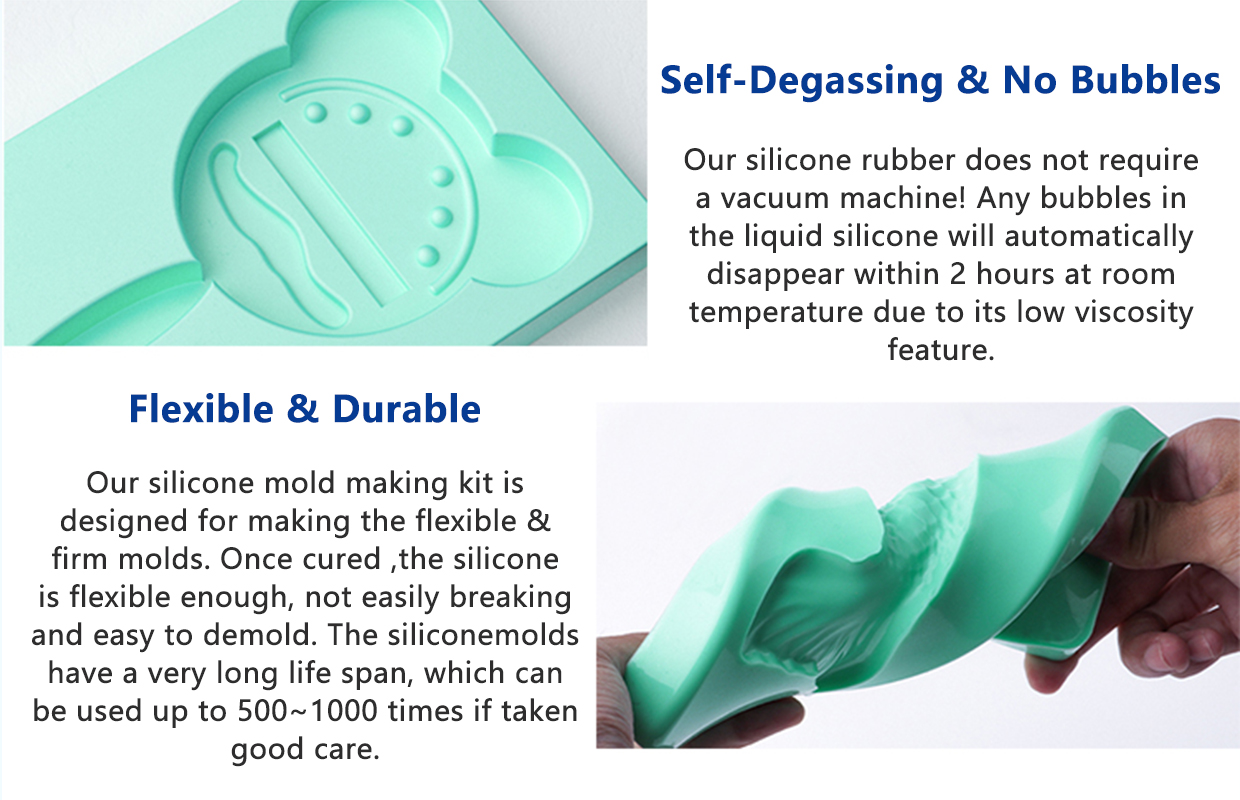
Typical Resin Casting Mold Applications
Epoxy Resin Casting Molds
For manufacturers producing decorative epoxy components, custom-shaped resin parts and cast resin products. Mold design should account for the resin's curing profile, casting volume, cavity depth and the required surface finish.
Decorative Resin Components
For molded decorative parts with shaped edges, raised patterns, recessed details and custom surface designs. The silicone mold should provide an appropriate balance between flexible release and cavity support.
Custom Resin Replicas
For reproducing a master model into a silicone mold before casting resin copies. The master surface, parting line, undercuts and required dimensional consistency should be reviewed before selecting the silicone grade.
Prototype and Small-Batch Resin Parts
For product-development samples, custom components and limited production runs where flexible tooling can be useful. The mold structure should be matched to the part geometry and the intended number of casting cycles. 
How to Select the Right Silicone Grade
There is no single Shore A hardness that suits every resin casting mold. The correct grade depends on how the mold will be filled, supported and released.
Softer Grades for Complex Release
Lower-hardness silicone grades offer greater flexibility. They can be considered for molds with undercuts, deep recesses or shapes that need the mold to deform during demolding. The mold may require additional external support depending on its size and wall thickness.
Medium Grades for Balanced Mold Handling
Medium-hardness grades can be evaluated where both flexibility and shape retention are important. They may be a practical starting point for mold designs that do not require extreme deformation or very firm support.
Firmer Grades for Greater Structural Support
Higher-hardness grades provide a firmer mold structure. They can be considered for molds that need more support during handling and casting. However, firmer grades in the 717AB-F series also have higher viscosity, so their ability to flow around the master pattern should be evaluated carefully.
Selection Guide
| Mold Requirement | Selection Direction | What to Evaluate |
|---|---|---|
| Deep undercuts or complex release | Consider lower Shore A grades | Flexibility, tearing risk and demolding movement |
| General resin casting molds | Compare medium Shore A grades | Balance between flexibility and cavity support |
| Larger or more structured molds | Consider firmer grades with suitable support | Mold stability, viscosity and wall thickness |
| Narrow cavities or detailed masters | Review grade viscosity and pouring method | Material flow, trapped air and cavity filling |
| Repeated casting cycles | Evaluate the complete mold structure | Tear resistance, handling and demolding frequency |
These are starting points for grade evaluation, not fixed model assignments. The final choice should be confirmed through a sample mold and casting trial.
Recommended Technical Range
The 717AB-F series provides multiple hardness options for different mold structures. The following ranges can be used as an initial guide when discussing a resin casting project.
| Selection Range | General Characteristics | Evaluation Focus |
|---|---|---|
| Shore A 0–15 | Softer and more flexible | Complex release, undercuts and mold deformation |
| Shore A 20–30 | Intermediate hardness options | Balance of release flexibility and shape support |
| Shore A 40–45 | Firmer grades with higher viscosity | Structural support, material flow and mold dimensions |
General Product Information
Working time and curing time depend on the selected grade, temperature and processing conditions. Refer to the corresponding technical data sheet for the exact grade. The 30A grade uses a different reference test temperature in its source data, so its figures should be checked separately.
For the complete grade comparison, including viscosity and mechanical properties, see the 717AB-F Grade Comparison.
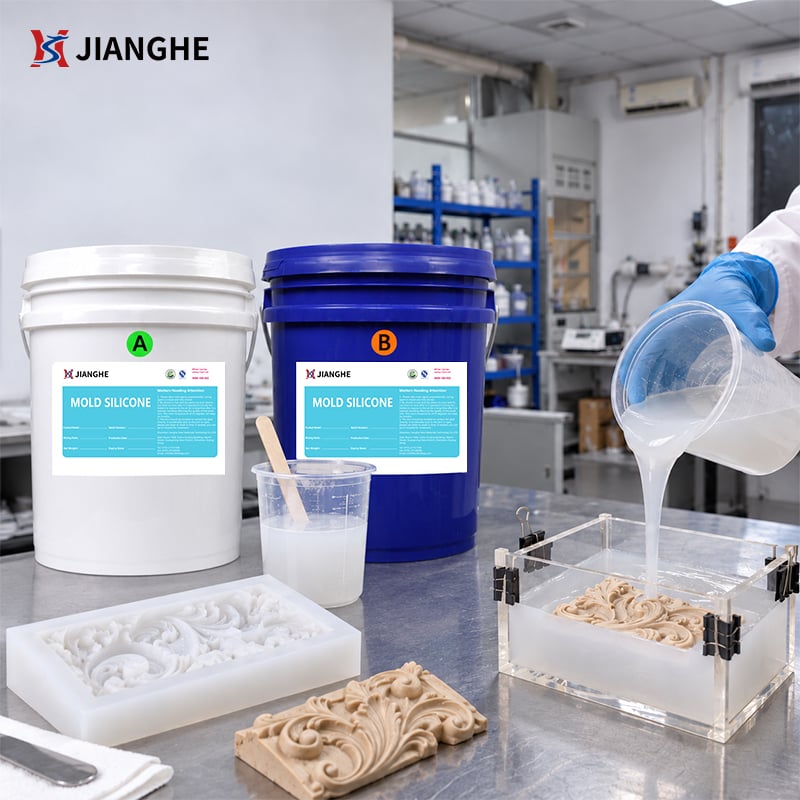
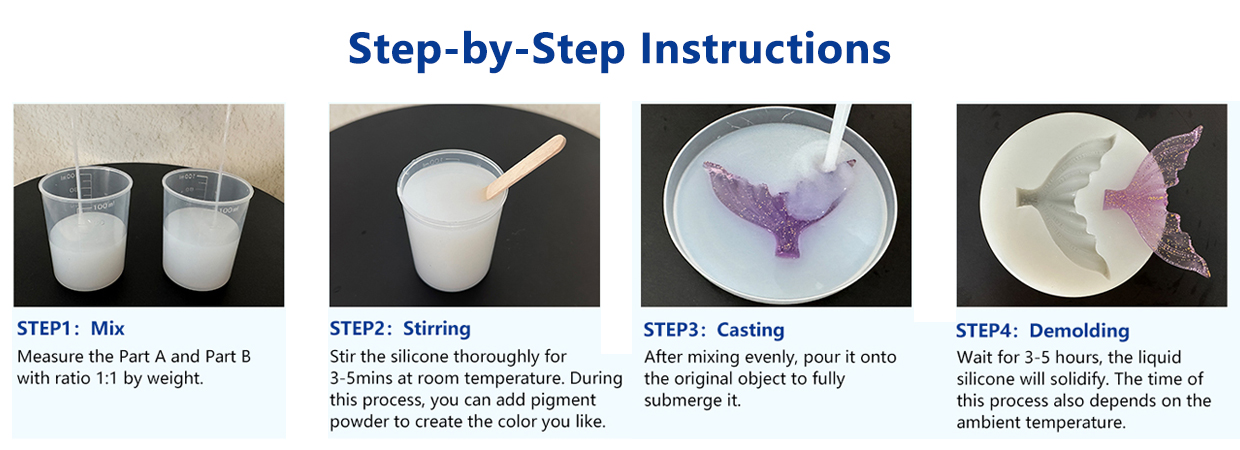
Resin Mold Making Process
Step 1: Prepare the Master Pattern
Make sure the master pattern is clean, dry and securely positioned in the mold box. Check the surface condition, parting line and areas where air may become trapped. New master materials, coatings, adhesives or modeling compounds should be checked for compatibility with platinum cure silicone.
Step 2: Plan the Mold Structure
Determine the required mold wall thickness, pouring direction, support method and demolding route. For complex shapes, consider whether a one-piece flexible mold or a multi-part mold is more suitable.
Step 3: Mix Silicone Components
Combine Parts A and B at the specified 1:1 ratio. Mix thoroughly while minimizing the introduction of air. Metering and mixing equipment can help support more consistent processing in production environments.
Step 4: Degas When Necessary
If air is introduced during mixing or the master contains detailed recessed areas, vacuum degassing can help reduce trapped bubbles. The degassing method should be suitable for the equipment and batch size being used.
Step 5: Pour and Allow to Cure
Pour the mixed silicone carefully into the mold box. Allow sufficient time for curing under the applicable processing conditions. The reference room-temperature curing time for the series is approximately four hours; actual curing may vary with temperature and grade.
Step 6: Demold and Inspect
Remove the cured silicone mold from the master carefully. Inspect the cavity surface, edges, thin sections and dimensional features before using the mold for resin casting.
Step 7: Conduct a Resin Casting Trial
Use the intended resin formulation for a trial casting. Review filling behavior, curing heat, surface finish, release and mold condition after demolding. Confirm the results before starting regular production.
Performance and Compatibility Considerations
Master Material Compatibility
Platinum cure silicone can be inhibited by certain materials, including amines, sulfur and organotin compounds. If the master pattern contains unfamiliar coatings, adhesives, clays or surface treatments, conduct a small compatibility test before making the complete mold.
Casting Resin and Curing Heat
Resin curing may generate heat, and the amount can vary with resin formulation, casting volume, mold geometry and curing conditions. For deep or larger castings, evaluate the actual peak temperature during a trial. Do not assume that one silicone grade is suitable for every resin volume or curing schedule without testing.
Surface Finish and Release
The finished mold surface is influenced by the master pattern, silicone mixing, air removal and curing process. The release behavior of the final casting also depends on the resin formulation and mold condition. If a release agent is considered, check that it is compatible with both materials and does not affect the required surface finish.
Mold Support and Service Conditions
A flexible silicone mold may need a rigid support shell or external fixture, particularly when the mold is large, deep or filled with a heavier resin volume. Mold hardness alone does not determine stability. Wall thickness, support design and casting conditions all contribute to the final result.
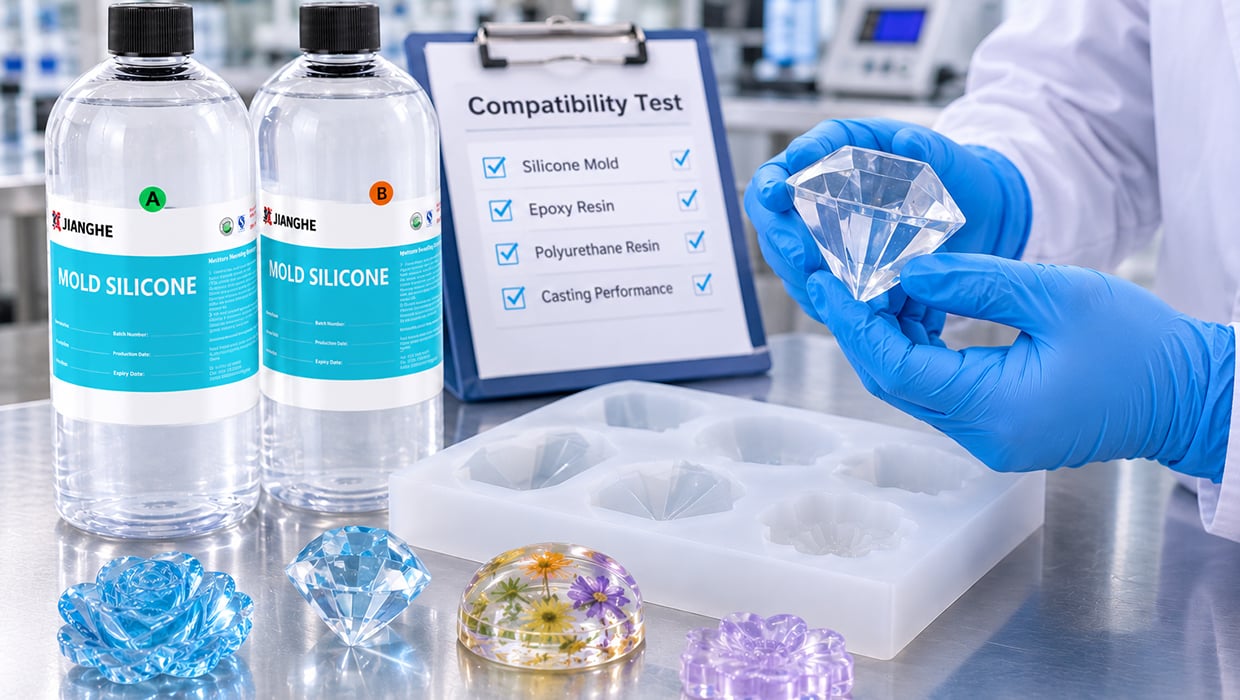
Application Testing & Quality Control
A successful sample mold should be evaluated under conditions close to the intended production process. For a new resin casting project, testing can include:
Master and Surface Inspection
Check the master pattern for surface defects, contamination and materials that may interfere with silicone curing.
Silicone Curing Evaluation
Confirm that the silicone cures throughout the mold, including around deep recesses, narrow sections and complex geometry.
Mold Dimension and Structure Check
Inspect cavity dimensions, wall thickness, edges and areas that may deform during handling or resin filling.
Resin Compatibility Trial
Cast the intended resin in the trial mold. Observe surface condition, release behavior, curing heat and any visible changes to the mold.
Repeated Demolding Evaluation
Where repeated production is planned, conduct multiple casting and demolding cycles to observe wear, tearing and deformation before confirming the mold design.
The evaluation scope should be based on the actual mold design and casting material rather than relying only on a general silicone specification.
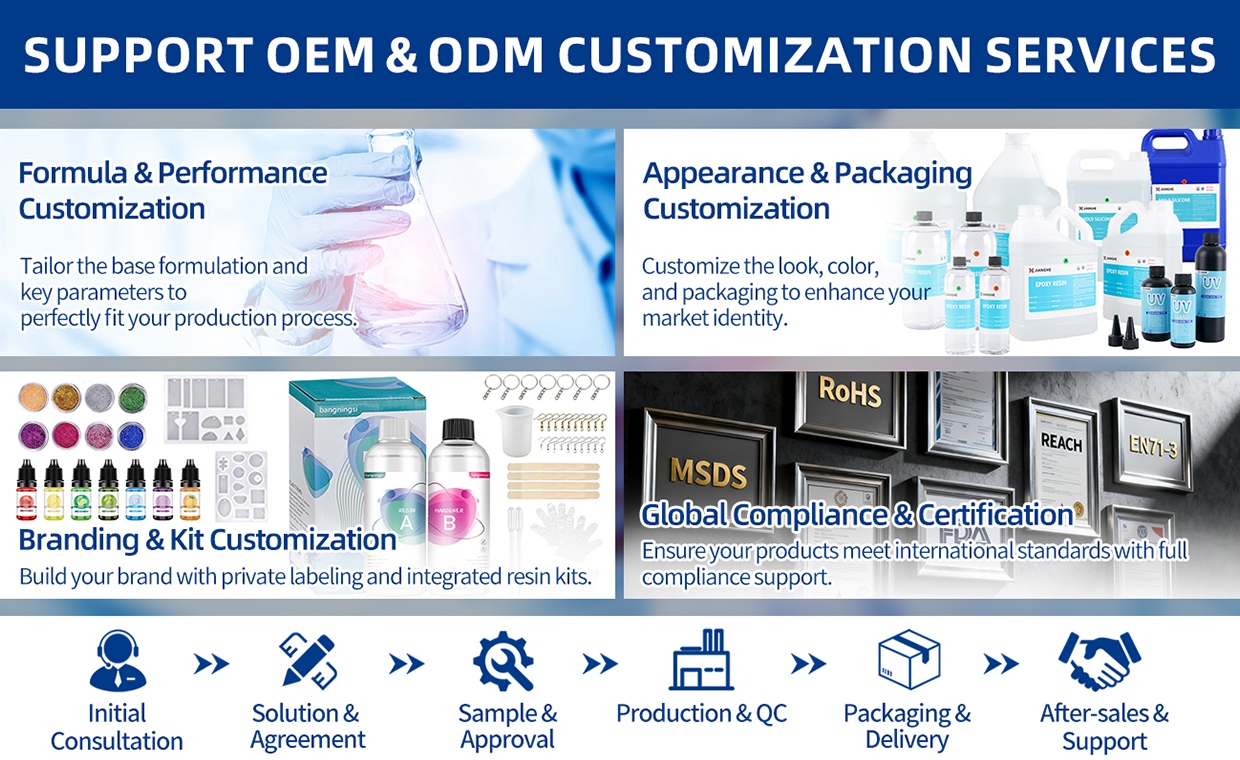
Packaging, Customization & Supply Support
Jianghe supplies two-component liquid silicone rubber for manufacturers and businesses developing their own mold-making and resin casting processes.
The 717AB-F series provides multiple hardness grades within one product family, allowing purchasing teams to evaluate different mold requirements without changing to an unrelated material system.
Packaging can be arranged according to order requirements. Sample evaluation, grade selection and OEM or private-label arrangements can be discussed for qualified projects.
For distributors, resin product manufacturers and mold-making businesses, the supply discussion can cover:
Share your mold dimensions, master material, intended resin type and expected casting volume when requesting a recommendation.
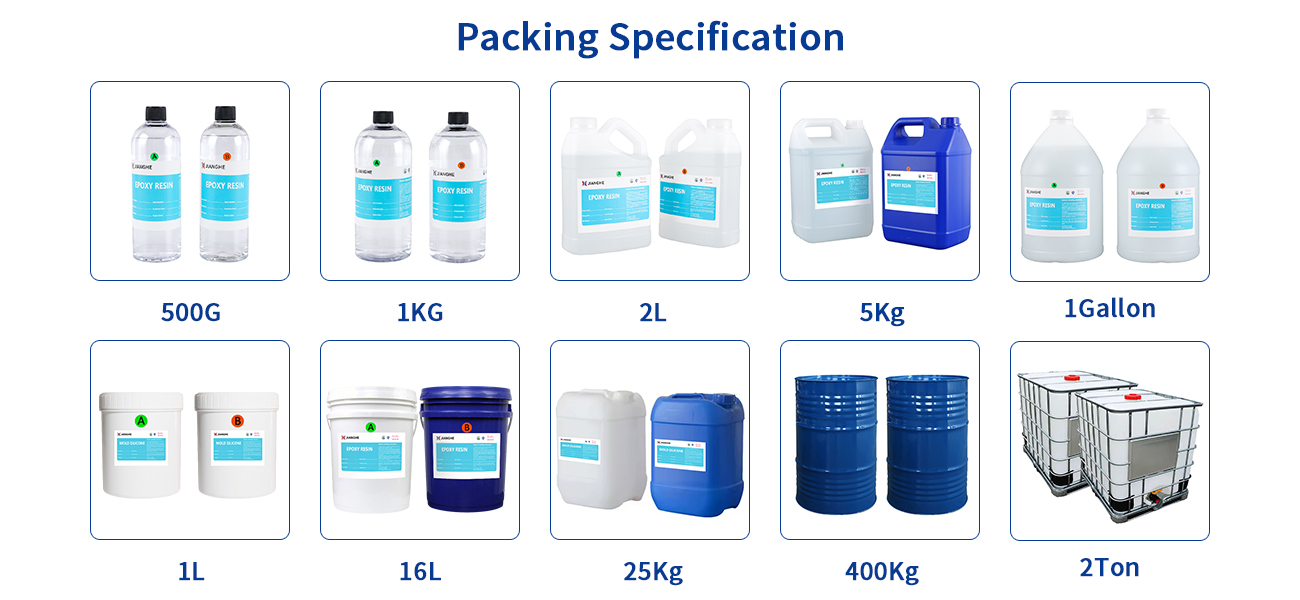
If You Need Customized Packaging Or Other Specifications, Please Contact Us.
FAQ
Q1: Can platinum cure silicone be used for resin casting molds?
Yes. Platinum cure silicone rubber can be evaluated for making molds used in resin casting. The suitable grade depends on the mold design, required flexibility, casting material and demolding conditions. We recommend testing compatibility with your specific resin system before starting full production.
Q2: Which Shore A hardness is suitable for resin casting molds?
The right hardness depends on the mold's size, shape, wall thickness and level of detail. Softer silicone grades offer greater flexibility for molds with undercuts, while firmer grades provide more structural support. A sample test can help determine the appropriate hardness for your mold design.
Q3: What is the mixing ratio and working time?
The 717AB-F series uses a 1:1 mixing ratio for Parts A and B. Its typical working time is approximately 30 minutes at 25°C. Actual working time may vary with ambient temperature and processing conditions.
Q4: How can I reduce air bubbles when making silicone molds?
Mix Parts A and B slowly and thoroughly while minimizing air introduction. Vacuum degassing can help remove trapped air before pouring. For molds with narrow cavities or detailed structures, proper pouring technique and sample testing are also important.
Q5: Can resin or master patterns affect silicone curing?
Yes. Certain materials, including amines, sulfur-containing compounds and organotin compounds, can inhibit the curing of platinum-catalyzed silicone. If you are using an unfamiliar master pattern, coating, adhesive or release agent, conduct a small compatibility test before full production.