 EN
EN

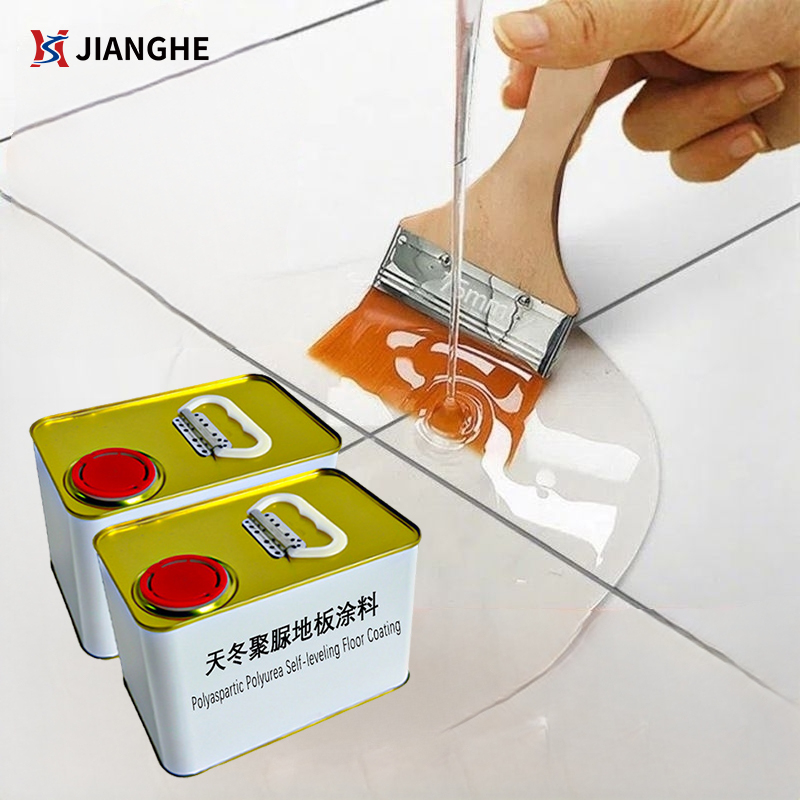
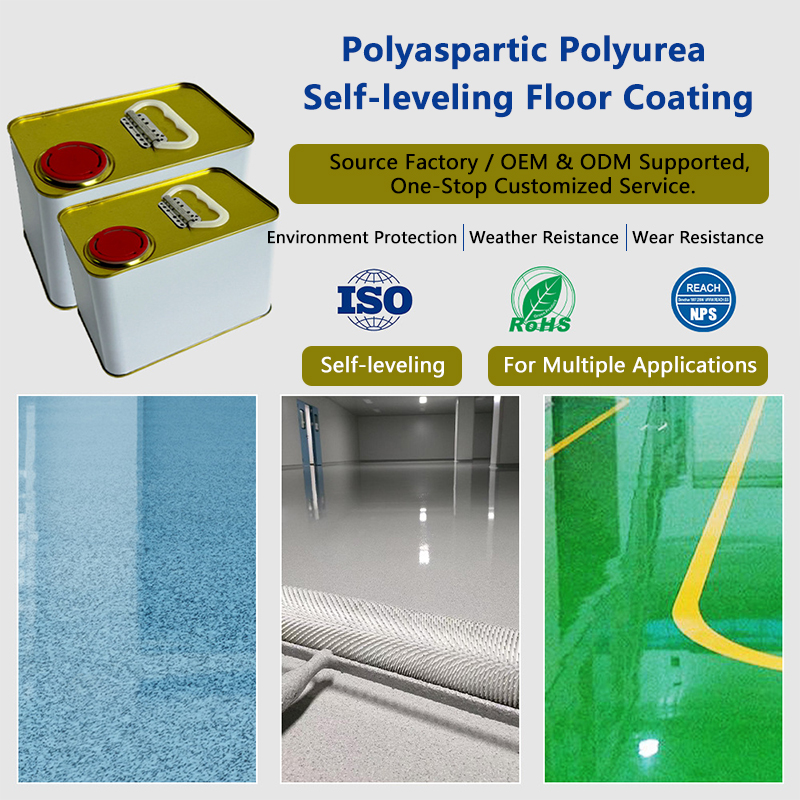
Clear Aspartic Polyurea Coating 1:1 for Floor Protection
Model: 618A-FD-3+618B-FD Mix Ratio: A:B=1:1 By Weight
Two-component transparent aspartic polyurea coating system designed for floor protection, thin-layer coatings and decorative surface applications. It cures into a smooth, glossy and flexible protective layer with excellent UV resistance, weather resistance and good surface adhesion.
Key Product Features:
- Transparent Glossy Finish
- Excellent UV & Weather Resistance
- Smooth Leveling & Good Adhesion
- Shore D 65±5 After Curing
Typical Applications:
Clear Floor Coating · Decorative Flooring Protection · Thin-Layer Coating · Clear Protective Topcoat

- Overview
- Recommended Products
- Transparent finished surface required
- Thin or shallow coating application
- 20–30 min working time fits the process
- UV and weather resistance are important
- Room‑temperature or heat‑assisted curing fits the workflow
- Smooth and glossy surface appearance is required
- Bulk Material Supply
- Sample Evaluation
- Material Selection Support
- Application Matching
- Long‑Term Supply Cooperation
- Customized Packaging Support
- 5 kg PE plastic bucket
- 20 kg metal can
- Customized Product Labels
- Private‑Label Packaging
- A/B Kit Configuration
- Bulk Supply Packaging
- Packaging Preparation for Distributors and Brands
- Substrate compatibility
- Adhesion
- Transparency
- Surface appearance
- Working time
- Curing behavior
- Compatibility with existing coatings or decorative layers
- Thick self‑leveling floor construction
- Opaque flooring systems
- Deep casting applications
- Significantly longer working time requirements
- Projects requiring specific verified abrasion, chemical or anti‑slip performance data
Clear Aspartic Polyurea Coating System for Protective Applications
618A‑FD‑3 + 618B‑FD is a two‑component clear coating system developed for applications where the underlying floor or decorative surface needs to remain visible after protection. Component A is an aspartic polyurea resin component, while Component B is an isocyanate component. The two components are mixed at an A ratio of 1:1 by weight before application.
Unlike opaque flooring materials that cover the original substrate, this grade cures to a transparent, smooth and glossy surface. It is therefore better suited to thin‑layer protective finishing, decorative flooring protection and other applications where the original color, texture or visual effect should remain visible.
At 25°C, the mixed system provides a working time of 20–30 minutes. It can be cured at room temperature or with controlled heating, giving users flexibility to match the curing process to their production schedule and available equipment.
For customers comparing clear epoxy materials with polyaspartic or polyurea‑based surface systems, this grade is positioned as a transparent protective coating with a defined processing window, smooth cured appearance and UV‑ and weather‑resistant performance.
Key Performance Advantages
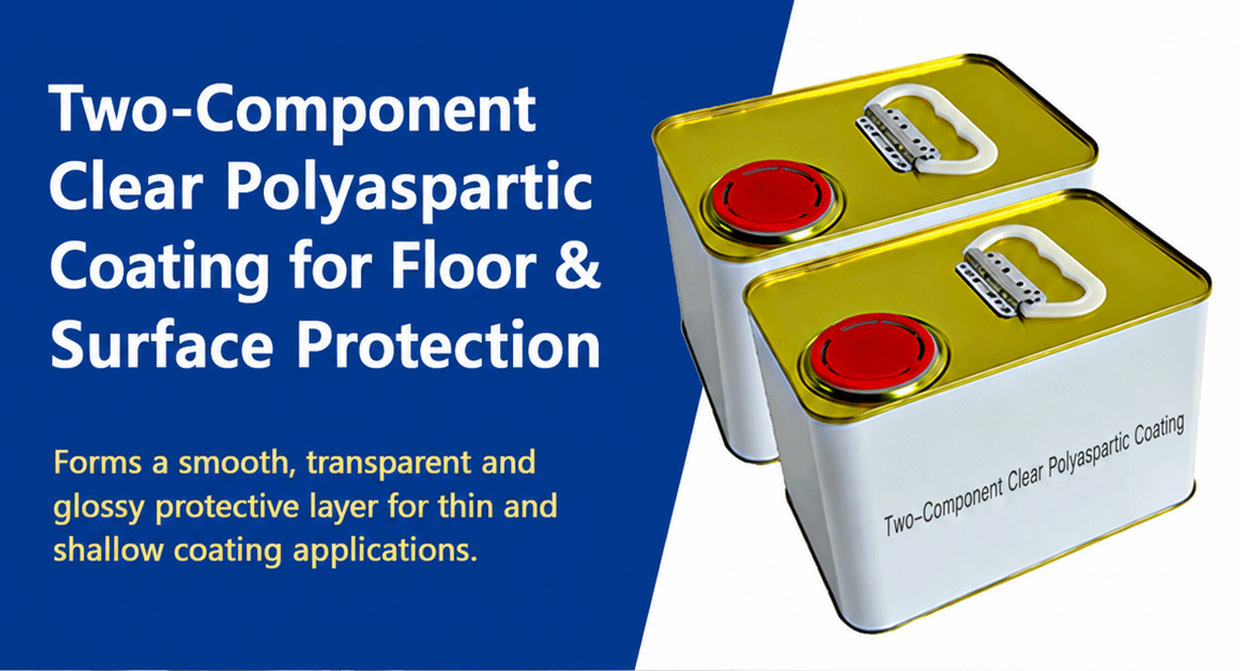
The clear polyaspartic system is designed for transparent protective finishing rather than heavy‑build flooring construction. Its main advantages come from its cured appearance, practical processing window, curing flexibility and resistance to UV and environmental exposure.
Transparent & Smooth Surface Finish
After curing, the system forms a colorless and transparent surface with a smooth and bright appearance. The coating remains visually clear, allowing the original color, texture or decorative effect underneath to remain visible.
This is particularly useful for decorative flooring and clear protective applications where the coating should protect the surface without replacing its original appearance.
Practical 20–30 Minute Processing Window
The working time is approximately 20–30 minutes at 25°C, providing a defined period for weighing, mixing and application.
For manual processing, usable time may become shorter when the mixed batch exceeds approximately 100 g. Customers planning larger batches should therefore evaluate actual pot life under their own production conditions before moving to full‑scale use.
Room‑Temperature or Heat‑Assisted Curing
The system can be cured at room temperature or with controlled heating.
Typical curing conditions include:70°C × 1.5 h or 25°C × 48 h.
This gives users flexibility to choose a curing process that fits their production equipment and processing schedule.
UV & Weather Resistance
The cured coating provides strong UV and weather resistance, making it suitable for applications where exposure resistance and appearance retention are important selection factors.
Long‑term performance should be verified under the intended substrate, coating structure and actual exposure conditions before commercial‑scale use.
Recommended Applications for Clear Protective Finishing
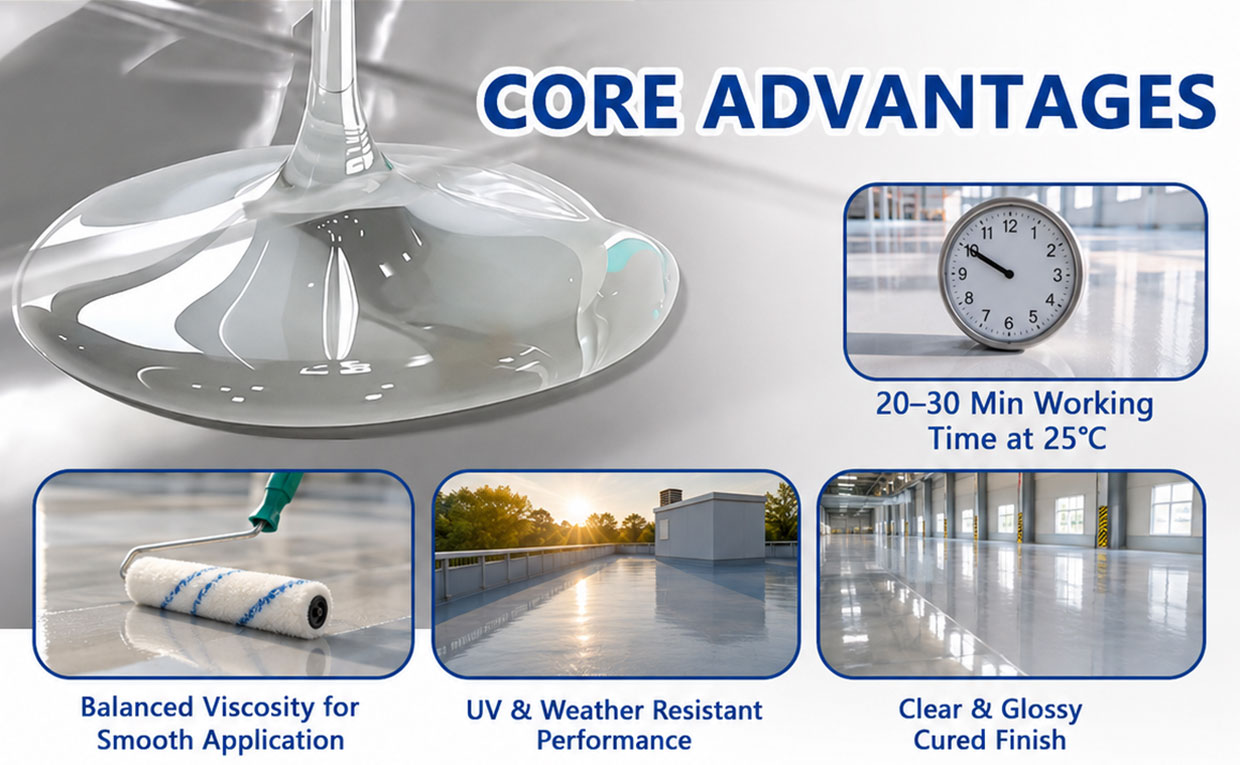
This grade is best suited to applications where a transparent protective layer is required over an existing floor or decorative surface.
Because the cured system remains clear and glossy, it can protect the surface while keeping the underlying color, texture or decorative effect visible. Its positioning is therefore different from opaque industrial floor coatings and deep‑build self‑leveling systems.
Typical application directions include:
Clear Floor Protective Topcoat
For prepared flooring surfaces that require a transparent finishing layer while retaining the original appearance underneath.
Decorative Flooring Protection
For decorative floor systems where the underlying color, pattern or visual effect should remain visible after protection.
Thin‑Layer Clear Coating
For applications requiring a relatively thin transparent coating rather than a thick resin build.
Transparent Surface Finishing
For prepared surfaces requiring a smooth, bright and clear final appearance.
Shallow Coating Applications
For controlled shallow coating processes where the material is used as a clear finishing or protective layer.
Is This Clear Polyurea Coating Right for Your Application?
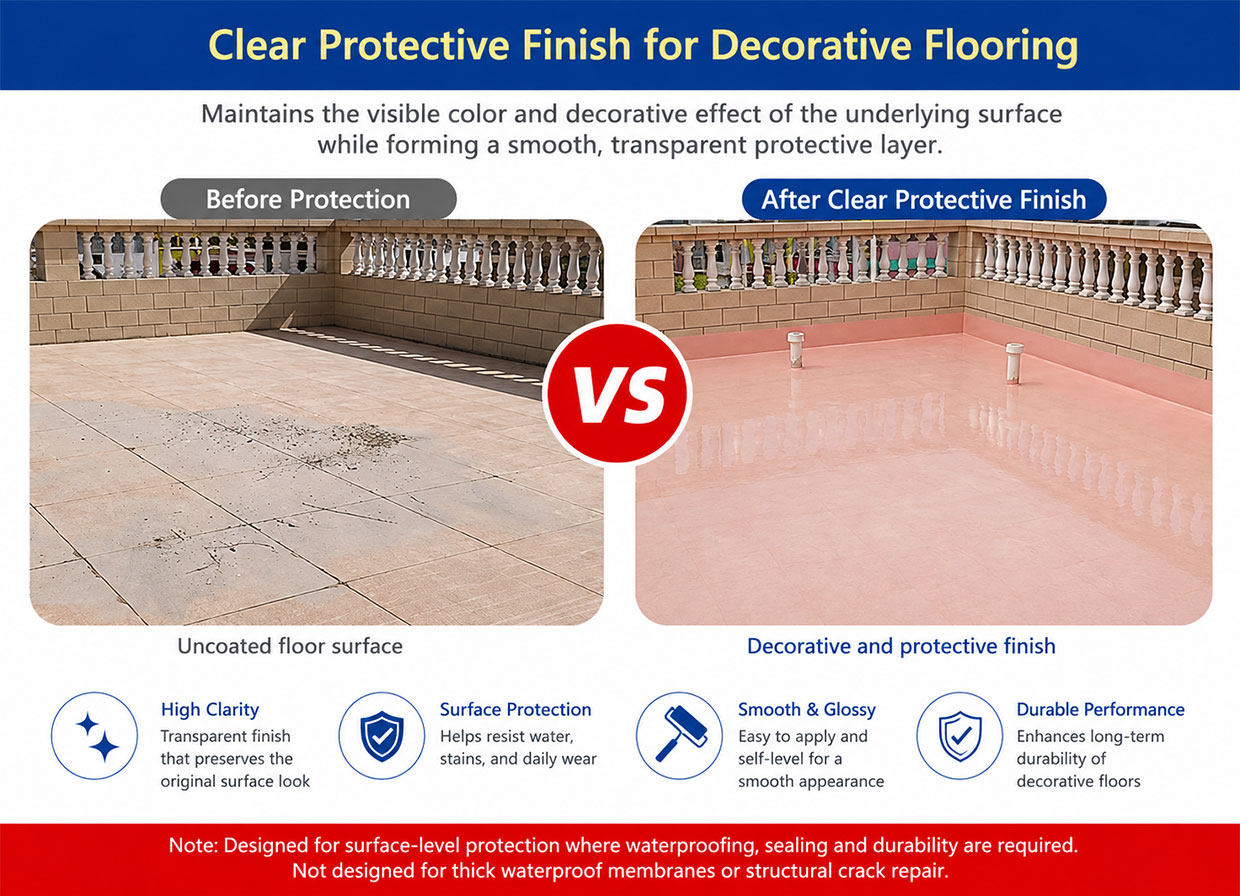
The right coating system should be selected according to transparency requirements, coating build, processing time, curing conditions and expected finished appearance.
This grade is primarily positioned as a clear thin‑layer protective material rather than a universal flooring resin.
Choose This Grade When...
Choose this system when your application requires a transparent protective coating and the underlying decorative or finished surface should remain visible.
It is particularly suitable when a 1:1 weight mixing system, approximately 20–30 minutes of working time at 25°C and the option of room‑temperature or heat‑assisted curing fit your processing requirements.
Suitable Selection Conditions
Consider Another Grade When...
A different resin or flooring system should be considered when the application requires a thick self‑leveling layer, opaque industrial flooring, deep casting, significantly longer open time or another specialized coating structure.
For service conditions requiring documented heavy abrasion resistance, chemical resistance, anti‑slip performance or other specialized properties not currently specified for this grade, additional testing or another material system should be evaluated.
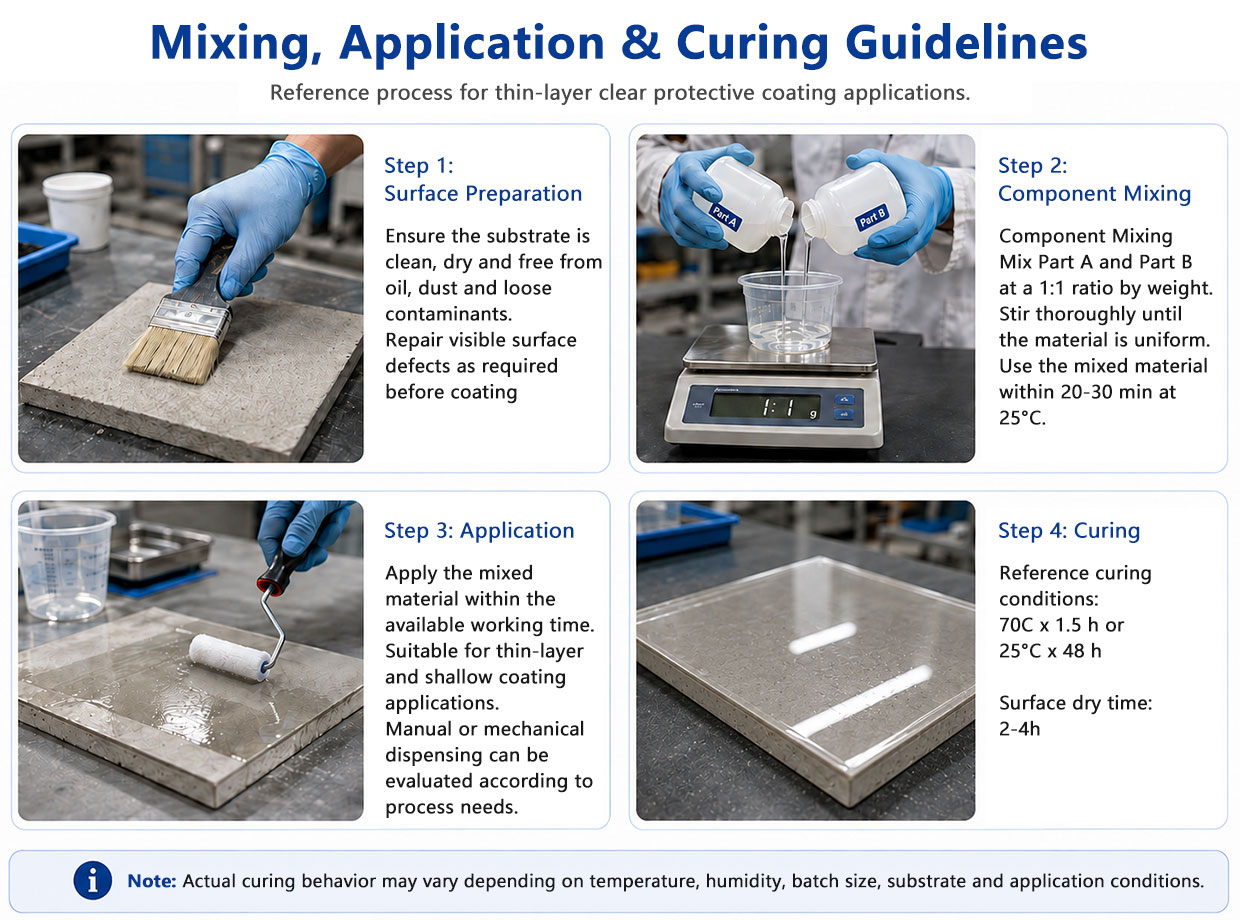
Mixing, Curing & Application Guidelines
01 Surface and Material Preparation
Before application, ensure the substrate is clean, dry and suitable for coating.
Remove oil, dust, rust and other contaminants that may interfere with adhesion or final surface quality. Cracks, holes and obvious surface defects should be repaired before coating.
Both components should be protected from moisture during storage, weighing and handling. Component B is sensitive to air exposure and should be resealed promptly after dispensing.
02 Measure and Mix Components A & B
Measure Component A and Component B accurately according to: A:B = 1:1 by weight. Mix thoroughly until the material becomes uniform.
The working time is approximately: 20–30 minutes at 25°C.
For manual processing, usable time may become shorter when the mixed batch exceeds approximately 100 g. Larger batch sizes should therefore be tested before full‑scale production.
03 Apply Within the Available Working Time
Apply the mixed material according to the required thin‑layer or protective coating process.
The system can support manual and mechanical dispensing methods. Accurate A/B proportioning, uniform mixing and control of the available working time are important for maintaining stable application results.
Avoid preparing more material than can be applied within the available pot life.
04 Allow the Coating to Cure
The system supports room‑temperature and heat‑assisted curing.
Typical curing conditions are: Heat‑Assisted Cure: 70°C × 1.5 h or Room‑Temperature Cure: 25°C × 48 h. Surface dry time is approximately: 2–4 h. Actual curing behavior can vary depending on temperature, humidity, batch size, substrate condition and application thickness.
Technical Data
| Property | 618A‑FD‑3 | 618B‑FD |
|---|---|---|
| Appearance | Colorless to pale yellow liquid | Colorless transparent liquid |
| Viscosity (mPa·s) | 650±100 | 500±200 |
| Density (g/mL) | 1.06±0.03 | 1.08±0.03 |
| Mixing Ratio | A:B=1:1 | A:B=1:1 |
| Working Time (25°C) | 20–30 minutes | 20–30 minutes |
| Curing Time | 70°C for 1.5 h or 25°C for 48 h | 70°C for 1.5 h or 25°C for 48 h |
| Shelf Life | 6 months | 6 months |
| Properties After Curing | Properties After Curing | Properties After Curing |
| Appearance | Colorless and transparent, with a smooth surface free of ripples. | Colorless and transparent, with a smooth surface free of ripples. |
| Hardness (Shore D) | 65±5 | 65±5 |
| Tack‑free Time (h) | 2‑4 | 2‑4 |
| Full Cure (h) | 24‑36 | 24‑36 |
Typical values are provided for material selection and process evaluation. Actual results may vary depending on temperature, humidity, batch size, substrate, application thickness and processing conditions. Customers should verify performance under their actual production or application conditions before large‑scale use.
Manufacturing, Quality Control & Supply Support
As a material manufacturer, we support industrial customers, flooring material distributors and private‑label partners with material supply, quality control and application evaluation for long‑term purchasing requirements.
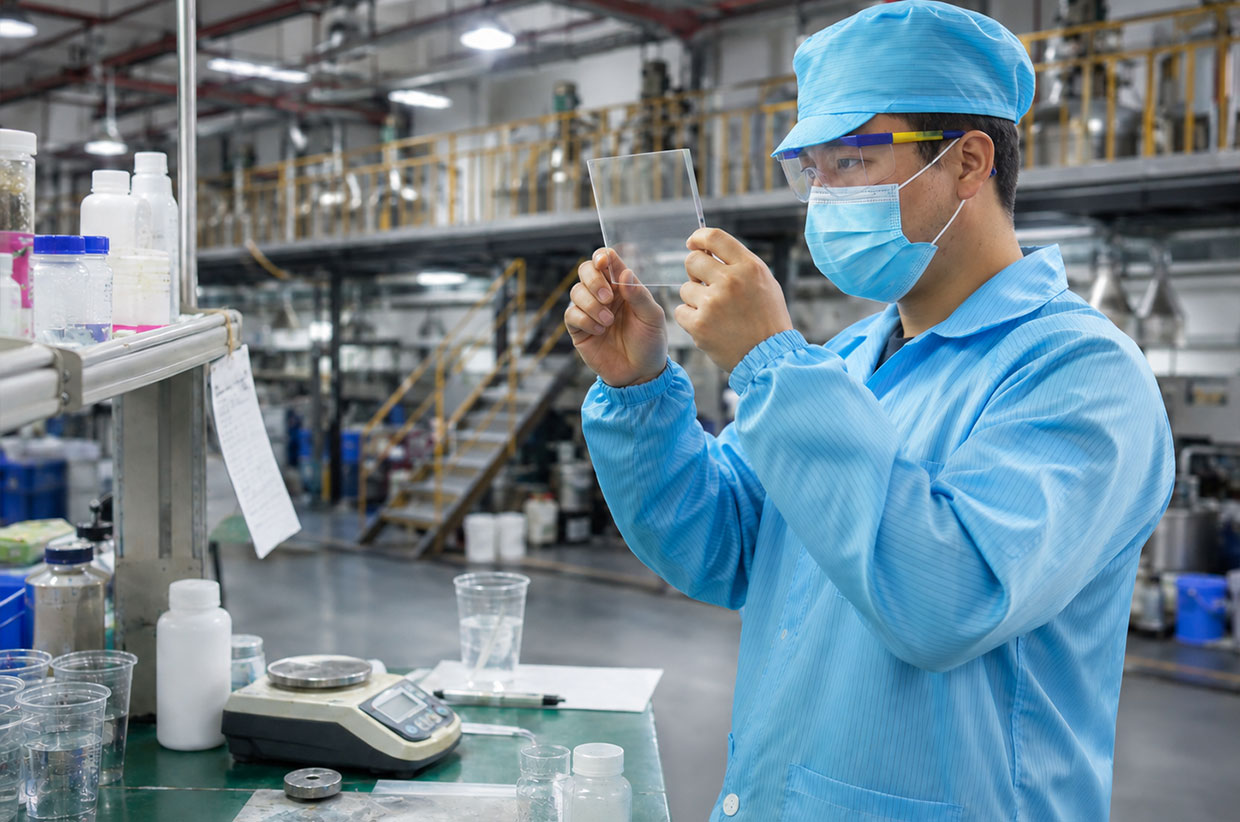
Our quality control process can include appearance inspection, viscosity testing, curing behavior evaluation and cured surface inspection according to product and order requirements. These checks help evaluate material consistency and processing behavior before shipment or application.
For customers moving from sample evaluation to regular purchasing, we support bulk material supply and long‑term material cooperation.
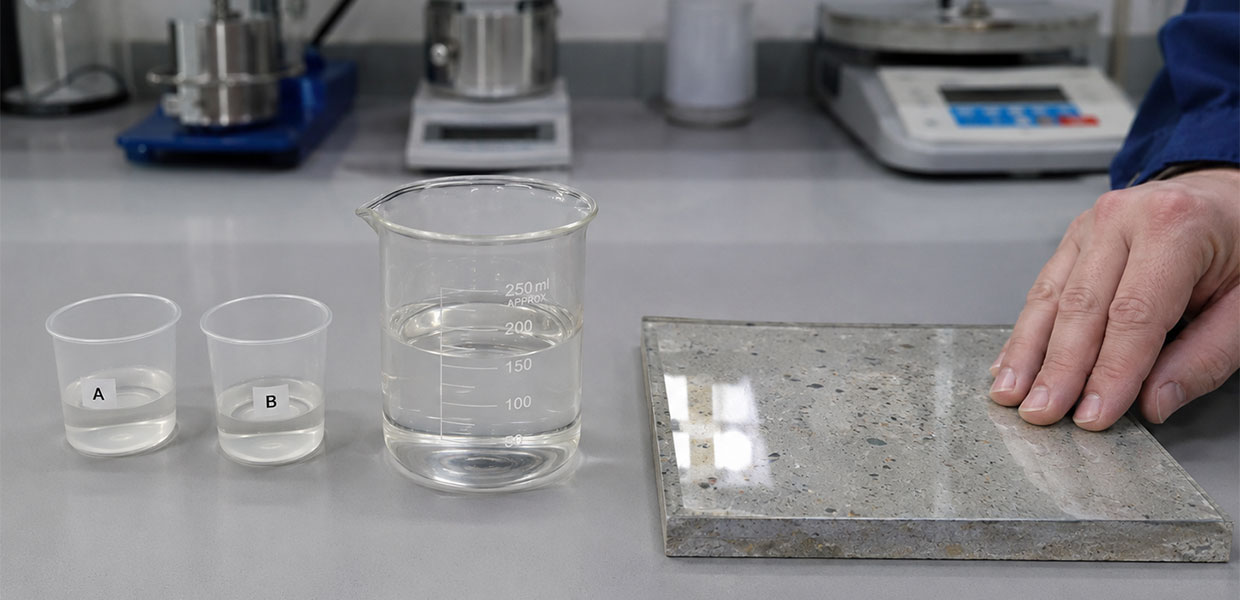
Our technical team can also assist with sample evaluation, material selection and application matching based on substrate type, coating method, working time requirements, curing conditions and expected surface appearance.
Customers evaluating a new substrate, coating structure or production process are encouraged to complete small‑scale testing before full‑scale production or project use.
Support Options
Packaging, Storage & OEM Support
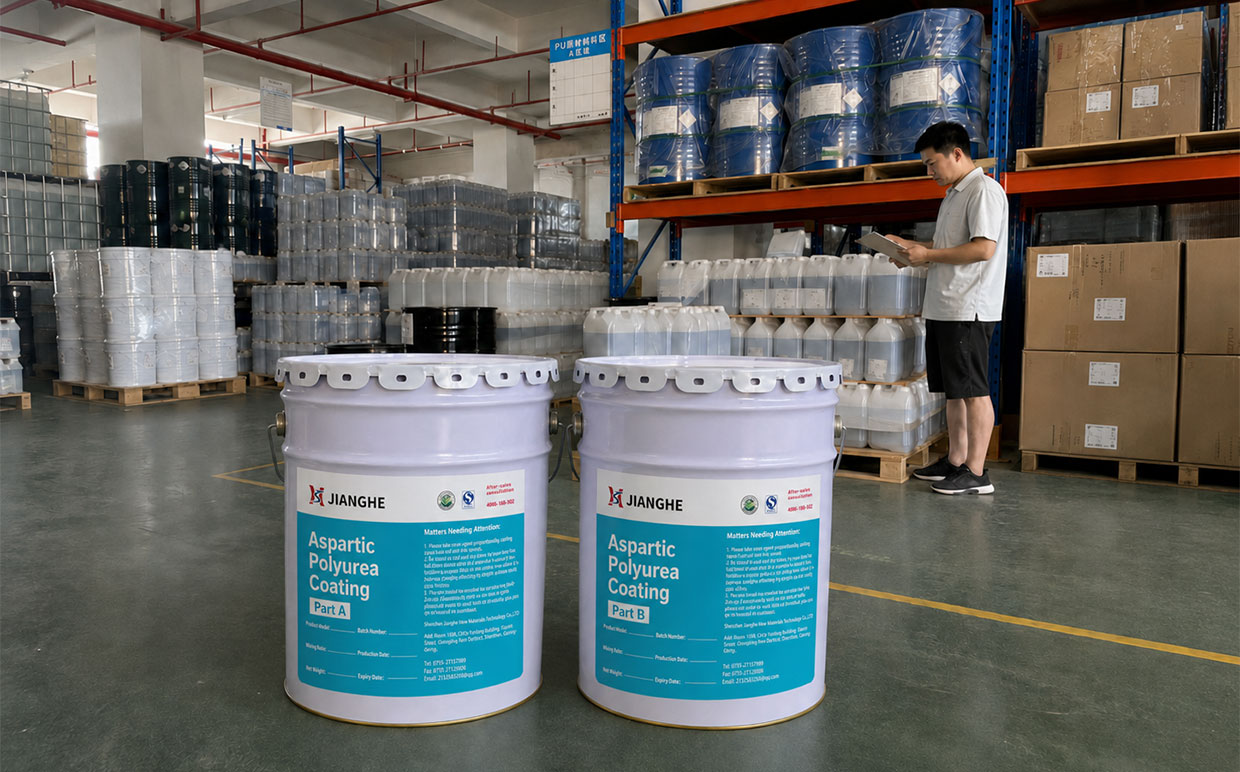
Standard Packaging
Available standard packaging includes:
Component A and Component B should be supplied as matched sets according to the required: A:B = 1:1 by weight.
OEM & Private Label
OEM and private‑label requirements can be discussed according to order volume, packaging format and market requirements.
Available support can include:
Final packaging specifications can be confirmed according to the customer's order requirements.
Storage & Handling
Store both components tightly sealed and protected from direct light and moisture.
Recommended storage conditions:
Temperature: 15–25°C
Relative Humidity: Below 70%
Component B is sensitive to air exposure and should be resealed immediately after dispensing.
Both Component A and Component B are moisture‑sensitive and should be protected from water vapor during storage, weighing and processing.
Shelf life: 6 months at 25°C in sealed packaging.
Where suitable equipment is available, Component A can be vacuum‑treated before use to help reduce the influence of residual moisture.
FAQ
Q1. Is this product intended for a thick self‑leveling floor?
No. This grade is primarily positioned for clear floor protection, thin coating and shallow coating applications.
If your flooring system requires a thick self‑leveling layer or heavy‑build resin construction, another flooring material should be evaluated according to the required thickness and performance.
Q2. Can the coating preserve the appearance of a decorative floor underneath?
Yes. The cured coating is colorless and transparent with a smooth and bright surface.
This makes it suitable for applications where the underlying color, pattern or decorative effect should remain visible after protection.
A sample test is recommended on the actual decorative surface before larger‑scale application.
Q3. Is the 20–30 minute working time suitable for large batches?
The 20–30 minute working time applies at approximately 25°C.
For manual processing, usable time may become shorter when the mixed batch exceeds approximately 100 g.
Customers planning larger batches should conduct a batch‑size test before moving to full‑scale production.
Q4. Is this coating suitable for outdoor use?
The cured coating provides UV and weather resistance.
However, outdoor service life depends on exposure level, substrate condition, coating structure and local environmental conditions.
For continuous outdoor use, customers should test the material under the actual service conditions before commercial‑scale application.
Q5. What should be evaluated before switching from another clear coating material?
Before changing from another resin or coating system, customers should evaluate:
A small‑scale application test is recommended before regular production.
Q6. When should I consider another material system?
Consider another material system when the application requires a coating build, curing profile or verified performance level that is outside the intended use of this clear polyurea grade.
For example, another solution may be more appropriate for:
If you are unsure which material system is more suitable, our technical team can help compare the substrate, coating thickness, processing method and final performance requirements before recommending a product.