 EN
EN

Platinum Cure Silicone Rubber for Precision Mold Making
Model: 717AB-F Series Mix Ratio: 1:1
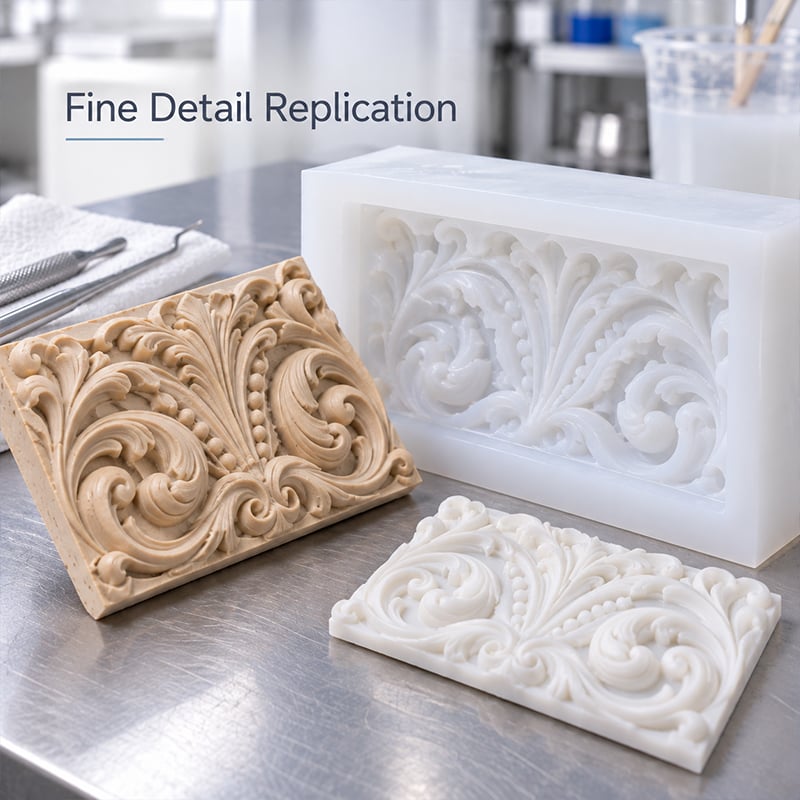
Designed for precision mold making where fine grooves, small lettering, complex textures and delicate undercuts must be reproduced cleanly. Selected 717AB-F grades provide the flow needed to reach detailed geometry while maintaining enough flexibility for controlled demolding and enough support for stable mold handling.
Key Features:
- Good Flow Into Fine & Narrow Features.
- Flexible Demolding Around Delicate Geometry.
- Multiple Hardness Options for Different Mold Structures.
- Compatibility Testing for New Master Materials.
Perfect For:
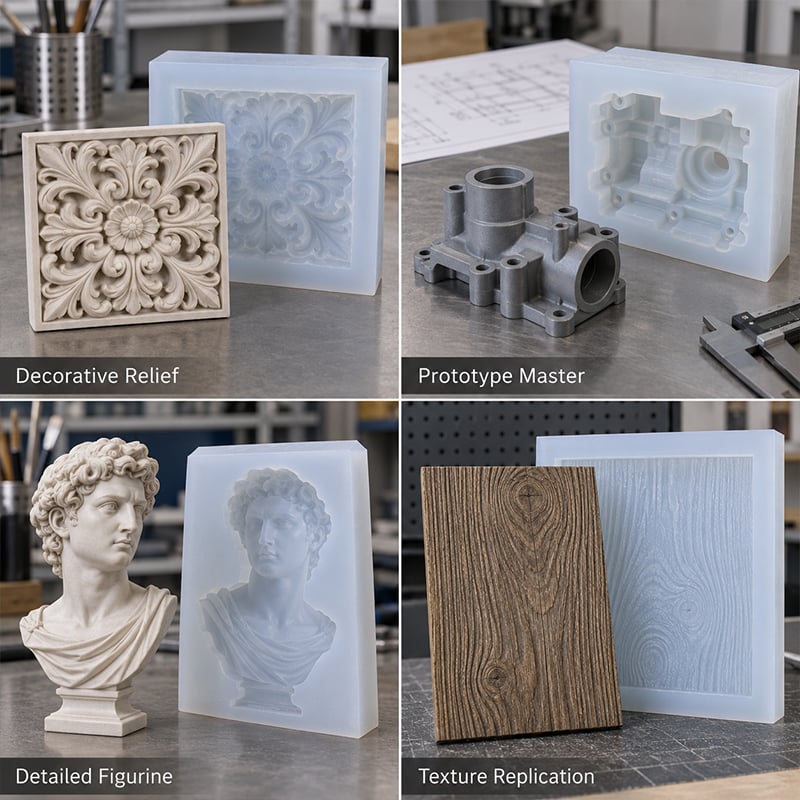
Prototype Masters · Detailed Figurines · Texture Replication · Precision Components · Decorative Master Models

- Overview
- Recommended Products
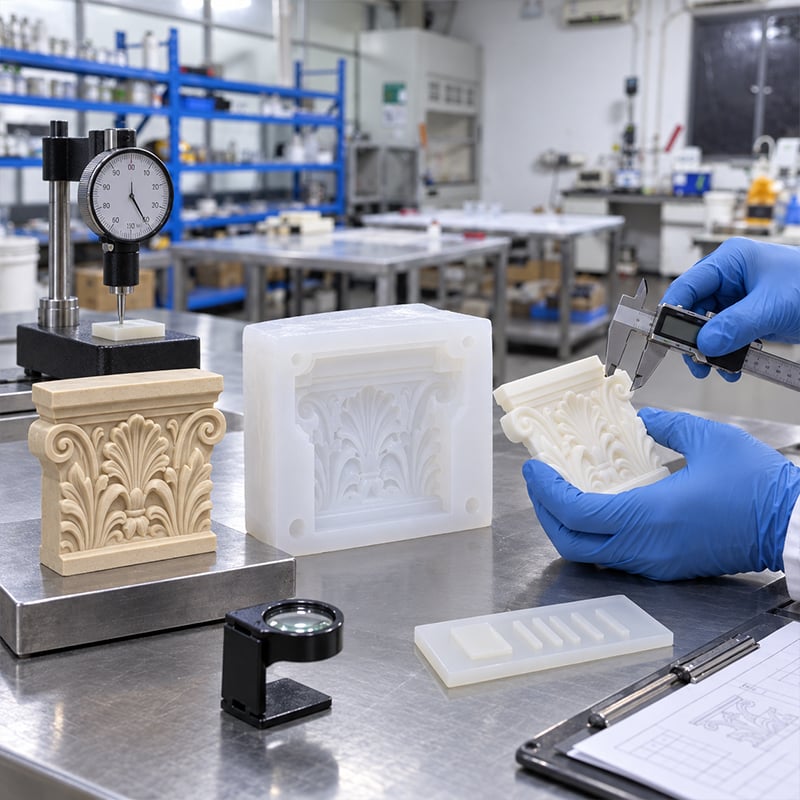
- Viscosity Evaluation — Helps confirm whether the material can flow into fine grooves and narrow details.
- Shore Hardness Testing — Helps verify whether the cured mold has the right balance of flexibility and support.
- Master Compatibility Test — Checks whether the silicone cures properly against the actual master surface.
- Detail Replication Check — Confirms whether lettering, textures, corners and recessed features are reproduced clearly.
- Demolding Evaluation — Checks whether delicate features can be released without excessive force or distortion.
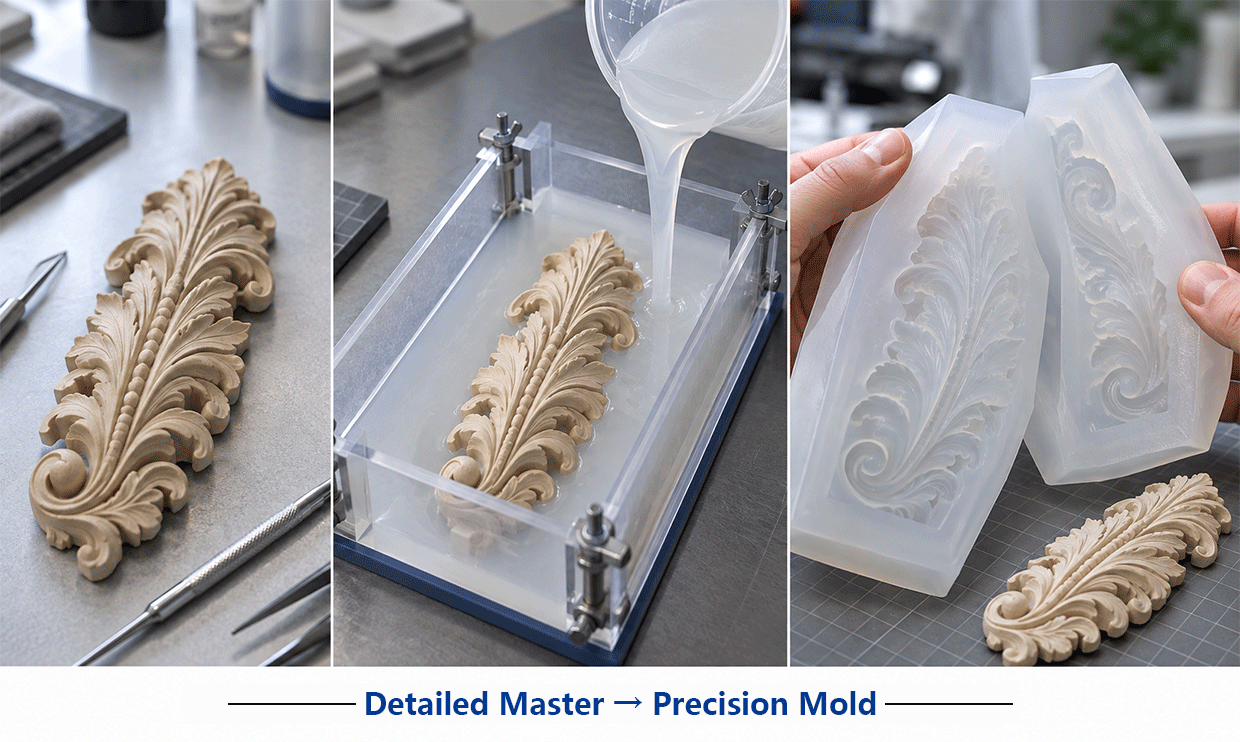
Designed for Precision Mold Making
Precision molds often fail at the smallest details first. Narrow grooves may not fill completely, air can become trapped around recessed textures, delicate undercuts can be damaged during demolding, and a mold that is too soft may distort during casting.
The right silicone therefore needs to do more than cure to the correct hardness. It must flow into detailed geometry, release from the master without excessive force and still provide enough support to hold the mold shape during use.
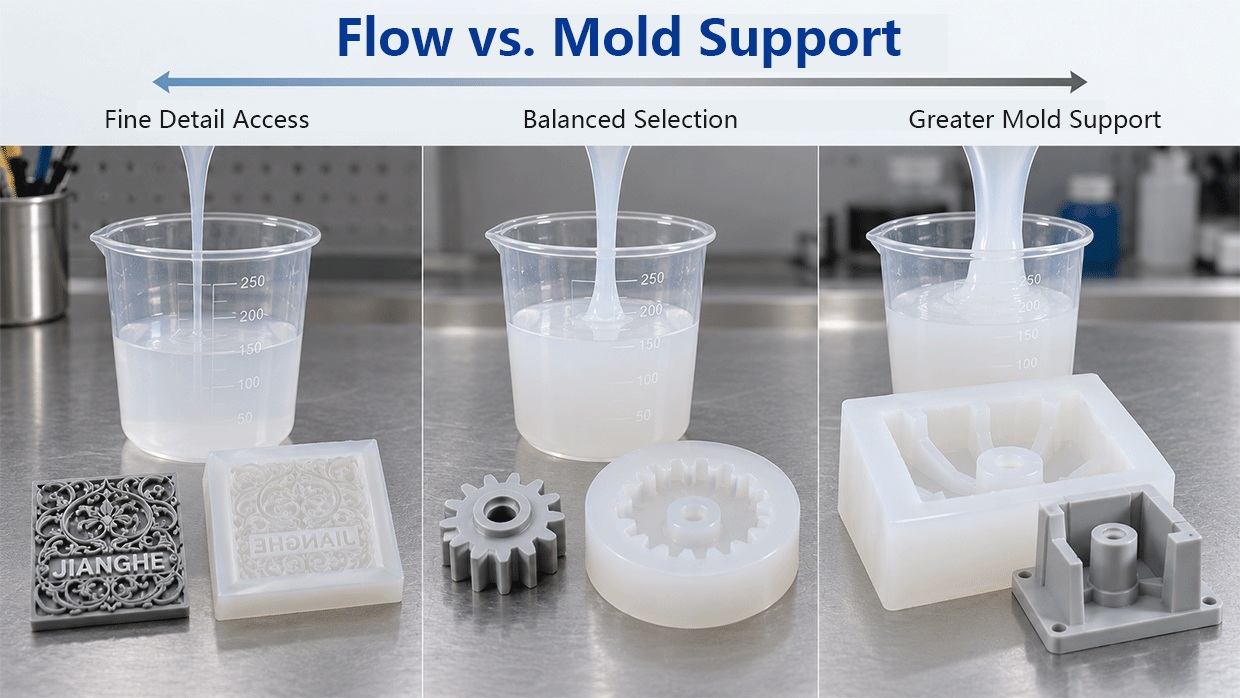
For masters with fine textures, small lettering or narrow channels, lower-viscosity grades can help the material reach difficult areas more easily. For larger or more structured precision molds, additional hardness and support may be needed so the finished mold remains stable during handling and casting.
The best grade depends on the actual master design. A small highly detailed master may need a different balance of flow and flexibility than a larger precision mold with the same surface detail.
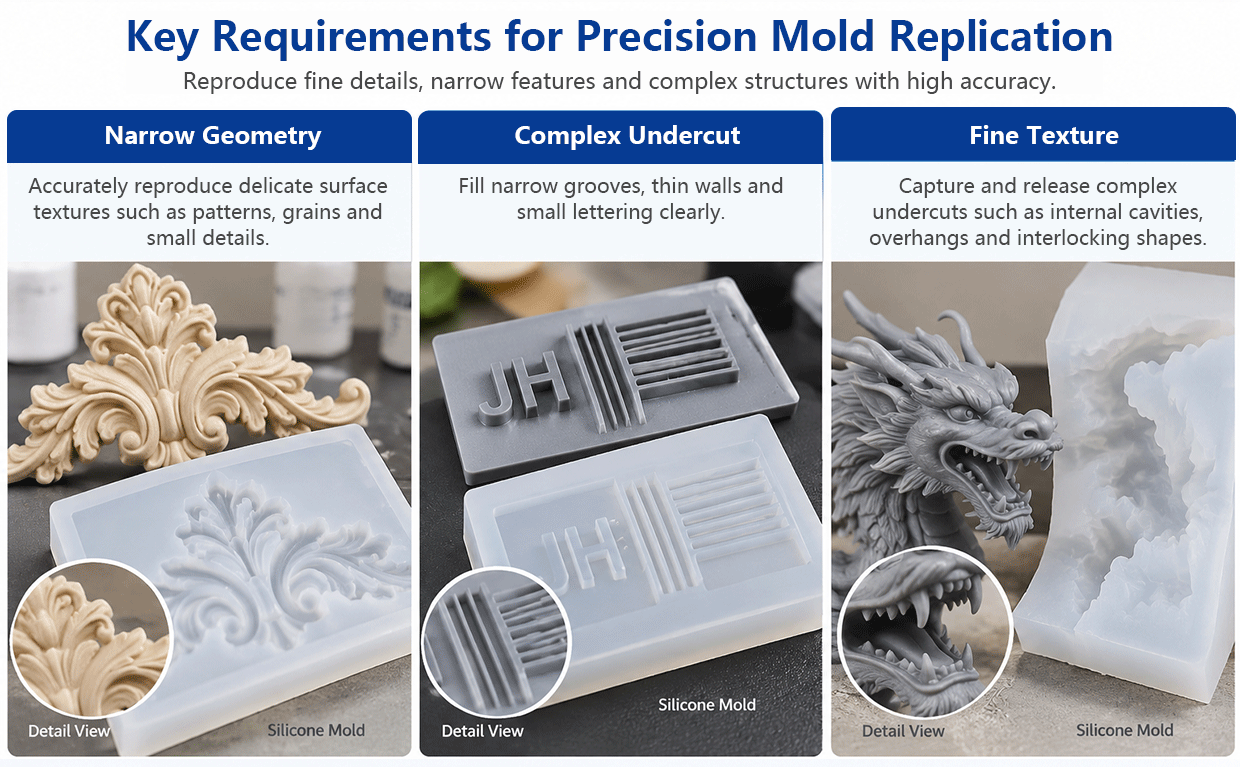
Key Requirements for Precision Mold Replication
When the master contains fine features, the smallest processing problem can become a visible defect in the finished mold. The following points are usually the most important when selecting silicone for precision replication.
Fine Feature Filling
The silicone must reach narrow grooves, recessed lettering, sharp transitions and small surface details without leaving unfilled areas. Material flow becomes more important as the feature size becomes smaller and the geometry becomes more complex.
Air Control
Small bubbles that may not matter in a simple mold can destroy lettering, textures or sharp edges in a precision mold. Mixing method, pouring direction and degassing should therefore be planned around the actual detail level of the master.
Controlled Demolding
Delicate protrusions and undercuts can be damaged if too much force is required during release. The mold needs enough flexibility to open around these features without becoming so soft that it loses support.
Mold Support
A soft mold can reproduce detail well but may deform during casting. Wall thickness, backing support and Shore hardness should be considered together to keep the mold stable during use.
Master Compatibility
A precision mold can lose critical detail if even a small area fails to cure properly. New master materials, coatings, adhesives, modeling compounds and release agents should be tested before the full mold is poured.
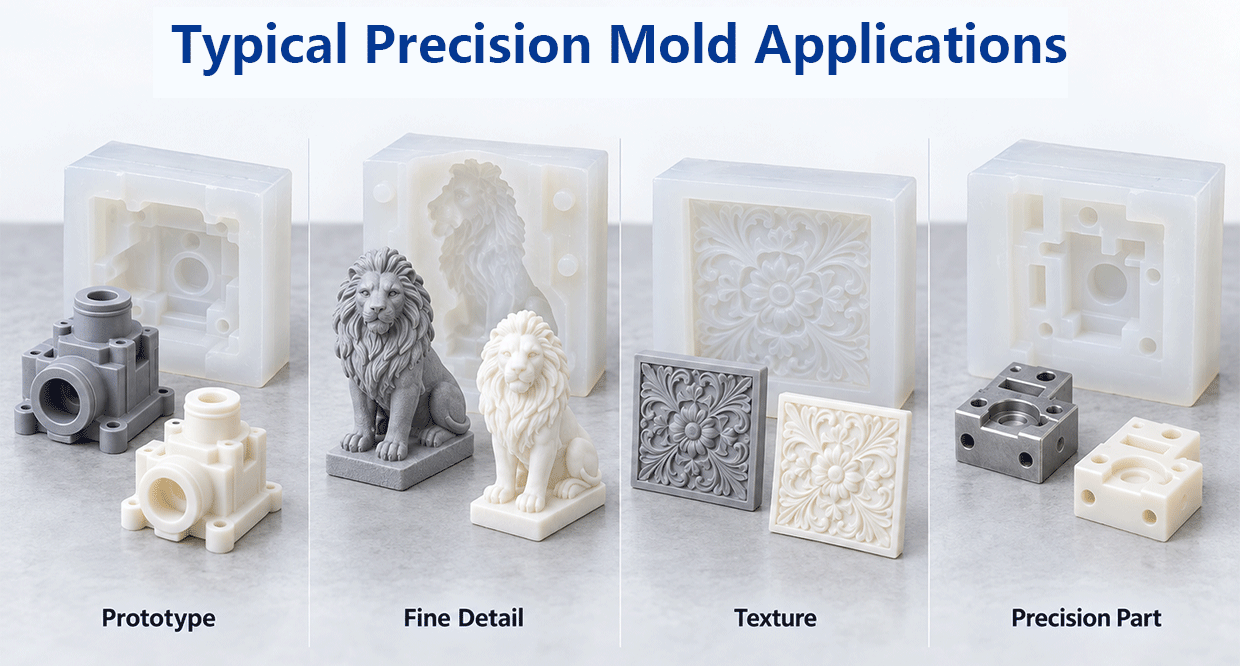
Typical Precision Mold Applications
Precision mold making is not limited to one industry. What these applications have in common is the need to reproduce small geometry and surface detail while keeping the mold practical to process, support and demold.
Prototype & Master Model Replication
For product-development masters, prototype parts and small production models where edges, dimensions and surface features need to transfer clearly into the mold.
Detailed Figurines & Sculptures
For faces, hair, clothing textures, engravings and decorative details where trapped air or excessive demolding force can reduce replication quality.
Texture & Pattern Replication
For embossed patterns, engraved surfaces, texture plates and repeated decorative details that need to remain visible across the finished mold surface.
Small Precision Components
For small molded components with narrow recesses, fine geometry or compact structures where mold support and detail access must be balanced carefully.
Decorative Master Replication
For reliefs, customized masters and decorative components that require clean detail transfer and flexible removal from the mold.
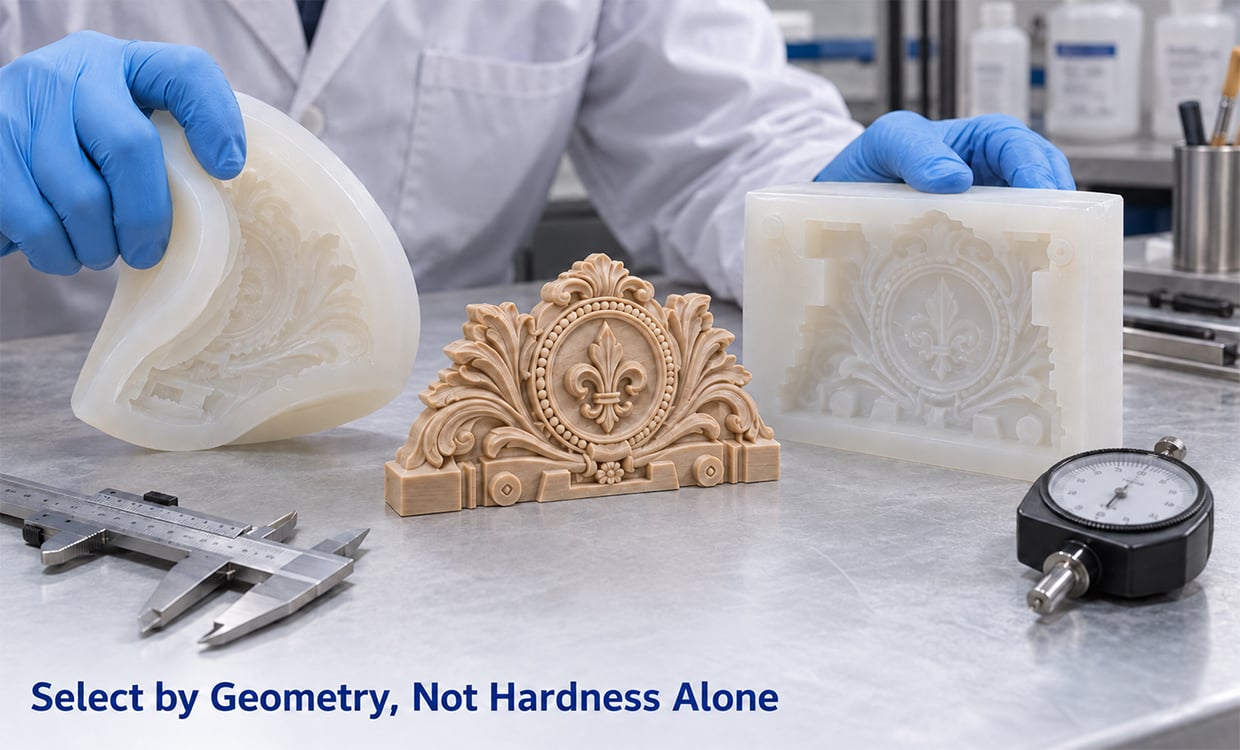
How to Select Silicone for Precision Mold Making
Do not begin with a Shore hardness number. Begin with the most difficult feature on the master, then decide how much flexibility and support the finished mold needs.
1. Look at the Smallest Feature
Check the narrowest groove, smallest lettering or deepest recessed texture. If these areas are difficult to reach, a lower-viscosity grade may be a better starting point.
2. Check the Undercuts
Strong undercuts need more flexibility during demolding. A grade that is too firm may increase stress on delicate master features, while a softer mold may need additional support.
3. Consider Mold Size
A small detailed mold and a large detailed mold do not need the same level of support. Larger molds usually require more attention to wall thickness and structural stability.
4. Consider the Support Method
If a rigid support shell or thicker mold wall is used, a more flexible silicone may still provide enough stability. Mold design can therefore be adjusted together with material hardness.
5. Check the Master Material
3D-printed resins, coatings, paints, adhesives and release agents can behave differently with platinum cure silicone. Test the actual finished surface before producing the complete mold.
6. Match the Grade to Your Equipment
Manual pouring, vacuum processing and metering equipment create different practical conditions. The selected grade should fit the actual production method and batch size.
Selection Summary
| Precision Requirement | Selection Direction |
| Very fine texture | Evaluate lower-viscosity grades |
| Complex undercuts | Prioritize flexibility |
| Larger precision mold | Increase mold support |
| Fine detail + larger size | Balance flow and support |
| New master material | Compatibility test first |
| Repeated production | Verify process consistency |
Recommended Technical Range for Precision Applications
Precision molds usually need enough flow to reach fine geometry and enough cured support to maintain the mold shape. The right balance depends on detail size, undercuts, mold dimensions and support design.
Lower-Viscosity Grades
Use lower-viscosity options as the first evaluation direction when narrow grooves, detailed textures and recessed features are difficult to fill.
Medium-Hardness Grades
Medium grades can provide a useful balance between flexible demolding and mold support for many general precision applications.
Firmer Grades
Firmer grades can improve structural support, but the highest-hardness options also have much higher viscosity. For very fine geometry, flow should be checked before moving to the firmest grades.
Precision Selection Reference
| Property | Reference |
| Material System | Platinum Cure / Addition Cure Silicone |
| Mix Ratio | 1:1 |
| Working Time | Approx. 30 min |
| Reference Cure | Approx. 4 h at room temperature |
| Available Hardness | Shore A 0–45 |
| Lower/Medium Grade Viscosity | Approx. 1500–1600 mPa·s |
| 40A–45A | Significantly higher viscosity |
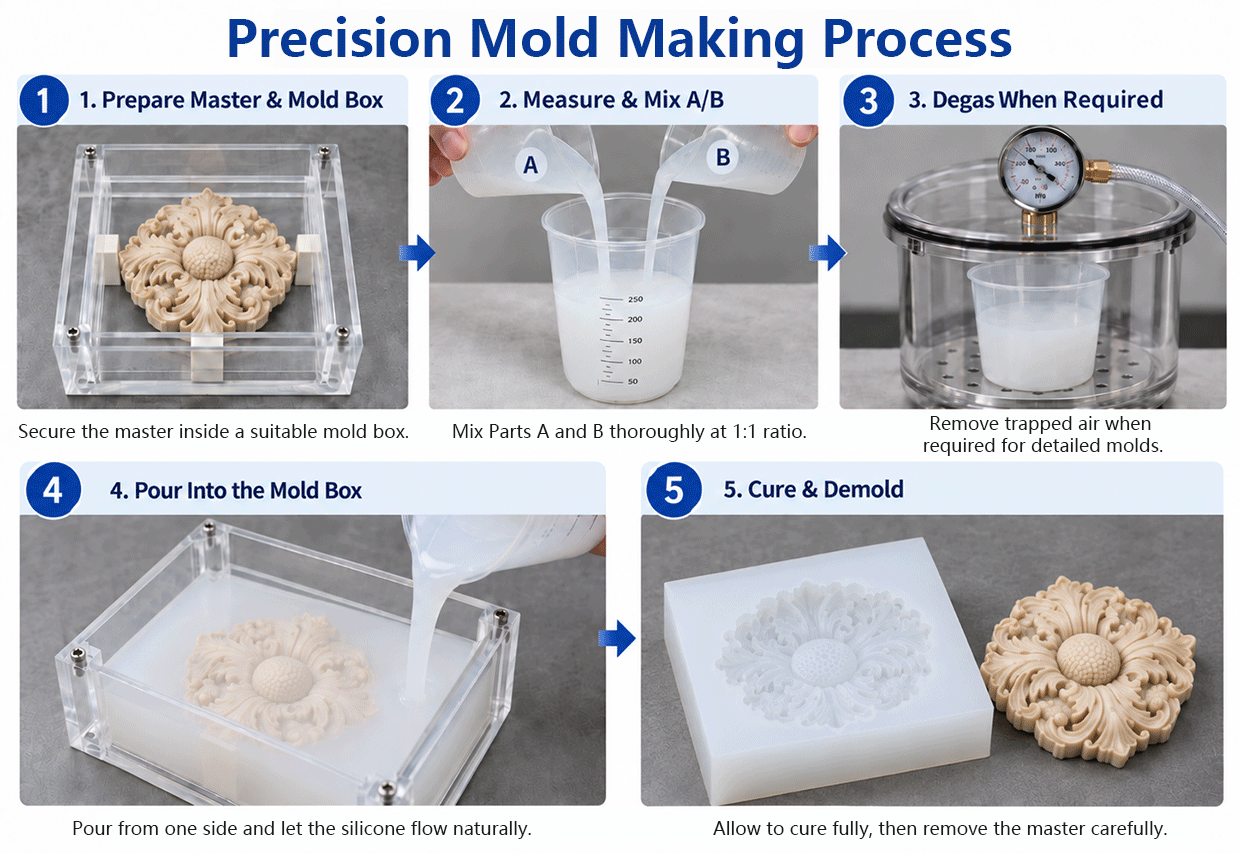
Precision Mold Making Process
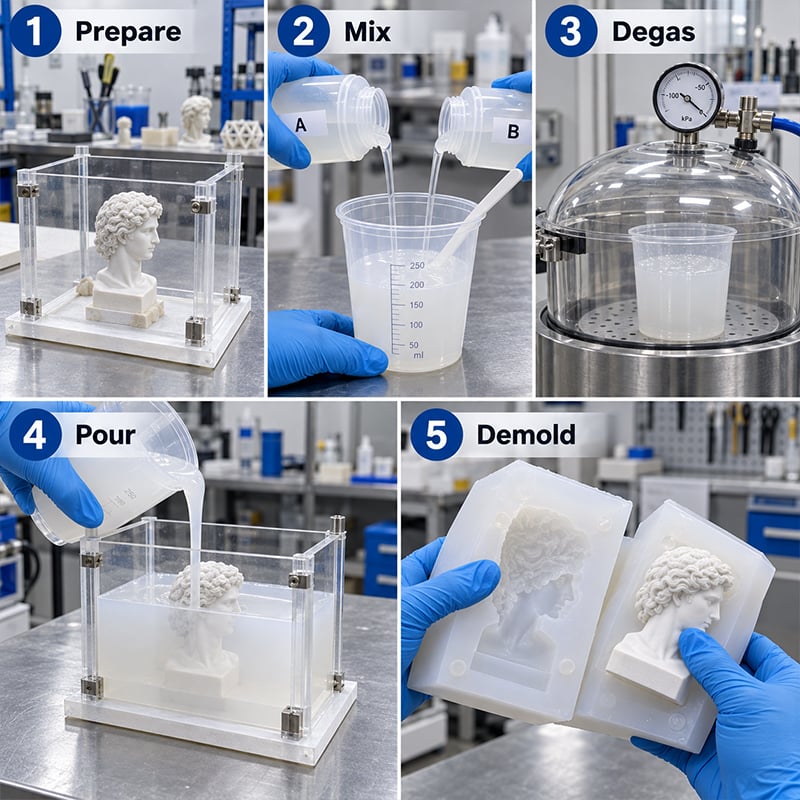
01 Inspect the Master
Identify narrow recesses, small lettering, undercuts and areas where air may become trapped before preparing the mold.
02 Test Surface Compatibility
If the master uses a new resin, coating, adhesive, clay or release agent, test a small area first. A full mold should not be the first compatibility test.
03 Prepare the Mold Structure
Leave enough space around the master for suitable wall thickness and ensure the support structure does not restrict silicone flow around detailed areas.
04 Mix A and B
Mix Parts A and B at the specified 1:1 ratio until uniform. Minimize unnecessary air introduction during mixing.
05 Degas When Needed
If air is introduced during mixing, vacuum degassing can be used where bubbles could affect fine surfaces or recessed geometry.
06 Pour for Detail Access
Pour steadily from one location and allow the silicone to flow naturally around the master instead of repeatedly directing the stream onto fine details.
07 Cure, Demold & Inspect
After curing, inspect grooves, corners, textures and recessed areas before approving the grade and process for repeat production.
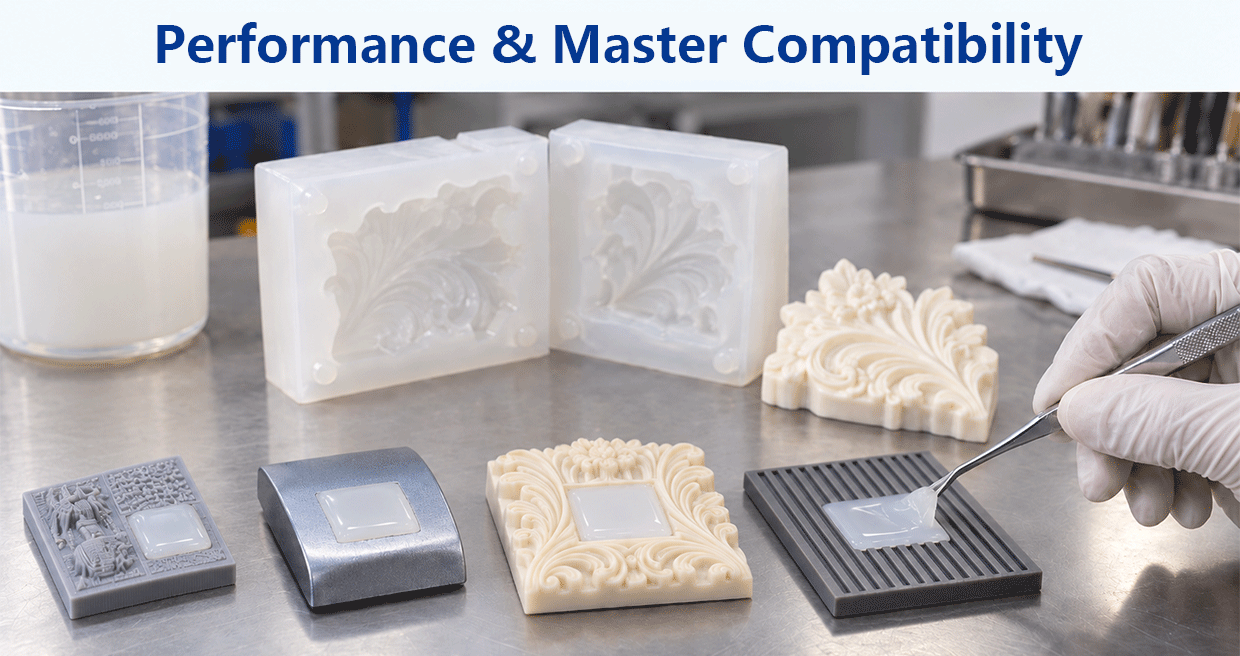
Performance & Master Compatibility
Precision replication depends on the complete mold-making system, not only the silicone itself. The master surface, coating, release method and processing conditions all affect whether the material cures correctly and reproduces the intended detail.
Platinum cure silicone can be inhibited by certain amines, sulfur-containing substances and organotin compounds. If these materials are present on the master surface, the silicone may remain partially uncured or develop localized soft areas.
This is especially important with 3D-printed and coated masters. Two parts made from similar-looking resin can behave differently if the formulation, post-curing method or surface treatment is different. Test the actual finished master surface instead of assuming all printed parts are compatible.
Release agents should also be tested when they are new to the process. A small cure trial can confirm whether the master, surface treatment and silicone work together before a larger quantity is used.
For precision work, even a small uncured area can damage lettering, fine texture or sharp transitions. Compatibility testing therefore protects both the master and the final mold quality.
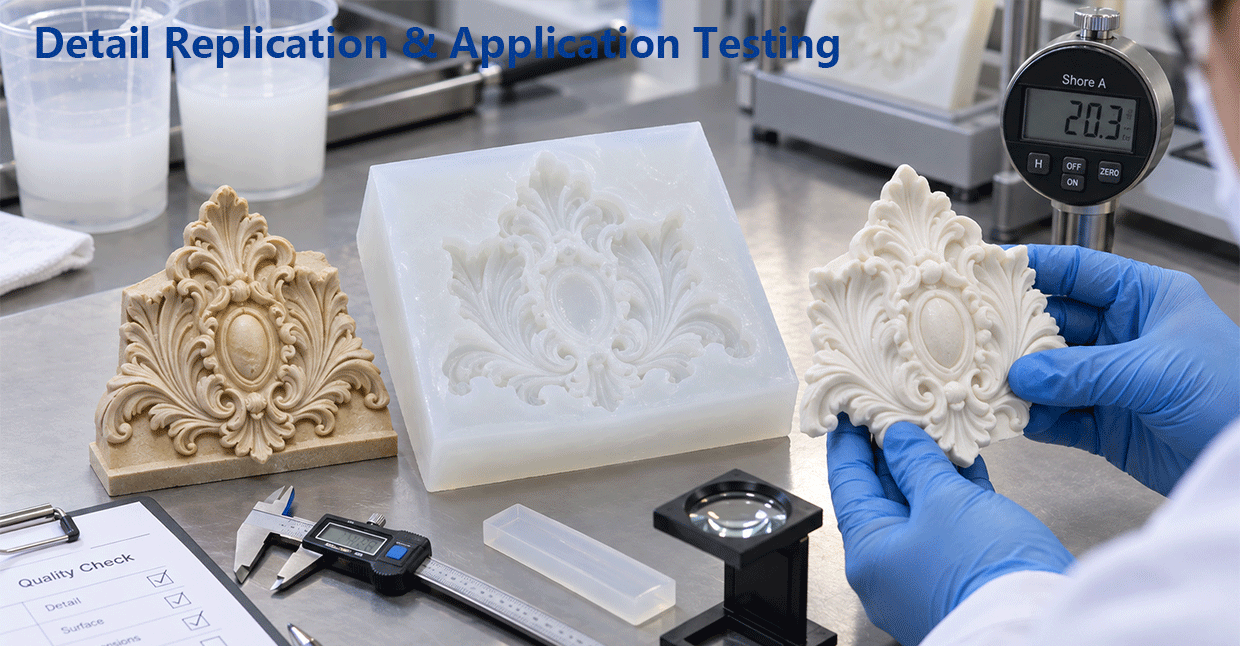
Application Testing & Quality Control for Precision Molds
A technical data table alone cannot show whether a silicone will reproduce a specific master successfully. Fine geometry, wall thickness, surface chemistry and processing method can all affect the final mold quality.
For precision applications, a representative test mold can help evaluate material flow into narrow details, air entrapment around recessed features, demolding behavior and the level of support provided by the cured mold.
This type of evaluation is especially useful when changing master materials, reducing feature size, increasing mold size or moving to a different hardness range. The objective is to confirm that the silicone, master and processing method work together for the required replication quality.
Application Evaluation May Include
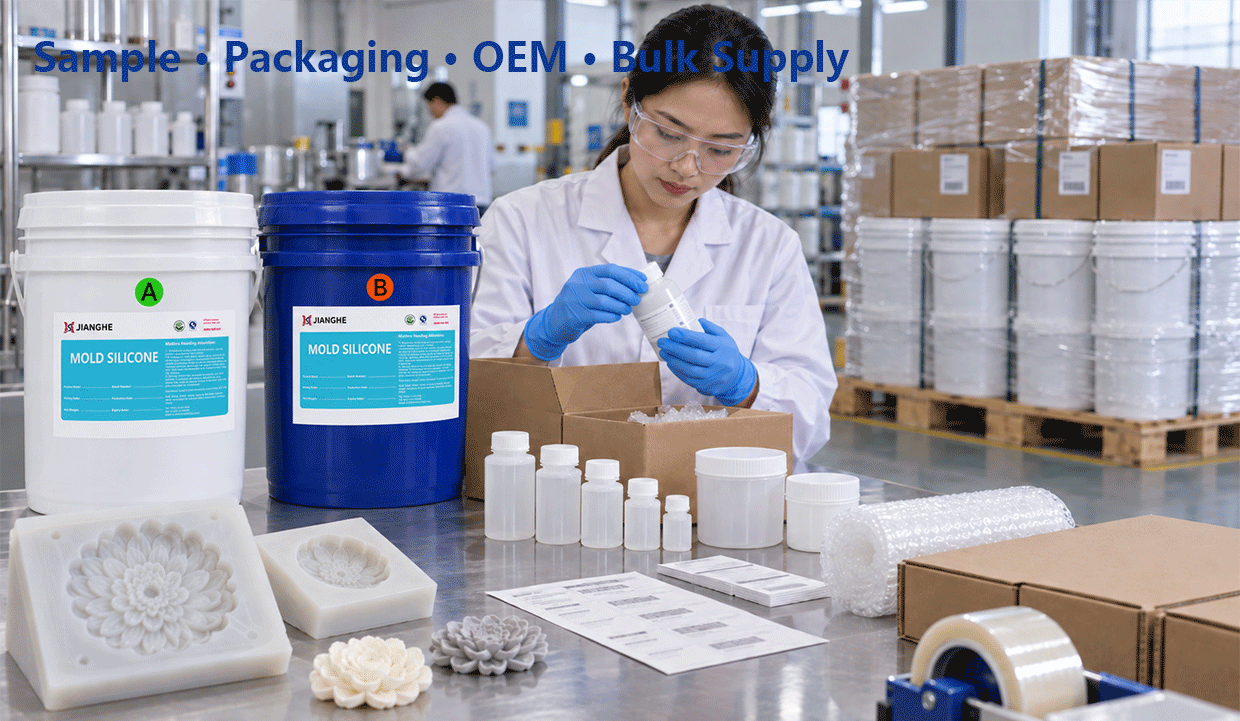
Packaging, Customization & Supply Support
Once a precision mold material has been approved, repeat production depends on consistent grade identification, practical packaging and clear technical documentation.
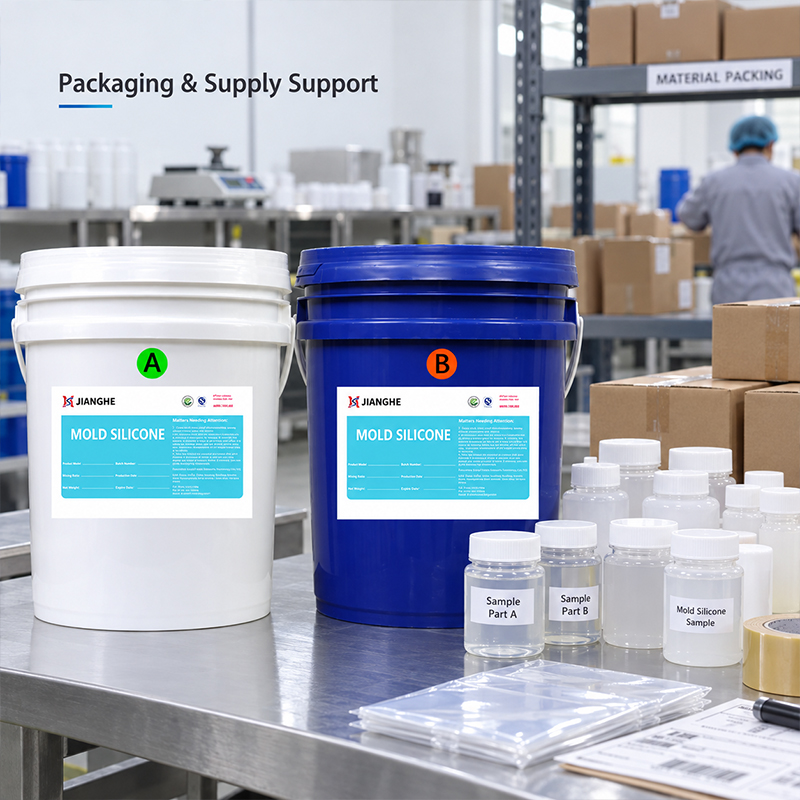
Samples can be used to confirm whether the selected grade works with your master geometry and processing method before moving to bulk purchasing.
Packaging can be arranged according to order requirements. OEM and private-label options can also be discussed for distributors, brands and other qualified projects.
For precision applications, the most useful information to provide is the master material, smallest feature size, mold dimensions, undercuts, required flexibility and casting material. These details make grade selection more accurate than requesting a Shore hardness without application context.
After a grade is approved, sample identification, technical documents and bulk-order specifications can be aligned for repeat purchasing.
Sample Evaluation
Evaluate the selected silicone grade with your actual master and mold process before bulk purchasing.
Grade Matching
Select the suitable hardness and processing range based on master geometry, mold size and demolding requirements.
OEM & Private Label
Packaging, labeling and private-label options can be discussed for qualified projects and distribution programs.
Bulk Supply
Support repeat purchasing with aligned grade identification, technical documents and order specifications.
FAQ:
Q1: What makes a silicone suitable for precision mold making?
It needs to balance three things: flow into fine geometry, flexibility during demolding and enough support to hold the mold shape during handling and casting.
Q2: Is lower viscosity always better for detailed molds?
No. Lower viscosity can help the material reach narrow details, but the finished mold still needs enough support. The best choice depends on feature size, undercuts, mold dimensions and wall thickness.
Q3: Which Shore hardness should I use?
There is no single hardness that works for every precision mold. Softer grades can help with complex undercuts, while medium or firmer grades may provide more support. Start with the master geometry, not the Shore number.
Q4: Can platinum silicone be used with 3D-printed resin masters?
It may be possible, but the actual printed and post-cured surface should be tested first. Resin formulation, post-curing and surface treatment can affect compatibility.
Q5: What can cause cure inhibition?
Certain amines, sulfur-containing materials and organotin compounds can interfere with curing. Test unfamiliar master materials, coatings, adhesives and release agents before full production.
Q6: Do precision molds require vacuum degassing?
Not always. Vacuum degassing is useful when mixing introduces air or when bubbles could affect fine surfaces and recessed geometry.
Q7: How much working time is available?
The technical documents provide approximately 30 minutes of working time under the stated reference conditions. Higher temperature shortens the working time, while lower temperature extends it.
Q8: Should I test a sample before bulk production?
Yes. A representative trial is especially useful for new master materials, complex undercuts or very fine details because it confirms both material choice and processing method before a larger order is placed.