 EN
EN


Clear Epoxy Resin for Gravel & Pebble Stone Flooring
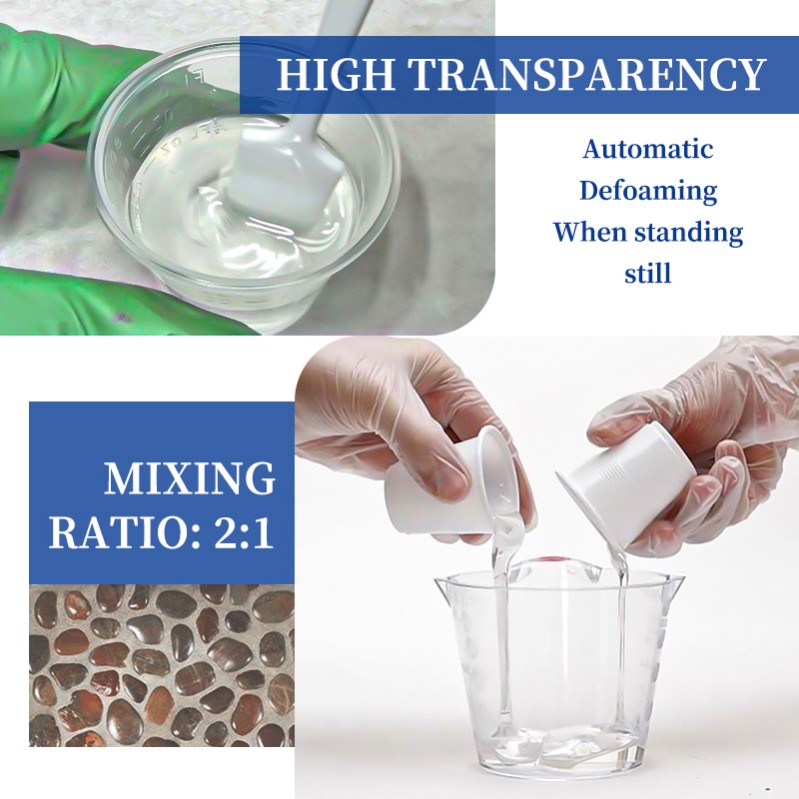
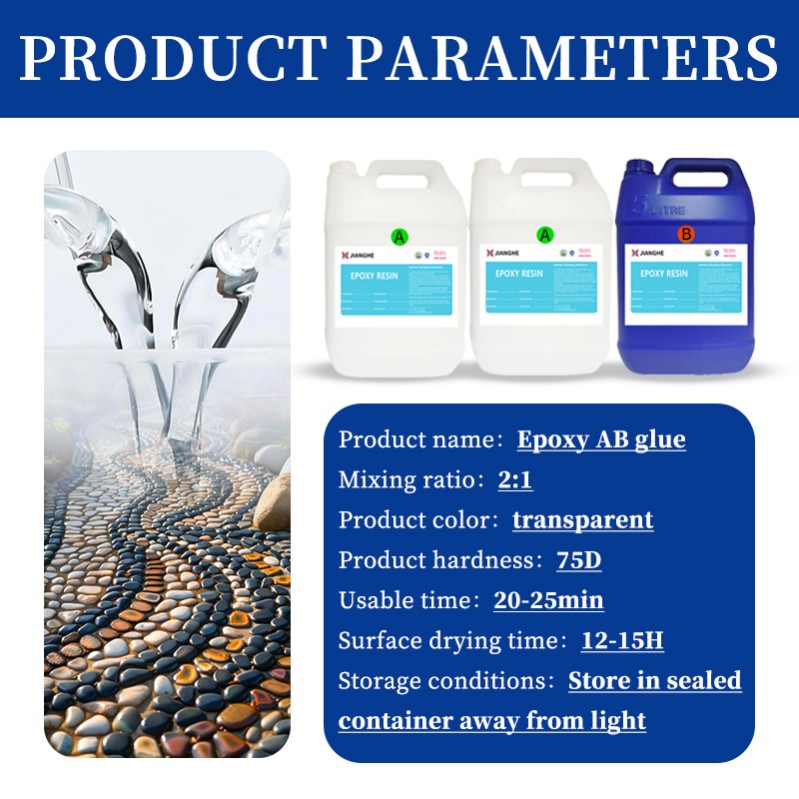
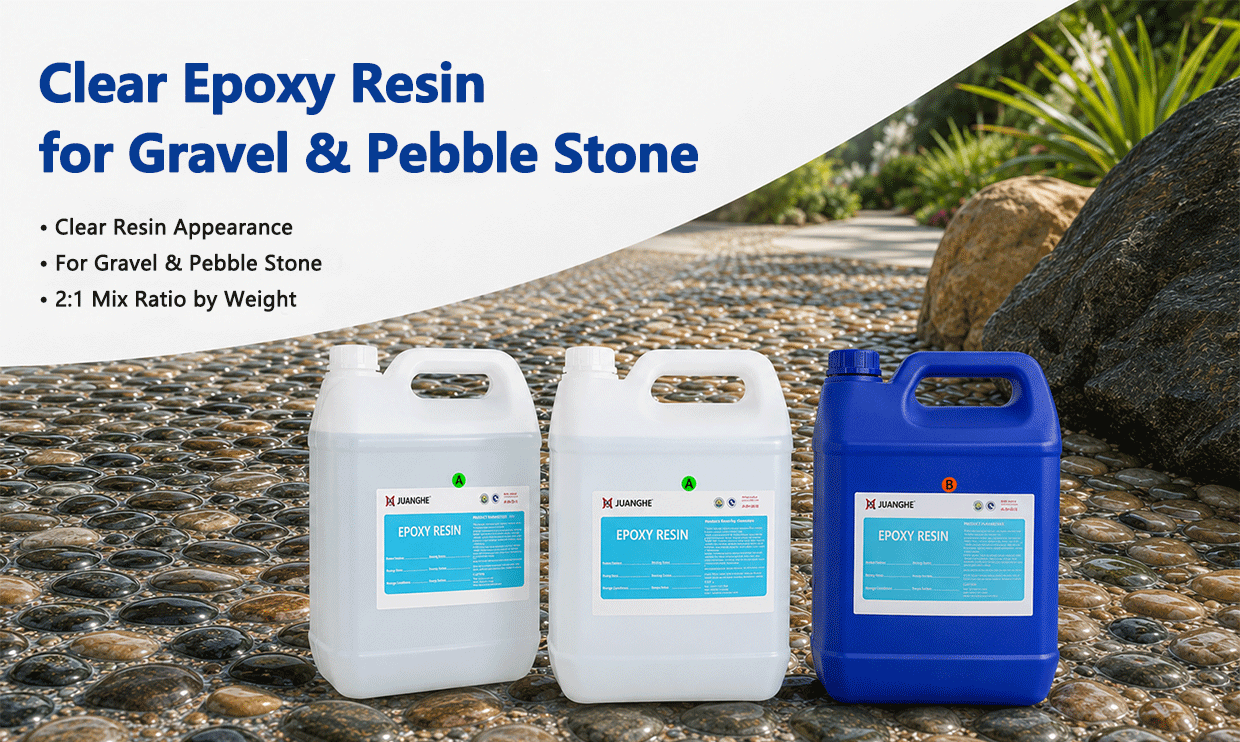
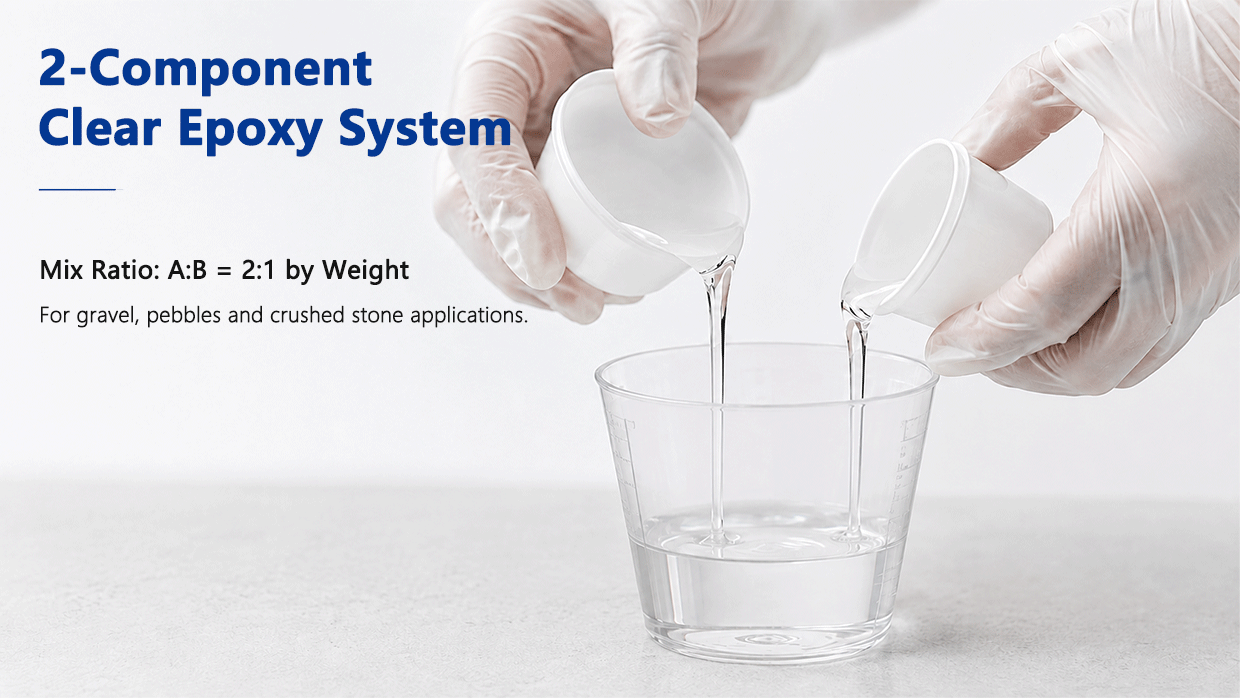
Model: 204AB Mix Ratio: A:B=2:1 by Weight
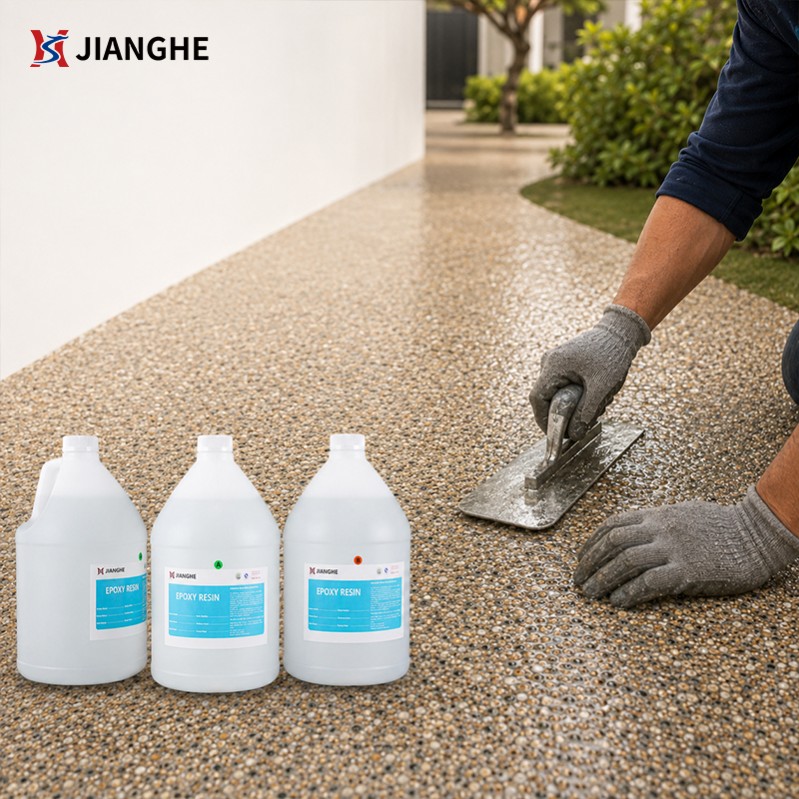
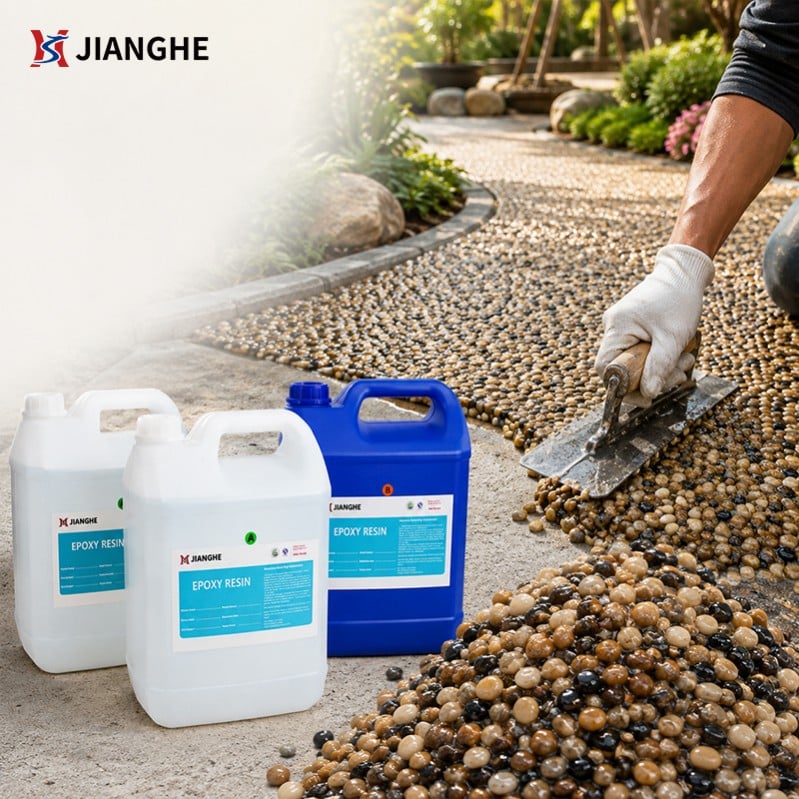
204AB is a two-component clear epoxy resin used for bonding gravel, pebbles, crushed stone and other larger stone particles. Its transparent and flowable consistency helps coat the stone surfaces while keeping their natural color and texture visible. It is suitable for resin bound gravel flooring, garden pathways, pebble stone flooring and decorative landscape ground surfaces.
Key Product Features:
- Suitable for Gravel & Larger Stone Particles
- Clear & Glossy Resin Appearance
- 400 ± 50 mPa·s Mixed Viscosity
- Good Natural Defoaming & UV Resistance
Typical Applications:
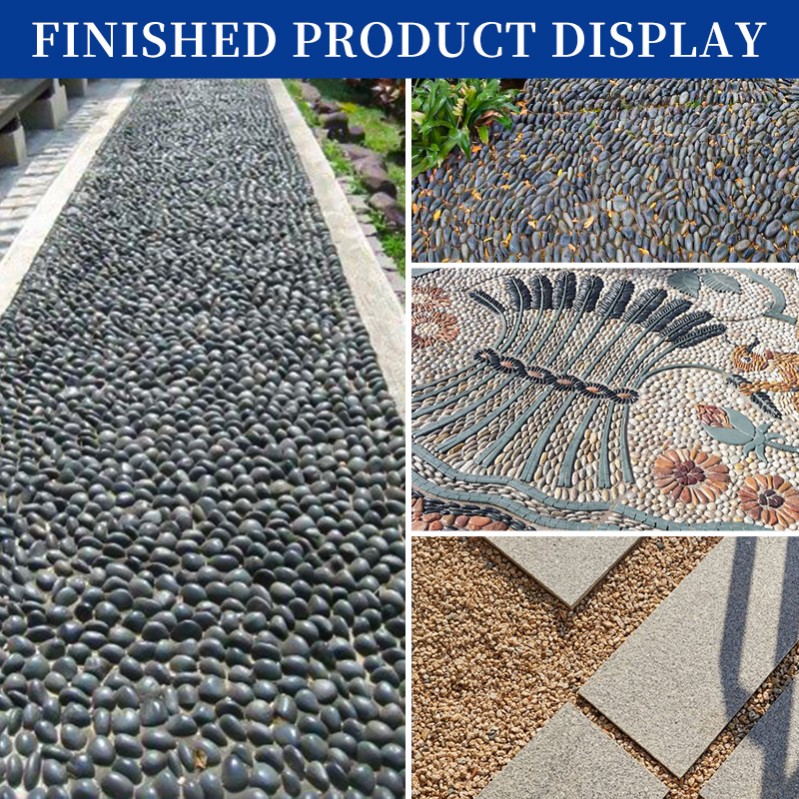
Resin Bound Gravel · Pebble Stone Flooring · Garden Pathways · Gravel Flooring · Landscape Stone Surfaces

- Overview
- Recommended Products
- Stone type
- Approximate particle size
- Intended application
- Substrate type
- Required surface appearance
What Is 204AB Gravel Epoxy Resin?
204AB is a clear two‑component epoxy resin used to bond gravel, pebbles, crushed stone and similar stone materials into decorative ground surfaces.
Unlike conventional floor coatings that cover the floor with an opaque colored layer, 204AB is used together with the stone. The clear resin spreads around the individual particles and helps hold them together after curing, while the natural color, shape and texture of the stone remain visible.
This makes 204AB particularly suitable for applications where the stone itself is intended to become part of the finished appearance, including resin bound gravel flooring, pebble stone flooring, garden pathways and decorative landscape surfaces.
The product is better positioned for clearly visible gravel, pebbles and crushed stone than for flooring systems based mainly on very fine decorative sand.
Different stones can behave differently during mixing and curing. Stone size, shape, surface condition and porosity can all affect resin coverage and material consumption. For this reason, customers using a new stone should evaluate the material with their actual sample before larger‑scale production or installation.
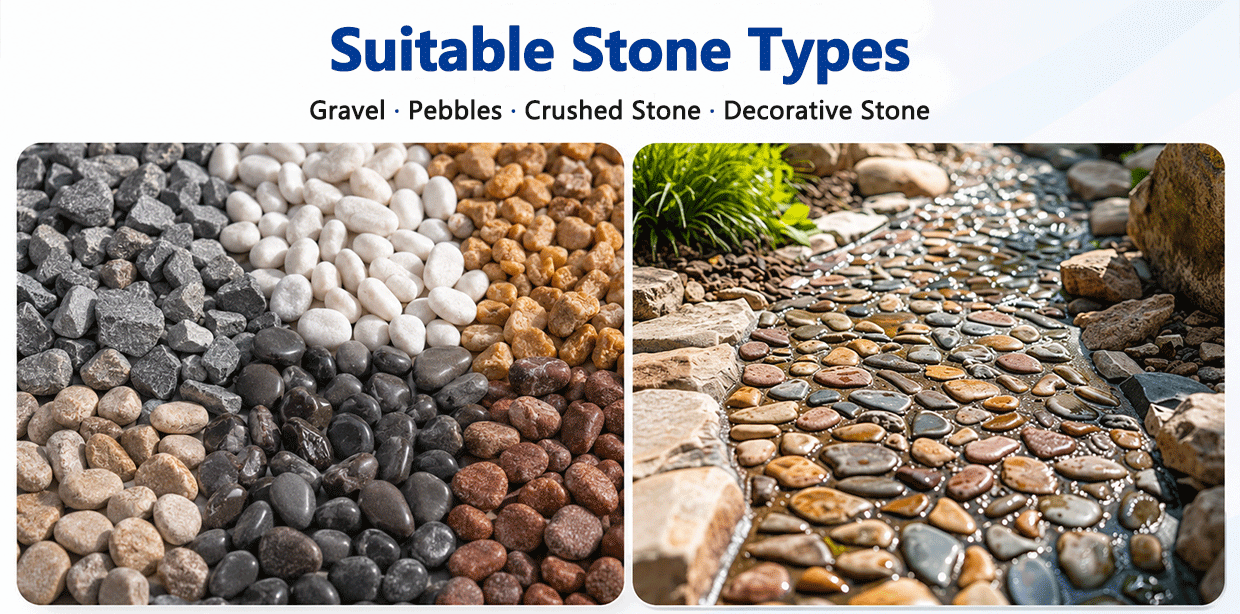
What Types of Stone Can Be Used?
Choosing the right stone is one of the first things to consider when using 204AB.
The product is primarily used with gravel, pebbles, crushed stone and other decorative stone materials where the individual particles remain clearly visible in the finished surface.
Different stone shapes and surfaces can affect how the resin spreads and how much resin is required. Rounded pebbles, for example, have a different surface structure from angular crushed stone. Porous natural stones may also behave differently from smoother materials.
The following guide can help customers make an initial material assessment:
| Stone Type | Suitability | What to Consider |
|---|---|---|
| Gravel | Recommended | Stone size and resin coverage |
| Pebbles | Recommended | Smooth surface and spacing between stones |
| Crushed Stone | Recommended | Angular shape and larger surface area |
| Decorative Stone | Recommended | Color, surface condition and porosity |
| Mixed Stone Sizes | Test Recommended | Particle distribution and voids |
| Fine Decorative Sand | Evaluate Separately | A dedicated fine‑sand flooring resin may be more suitable |
There is no single stone size or resin dosage that is suitable for every application. Customers are encouraged to provide the stone type, approximate particle size and intended use when requesting a material recommendation.
How Does the Resin Coat the Stone?
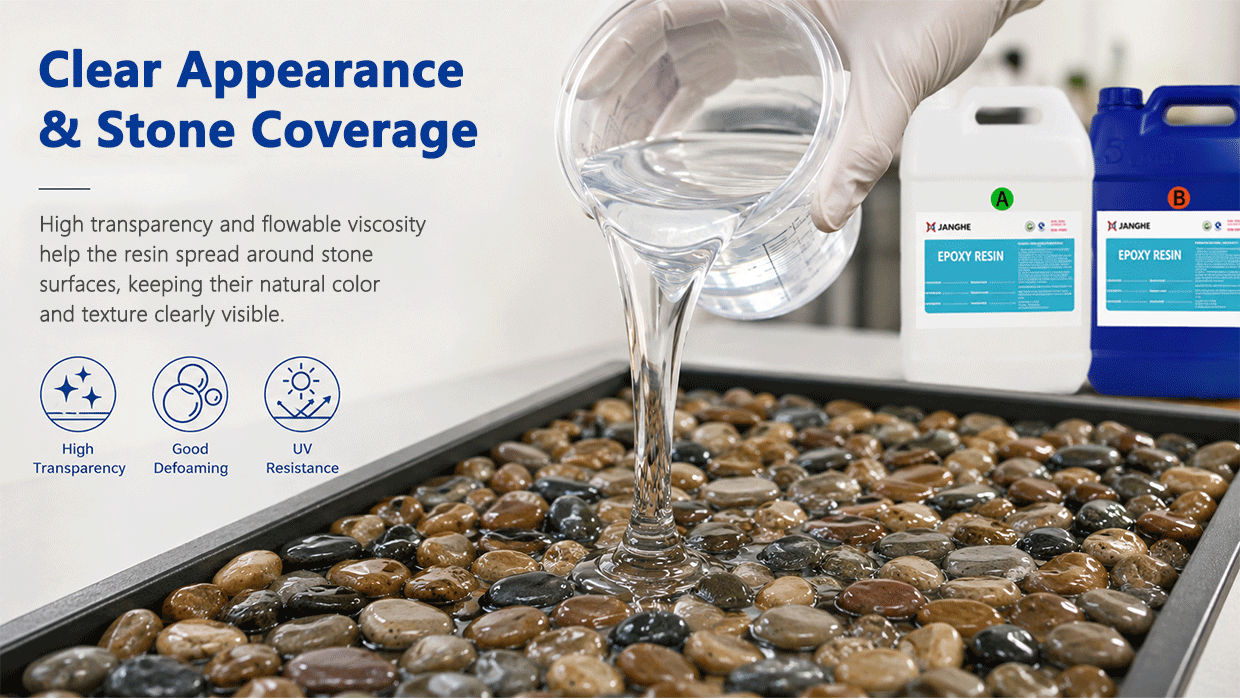
For gravel and pebble flooring, the resin needs to spread around irregular stone surfaces during mixing without completely filling the natural texture between the particles.
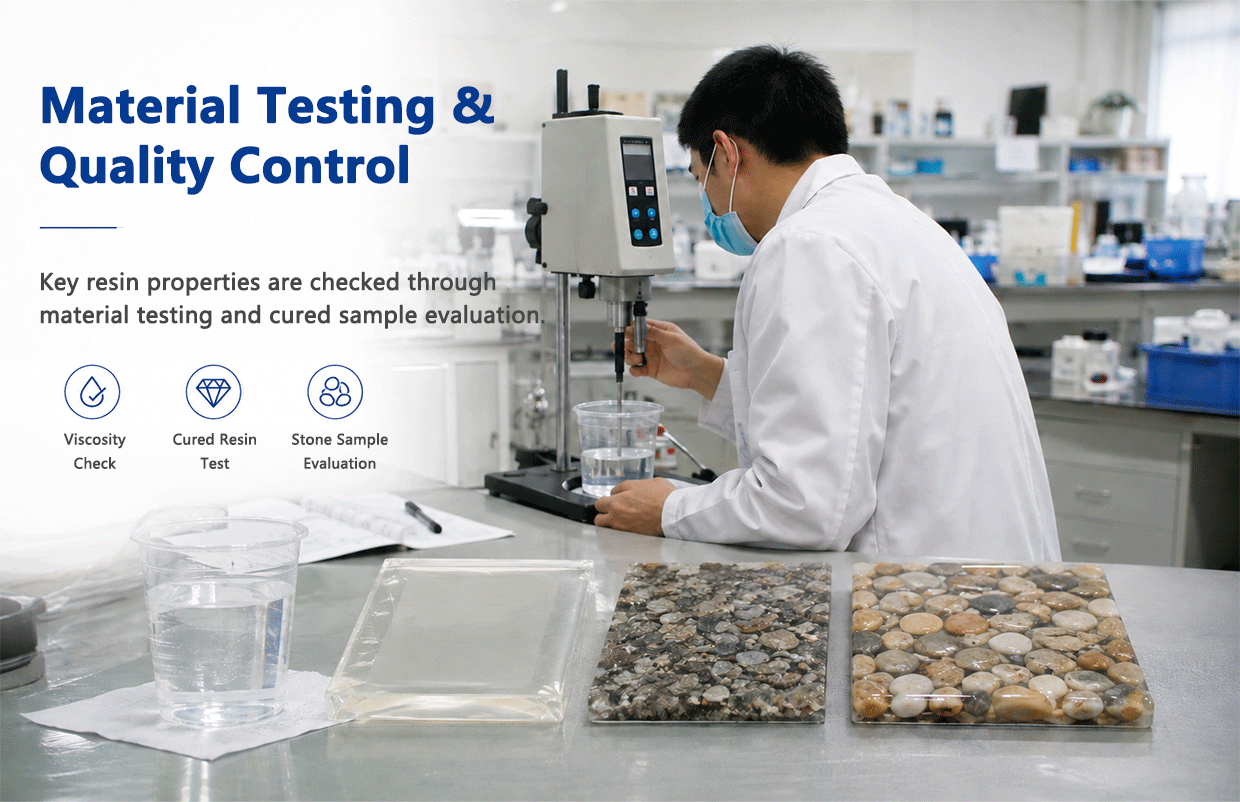
At 25°C, 204A has a typical viscosity of 800 ± 250 mPa·s, while 204B is specified at a maximum of 300 mPa·s. After mixing, the typical viscosity is approximately 400 ± 50 mPa·s.
This flowable mixed consistency helps the resin distribute over gravel, pebbles and crushed stone during blending.
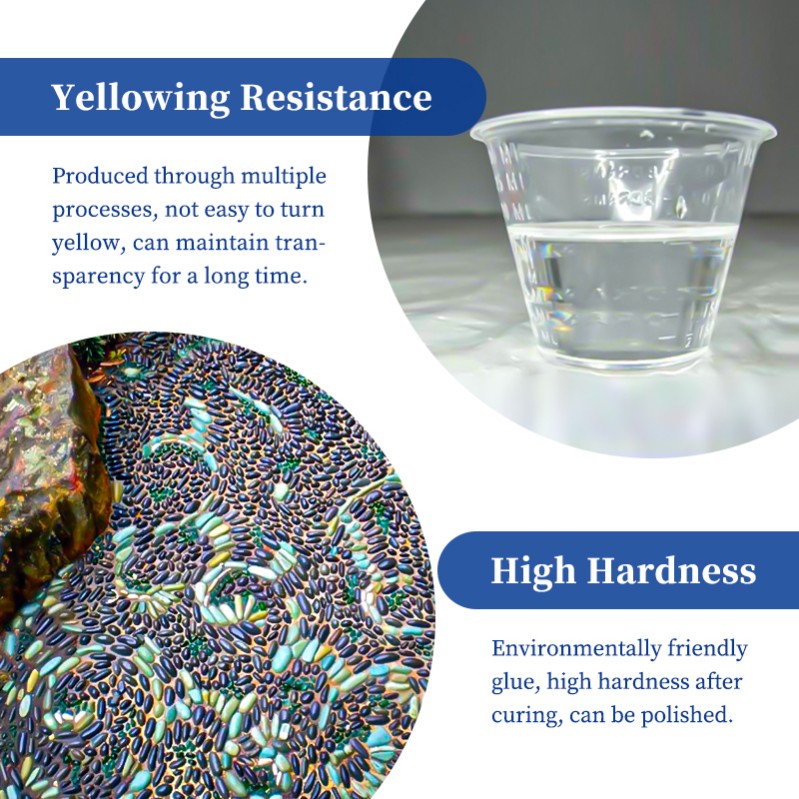
204AB is also characterized by high transparency, good surface gloss and good natural deaeration. These characteristics are useful when the natural appearance of the stone needs to remain visible after curing.
The amount of resin required will depend on the stone. Larger stones and smaller stones have different total surface areas, while rounded pebbles and angular crushed stone also create different spaces between particles.
Using too little resin may result in incomplete stone coverage. Using excessive resin may fill more of the space between the stones and change the intended surface texture.
For this reason, the resin‑to‑stone ratio should be confirmed using the actual stone rather than applying one fixed ratio to every material.
Where Can 204AB Be Used?
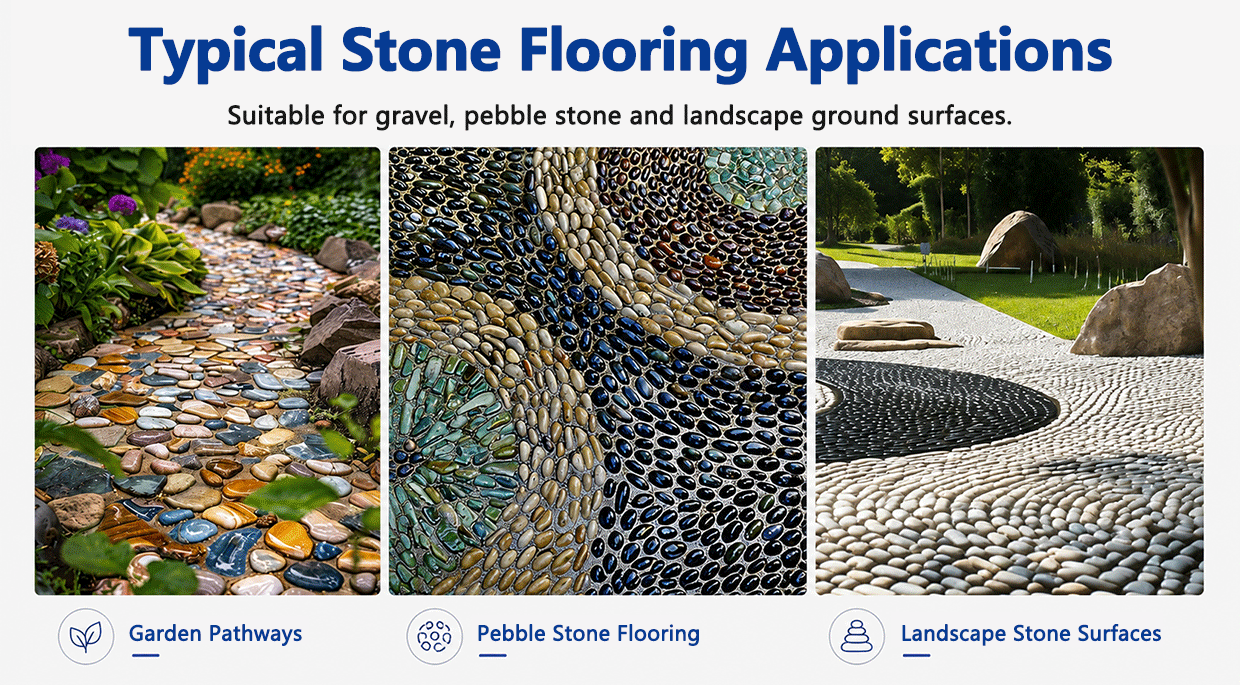
204AB is mainly used for decorative stone ground surfaces where gravel, pebbles or crushed stone remain visible after the resin has cured.
Resin Bound Gravel Flooring
Suitable for decorative gravel flooring where loose stones are bonded together while retaining the natural appearance of the selected gravel.
Garden Pathways
Suitable for garden paths and landscape areas using gravel or decorative stone as the visible walking surface.
Pebble Stone Flooring
Suitable for surfaces made with rounded pebbles where the natural shape and color variation of the stone are part of the finished appearance.
Landscape Walkways
Suitable for decorative pedestrian areas and landscape surfaces using gravel, crushed stone or similar stone materials.
Decorative Stone Ground Surfaces
Different stone colors, shapes and combinations can be evaluated to create different natural‑looking ground textures.
The final performance of each surface depends on the complete combination of resin, stone, substrate and application conditions. For a new stone or new application, a representative test panel is recommended before larger‑scale use.
Technical Data
The following technical data can be used as a reference when evaluating 204AB for gravel and stone flooring applications.
| Property | 204A | 204B |
|---|---|---|
| Appearance | Colorless and Transparent | Colorless and Transparent |
| Viscosity (mPa·s) | 800±250 | 300max |
| Density (g/cm³) | 1.07±0.05 | 0.95±0.03 |
| Mixing Ratio (By Weight) | A:B=2:1 | |
| (By Bolume) | A:B=1.8:1 | |
| Properties After Curing | ||
| State | Fluid | |
| Viscosity (mPa·s) | 400 ± 50 mPa·s | |
| Brookfield DV2TRV Test Method | 25°C | |
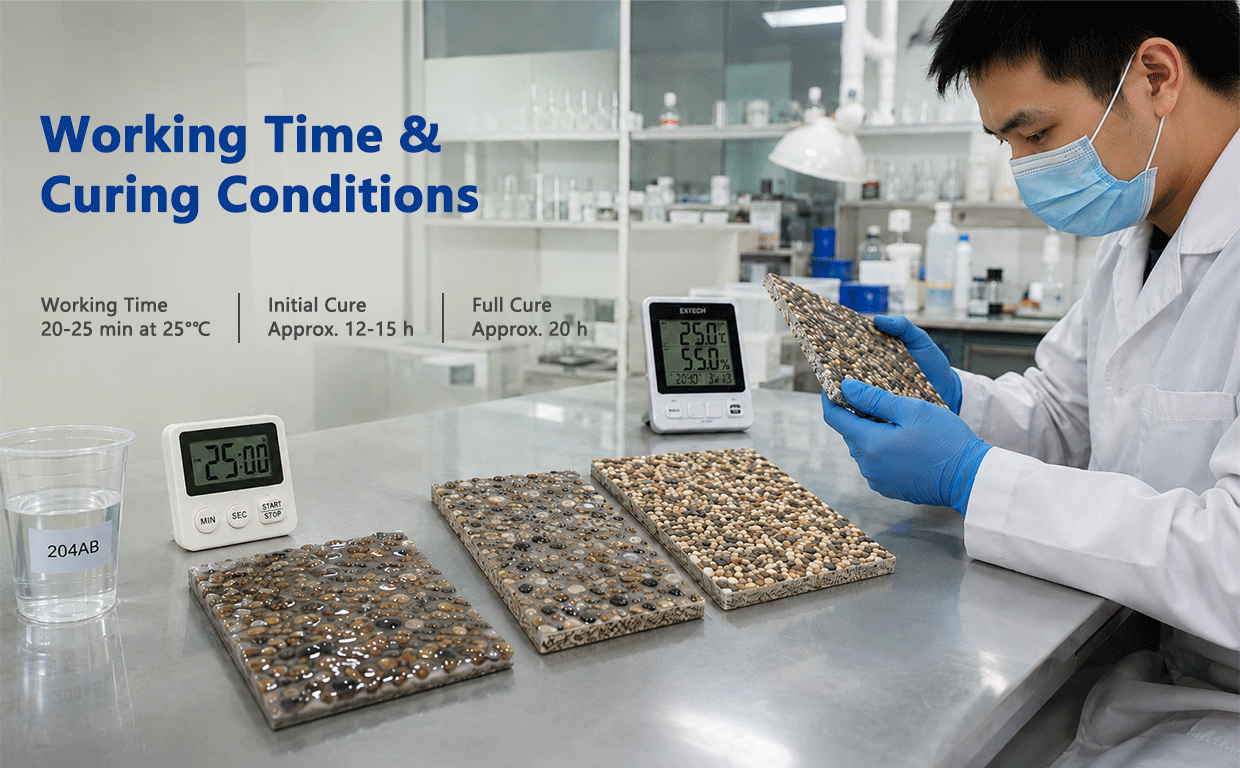
| Working Time (100 g, 25°C) | 20–25 min | |
| Usage | 280–350 g/m² (Depending on the Substrate) | |
| Initial Cure (h) | Approx. 12–15 Hours at Room Temperature | |
| Full Cure (h) | 20 Hours at Room Temperature | |
| Shore Hardness | Shore D 75 | |
| Flexural Modulus | 5155 MPa | |
| Heat Deflection Temperature | 50°C | |
| Water Absorption | <0.1% | |
| Compressive Strength | 8.4 kg/mm² | |
The values above are typical laboratory data and should be used as technical references rather than guaranteed performance values for every finished gravel or stone floor.
Actual performance can vary according to stone type, resin dosage, substrate, temperature, humidity and application conditions.
The listed 280–350 g/m² consumption is a substrate‑related reference value and is not a fixed resin‑to‑stone mixing ratio.
How to Mix and Use 204AB
Correct measuring and mixing are important for consistent curing and processing.
Step 1 — Prepare the Stone
Prepare the gravel, pebbles or crushed stone before mixing. The stone should be reasonably clean and suitable for resin bonding.
Step 2 — Measure A and B
Measure 204A resin and 204B hardener accurately at:
A = 2:1 by Weight
Use a clean and dry mixing container.
Step 3 — Mix Thoroughly
Mix the two components thoroughly until the resin is uniform. Pay attention to material along the sides and bottom of the container.
Step 4 — Allow 3–5 Minutes Before Use
After mixing, allow the prepared resin to stand for approximately 3–5 minutes before application.
Step 5 — Mix with the Stone
Add the prepared resin to the selected gravel, pebbles or crushed stone according to the working formulation.
Mix until the resin is distributed consistently over the stone surfaces.
Step 6 — Place Within the Working Time
Place and finish the resin‑coated stone within the available working time.
At 25°C with a 100 g test quantity, the typical working time is approximately 20–25 minutes.
For a new stone type, small‑scale testing is recommended before establishing the final resin dosage.
Working Time, Curing & Environmental Conditions
Temperature and humidity can affect the viscosity, working time, curing behavior and final surface appearance of 204AB.
At 25°C, the typical working time for a 100 g mixed quantity is approximately 20–25 minutes.
Initial curing takes approximately 12–15 hours at room temperature, while full curing is approximately 20 hours.
When the ambient temperature falls below 15°C, Component A can become thicker. Under these conditions, the product instructions recommend warming Component A to approximately 30°C before mixing to improve handling.
Humidity should also be considered during curing. When relative humidity exceeds approximately 85%, the cured surface may absorb moisture from the air and develop a whitish haze.
Under very high‑humidity conditions, room‑temperature curing is not recommended, and heat‑assisted curing should be considered.
For outdoor applications such as garden pathways and landscape ground surfaces, resin temperature, stone condition, substrate condition and local temperature and humidity should be checked before application.
Packaging, Storage & Material Support
204AB should be stored under appropriate conditions before use.
The recommended storage temperature is 15°C–25°C. The product should not be stored below 10°C or above 50°C, and it should be protected from freezing.
The stated shelf life is six months in the original unopened packaging under recommended storage conditions.
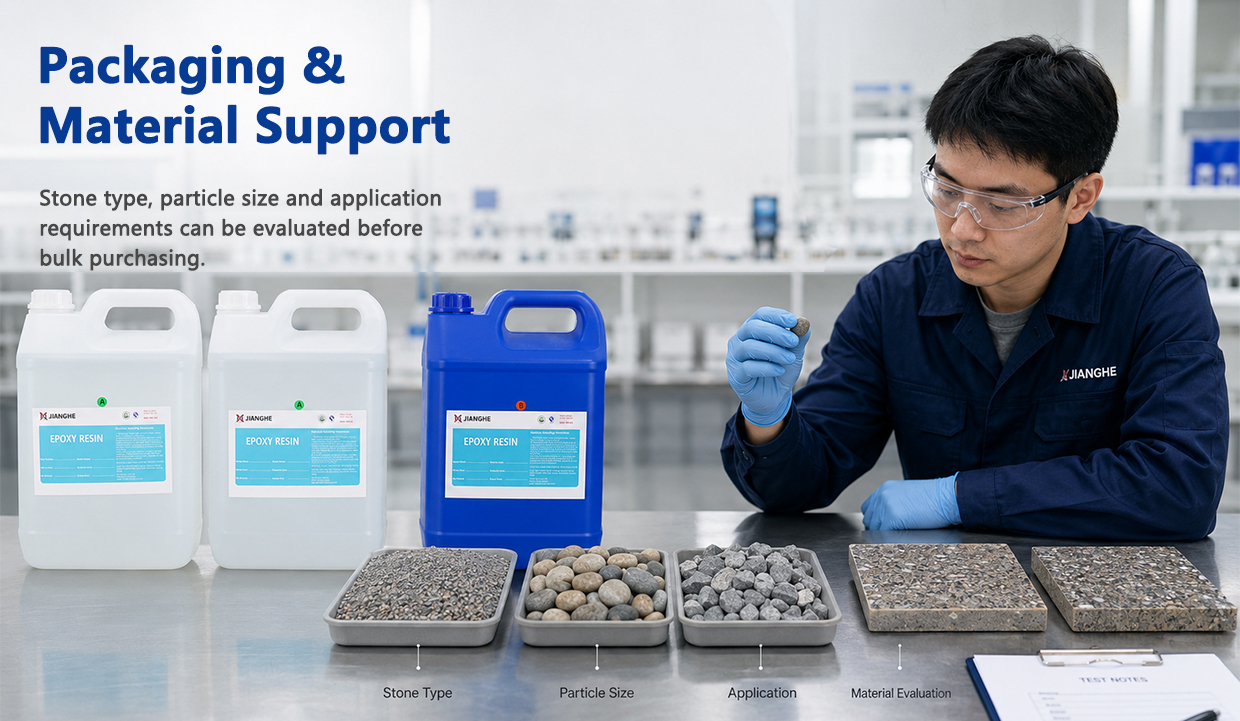
The current technical documentation lists: 204A Resin: 5 kg/container, 204B Hardener: 5 kg/container.
Containers should be closed after use. The hardener is moisture‑sensitive, so unnecessary exposure to humid air should be avoided during storage and handling.
For customers working with different gravel, pebbles or crushed stone, material matching can be evaluated according to the actual stone.
When requesting a recommendation, customers can provide:
This information helps evaluate whether 204AB is suitable and whether sample testing should be carried out before bulk purchasing.
FAQ
Q1. What type of stone is 204AB suitable for?
204AB is primarily positioned for gravel, pebbles, crushed stone and other relatively coarse mineral aggregates. Because different aggregates vary in particle size, shape and porosity, testing with the actual stone is recommended before larger‑scale use.
Q2. Can 204AB be used with fine sand?
204AB may be evaluated with different mineral materials, but its main positioning is larger visible stone and gravel applications. For fine decorative sand or fine quartz flooring systems, a dedicated color sand flooring resin may be more appropriate.
Q3. What is the mixing ratio?
The standard mixing ratio is A = 2:1 by weight or approximately 1.8:1 by volume.
Q4. How long is the working time?
At 25°C with a 100 g test quantity, the typical working time is approximately 20–25 minutes.
Q5. How much resin should be mixed with gravel?
There is no single fixed resin‑to‑gravel ratio suitable for every aggregate. Stone size, particle shape, porosity, surface area and required surface texture can all affect resin consumption. Testing with the actual aggregate is recommended to establish the working formulation.
Q6. Is the resin transparent after curing?
204A and 204B are both colorless transparent materials, and the product is characterized by high transparency and good surface gloss.
Q7. Can it be used outdoors?
204AB has documented good UV resistance and is used for suitable gravel and landscape ground applications. Actual outdoor performance should still be evaluated according to the complete stone system, substrate and service environment.