 EN
EN

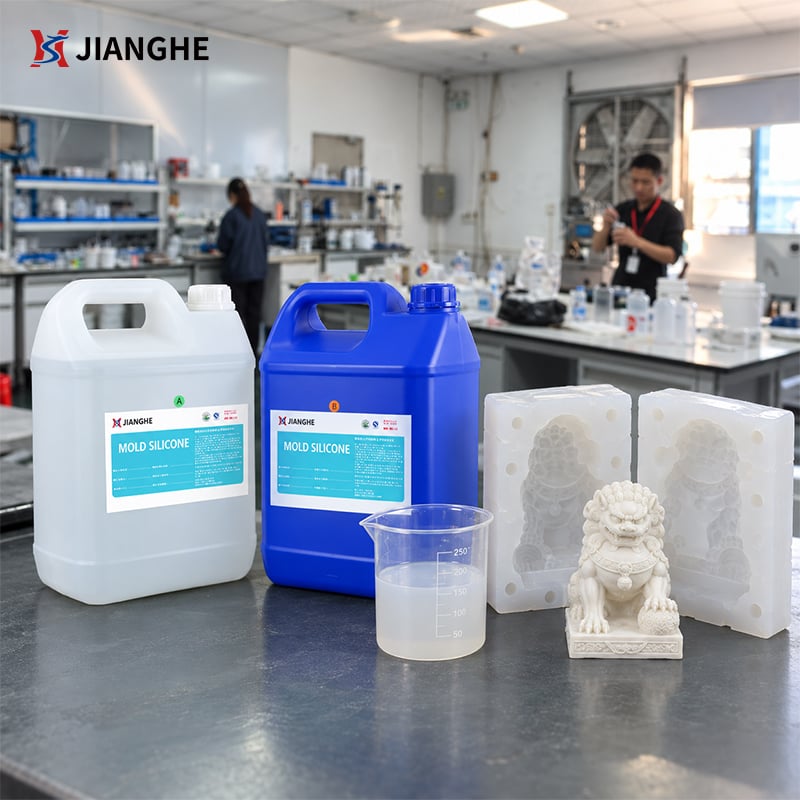
Platinum Addition Cure Silicone Rubber for Mold Making
Model: 717AB-F Available Hardness: Shore A 0–45
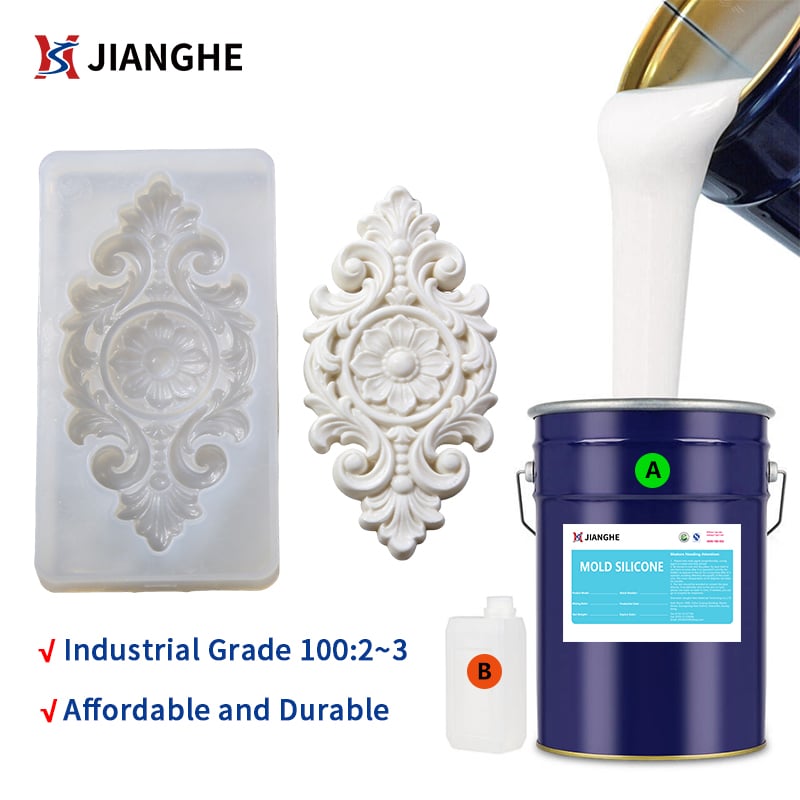
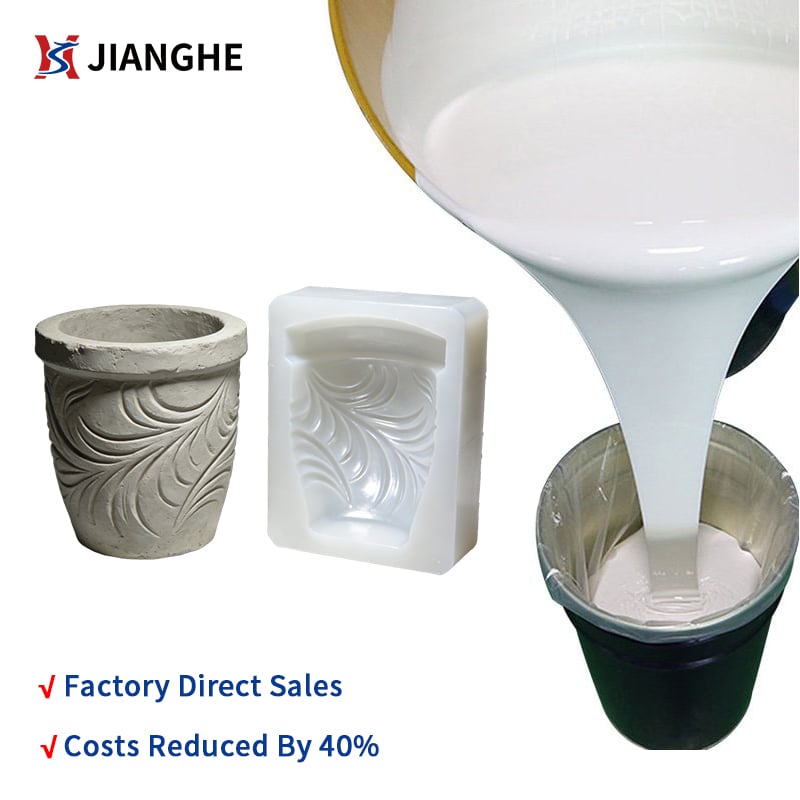
717AB-F is a two-component platinum addition cure liquid silicone rubber series developed for professional mold making. With grades ranging from very soft to firm, the series allows manufacturers to balance flexibility, demolding behavior and mold support according to mold geometry, master design and casting requirements rather than relying on one hardness for every application.
Key Features:
-
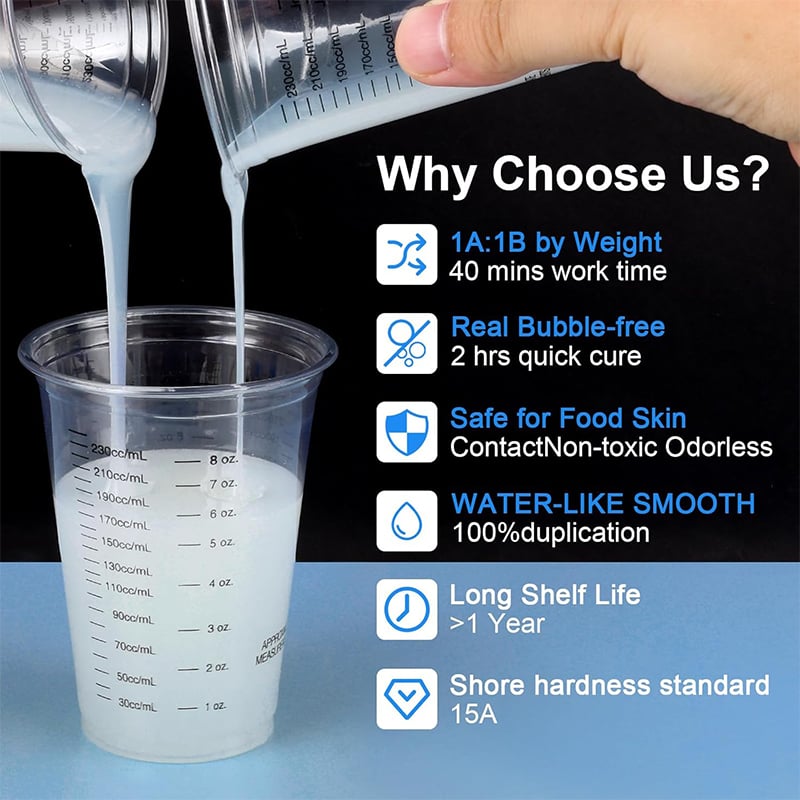
Low Shrinkage for Accurate Replication.
-
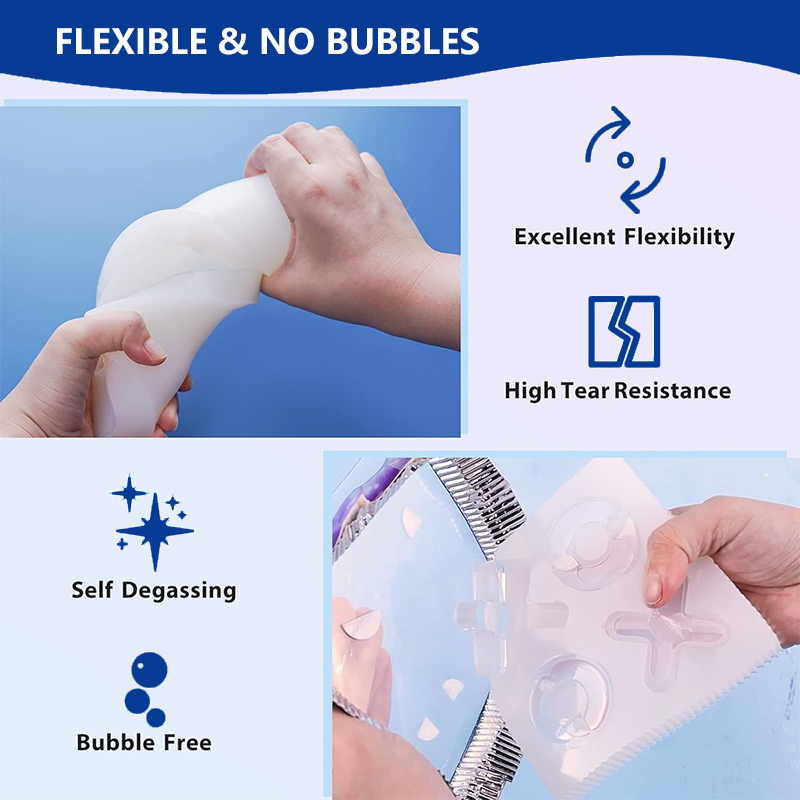
High Tear Strength & Flexible Demolding.
-
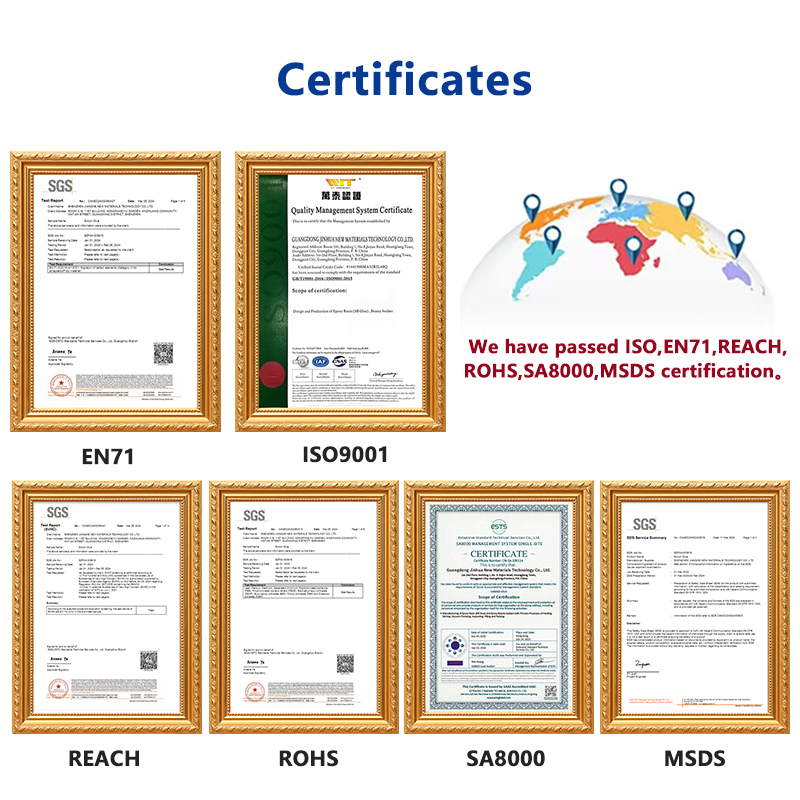
FDA-Compliant Food-Contact Grade Available.
-
Room-Temperature or Heat-Assisted Curing.
Typical Applications:
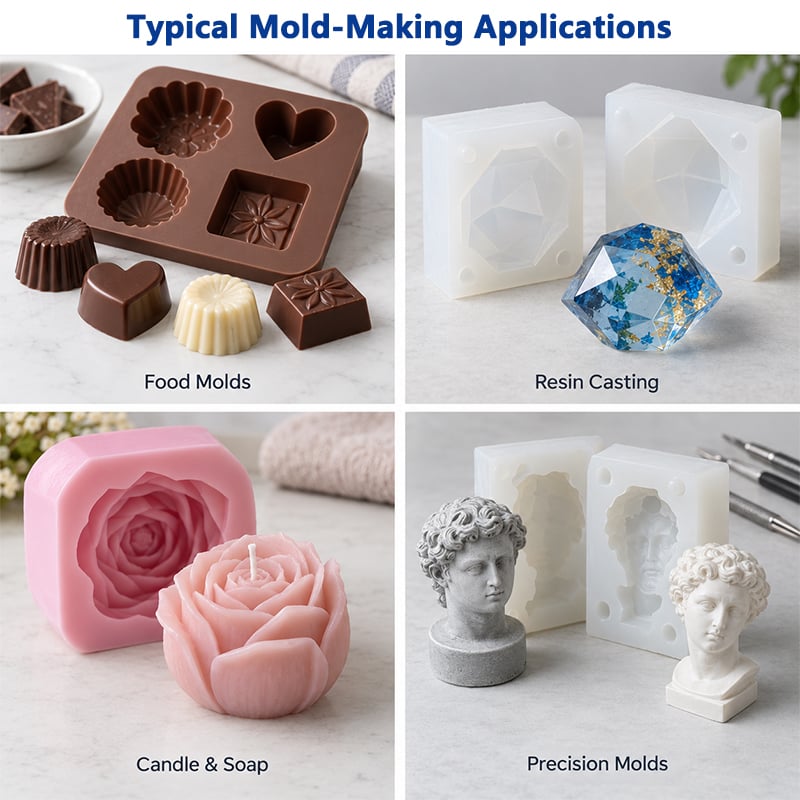
Food Molds · Resin Casting Molds · Candle & Soap Molds · Precision Replication

- Overview
- Recommended Products
- Sample Evaluation Before Bulk Orders
- Grade Matching for Different Mold Projects
- Bulk & Repeat Order Supply
- OEM & Private Label Packaging
- Technical Support for New Applications
Built for Professional Mold Making
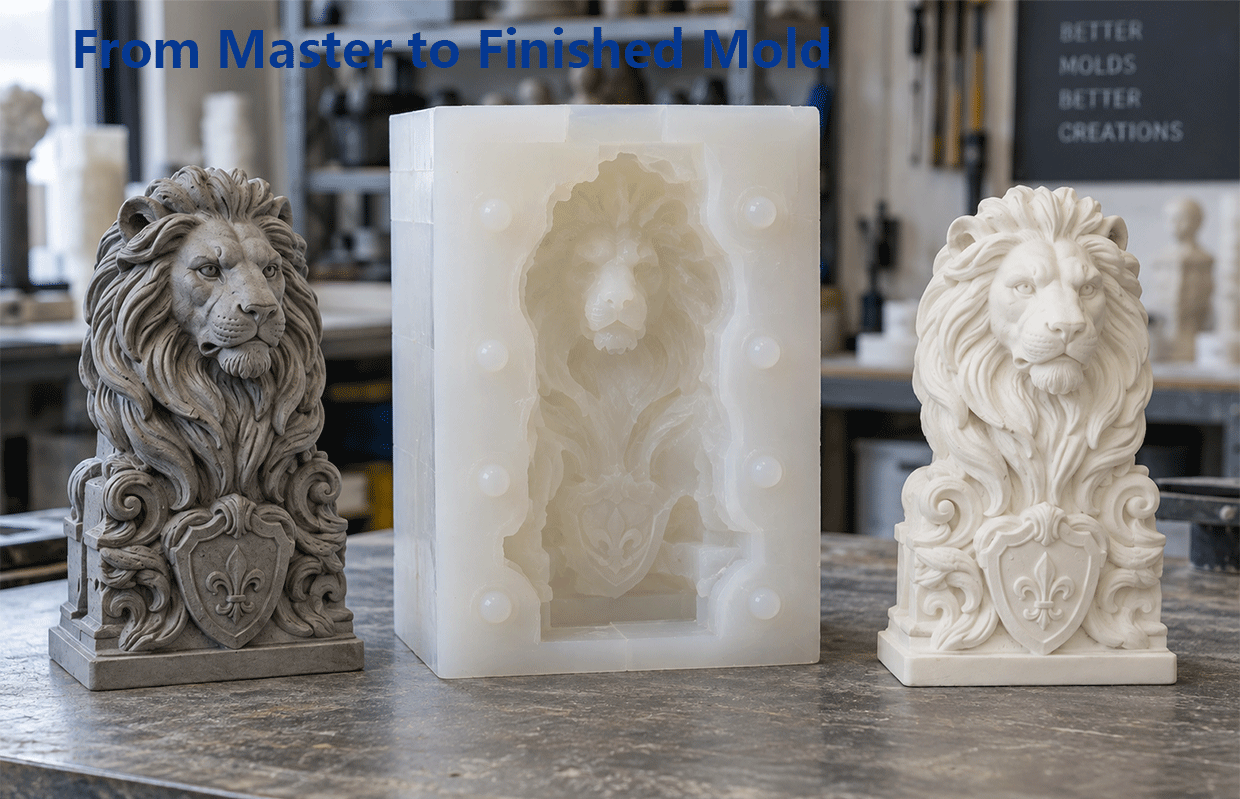
A professional mold-making silicone must do more than simply cure into a flexible material. It needs to flow around the master, reproduce the required surface detail, release complex shapes without excessive stress and still provide enough support to maintain the mold geometry dur
ing casting.
The 717AB-F platinum addition cure silicone series is designed around these different mold-making requirements. Multiple Shore A hardness grades give manufacturers a practical way to select the balance between flexibility and mold support instead of forcing one grade into every mold design.
For molds with deep undercuts or difficult release areas, a softer silicone may provide the flexibility needed for demolding. For larger or more self-supporting molds, medium or firmer grades can provide better shape retention. Mold wall thickness, support-shell design, master geometry and the material to be cast should all be considered together.
For purchasing teams, the main value of the series is therefore not simply the number of grades available. It is the ability to match the silicone to the actual mold structure and production process.
Why Choose Platinum Addition Cure Silicone?
Platinum addition cure silicone is selected for mold-making applications where dimensional control, flexible release and stable processing are important. The material is especially useful when the mold must reproduce detailed geometry while still being flexible enough to release the finished casting or master without unnecessary damage.
Accurate Mold Replication
Low shrinkage helps the finished silicone mold remain closer to the geometry of the original master. This is especially important for mold projects where dimensional consistency, surface detail and repeatability are more important than simply creating a flexible mold.
Flexible Release from Complex Geometry
A cured silicone mold must be able to deform around undercuts, narrow sections and detailed shapes during demolding. Different hardness grades allow manufacturers to balance release flexibility with the structural support required by the mold.
Resistance to Demolding Stress
Molds are repeatedly flexed, stretched and turned during use. Good tensile and tear performance are therefore important around thin sections, sharp details and narrow connections where damage is more likely to begin. Firmer grades within the 717AB-F series also provide higher tensile and tear values for applications requiring additional support.
Flexible Curing Options
The system can be cured at room temperature and can also be processed with heat-assisted curing where the formulation and production conditions allow. This gives manufacturers greater flexibility when matching material processing to available equipment and production schedules.
Choose the Right Flexibility for Your Mold
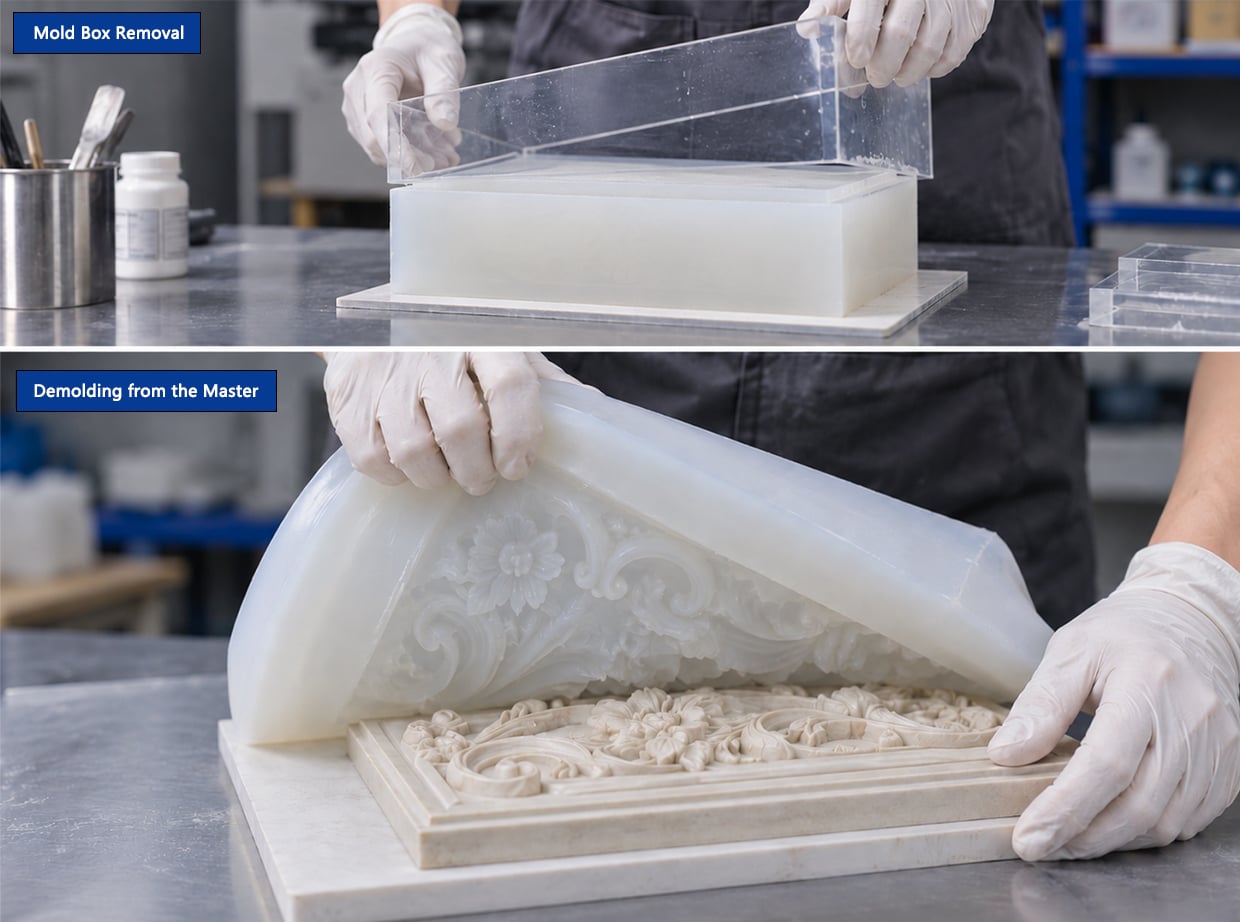
The best mold-making silicone is not automatically the softest or the hardest grade. The correct choice depends on how the finished mold needs to behave during casting and demolding.
Very soft and soft grades provide greater flexibility and can be useful where the mold needs to deform significantly during release. Medium grades offer a more balanced relationship between flexibility and shape retention, while firmer grades provide greater structural support for molds that need to hold their geometry more strongly.
The design of the mold also changes the selection. A soft silicone used with a rigid support shell may perform very differently from the same grade used as a self-supporting mold. Wall thickness, mold size and casting weight should therefore be considered together with Shore hardness.
The goal is not to select the highest or lowest hardness available, but to choose a grade that supports the actual mold geometry and production method.
Selection Overview
| Selection Direction | Hardness Range | Typical Selection Focus |
| Very Soft | Shore A 0–5 | Maximum flexibility, demanding undercuts |
| Soft | Shore A 10–15 | Detailed molds and easier release |
| Medium Soft | Shore A 20–25 | General mold making |
| Medium | Shore A 30 | Greater shape retention |
| Firm | Shore A 40–45 | Higher mold support |
These ranges are selection directions rather than fixed application rules. Final selection should be confirmed with the actual master, mold structure and casting process.
Where This Silicone Is Used
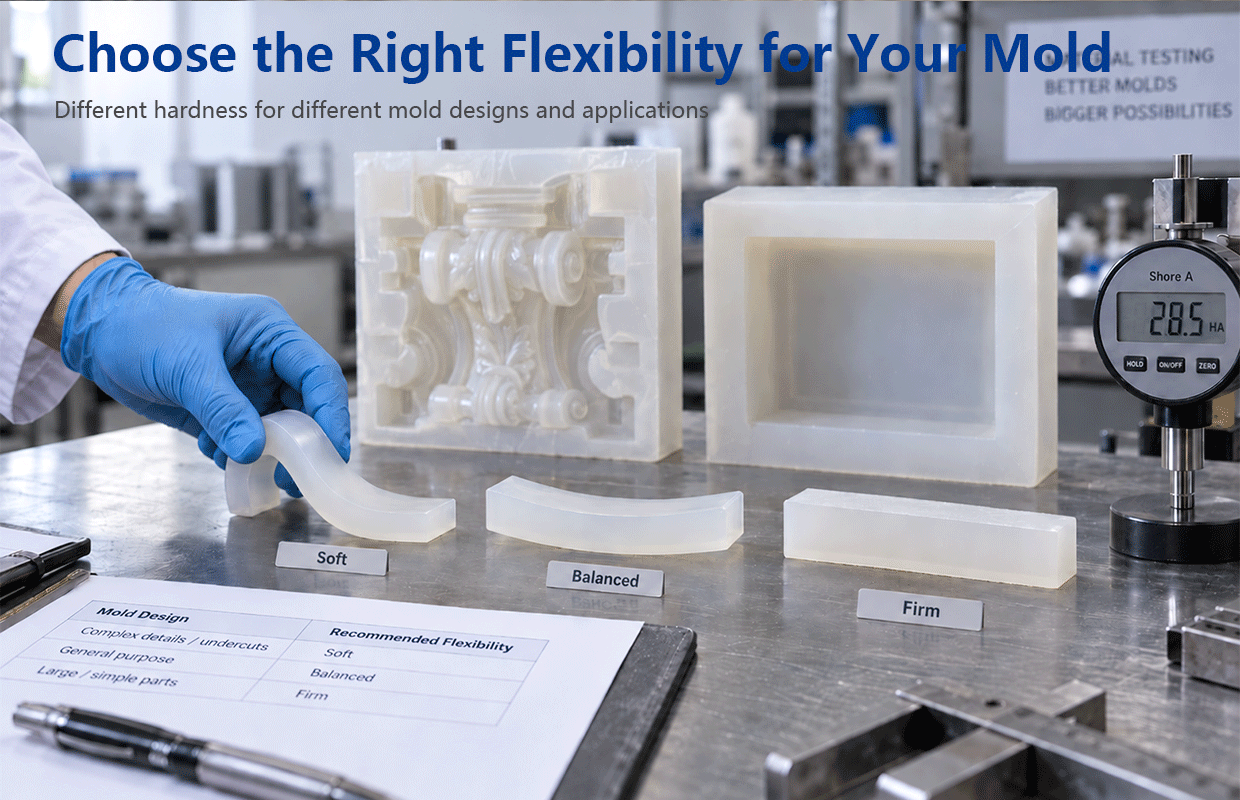
Different mold applications place different demands on silicone. Food molds may focus more on cavity structure, flexible release and compliance requirements. Resin casting molds need to balance demolding and mold support. Candle and soap molds often contain deep cavities and undercuts. Precision molds place greater emphasis on material flow, master compatibility and mold stability.
The 717AB-F series provides multiple hardness options so the material can be selected according to the mold rather than treating every application in the same way.
Food Mold Making
For food mold structures where flexibility, cavity support and applicable food-contact documentation need to be considered together.
Resin Casting Molds
For compatible resin casting processes where surface reproduction, flexible release and mold stability need to be balanced.
Candle & Soap Molds
For decorative molds with deep cavities, detailed shapes and undercuts that place greater demand on demolding flexibility.
Precision Mold Making
For detailed masters, prototype replication and precision molds where material flow, mold support and master compatibility require closer control.
How to Choose the Right Grade
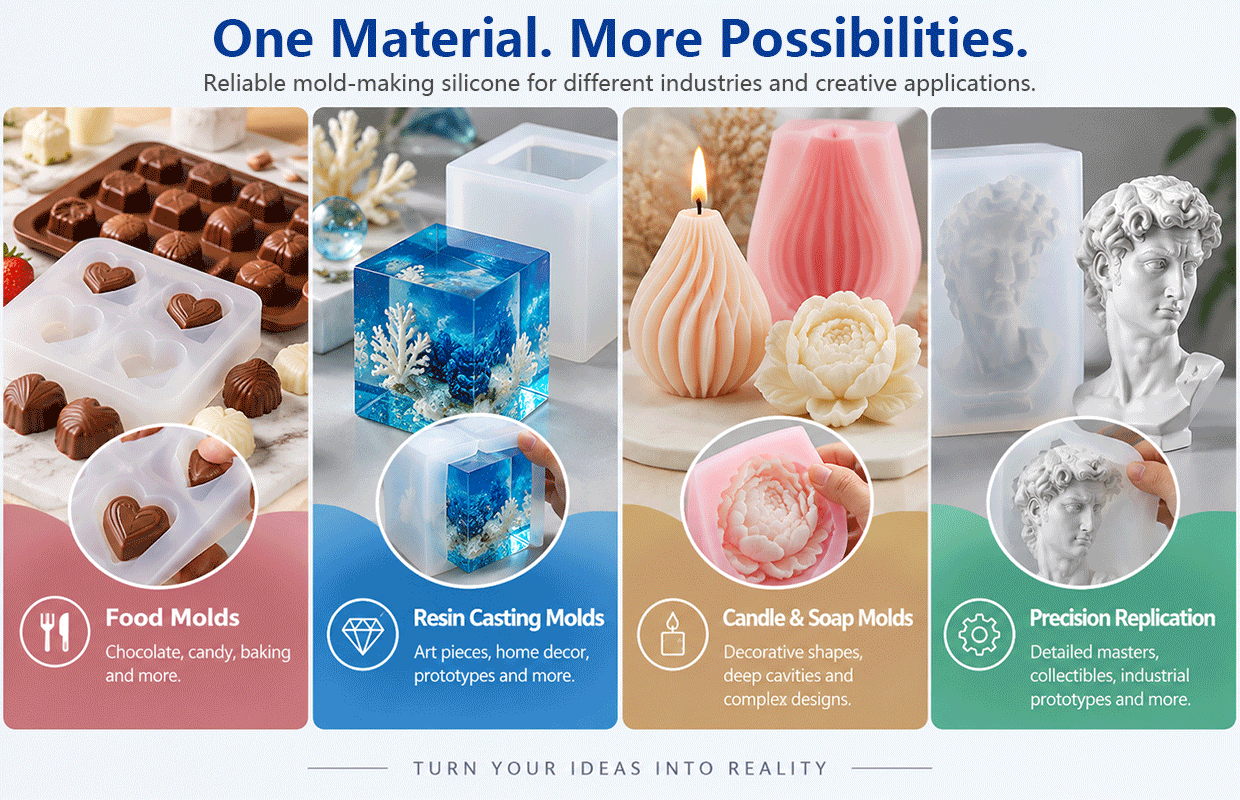
Choosing the right platinum silicone grade begins with the mold, not the technical data table. Before comparing hardness values, consider how much the mold needs to flex, how much support it needs and how complex the master geometry is.
If the master contains deep undercuts, narrow release areas or fragile features, the silicone must deform during removal without placing excessive stress on the master or casting. Softer grades may therefore be a better starting point.
If the mold is large, tall or expected to support heavier casting material, shape retention becomes more important. Medium or firmer grades may provide a more suitable balance, especially where the mold will not use a rigid support shell.
For fine or narrow geometry, processing viscosity also matters. Lower-viscosity grades can move more easily around detailed features, while firmer grades with higher viscosity require more attention to mixing, trapped air and pouring technique.
The master material must also be considered. Platinum cure silicone can be sensitive to certain contacting materials, so unfamiliar masters, coatings, clays, adhesives and release agents should be tested before a full production mold is poured.
Quick Selection Guide
Consider a softer grade when:
the mold has deep undercuts
strong flexing is required during demolding
a rigid support shell will be used
Consider a firmer grade when:
the mold must support itself
shape retention is a priority
the structure is large or relatively simple
Technical Data
General Processing Data
Property |
Specification |
Material Type |
Platinum Addition Cure Liquid Silicone Rubber |
Component Appearance |
Translucent A / Translucent B |
Mixing Ratio |
1:1 |
Available Hardness |
Shore A 0–45 |
Working Time |
Approx. 0.5 h |
Reference Cure |
Approx. 4 h at Room Temperature |
Shelf Life |
12 Months |
Storage |
Below 35°C / 95°F |
Packaging |
According to Requirements |
Technical Note
Typical technical values are provided for reference under the stated test conditions. Actual processing behavior and curing may vary with temperature, batch size, mold geometry, material thickness and production conditions. Review the grade-specific TDS and complete application testing before bulk production.
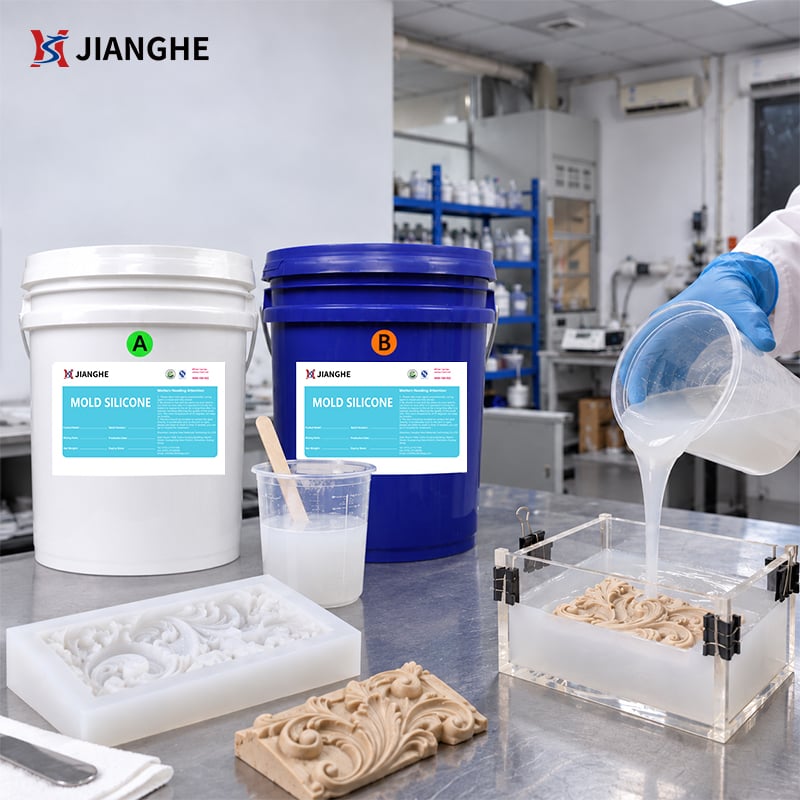
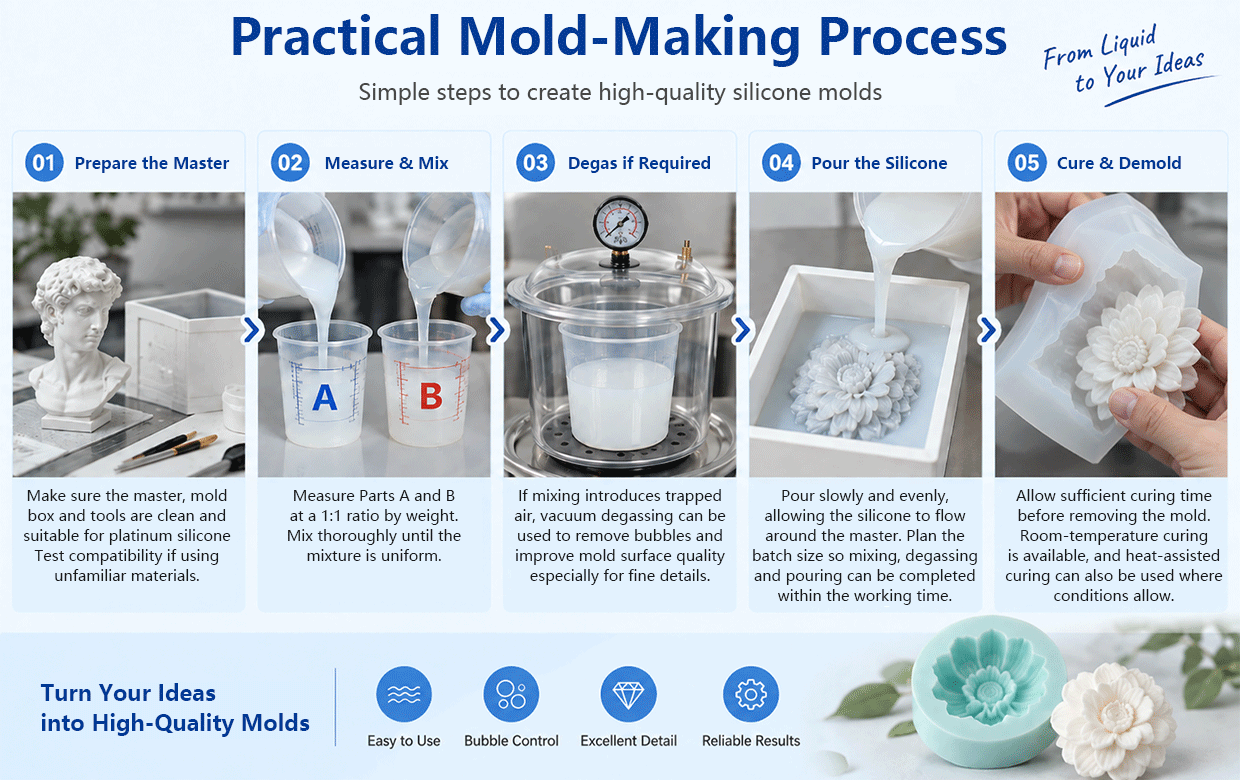
Practical Mold-Making Process
01 Prepare the Master
Make sure the master, mold box, tools and contacting materials are clean and suitable for platinum cure silicone. When the master material or release agent is unfamiliar, complete a small compatibility test before preparing the full mold.
02 Measure and Mix
Measure Parts A and B at the specified 1:1 ratio and mix thoroughly until uniform. The objective is complete mixing while avoiding unnecessary air introduction.
03 Degas if Needed
If mixing introduces trapped air, vacuum degassing can be used where bubbles could affect the mold surface or fine details.
04 Pour the Silicone
Pour in a controlled manner and allow the liquid silicone to flow around the master. Plan the batch size so mixing, degassing and pouring can be completed within the available working time.
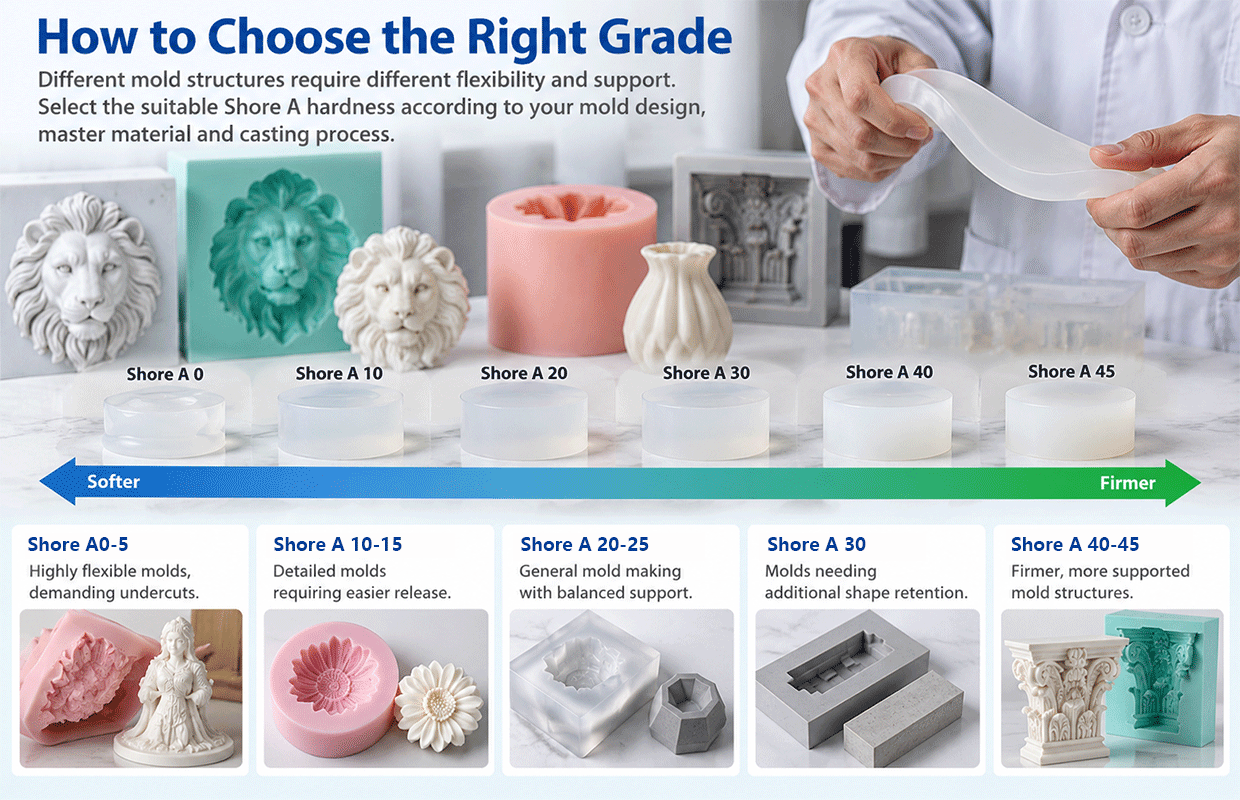
05 Cure and Demold
Allow sufficient curing before removing the finished silicone mold. Room-temperature curing is available, while heat-assisted curing can be used where the product grade and production conditions allow.
Compatibility & Application Testing
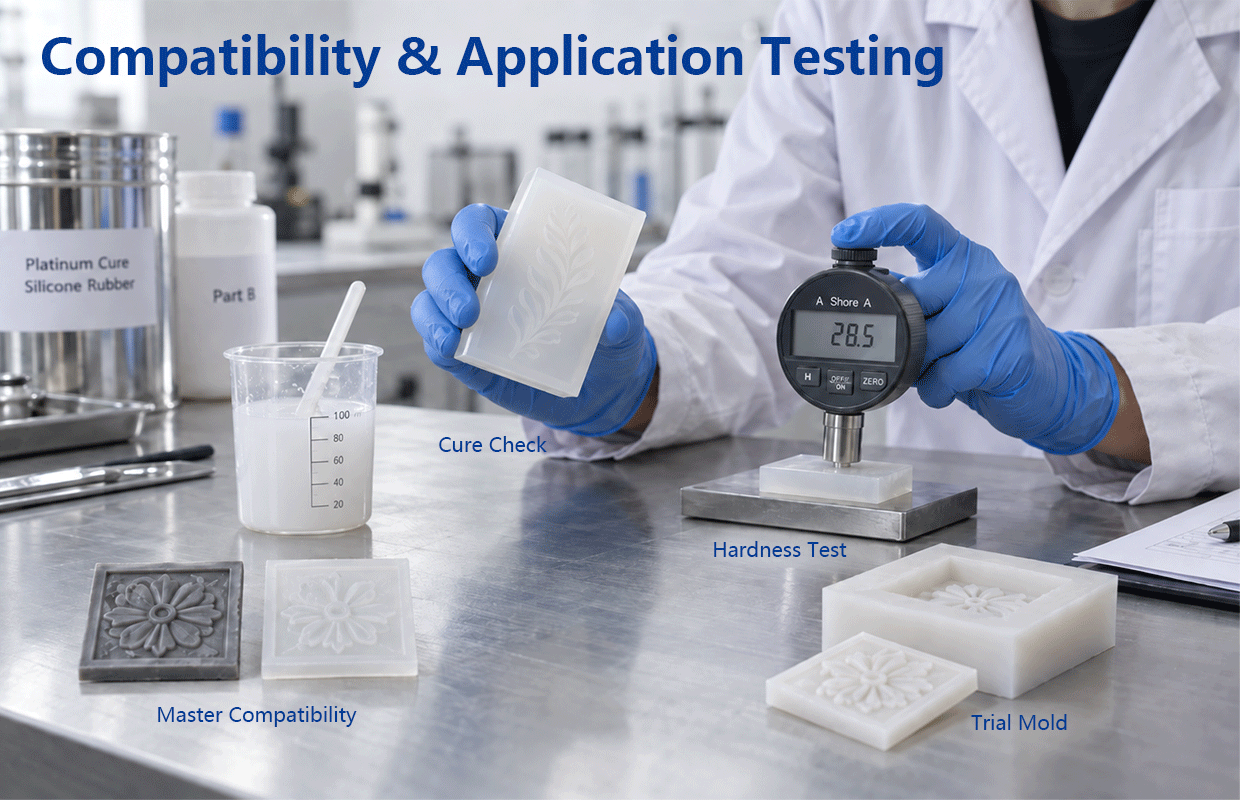
A silicone may appear suitable on a technical data sheet but still behave differently when it contacts the actual master, coating, release agent or casting material. Application testing is therefore especially important when a customer introduces a new mold design or production material.
Platinum cure systems can experience cure inhibition when they contact certain incompatible substances. A small compatibility test before full production can help confirm that the silicone cures correctly against the master and any other materials used in the process.
Application evaluation can also help confirm whether the selected hardness provides the required balance between flexibility and support. A representative test mold can be used to observe flow, trapped air, curing behavior and demolding before the material is approved for larger production.
For purchasing teams, this reduces the risk of selecting a grade based only on a hardness number or laboratory table.
Supply, OEM & Technical Support
From Grade Selection to Repeat Supply
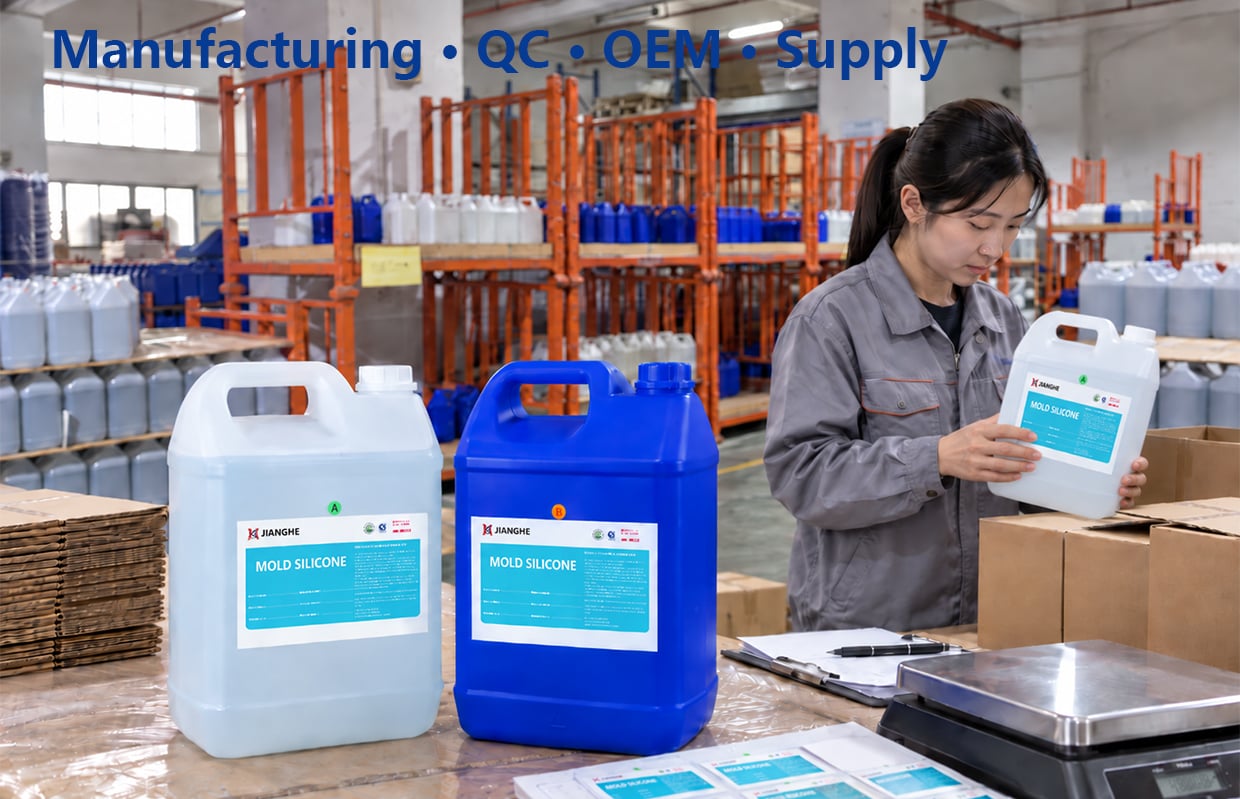
B2B buyers need more than a technical data sheet. The selected grade has to be qualified, supplied in the required packaging and kept aligned with the approved specification when purchasing moves from samples to regular production.
The 717AB-F series allows customers to evaluate multiple hardness grades within the same product family before confirming a production material. Sample testing can be used to compare mold flexibility, support and processing behavior under actual conditions.
For recurring purchasing programs, model identification, approved samples and technical requirements should remain consistent with future bulk orders. This is especially important when several hardness grades are being used for different mold projects.
OEM and private-label support is available for qualified projects, including packaging and label customization. Customers can also provide mold geometry, target hardness, master material and application requirements for grade-selection discussion before ordering.
Support Points
FAQ
Q1: What is the main advantage of platinum addition cure silicone for mold making?
Platinum addition cure silicone is often selected where mold flexibility, dimensional control and stable cured performance are important. The suitable grade still depends on the mold geometry, required support and production process.
Q2: How do I choose between a softer and a firmer silicone?
Softer grades provide more flexibility for undercuts and difficult release areas, while firmer grades provide greater structural support and shape retention. Mold size, wall thickness and support-shell design should also be considered.
Q3: Is the softest grade always best for complicated molds?
No. A very soft mold may release complex geometry more easily, but it also provides less self-support. The best choice depends on both the release requirement and how the mold will be supported during casting.
Q4: Does viscosity matter when choosing a grade?
Yes. Viscosity affects how easily the liquid silicone flows around narrow features and complex geometry. Firmer grades in the 717AB-F family can also have higher viscosity, so flow and air removal should be considered together with hardness.
Q5: Do I need vacuum degassing?
It depends on the mixing method and required mold quality. If trapped air could affect detailed surfaces or create defects, vacuum degassing is recommended before pouring.
Q6: Can platinum silicone fail to cure against some masters?
Yes. Some contacting materials can interfere with platinum-cure silicone. When using unfamiliar masters, coatings, clays, adhesives or release agents, complete a small compatibility test first.
Q7: Can this series be used for food molds?
Food-contact options are available. The selected grade and supporting FDA documentation should be confirmed according to the intended application and target market before production.
Q8: Can I test a sample before ordering in bulk?
Yes. Sample evaluation is recommended when selecting a new hardness, using an unfamiliar master material or qualifying a new mold process before regular production.