 EN
EN

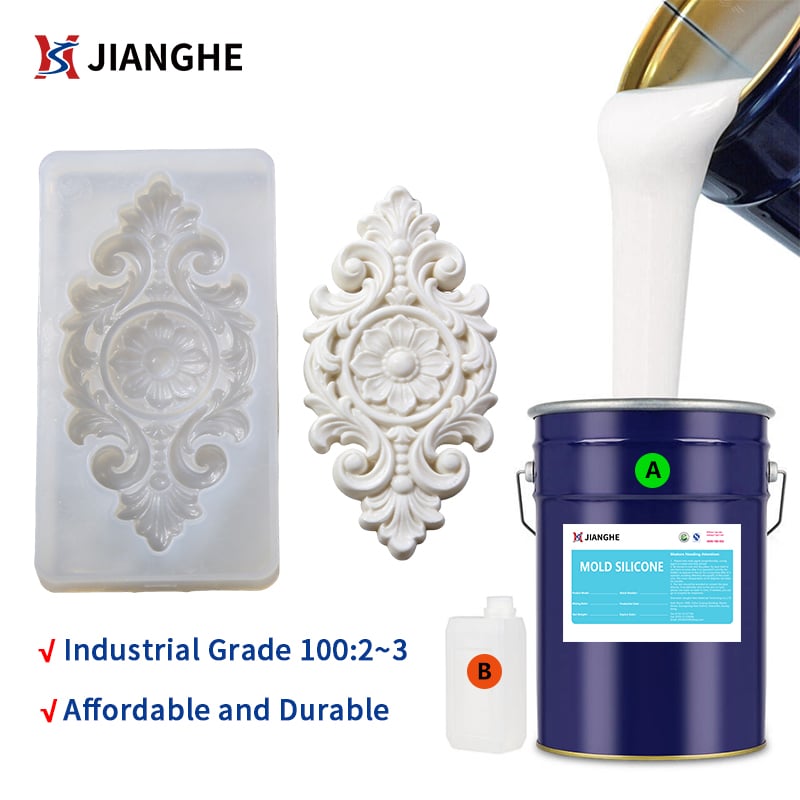

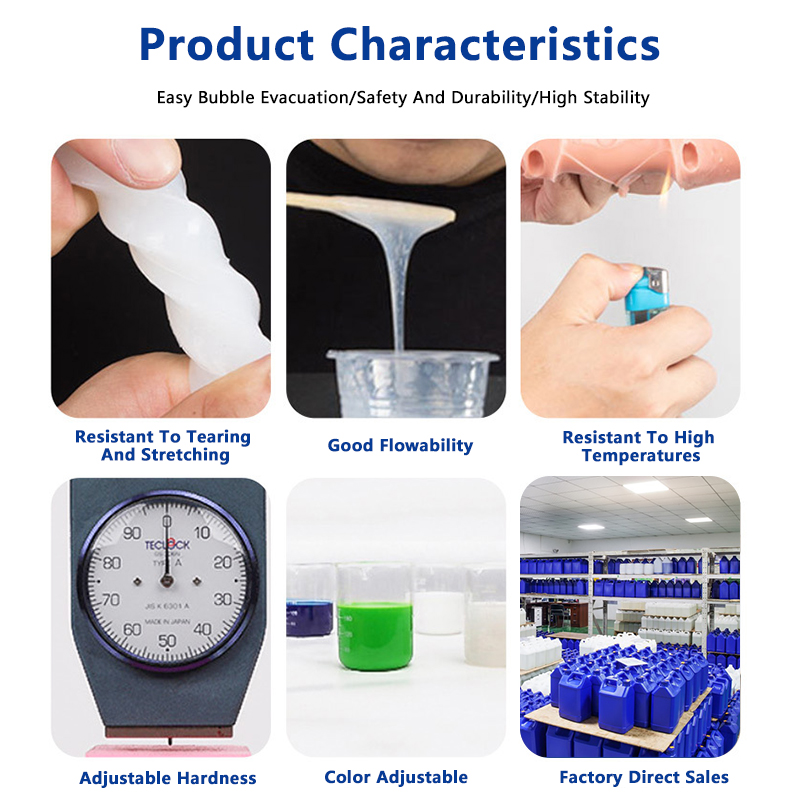
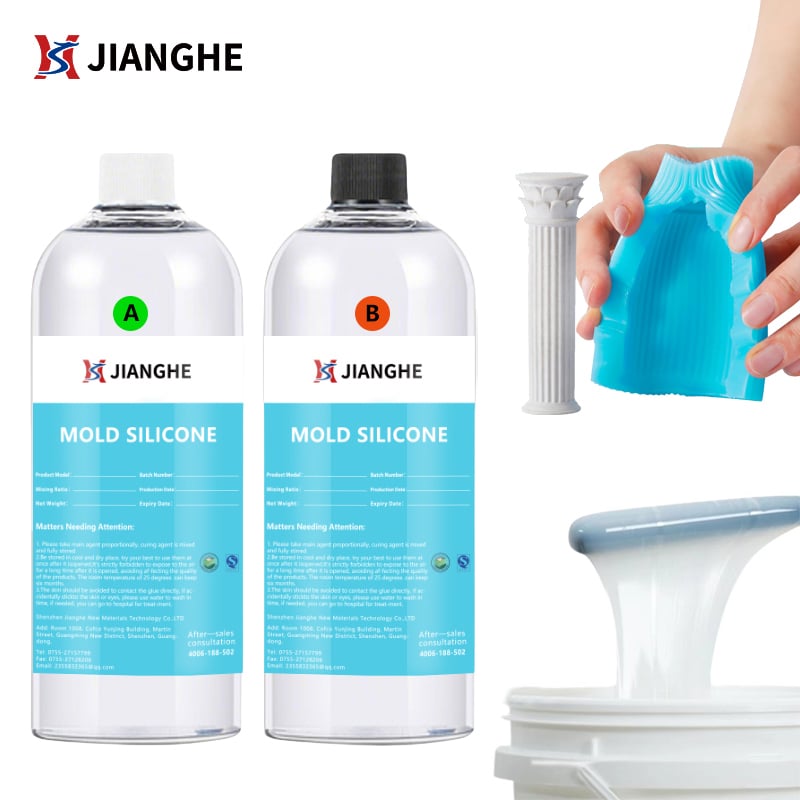
Tin Cured Silicone for GRC Decorations and Architectural Mold
Model: Series 9 Mix Ratio: 100:2 or 100:3
Key Features:
-
GRC-Optimized: Formulated for glass fiber reinforced concrete production.
-
Detail Accuracy: Captures period architectural details faithfully.
-
Firm for Large Molds: 30-40A hardness maintains shape for meters-long elements.
-
Multiple Casts: Suitable for producing dozens of identical elements per mold.
- Construction Site Durable: Can be used on-site for custom fabrication.
Technical Specifications:
| ☆ Shrinkage: ≤0.3% | ☆ Tear Strength: 16-18 kN/m |
| ☆ Cure Time: 3-5 hrs@RT | ☆ Application: Industrial mass production |
Perfect For:
| ☆ GRC Architectural Cornice Molds | ☆ Decorative Column and Capital Production |
| ☆ Window Surround and Door Trim Casting | ☆ Large-Scale Architectural Panel Molds |
| ☆ Period Building Restoration Projects | ☆ Custom Architectural Feature Fabrication |

- Overview
- Recommended Products
- Architectural Detail Fidelity: 0.2% shrinkage and good flow capture the subtle profiles, curves, and ornamentation of period architecture—essential for authentic reproduction of Victorian, Georgian, Art Deco, and other historic styles.
- Large Mold Capability: Harder grades (30-40A) provide the firmness needed for large architectural molds (2m+ cornices, full-scale columns). The material maintains its shape during casting, ensuring consistent dimensions across multiple elements.
- GRC Compatibility: Formulated to resist the specific challenges of glass fiber reinforced concrete, including fiber abrasion and cement chemistry. Molds last through production runs of 20-100+ elements.
- Project Economics: Architectural projects often require dozens of identical elements—cornices for a building, columns for a portico, panels for a facade. Tin-cure economics make producing the necessary molds feasible within construction budgets.
- On-Site Usable: Can be used on construction sites for custom fabrication. Cures in variable conditions, allowing mold making where and when needed.
- Multiple Casts per Mold: With proper care, each mold produces 20-100+ elements—enough for most architectural projects before replacement is needed.
- Transfer to vacuum chamber
- Degas at 29 inHg for 2-4 minutes
- Critical for bubble-free architectural surfaces
Powered by Shenzhen Jianghe New Materials
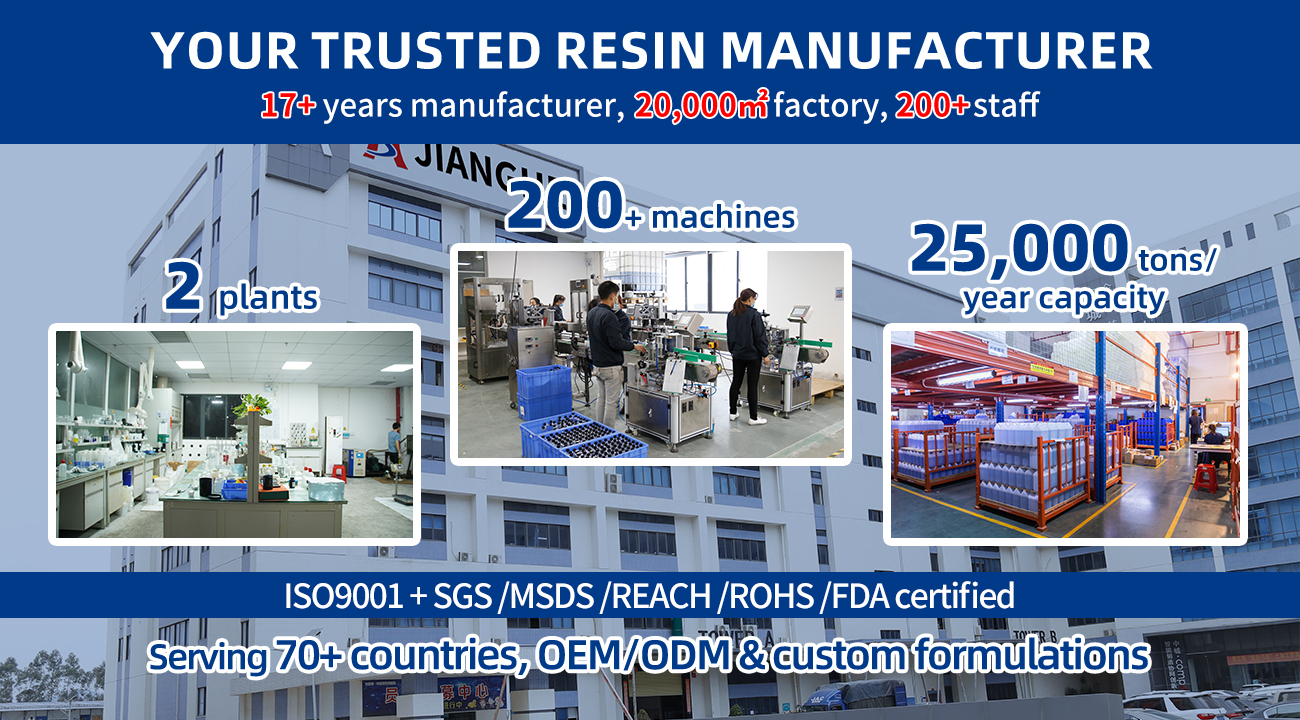
We supply silicone materials to the GRC (Glass Fiber Reinforced Concrete) and architectural element industry worldwide. Our architectural-grade tin-cure formulations help manufacturers produce period reproductions, custom designs, and large-scale architectural elements economically—from cornices and columns to window surrounds and decorative panels.
GRC combines the durability of concrete with the design freedom of reinforced composites, making it ideal for architectural ornamentation—cornices, columns, capitals, window surrounds, decorative panels. But producing these elements requires molds that balance cost, detail, durability, and the ability to handle large formats.
The Architectural Manufacturer's Needs:
| Requirement | How Our T-ARCH Series Delivers |
| Detail for period reproduction | 0.2% shrinkage captures fine details |
| Large mold capability (2m+) | 30-40A firmness maintains shape |
| GRC chemical resistance | Formulated for glass fiber concrete |
| Production economics | Tin-cure cost (vs platinum) |
| Multiple identical casts | Good mold life for project runs |
Key Performance Benefits:
Detailed Technical Specifications
| Model | 915 | 920 | 925 | 930 | 935 | 940 |
| Color | White/Translucent | |||||
| Hardness (Shore A°) | 15±2 | 20±2 | 25±2 | 30±2 | 33±2 | 40±2 |
| Mix Ratio (A:B) | 100:2 or 100:3 | |||||
| Viscosity (mPa.s) | 1300±1000 | 17000±2000 | 25000±2000 | 27000±2000 | 25000±2000 | 15000±2000 |
| Tensile Strength (Mpa) | 3.2 | 4 | 4.2 | 4.5 | 4 | 3.5 |
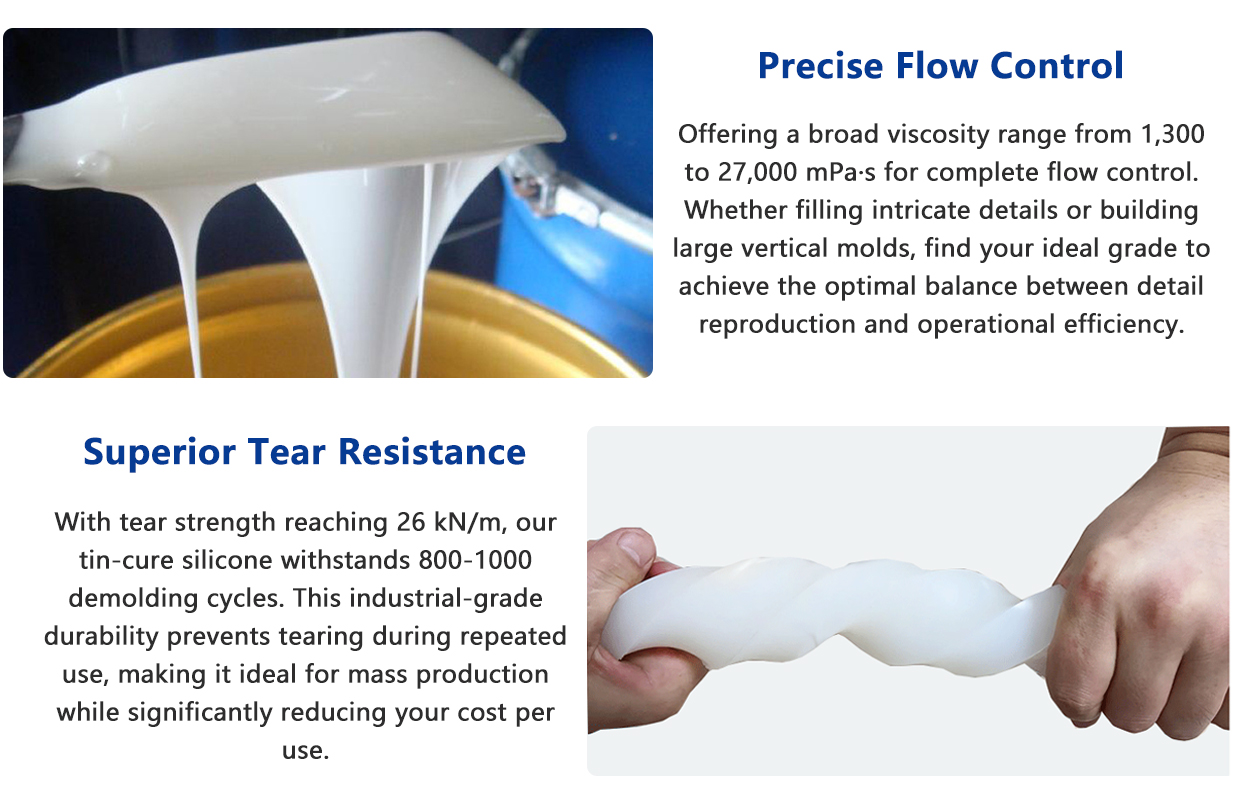
| Tear Strength (kN/m) | 16±2 | 19±2 | 24±2 | 26±2 | 25±2 | 21±2 |
| Elongation (%) | 420 | 530 | 480 | 480 | 450 | 250 |
| Density (g/cm³) | 1.08 | 1.08 | 1.08 | 1.08 | 1.09 | 1.09 |
| Operation Time (min) | 30-50 | 30-50 | 30-40 | 30-40 | 30-40 | 30-50 |
| Vulcanization Time (h) | 4-5 | 4-5 | 3-4 | 3-4 | 3-4 | 4-5 |
| Line Shrinkage Not Rate (%) | ≤0.3 | |||||
| Note: The color, viscosity, operation time and hardness after curing in the parameter table can be adjusted according to customer's demand. | ||||||
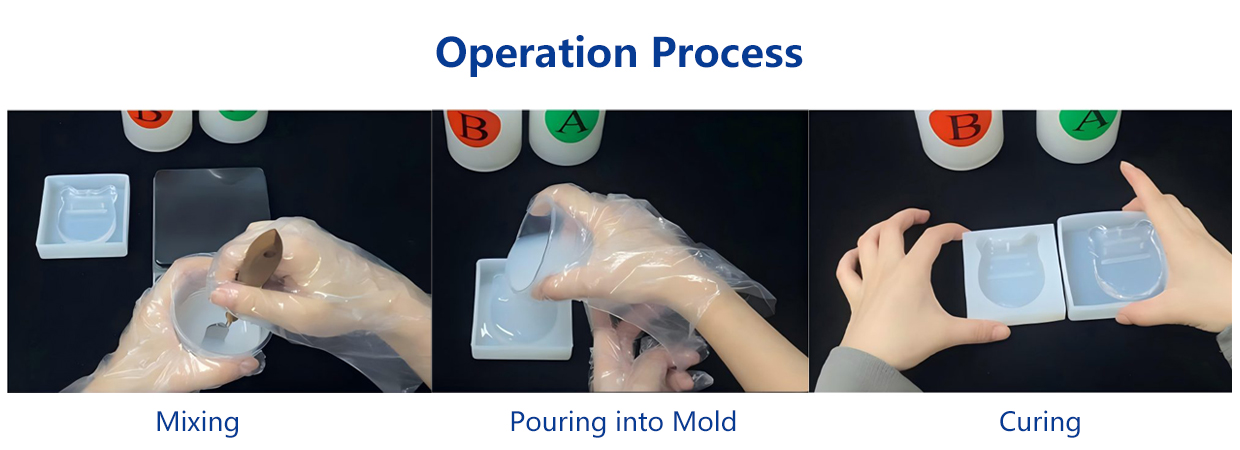
How to Use
Step 1: Prepare Master
Clean master thoroughly. Apply release agent.
Step 2: Build Mold Box
Use sturdy plywood (18mm+) for large molds. Seal all seams.
Step 3: Calculate Volume
Measure L×W×H accurately. Add 10% contingency.
Step 4: Mix Silicone
Follow catalyst ratio precisely. Mix thoroughly for 2-3 minutes.
Step 5: Vacuum Degas (Recommended)
Step 6: Pour
Pour slowly from highest point. Use notched trowel for detailed areas.
Step 7: Create Mother Mold
Fiberglass or plaster support mold required for large architectural molds.
Step 8: Cure
24 hours minimum at 20-25°C before demolding.
Precautions for Mold Silicone:
1. Mother Mold is Essential: For any architectural mold that will be used without permanent rigid support, a fiberglass or plaster mother mold is absolutely required. The weight of GRC will distort unsupported silicone.
2. Plan for Multiple Pours: If your mold requires more silicone than can be mixed in one batch, plan the pour strategy carefully. Multiple batches must be poured before any partial cure occurs to ensure seamless integration.
3. Release Agent Every Pour: Use high-quality concrete release agent before every production pour. This is not optional—it's essential for mold life and clean release.
4. Temperature Management: Large molds generate internal heat during cure. Monitor temperature; if excessive, slow cure by reducing catalyst slightly (consult us for adjustments).
5. Storage: Store large molds flat or on curved supports matching their shape. Warping is difficult to reverse.
6. Inspect Detail Areas: Check intricate details regularly for wear. Replace molds when detail fidelity diminishes.
Shelf Life:
Unopened packaging at room temperature (25°C): 12 months. Finished silicone molds can be stored for up to six months without loss of performance.
Storage and Transportation:
1.Mold silicone should be stored at room temperature in a dry, sealed container. Avoid contact with water to prevent deterioration.
2.This product is classified as non-hazardous for transportation.
Applications & Project Gallery
A. GRC Cornice and Molding Production
A manufacturer in Dubai produces GRC cornices, crown moldings, and decorative trim for commercial buildings throughout the Middle East. Using T835-ARCH, they create molds up to 3m long that produce 30-40 identical cornice sections per mold—enough for an entire building facade. The firm 35A hardness maintains sharp profiles through the production run.
B. Column and Capital Manufacturing
An Italian company specializing in architectural columns for luxury villas uses T830-ARCH for fluted columns and T835-ARCH for ornate Corinthian capitals. The detail capture reproduces classical orders faithfully, while the material's durability handles the weight of full-height column sections (up to 4m tall).
C. Window Surround and Door Trim Production
A US manufacturer creates architectural window surrounds and door trim for historic home renovations. Using molds made with our architectural silicone, they produce exact reproductions of original Victorian and Craftsman details, matching period profiles that would be impossible to find off-the-shelf.
D. Custom Architectural Feature Fabrication
A UK-based architectural fabricator creates custom elements for high-end commercial and residential projects—sculptural lobby features, branded entrance elements, unique decorative panels. The ability to make molds on-site and produce multiple identical elements makes complex custom work economically feasible.
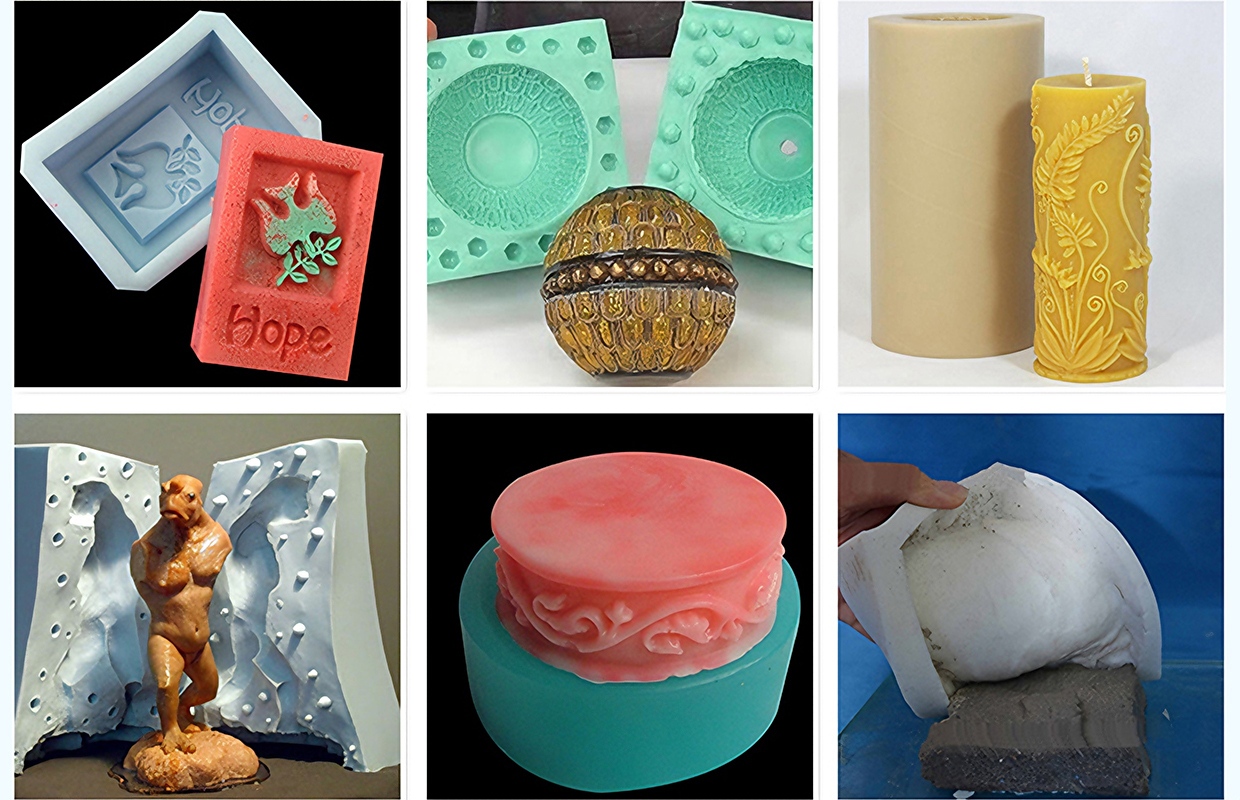
Custom Architectural Mold Solutions
We partner with architectural element manufacturers and restoration specialists:
1. Hardness Tuning: Develop specific formulations for your element types and sizes;
2. Large Mold Support: Technical advice for very large projects (5m+);
3. GRC Formulation Optimization: Enhanced for your specific GRC mix;
4. Bulk Supply: Production-scale quantities for ongoing projects;
5. On-Site Support: Guidance for field mold making;
6. Restoration Consulting: Help with period reproduction challenges;
👉 [Partner With Us for Architectural Projects]
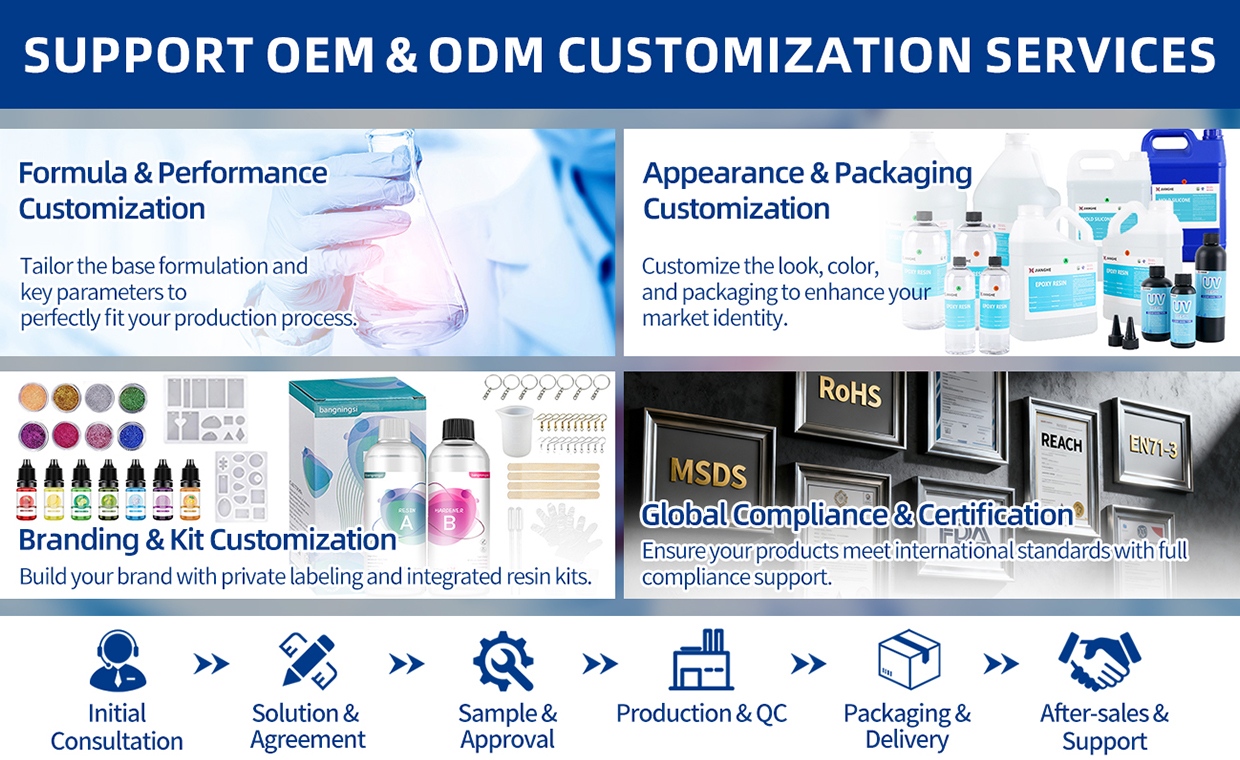
Why Architectural Professionals Trust JH Epoxy:
1. Detail-Optimized: Captures architectural nuances essential for period reproduction;
2. Large Mold Capable: Formulations and support for molds up to several meters;
3. Production Practical: Good mold life for project-scale production runs;
4. Cost-Effective: Tin-cure economics make architectural mold-making feasible;
5. Technical Support: Our engineers understand architectural challenges;
6. Proven in Restoration: Used on historic projects worldwide;
7. Consistent Quality: ISO 9001 certified, batch-to-batch reliability;
👉 [Request Architectural Grade Sample Kit]
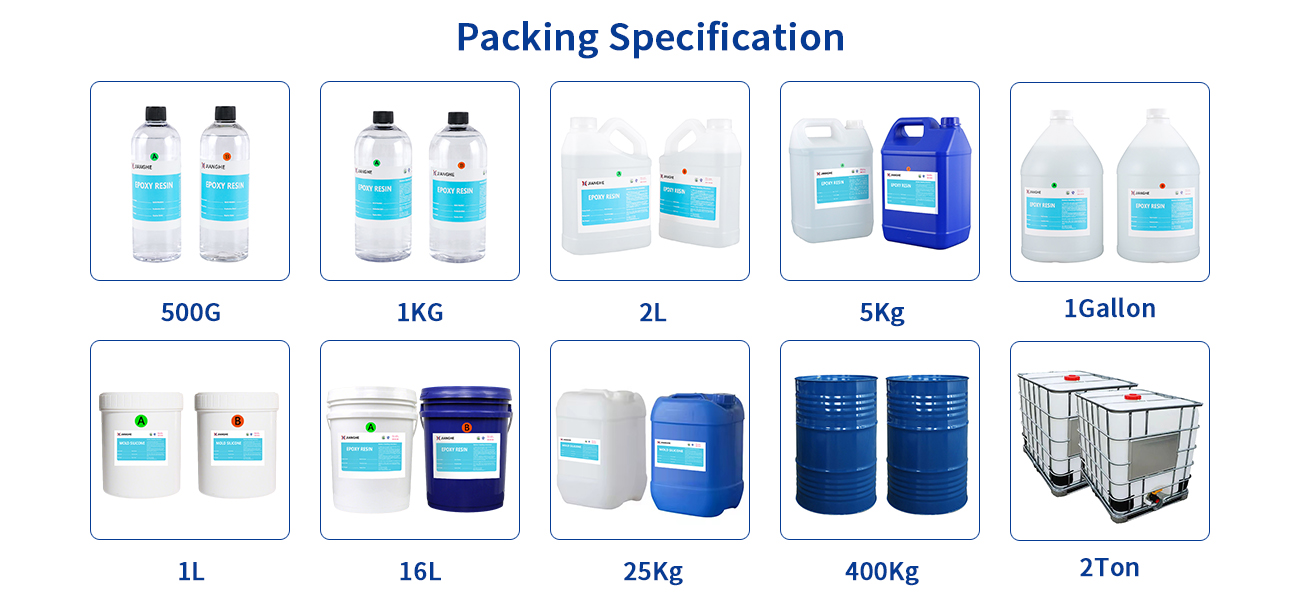
If You Need Customized Packaging Or Other Specifications, Please Contact Us.
FAQ:
Q1: How long do architectural molds last with GRC?
A: Typically 20-100+ casts depending on element size, complexity, and GRC mix. Smaller, simpler elements last longer; large, intricate pieces may have shorter life. With proper care and release agent, 50+ casts is common.
Q2: What hardness is recommended for long, thin cornice molds (2m+)?
A: 35-40A provides the firmness needed for long, thin profiles to maintain shape while allowing enough flexibility for demolding. T835-ARCH or T840-ARCH are ideal.
Q3: Can I make molds of existing building elements on-site?
A: Yes, our material can be used on-site. Ensure the element is clean, stable, and protected with release agent. Allow for temperature—on-site conditions may require adjusted cure time.
Q4: Do I need a mother mold for every architectural mold?
A: For any mold that will be used without permanent rigid support, yes. GRC is heavy—a 2m cornice section can weigh 50-100kg. The mold must be supported to maintain shape.
Q5: What's the difference between T-ARCH and standard tin-cure for architectural work?
A: T-ARCH has optimized flow for detail capture, better alkaline resistance for GRC, and tighter viscosity control for large molds. It's specifically formulated for architectural applications, not just general-purpose.