For whom?
Industrial label manufacturers, simulation food model makers, glassware encapsulation engineers, and high-end craft studios using PU resin in daily production.
In the high-precision world of label doming, logo manufacturing, and simulation food crafts, Polyurethane (PU) Resin is the gold standard for clarity and durability. However, because PU resin is a highly reactive chemical system, it is sensitive to environmental variables and human error. For B2B manufacturers and high-end craft studios, a single mistake can lead to a ruined production batch.
As a leading industrial manufacturer, JHEpoxy has compiled this comprehensive troubleshooting guide to help you identify, solve, and prevent the most common issues in PU resin doming, encapsulation, and simulation food crafts.
1. The "Sponge" Effect: Foaming and Micro-Bubbles
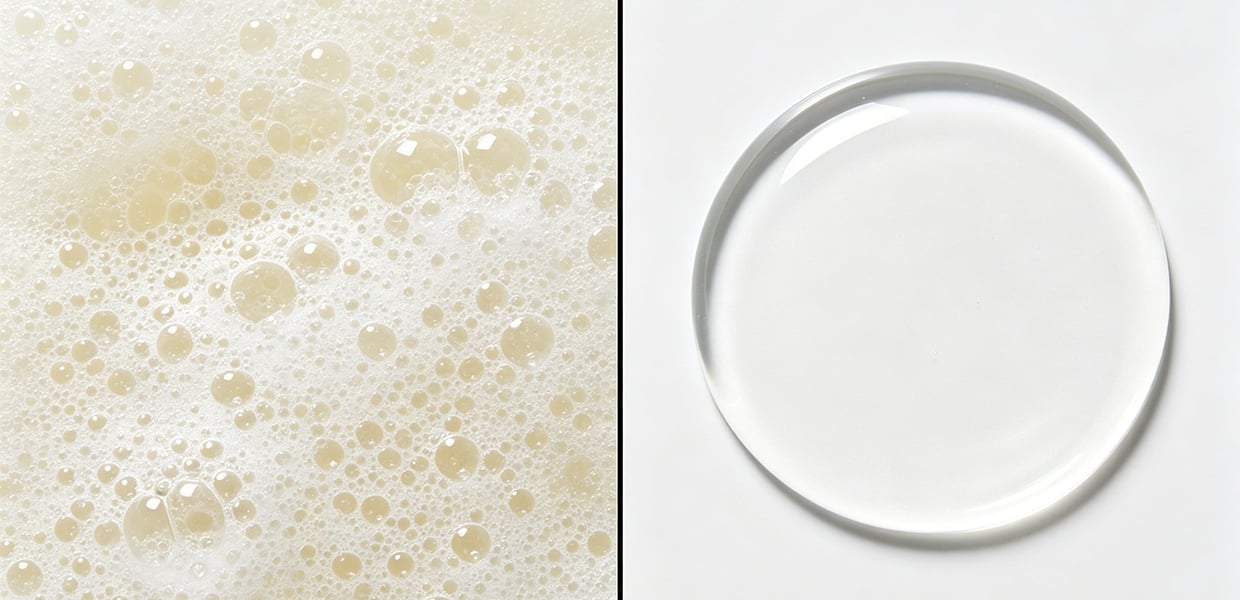
The Problem: The most frequent complaint in PU resin projects is the resin turning into a cloudy, white foam or containing thousands of tiny micro-bubbles shortly after pouring.
The Cause: This is almost always caused by Moisture Contamination. Polyurethane reacts aggressively with water to produce Carbon Dioxide (CO2) gas. Even a drop of sweat, high humidity (over 60%), or moisture in a wooden stirring stick can trigger this reaction. This is why moisture control is the number one rule when working with PU resin.
The Fix:
2. The "Sticky" Surface: Incomplete Curing and Tackiness
The Problem: After 24 hours, the surface of the domed label or fake water display remains tacky to the touch or soft like jelly.
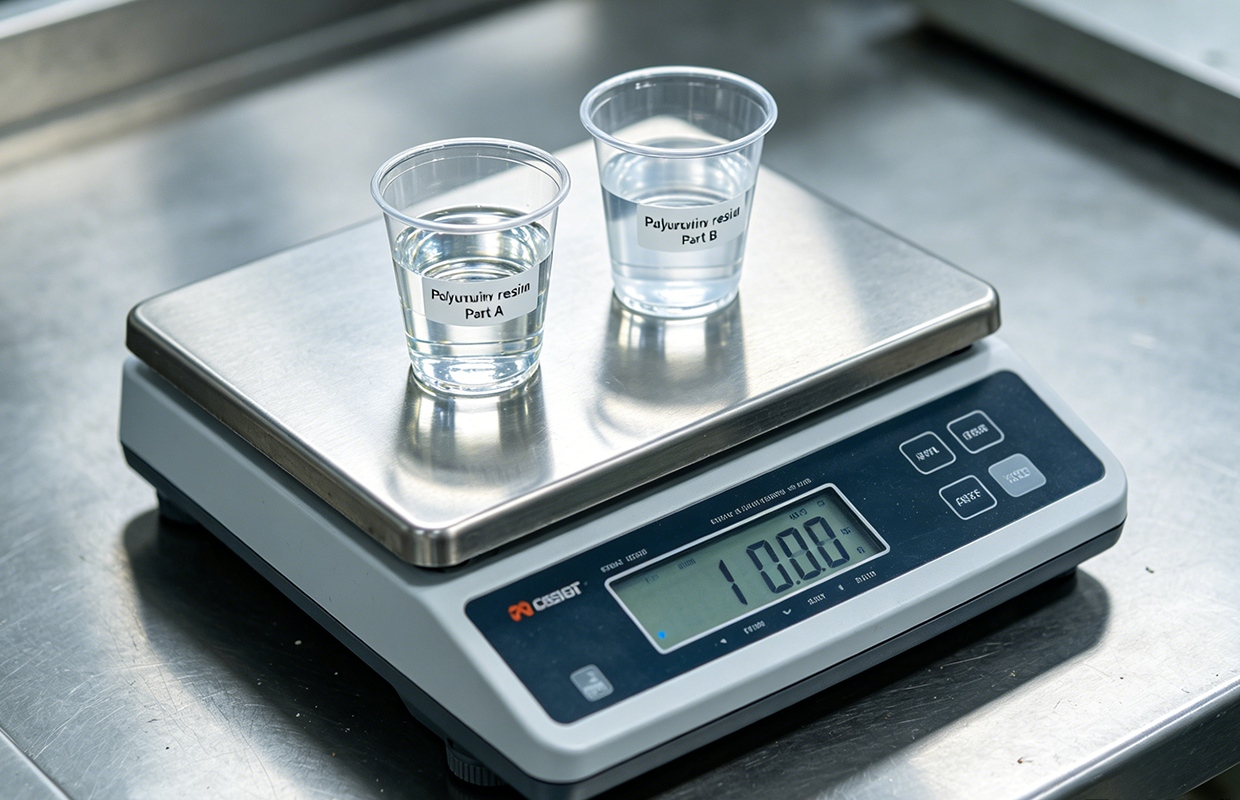
The Cause: This is a result of an inaccurate mix ratio or insufficient stirring. PU resin requires a precise chemical balance to achieve its full Shore D hardness. If there is too much Part A (Isocyanate) or Part B (Polyol), the cross-linking reaction will not complete properly. Even a 2% deviation can cause permanent tackiness.
The Fix:
3. "Fish-Eyes" and Edge Pull-Back
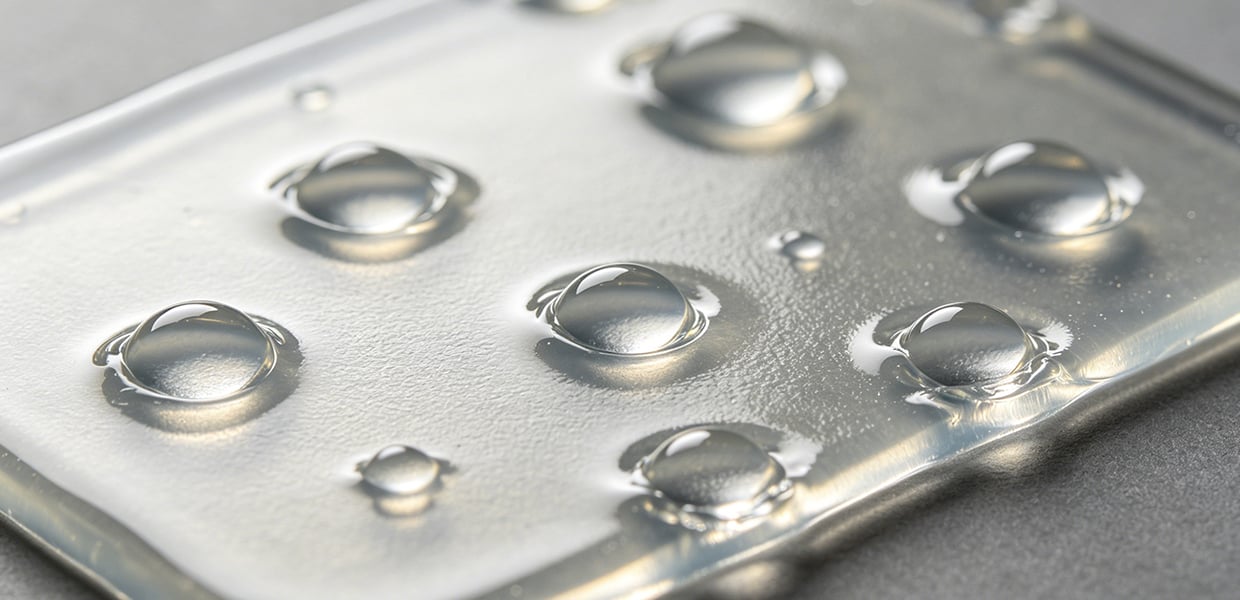
The Problem: The resin pulls away from the edges of a sticker or forms small circular craters (fish-eyes) on a flat surface.
The Cause: Surface contamination. Oils, silicones, or waxes on the substrate act as a release agent. Even the oils from your fingerprints can cause the resin to lose its grip. This is especially common in label doming where stickers may have residual adhesive or handling marks.
The Fix:
4. Yellowing Over Time
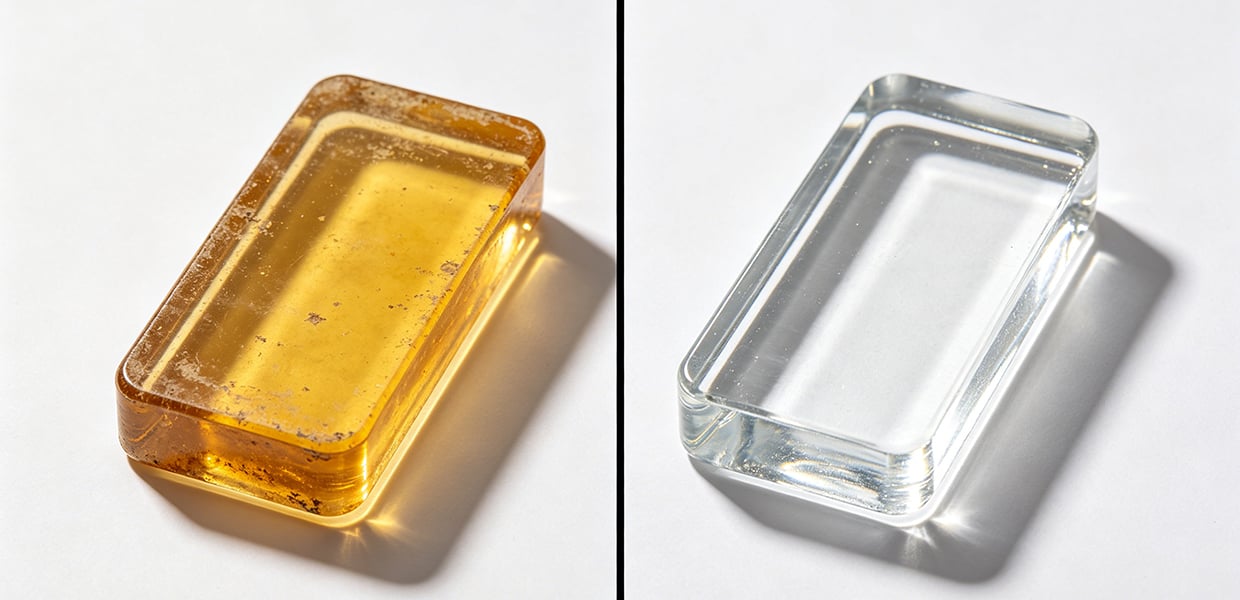
The Problem: A crystal-clear car logo or wine label starts to turn a yellowish or amber tint after a few months of use.
The Cause: UV degradation. Many cheap PU resins use aromatic isocyanates, which break down under sunlight. This is a common issue in low-cost PU resin doming projects that are exposed to windows or outdoor conditions.
The Fix:
5. Shrinkage and Delamination in Glassware
The Problem: In simulation beverage crafts (fake water for glassware), the resin pulls away from the glass wall, creating a visible gap or silver line (delamination).
The Cause: Thermal Shrinkage. During the exothermic (heat-releasing) reaction of curing, the resin expands and then shrinks as it cools. If the reaction is too fast or too hot, the shrinkage is more dramatic. This is especially problematic in glassware encapsulation where the rigid glass cannot flex with the resin.
The Fix:
6.Quick Troubleshooting Reference Table
| Symptom | Most Likely Cause | Your Next Step |
| Cloudy foam / bubbles | Moisture contamination | Check humidity, use plastic tools, pre-heat substrate |
| Tacky after 24h | Wrong mix ratio or poor stirring | Use digital scale + double-cup method |
| Fish-eyes / pull-back | Surface contamination | Clean with isopropyl alcohol, wear gloves |
| Yellowing in weeks | UV degradation (aromatic PU) | Switch to aliphatic PU or add UV blocker |
| Gap at glass edge | Thermal shrinkage | Pour in thinner layers, control room temp |
Why JHEpoxy for Your PU Resin Production?
Unlike generic suppliers, JHEpoxy provides:
Conclusion
Mastering PU resin doming, encapsulation, and simulation crafts is about understanding the variables — moisture, mix ratio, temperature, and UV exposure. By using this troubleshooting guide, you can diagnose problems quickly and adjust your process for consistent, high-yield production.
Need help with a recurring issue?
Contact JHEpoxy technical support for customized TDS sheets or process optimization advice — or Request a PU resin sample tailored to your production environment.
 Hot News
2026-01-14
2026-01-06
2025-12-27
2025-12-26
2025-12-26
2025-12-25
Shenzhen Jianghe New Materials Technology offers top-quality Epoxy AB Glue, PU Resin, UV Resin, and Liquid Silicone Rubber. With ISO-certified production, global certifications, and customizable solutions, we serve manufacturers and Amazon sellers worldwide.
Room 1008, Building 1, Cofco Yunjing, Martin Street, Heshui Kou Community, Guangming
Copyright © 2026 Shenzhen Jianghe New Materials Technology Co., Ltd.All rights reserved. Privacy Policy
 EN
EN