 EN
EN

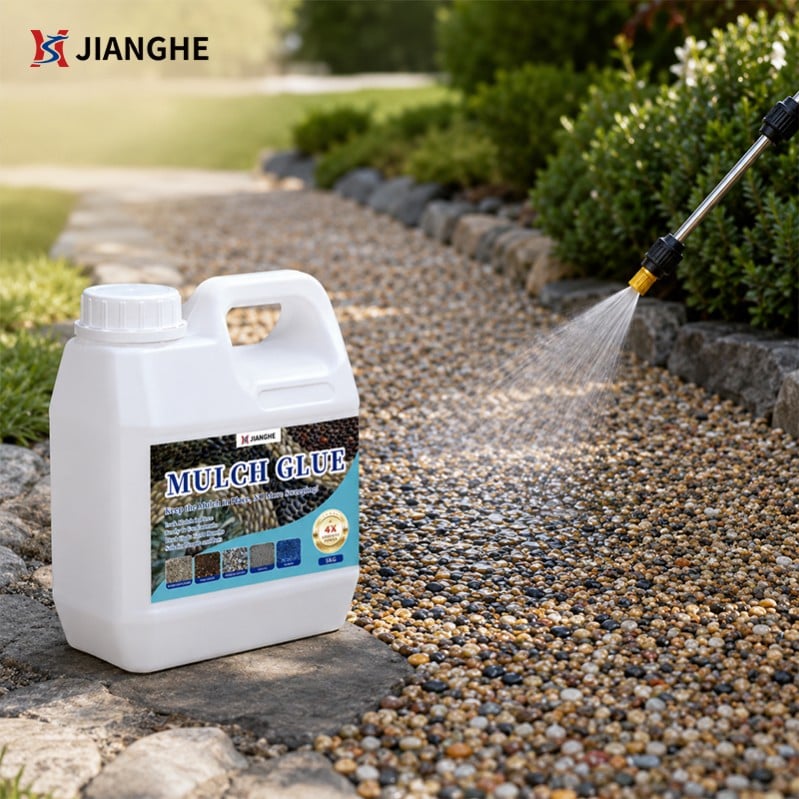
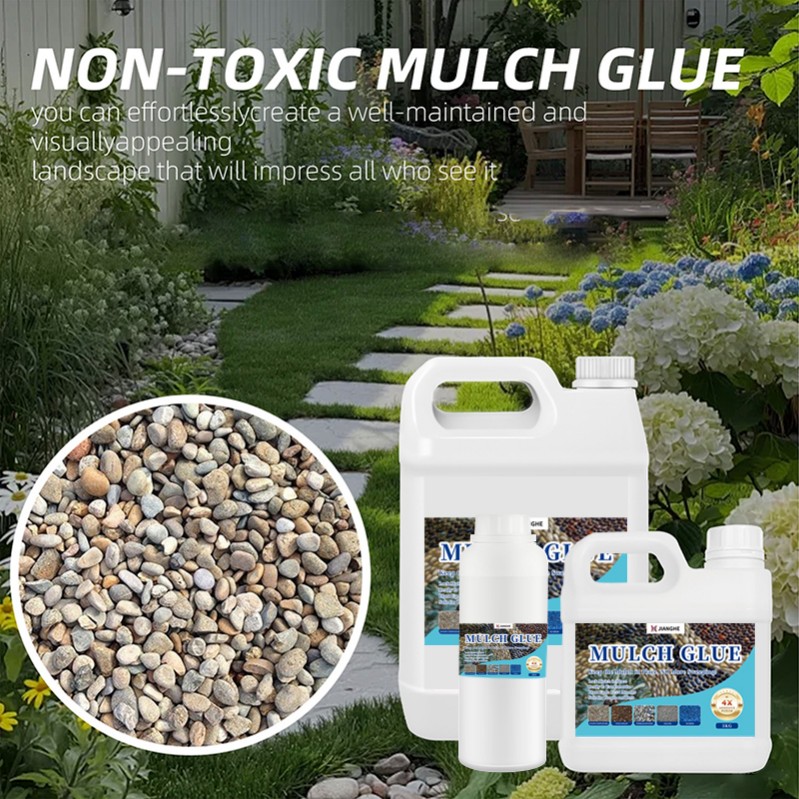
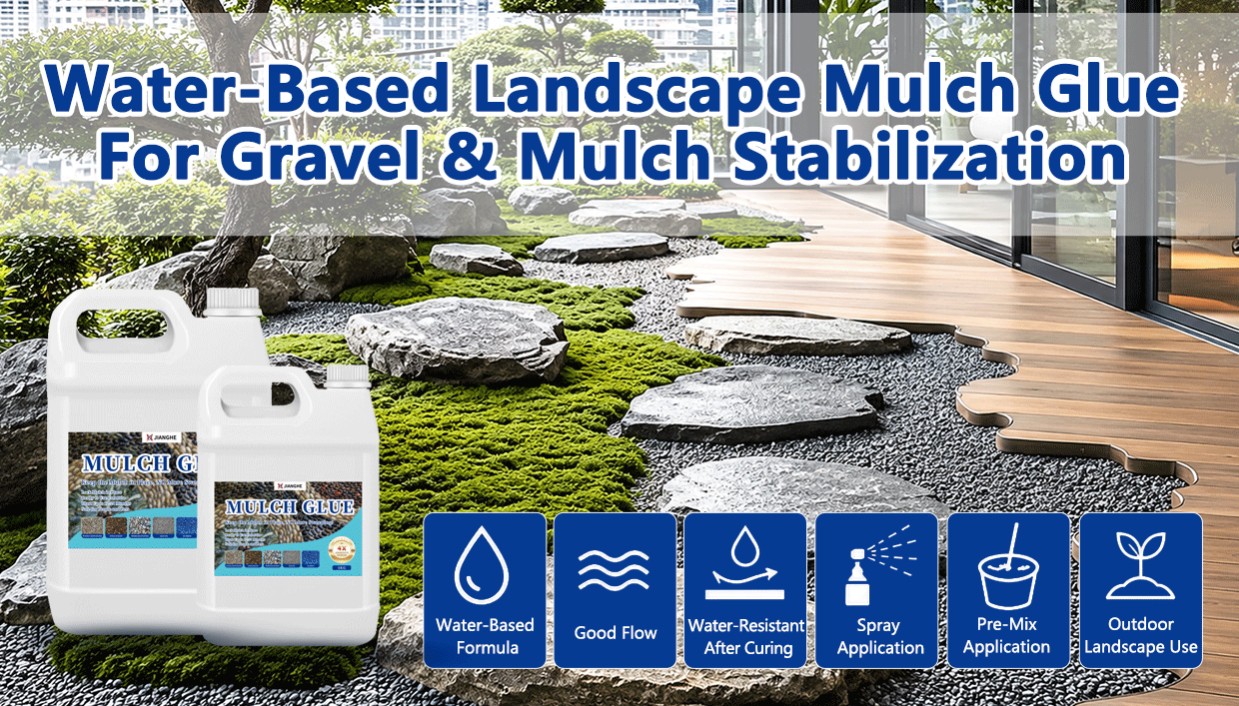
Water-Based Landscape Mulch Glue for Gravel & Mulch Stabilization
Model: 616-50 Mix Ratio: Spray or Pre-Mix
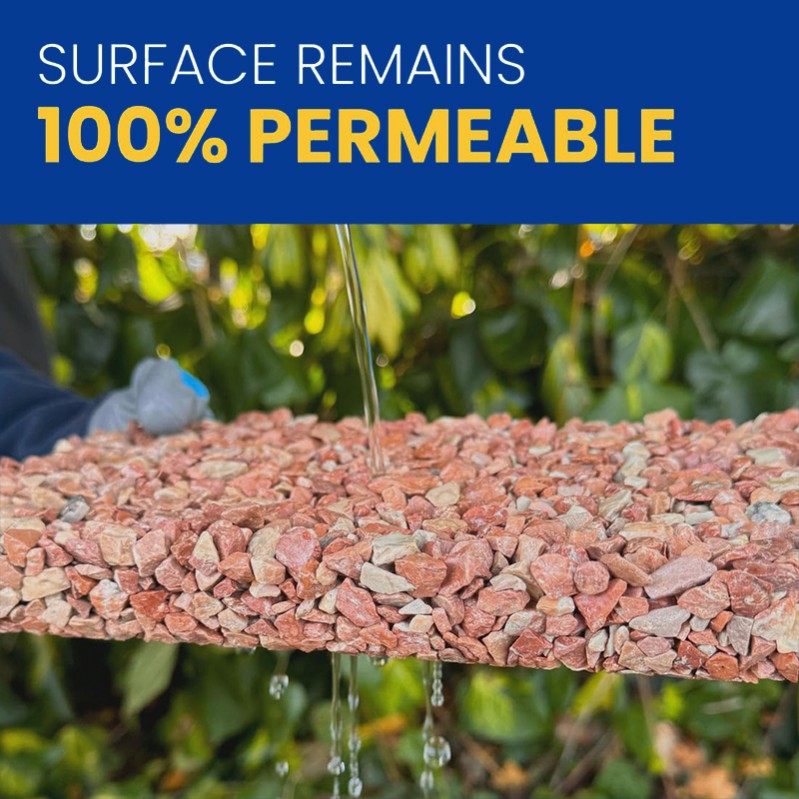
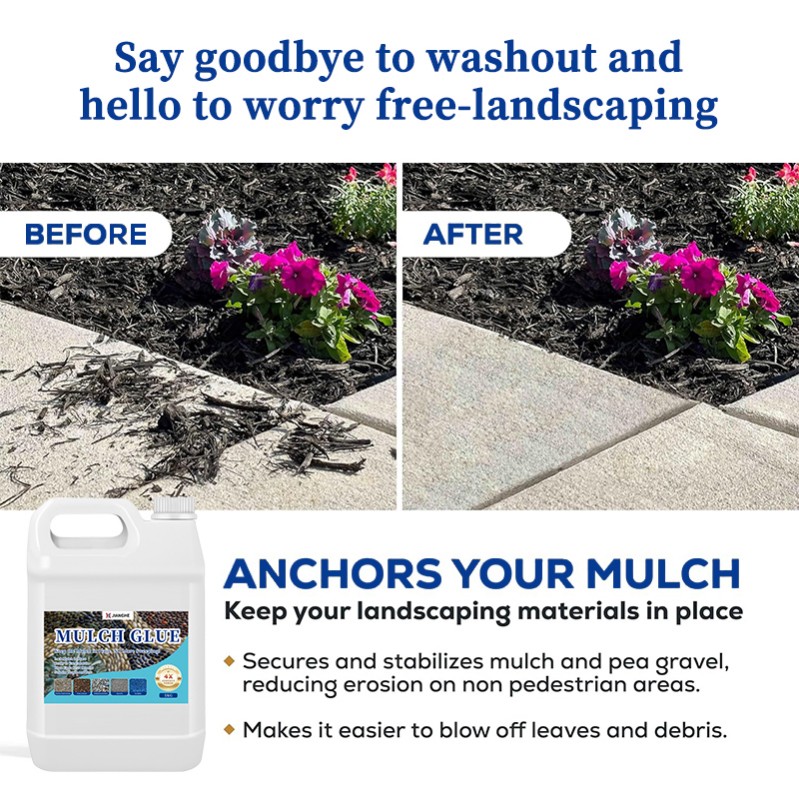
616-50 is a water-based acrylic emulsion binder developed for stabilizing loose landscape materials such as gravel, crushed stone, wood chips and bark. It can be applied by spraying to existing surfaces or mixed with aggregate before installation. After water evaporation and curing, the binder helps hold loose materials together and maintain a more stable landscape surface.
Key Product Features:
- Water-Based Acrylic Emulsion
- Good Flow & Material Coverage
- Water-Resistant After Curing
- Spray or Pre-Mix Application
Typical Applications:
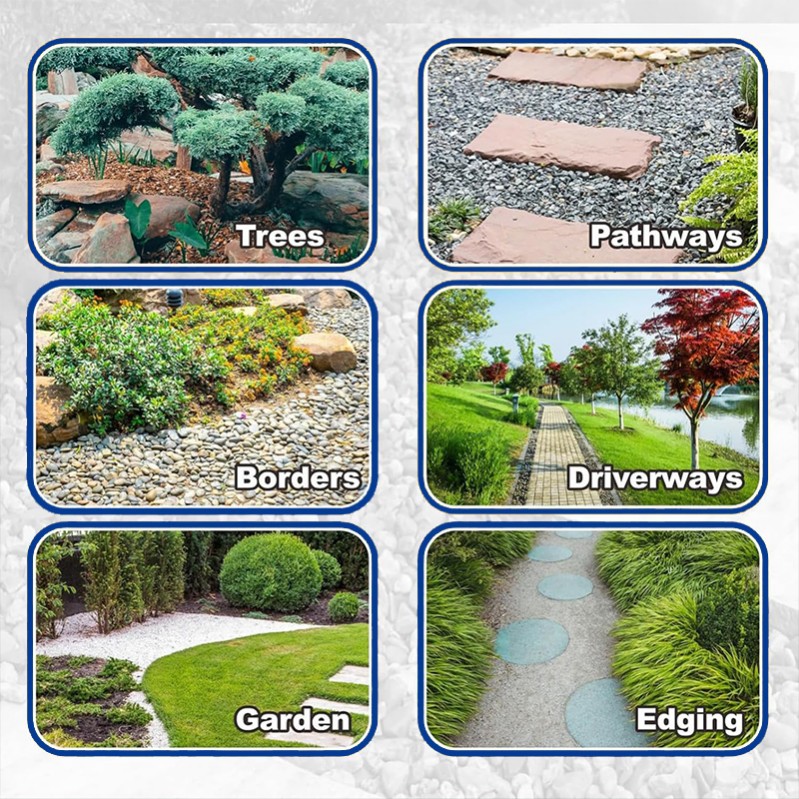
Gravel Stabilization · Wood Chip Binding · Bark Mulch Stabilization · Garden Pathways · Landscape Borders

- Overview
- Recommended Products
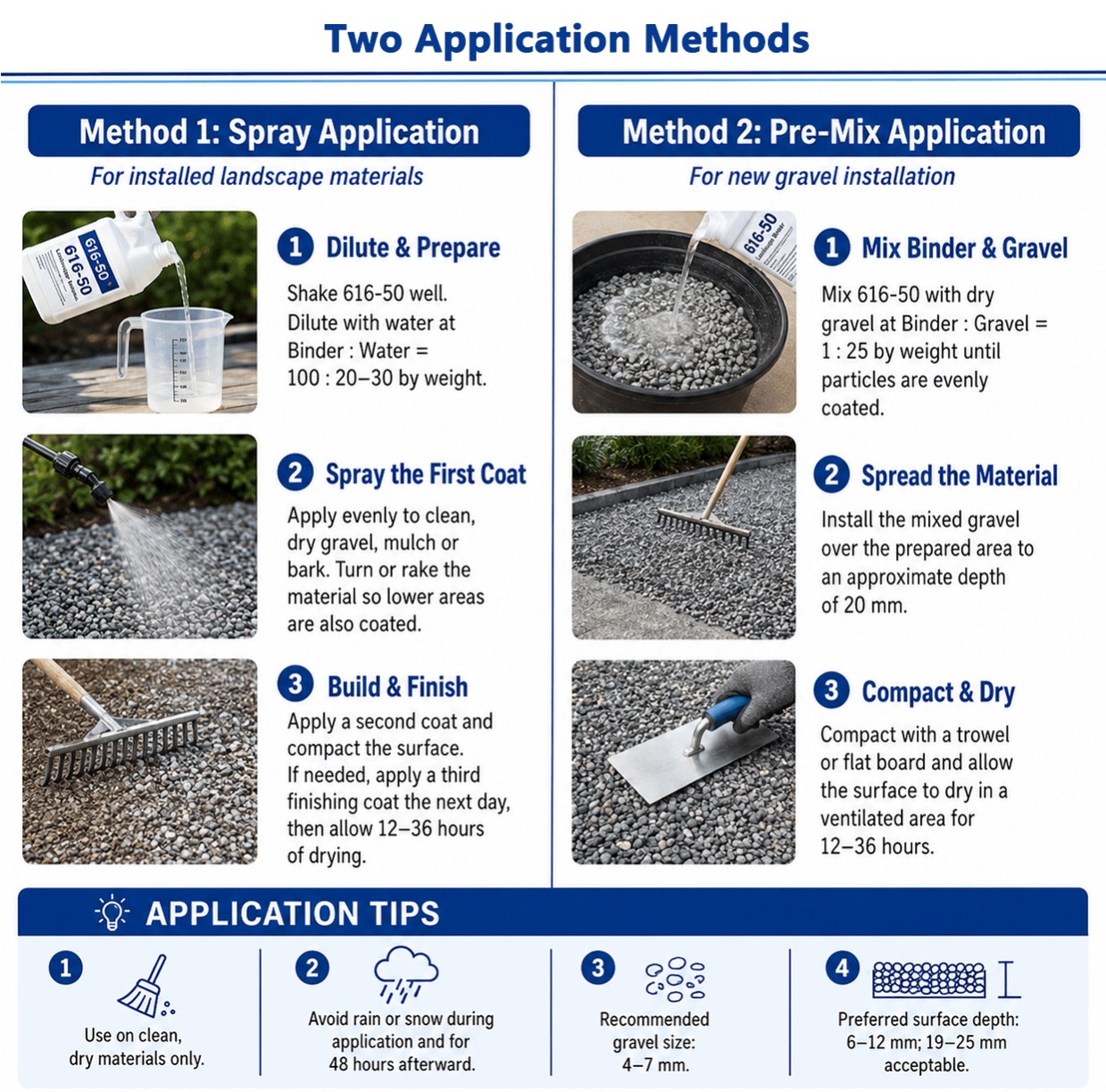
- Shake the product thoroughly before use and prepare the material according to the required spray dilution. Apply the first coat evenly across the landscape surface. For gravel applications, the material can then be turned or lightly raked so that the binder reaches lower contact areas.
- Apply a second coat, compact the surface and allow the treated area to remain undisturbed until the following day. A third light coat can then be applied as a finishing layer where required. Maintain good ventilation and dry conditions during the subsequent drying period.
- For spray application, the current technical specification provides a binder‑to‑water ratio of 100:20–30 by weight and a reference binder consumption of approximately 0.5 kg/m².
- For gravel applications, the recommended reference ratio is 1 part binder to 25 parts gravel by weight. Mix thoroughly until the gravel particles are evenly coated with the binder.
- Prepare the installation area before placement. Where appropriate, install a weed‑control fabric over the prepared base. Spread the mixed material evenly to an installation depth of approximately 20 mm, then compact the surface using a suitable trowel, flat board or similar tool.
- Allow the installed material to remain in a well‑ventilated, dry environment for approximately 12–36 hours, depending on temperature, humidity and site conditions.
- The stated ratio and installation conditions are reference values. Actual binder consumption may vary according to particle size, material absorption, surface condition and the required level of stabilization.
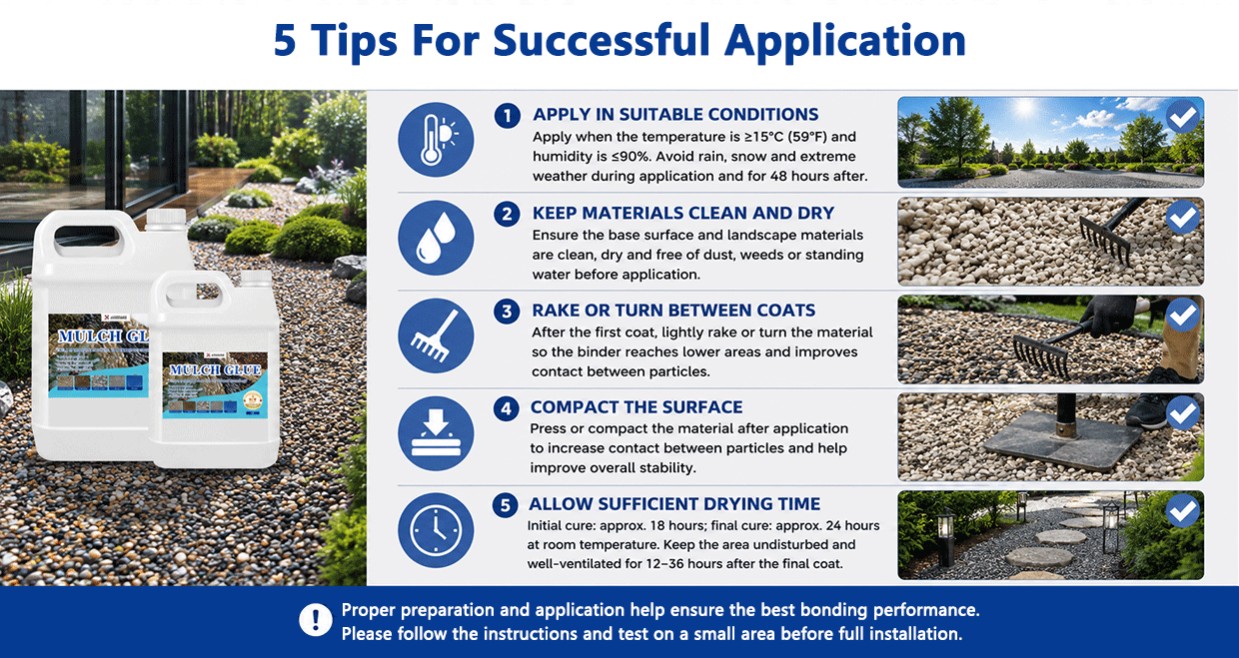
- The installation surface and the landscape material should be clean, dry and structurally stable before the binder is applied. Dust, weeds, standing water and loose contamination should be removed. Gravel used for bonding should also be dry, because surface moisture can interfere with binder contact.
- The technical specification requires the environment to remain at or above 15°C with relative humidity at or below 90% during application and for 48 hours afterward, with no rain or snow during this period.
- For practical outdoor application, warm and dry conditions are preferred because lower temperatures can slow the curing process. The product instructions recommend carrying out application in clear weather and keeping the treated area free from rain or snow during the initial curing period.
- For a 2 mm reference thickness, initial curing occurs in approximately 18 hours at room temperature, while final curing is approximately 24 hours at room temperature. Depending on the actual installation method and outdoor conditions, treated landscape surfaces may require an additional 12–36 hours of undisturbed drying.
- The specified use‑temperature range for the cured material is 10°C to 70°C.
- Because outdoor conditions vary significantly, curing times should be treated as reference values rather than guaranteed fixed times for every landscape installation.
- For spray treatment of an existing landscape surface, the current reference consumption is approximately 0.5 kg of binder per square meter, before accounting for site‑specific variation. The recommended spray dilution is 100 parts binder to 20–30 parts water by weight.
- For pre‑mixed gravel installation, the recommended reference ratio is 1:25 binder to gravel by weight. As an example, 10 kg of gravel requires approximately 0.4 kg of binder, while 25 kg of gravel requires approximately 1.0 kg of binder under the reference formulation.
- Particle size also matters. Gravel in the 4–7 mm range is preferred according to the current product specification. Larger particle sizes in the 19–25 mm range can still be used with good results under suitable conditions, while particles larger than 25 mm are not recommended.
- Installation depth should also be considered when planning the application. According to the current technical specification, a surface depth of approximately 6–12 mm provides the preferred result, while depths in the 19–25 mm range can still provide good performance under suitable conditions. Depths above 25 mm are not recommended.
- For the pre‑mix installation method specifically, the current application instruction provides an approximate placement depth of 20 mm before compaction. Actual depth should therefore be selected together with the particle size, application method and required surface stability.
- For commercial projects, customers should provide the material type, approximate particle size, required installation area and intended application method when requesting a material recommendation. This allows consumption and process recommendations to be matched more accurately to the actual project.
- 616‑50 is a water‑based system and should be protected from unnecessary water loss during storage and use. After opening, the container should be resealed promptly. According to the current product instruction, the lid should be securely closed within approximately five minutes after use to help prevent water evaporation and changes in product condition.
- Store the product in its original packaging in a cool, controlled environment. The recommended storage temperature is 20°C–30°C. The product is sensitive to freezing and should be stored under controlled conditions within the recommended temperature range. Keep the original container tightly sealed and avoid unsuitable storage environments.
- The specified shelf life is 12 months in the original packaging under recommended storage conditions.
- Application equipment should be cleaned promptly after use. Spray bottles, spray equipment and related tools can be rinsed with water before the binder dries. Once cured material has accumulated inside spray equipment, cleaning becomes considerably more difficult and may cause blockage.
- For installed landscape areas, maintenance requirements depend on traffic and environmental exposure. The current product guidance recommends approximately annual recoating for areas with frequent pedestrian traffic and approximately every 24 months for primarily decorative areas.
- Users should wear appropriate gloves, eye protection and protective clothing during handling and application and follow the applicable SDS and workplace safety procedures.
What Is Landscape Mulch Glue?
A Water‑Based Binder for Loose Landscape Materials
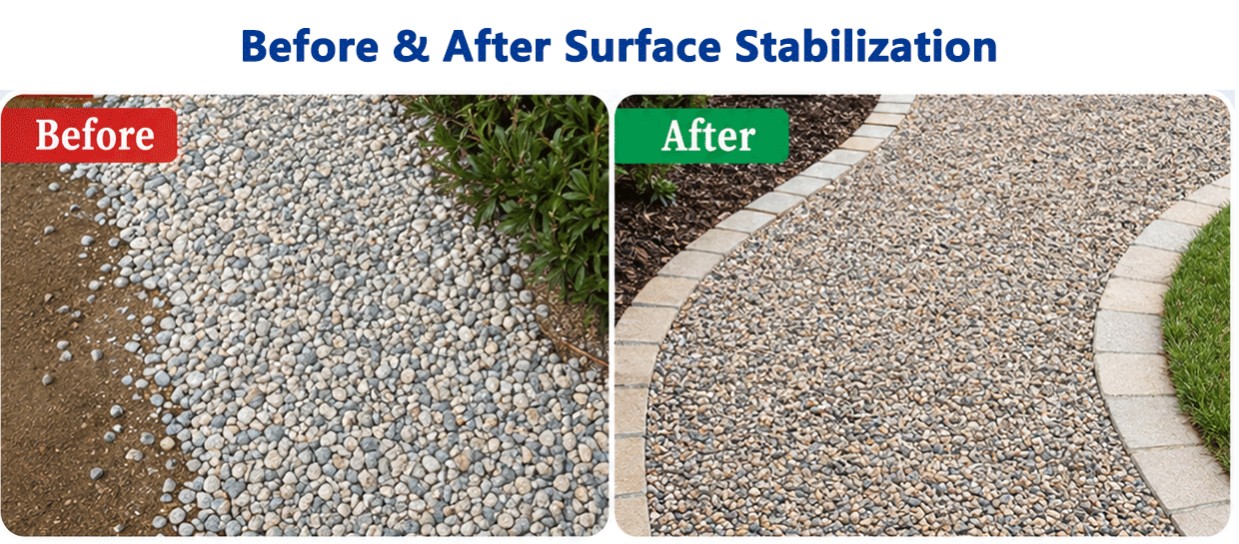
Landscape Mulch Glue 616‑50 is a water‑based acrylic emulsion formulated for bonding and stabilizing loose materials used in landscaping. Typical materials include gravel, crushed stone, wood chips and bark used around garden areas, pathways, borders and decorative outdoor surfaces.
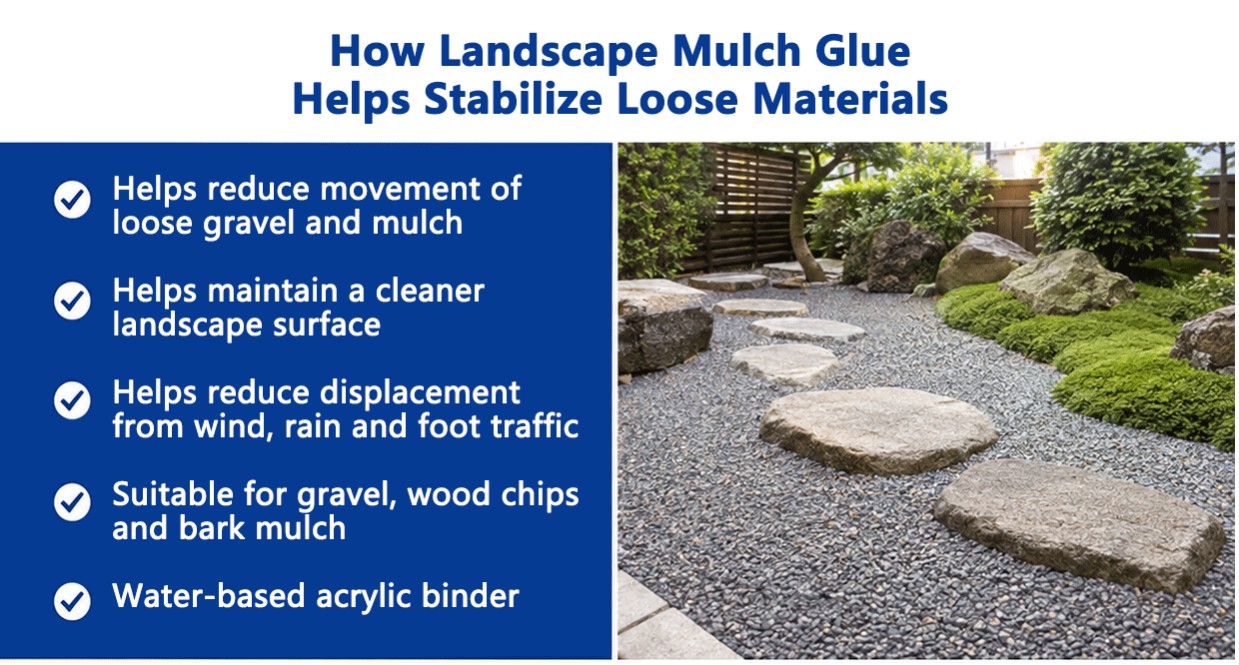
Unlike rigid resin systems designed to create thick structural flooring, this product is intended to penetrate and coat the contact areas between loose landscape particles. As the water in the formulation evaporates, the remaining binder forms connections between adjacent materials and helps reduce unwanted movement caused by normal environmental exposure and foot traffic.
The product can be used under room‑temperature or moderately heated curing conditions. Its liquid consistency allows it to be distributed over irregular surfaces and between individual pieces of landscape material. This makes it suitable for both maintenance of previously installed landscape surfaces and preparation of newly placed materials.
616‑50 is supplied as a milky‑white liquid before curing. For consistent application, the material should be kept properly sealed during storage and mixed or shaken before use according to the selected installation method.
Suitable Landscape Materials
Designed for Common Loose Landscape Materials
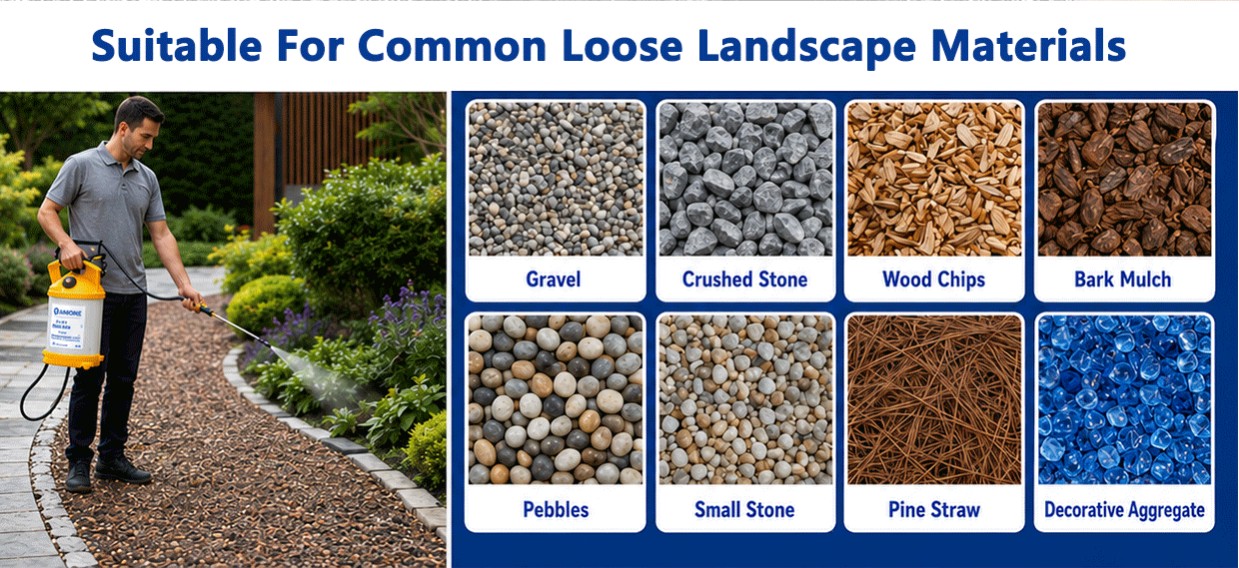
616‑50 can be used with several commonly used loose landscape materials, including gravel, crushed stone, small stone, wood chips, bark mulch and other suitable decorative landscape materials where improved surface stability is required.
Gravel & Small Stone
Suitable for stabilizing small loose gravel used in decorative landscaping, garden paths and border areas. For gravel applications, material size and installation depth have a direct influence on the final bonding result.
Crushed Stone
The binder can be distributed between irregular crushed stone particles to help reduce surface displacement after curing.
Wood Chips
Suitable for landscaping areas where wood chips need additional surface stability while maintaining the appearance of the original landscape material.
Bark Mulch
Can be applied to loose bark materials used around planting areas and decorative landscape sections.
For gravel applications, 4–7 mm particle size provides the recommended performance range in the current technical specification. Larger particles can also be used within appropriate installation conditions, while material above 25 mm is not recommended.
Surface depth should also be considered. A depth of approximately 6–12 mm provides the recommended result, while 19–25 mm can still provide good performance depending on material type and application conditions.
The final recommendation should therefore be based on the landscape material, particle size, installation depth and required surface stability rather than selecting the binder only by the appearance of the finished landscape.
Typical Landscape Applications
Suitable for Decorative and Functional Landscape Areas
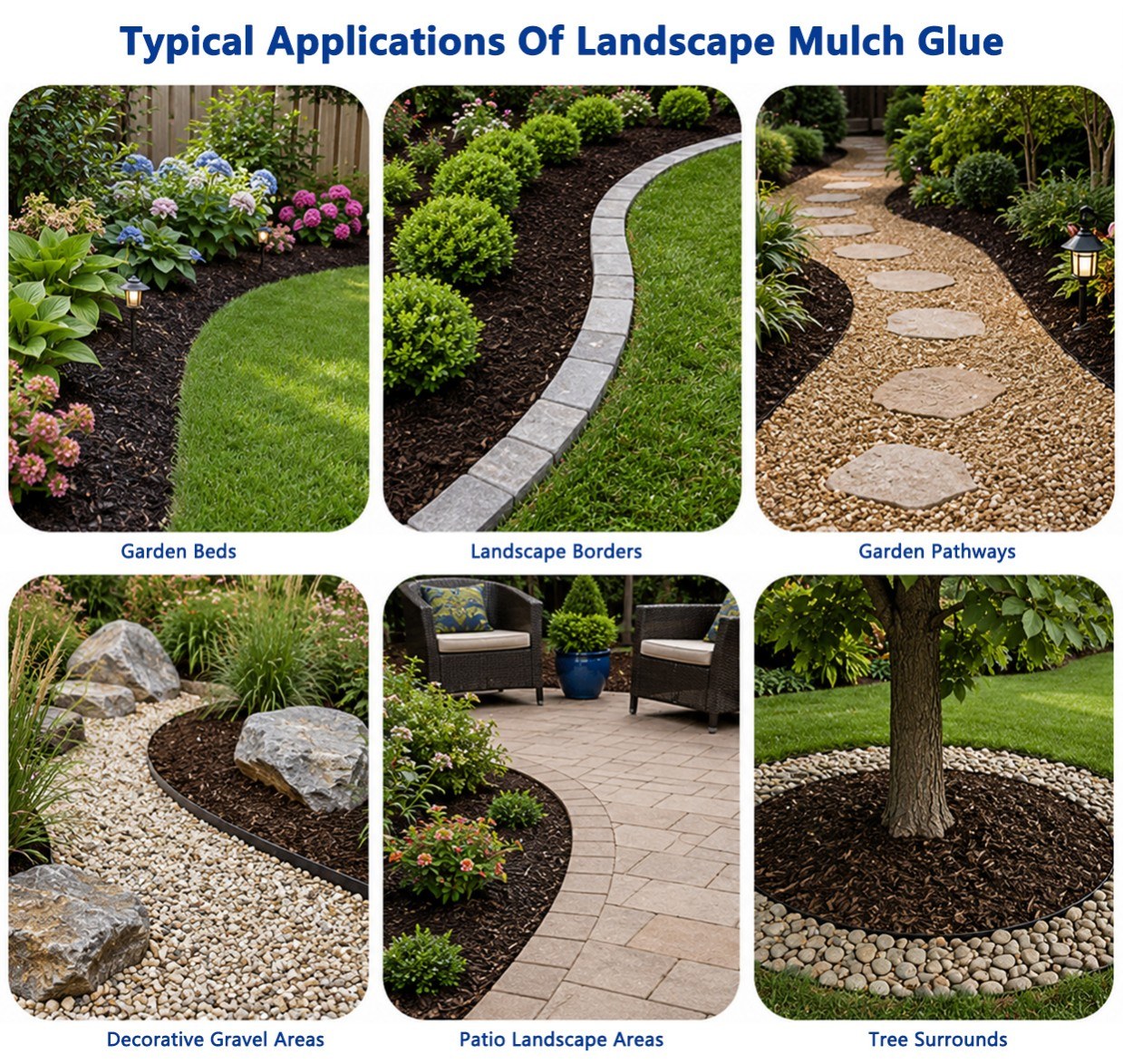
616‑50 can be used in landscape areas where loose gravel, wood chips, bark mulch or similar materials require improved surface stability. Typical applications include garden beds, landscape borders, garden pathways, decorative gravel areas, tree surrounds and landscaped areas around patios. Application suitability should be evaluated according to the material type, particle size, installation depth and expected traffic conditions.
How the Binder Works
From Liquid Application to a Stabilized Surface
616‑50 works through a water‑evaporation and binder‑formation process. During application, the liquid material is distributed over gravel, wood chips or other suitable landscape materials. The binder reaches the contact areas between individual particles while the water phase gradually evaporates.
Under suitable environmental conditions, water continues to leave the system during the curing period. After curing, the remaining acrylic binder connects adjacent particles and helps create a more stable surface.
Proper compaction is an important part of the process. After the binder has been applied, pressing or compacting the treated material increases contact between neighboring particles and helps the binder form more effective bonding points.
Application thickness, material size, moisture level and weather conditions can all influence the result. The substrate and landscape material should therefore be clean and dry before installation. Standing water, dust, weeds and other contamination should be removed before the binder is applied.
For outdoor installation, dry weather should be selected so that rainfall does not interrupt the initial curing process.
Two Application Methods
Spray Application or Pre‑Mix Installation
616‑50 supports two main application approaches depending on whether the landscape material has already been installed.
Spray Application
Spray application is suitable for previously placed landscape material.
Pre‑Mix Application
Pre‑mixing is suitable for landscape materials that have not yet been installed.
Application Conditions & Curing
Control Moisture, Temperature and Drying Conditions
Correct application conditions are important for achieving consistent bonding performance.
Technical Data
Technical Reference for 616‑50
The following values provide a technical reference for product evaluation and application planning.
| Property | 616‑50 |
|---|---|
| Product Type | Water‑Based Acrylic Emulsion Binder |
| Appearance | Milky‑White Liquid |
| Density | 1.03 ± 0.05 g/cm³ |
| Viscosity | 400 ± 200 mPa·s |
| Viscosity Test Condition | Brookfield DV2TRV, 25°C |
| Initial Cure, 2 mm | Approx. 18 Hours at Room Temperature |
| Final Cure, 2 mm | Approx. 24 Hours at Room Temperature |
| Use Temperature Range | 10°C–70°C |
| Spray Dilution Reference | Binder : Water = 100 : 20–30 |
| Spray Consumption Reference | Approx. 0.5 kg/m² Binder |
| Gravel Pre‑Mix Ratio | Binder : Gravel = 1 : 25 by Weight |
| Recommended Gravel Size | 4–7 mm |
| Recommended Surface Depth | 6–12 mm |
| Recommended Storage Temperature | 20°C–30°C |
| Shelf Life | 12 Months in Original Packaging |
Technical values are based on the current product specification and should be used together with actual material testing. Landscape aggregate varies in particle shape, absorption, cleanliness and packing density, so small‑scale application testing is recommended before large‑volume use.
Coverage & Material Selection
Plan Consumption According to Material and Installation Method
Binder consumption depends on how 616‑50 is applied.
Storage, Handling & Maintenance
Proper Handling Helps Maintain Product Stability
FAQ
Q1. Should the gravel be dry before application?
Yes. The bonding surface and gravel should be kept dry before application. Standing water and surface moisture can interfere with proper binder distribution and curing.
Q2. Can 616‑50 be sprayed over an existing landscape surface?
Yes. Spray application is one of the specified methods for previously installed landscape materials. The current reference dilution is 100 parts binder to 20–30 parts water by weight.
Q3. Can 616‑50 be mixed with gravel before installation?
Yes. For new gravel installations, the binder can be pre‑mixed with gravel. The current reference ratio is 1 part binder to 25 parts gravel by weight.
Q4. How long does 616‑50 take to cure?
For a 2 mm reference thickness, the specification lists approximately 18 hours for initial curing and 24 hours for final curing at room temperature. Actual outdoor drying time can vary with temperature, humidity, ventilation and installation conditions.
Q5. How much binder is required?
For spray application, the reference binder consumption is approximately 0.5 kg/m². For pre‑mixed gravel applications, the recommended reference ratio is 1:25 binder to gravel by weight. Actual consumption should be confirmed according to the material and project conditions.
Q6. What information should I provide when requesting a material recommendation?
Please provide the landscape material type, approximate particle size, installation depth, total application area and intended application method. These details help us evaluate a more suitable application approach and estimate material requirements.