 EN
EN

Clear Epoxy Resin 2:1 for Sand & Small Stone Flooring
Model: 2120AB-K26 Mix Ratio: A:B=2:1 by Weight
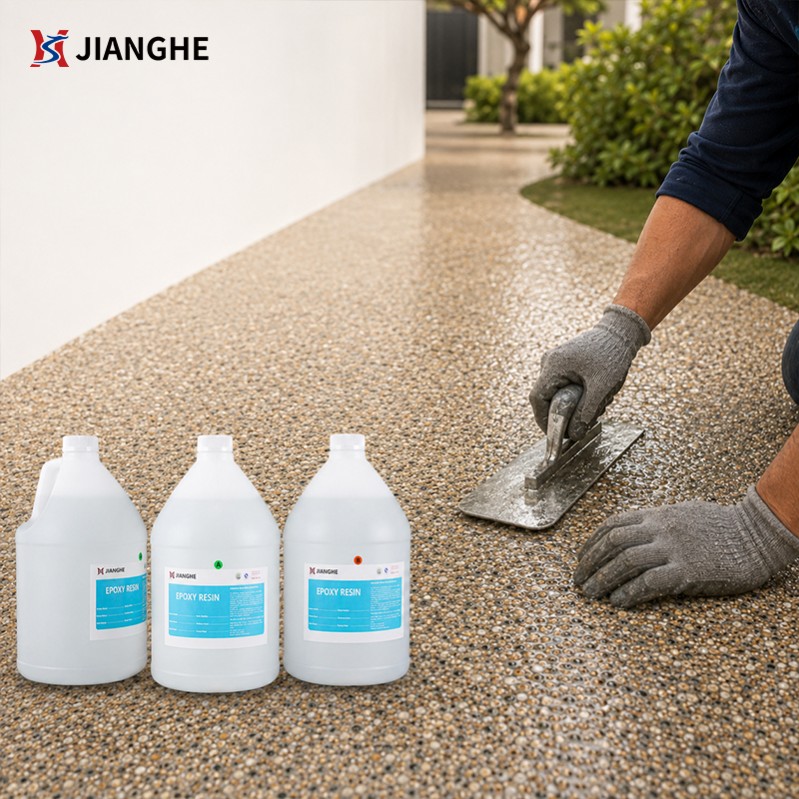
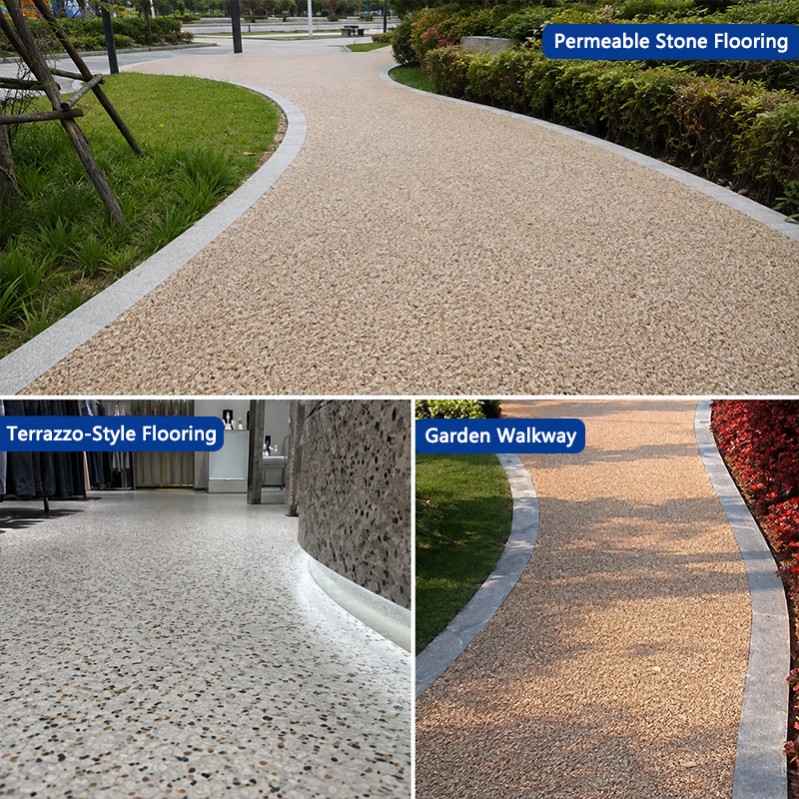
2120AB-K26 is a two-component epoxy resin system developed for sand and small-stone flooring applications. It provides good compatibility with quartz sand, colored sand and smaller decorative stone materials, supporting uniform mixing, spreading and curing. Typical uses include permeable stone flooring, terrazzo-style surfaces, garden walkways, commercial decorative floors and anti-slip pedestrian areas.
Key Product Features:
- Good Compatibility with Sand & Small Stone Materials
- Suitable for Small-Stone Flooring Systems
- Shore D 80 ± 3 After Curing
- Water, Wear & Weather Resistant Performance
Typical Applications:
Permeable Stone Flooring · Quartz Sand Flooring · Garden Walkways · Terrazzo-Style Flooring · Decorative Pedestrian Surfaces

- Overview
- Recommended Products
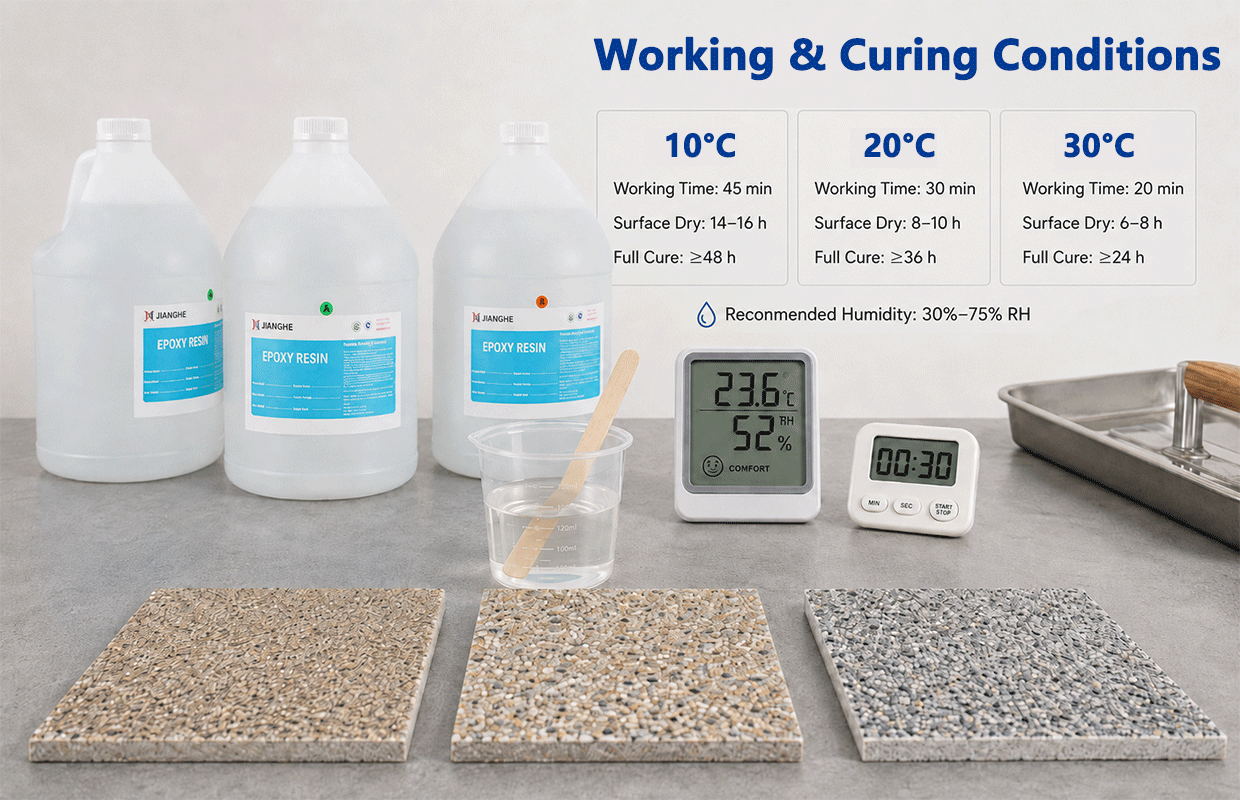
- 45 min at 10°C
- 30 min at 20°C
- 20 min at 30°C
- Sand or stone type
- Approximate particle size
- Flooring application
- Surface texture requirements
- Substrate information
Epoxy Resin for Sand & Small Stone Flooring
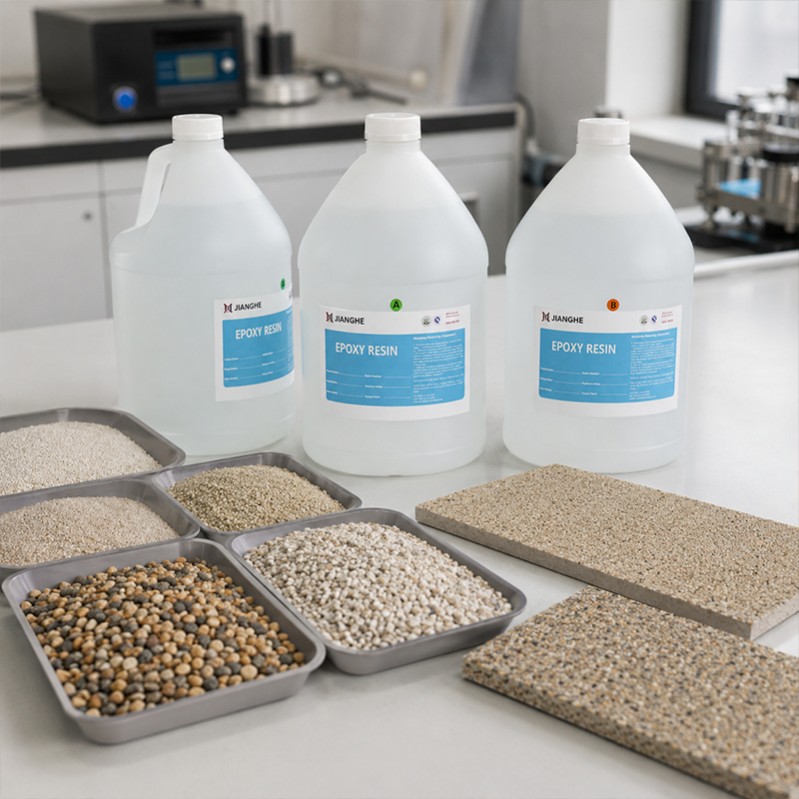
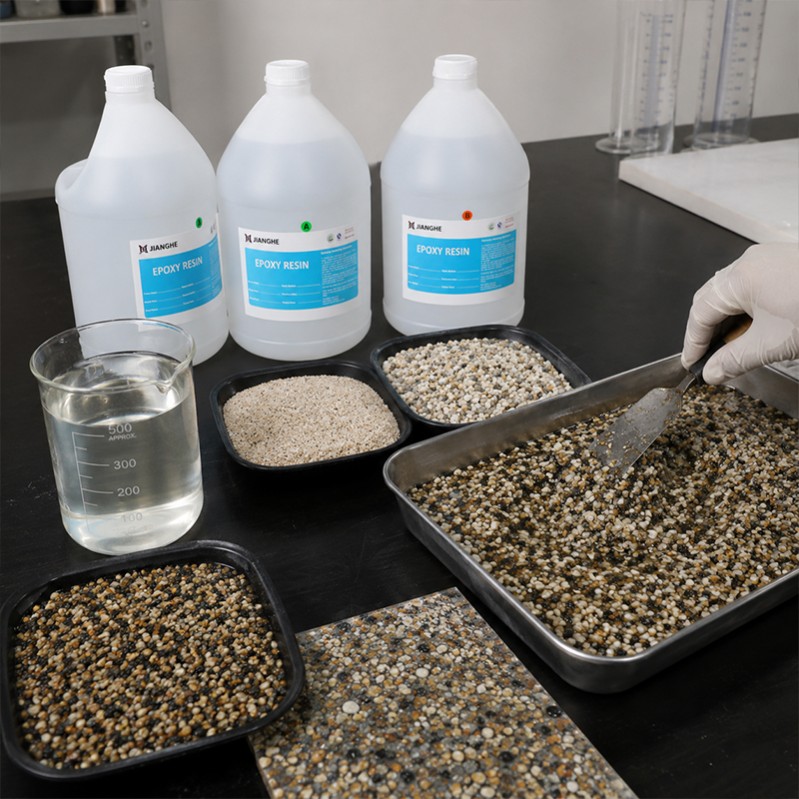
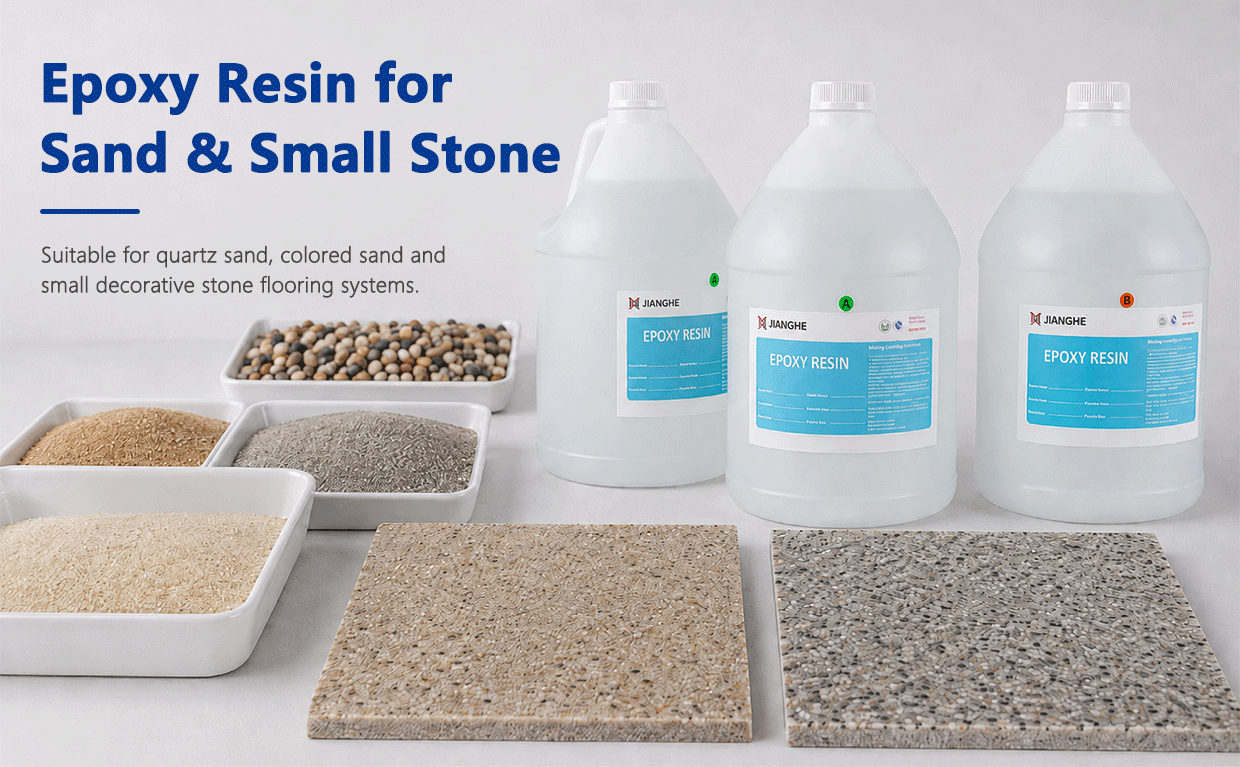
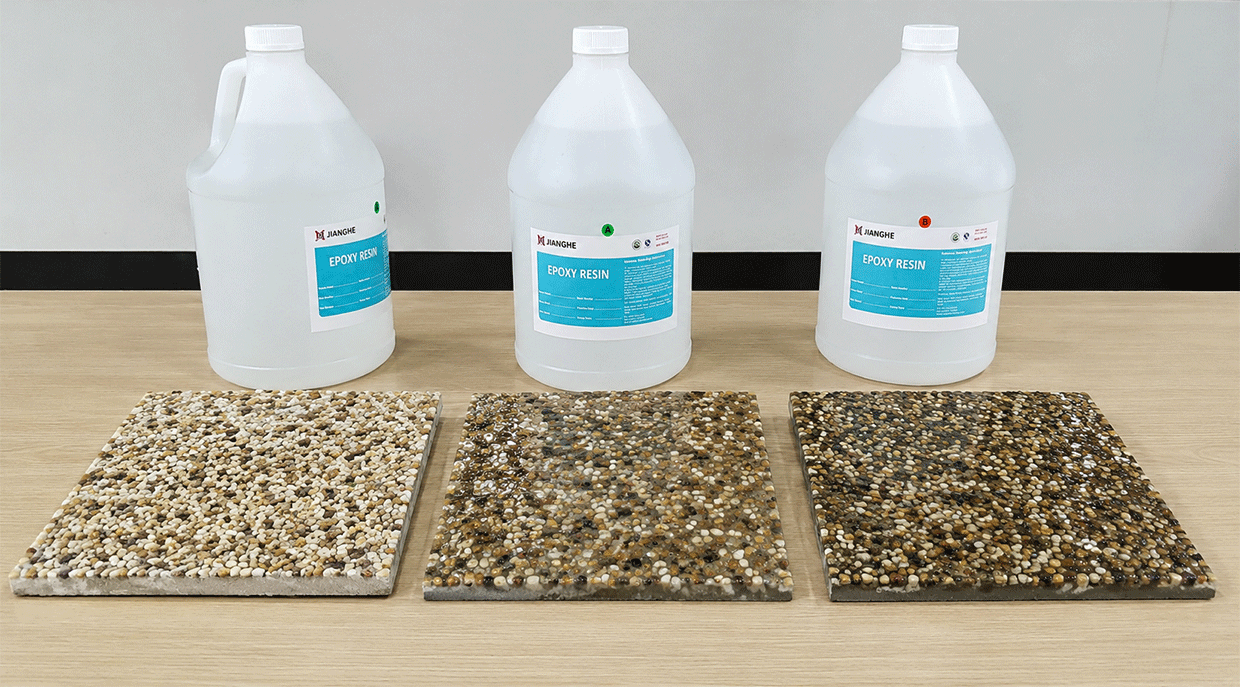
2120AB‑K26 is a two‑component epoxy resin developed for flooring systems made with quartz sand, colored sand, small decorative stone and similar mineral materials.
Compared with resin systems intended mainly for large pebbles or coarse gravel, 2120AB‑K26 is better suited to flooring applications where smaller particles need to be mixed more evenly with the resin and distributed consistently across the surface.
The resin acts as the bonding phase between the individual sand or stone particles. After correct mixing and curing, the mineral material remains visible as the main surface texture while the epoxy resin helps stabilize the flooring system.
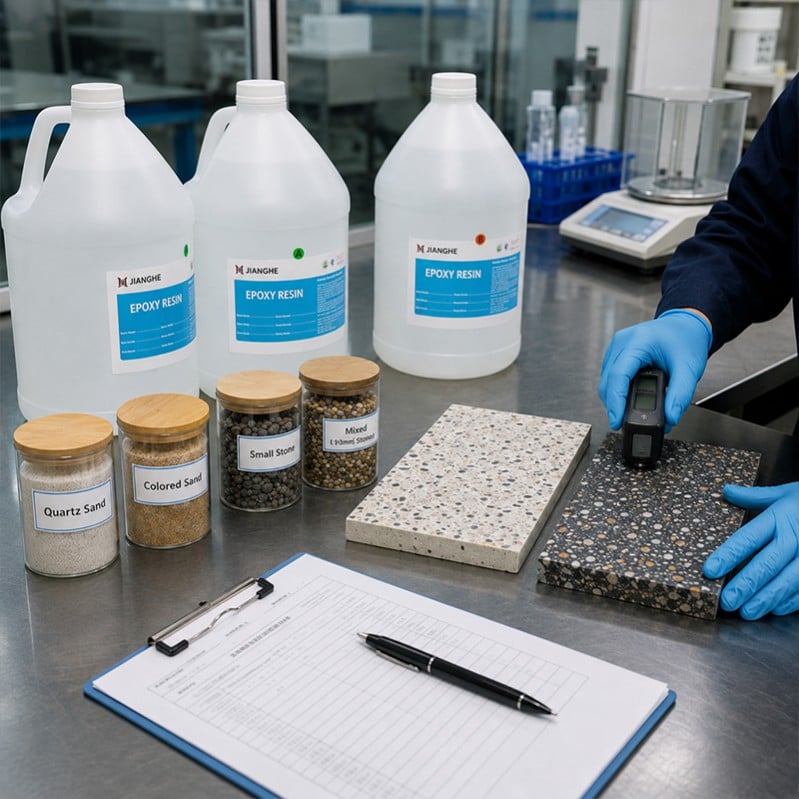
Material selection can affect resin consumption, surface texture and finished appearance. Quartz sand, colored sand and small decorative stone can all be evaluated according to particle size, porosity and the required flooring effect.
| Material Type | Recommendation |
|---|---|
| Colored Sand | Recommended |
| Quartz Sand | Recommended |
| Small Decorative Stone | Recommended |
| Mixed Small Stone | Trial Recommended |
| Terrazzo‑Style Stone Mix | Recommended |
| Large Pebbles / Coarse Gravel | Consider 204AB |
Customers are encouraged to provide the actual sand or stone type and approximate particle size before bulk purchasing.
Resin Flow & Mixing Performance
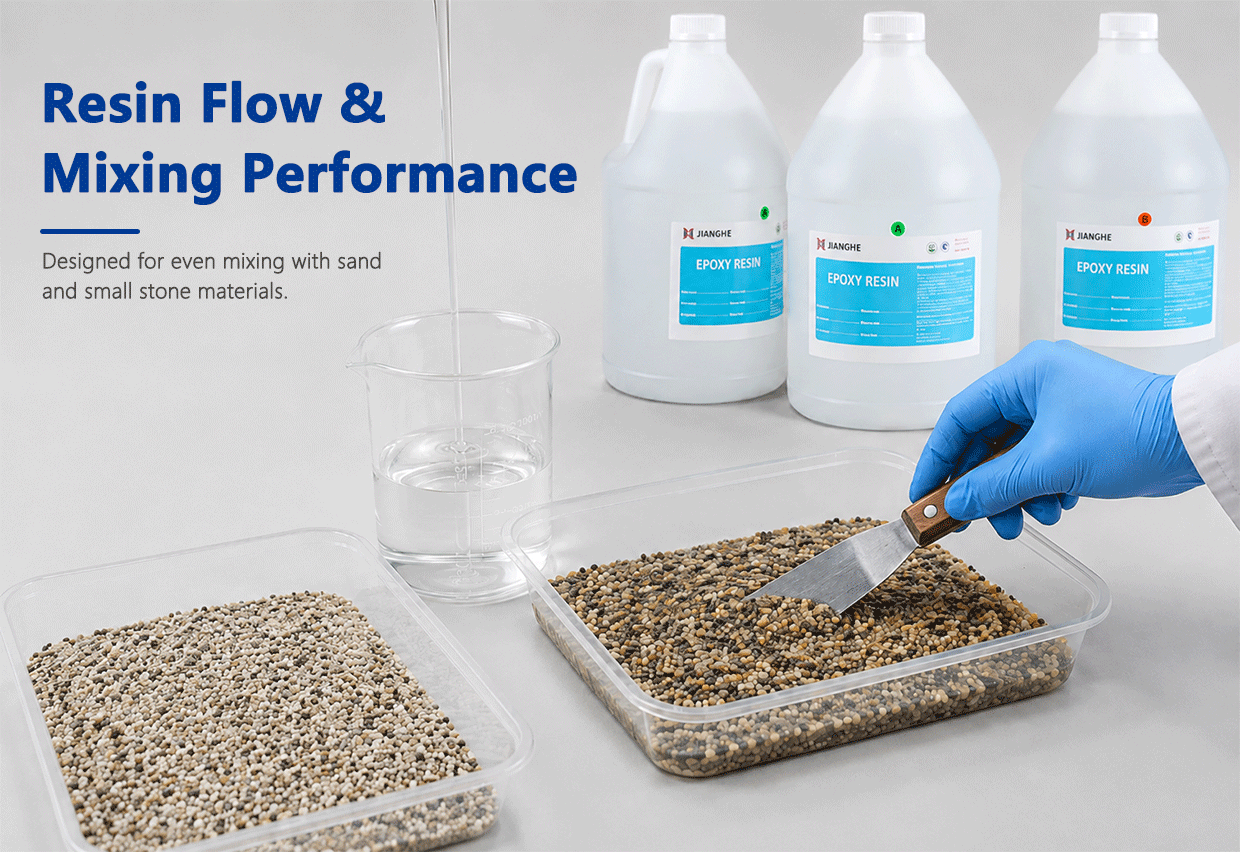
Resin consistency is important when working with sand and smaller stone particles because the material needs to distribute evenly throughout the mixture.
At 25°C, Component A has a typical viscosity of 1500 ± 500 mPa·s, while Component B has a viscosity of 400 ± 50 mPa·s. After mixing, the typical system viscosity is approximately 600 ± 50 mPa·s.
This mixed consistency supports blending with quartz sand, colored sand and small decorative stone while remaining suitable for spreading, leveling and compacting during flooring installation.
The resin should be distributed uniformly throughout the material. Insufficient resin may leave some particles inadequately bonded, while excessive resin can change the intended surface texture and may affect curing behavior.
For this reason, the resin quantity should be controlled according to particle size, total surface area, flooring thickness and the required finished texture.
Typical Flooring Applications
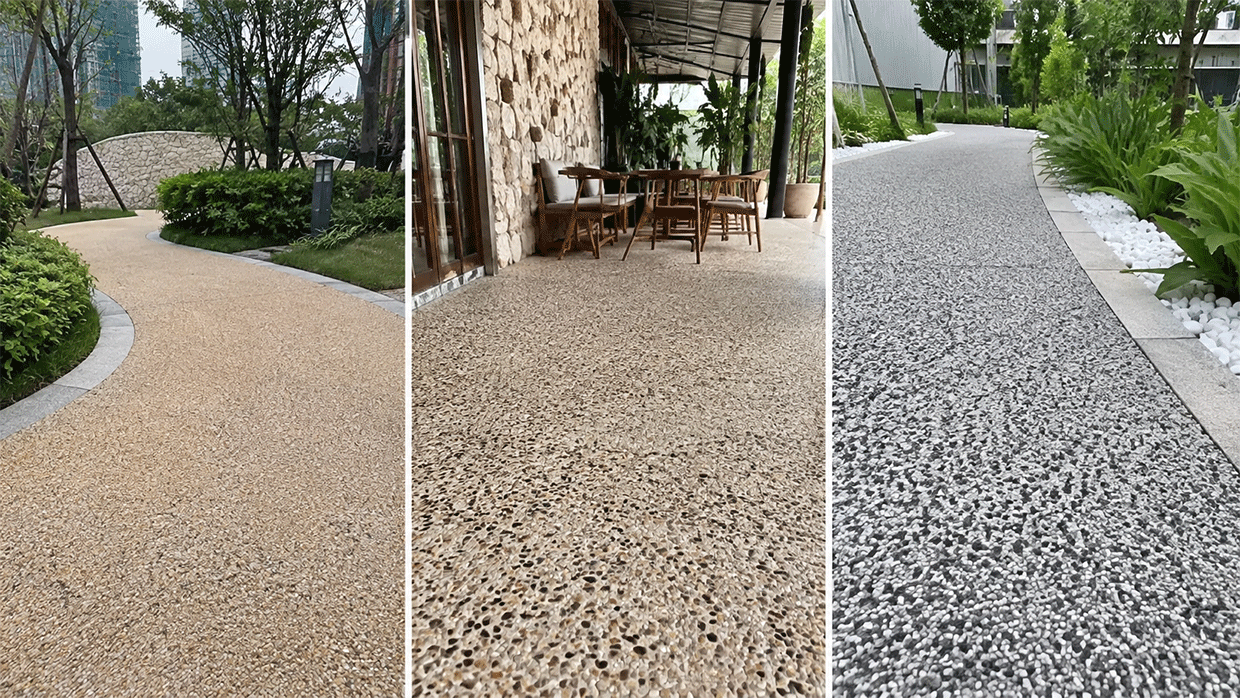
2120AB‑K26 is suitable for decorative and functional flooring systems where sand or smaller stone particles form the visible surface.
Permeable Stone Flooring
Suitable for decorative outdoor flooring using sand or small stone materials to create a textured walking surface.
Terrazzo‑Style Flooring
Suitable for decorative stone‑rich flooring where smaller mineral particles are used to create a continuous surface appearance.
Garden & Landscape Walkways
Suitable for garden paths, park walkways and landscaped pedestrian areas requiring a textured mineral finish.
Commercial Decorative Flooring
Suitable for selected commercial and leisure spaces where surface color, texture and decorative appearance are important.
Anti‑Slip Pedestrian Surfaces
Suitable for indoor and outdoor pedestrian areas where a textured sand‑and‑stone surface is required.
The final performance depends on the complete system, including the epoxy resin, stone material, substrate preparation, resin quantity, compaction and curing conditions.
Technical Data
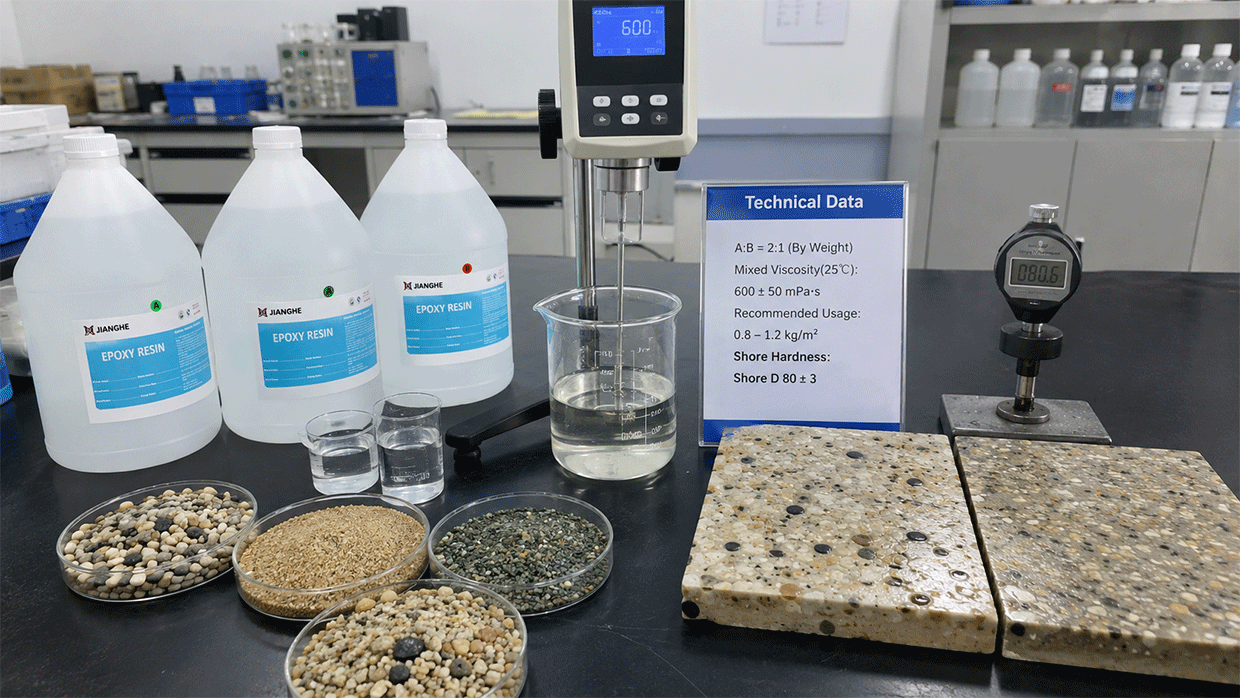
The following technical data provides a reference for evaluating 2120AB‑K26 during product selection and process development.
| Property | 2120A‑K26 | 2120B‑K26 |
|---|---|---|
| Appearance | Light Blue Transparent | Colorless Transparent |
| Viscosity (mPa·s) | 1500±500 | 400±50 |
| Density (g/cm³) | 1.02±0.03 | 1.00±0.02 |
| Mixing Ratio (By Weight) | A:B=2:1 | |
| Mixed Viscosity at 25°C | 600±50 mPa·s | |
| Recommended Application Humidity | 30%–75% RH | |
| Recommended Resin Usage | 0.8–1.2 kg/m² | |
| Shore Hardness | Shore D 80±3 | |
Curing Reference
| Temperature | Working Time | Surface Dry | Full Cure |
|---|---|---|---|
| 10°C | 45 min | 14–16 h | ≥48 h |
| 20°C | 30 min | 8–10 h | ≥36 h |
| 30°C | 20 min | 6–8 h | ≥24 h |
The values above are typical reference data. Actual processing and curing performance can vary with temperature, humidity, resin quantity, flooring material, substrate condition and application method.
The technical document also lists test standards for wear resistance, compressive strength, UV aging, stone bonding stability, 24‑hour water absorption, impact strength and adhesion. However, numerical results are not provided for these items in the current document, so no quantified claims should be added to the website.
Resin Usage & Surface Control
The recommended resin usage for 2120AB‑K26 is approximately 0.8–1.2 kg/m², depending on the flooring material and application conditions.
This value should be treated as a practical reference rather than a fixed resin‑to‑sand or resin‑to‑stone mixing ratio.
Insufficient resin may result in loose particles or surface powdering after curing. Excessive resin may affect curing and change the intended surface texture.
The final dosage should therefore be adjusted according to particle size, flooring thickness, material surface area and the required finished appearance.
For a new sand or stone material, a small test panel is recommended before larger‑scale flooring installation.
Surface Preparation & Installation
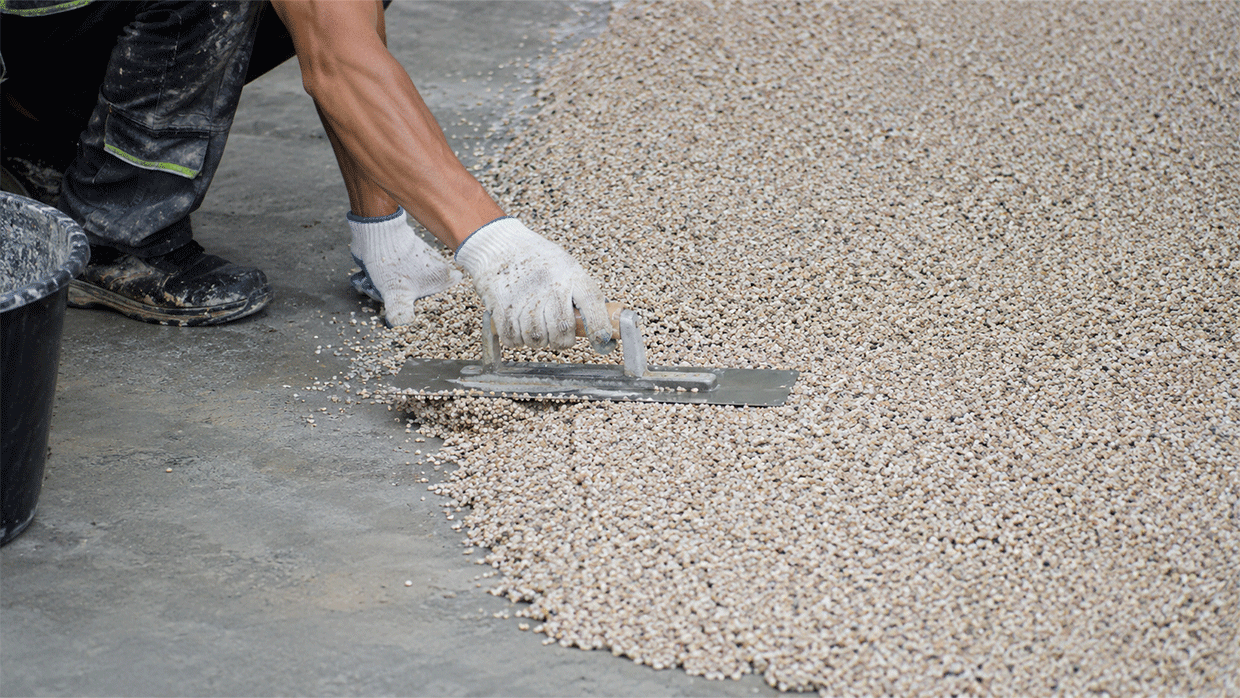
A stable flooring surface starts with proper substrate preparation.
Step 1 — Prepare the Floor
The substrate should be firm, dry and free from loose sand, dust, oil and other contamination.
Step 2 — Mix Components A and B
Measure the resin and hardener accurately at: A:B = 2:1 by Weight. Mix thoroughly until uniform.
Step 3 — Mix with Sand or Stone
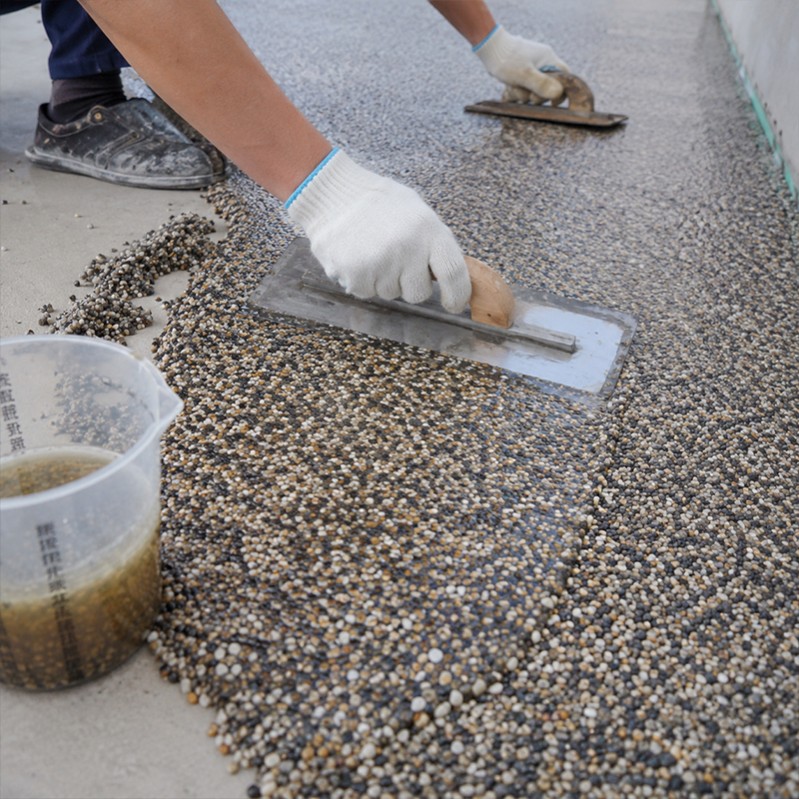
Blend the prepared epoxy resin thoroughly with the selected quartz sand, colored sand or small stone material.
Step 4 — Spread, Level & Compact
Place the mixed material promptly onto the prepared floor, spread it evenly, level the surface and compact it as required.
Step 5 — Allow the Surface to Cure
Keep the flooring undisturbed during curing. Avoid foot traffic, rain and water exposure until the surface has cured sufficiently.
Weak or damp substrates should not be used because poor substrate conditions can contribute to loose particles or surface powdering.
Working & Curing Conditions
Temperature directly affects the working time and curing speed of 2120AB‑K26.
At lower temperatures, the material provides a longer working window but requires more time to reach full cure. At higher temperatures, working time becomes shorter and curing proceeds faster.
Typical working time is approximately:
Recommended application humidity is approximately 30%–75% RH.
During curing, avoid walking on the surface and protect the flooring from rain or water immersion.
For new applications, the planned working quantity should be matched to the ambient temperature and available installation time.
Storage & Material Support
2120AB‑K26 should be stored in a cool, dry and shaded environment with the containers properly sealed.
The recommended storage temperature is 5°C–28°C.
Under suitable storage conditions, the stated shelf life of unopened material is 12 months.
After opening, the product should be used as soon as practical. Prolonged exposure to air may introduce moisture and negatively affect curing performance.
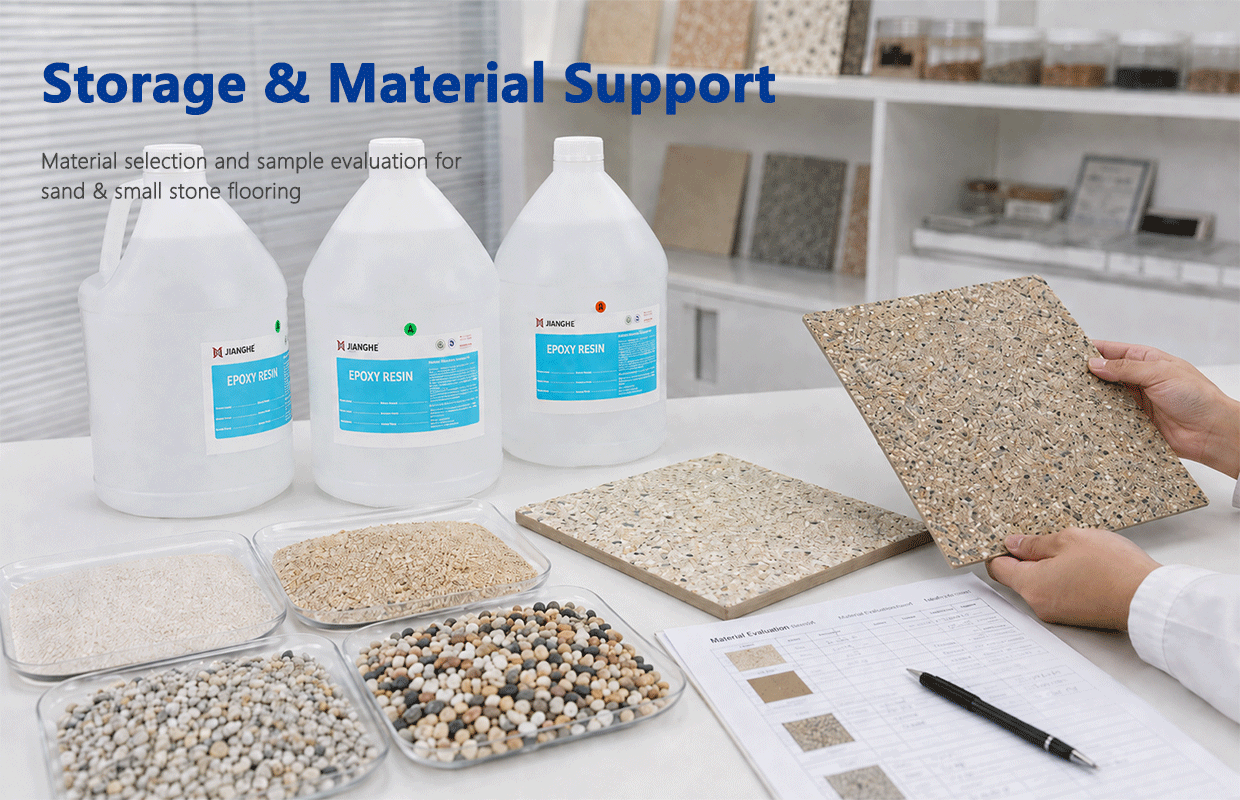
For customers using different quartz sand, decorative sand or small stone materials, material evaluation can be carried out according to the actual flooring requirements.
When requesting a recommendation, customers can provide:
This information can help determine whether 2120AB‑K26 is suitable and whether sample testing should be carried out before bulk purchasing.
FAQ
Q1. What materials are suitable for 2120AB‑K26?
2120AB‑K26 is primarily intended for quartz sand, colored sand, small decorative stone and similar smaller‑particle flooring materials.
Q2. How is 2120AB‑K26 different from 204AB?
2120AB‑K26 is better suited to sand, quartz sand and smaller stone flooring systems. 204AB is more suitable for gravel, pebbles and larger visible stone particles.
Q3. What is the recommended resin usage?
The technical instructions recommend approximately 0.8–1.2 kg/m². Actual usage should be confirmed according to particle size, flooring thickness and required surface texture.
Q4. How does temperature affect the working time?
Typical working time is approximately 45 minutes at 10°C, 30 minutes at 20°C and 20 minutes at 30°C.
Q5. Can I provide my sand or stone information for evaluation?
Yes. Providing the material type, approximate particle size, flooring application and required surface effect can help with initial material evaluation and sample testing.