 EN
EN

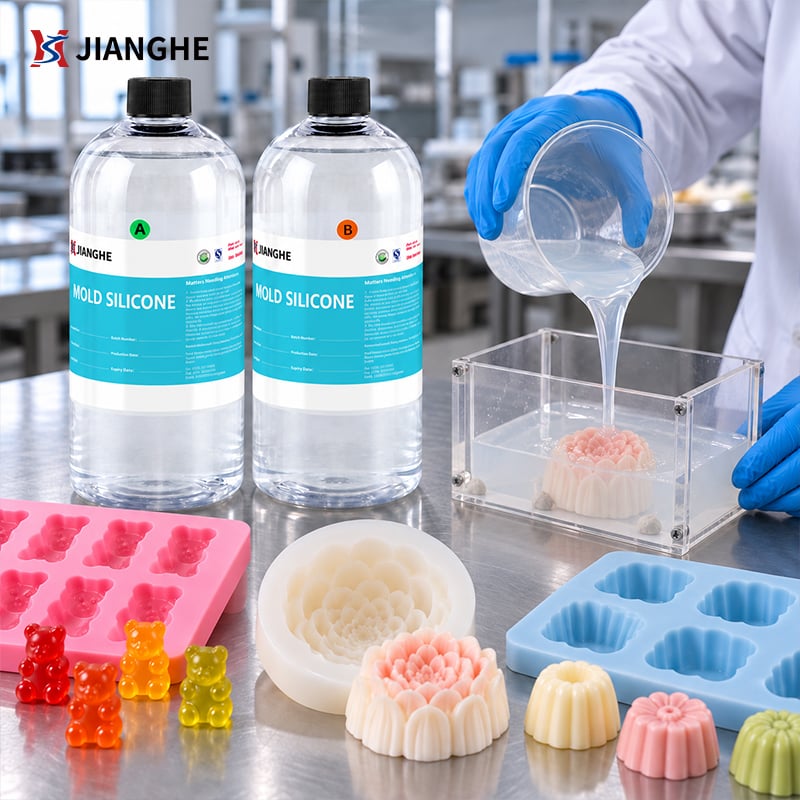
Platinum Cure Silicone Rubber for Food Mold Making
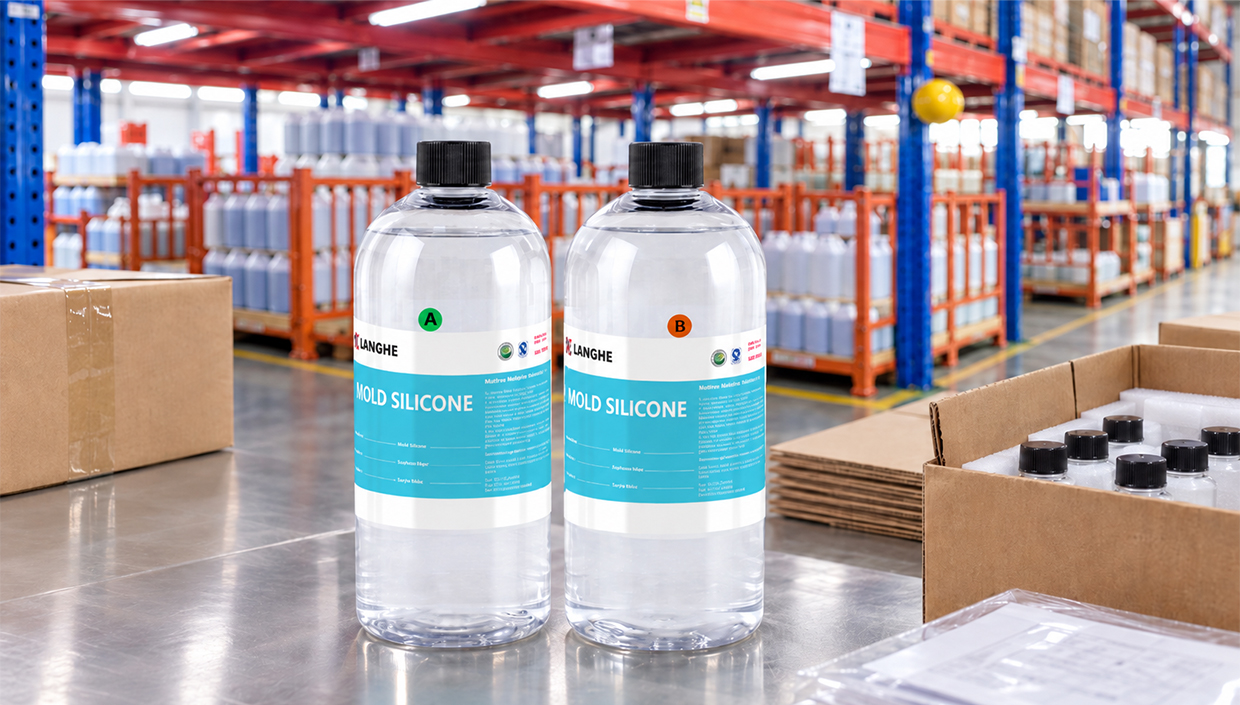
Model: 717AB-F Series Mix Ratio: 1:1
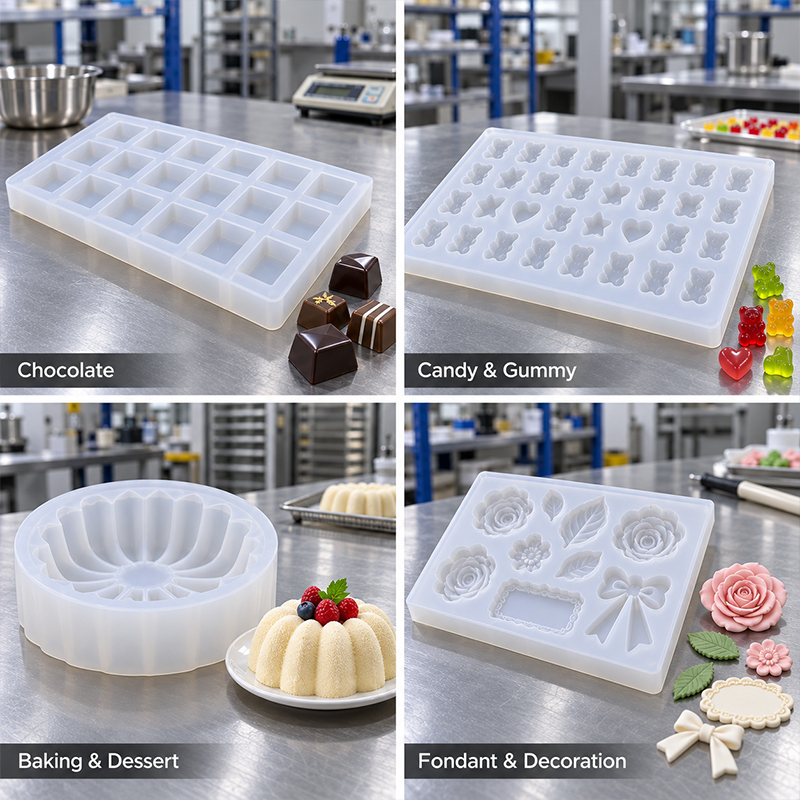
Platinum cure silicone rubber designed for reusable food mold production, including chocolate, candy, gummy, baking, fondant and decorative dessert molds. Different hardness options help balance flexible demolding, cavity support and mold stability according to mold size, cavity depth and food shape.
Key Features:
- Flexible Release for Detailed Food Shapes.
- Suitable for Single & Multi-Cavity Molds.
- Different Hardness Options for Mold Support.
- US FDA 21 CFR 177.2600 Test Report Available.
Typical Applications:
Chocolate Molds · Candy & Gummy Molds · Baking Molds · Fondant Molds · Ice & Dessert Molds

- Overview
- Recommended Products
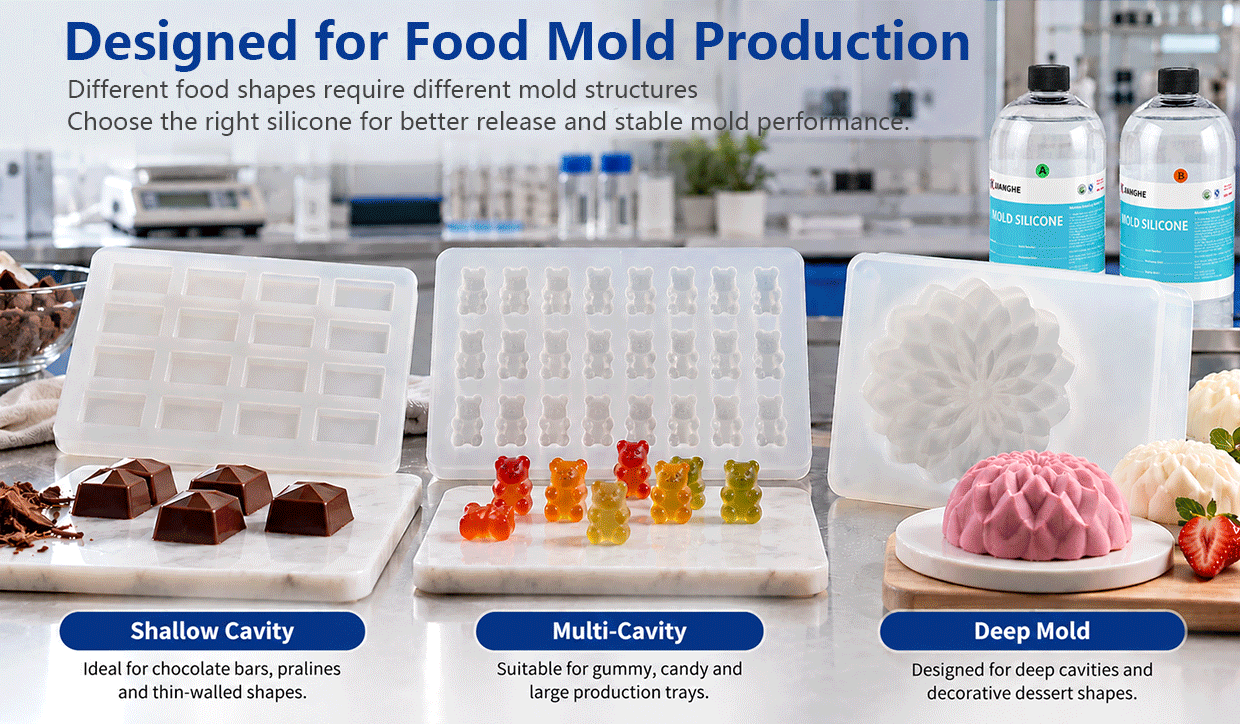
Designed for Food Mold Production
Food molds need to do more than reproduce the original shape. The finished mold should release the food cleanly, maintain cavity shape during filling and remain easy to handle throughout repeated use.
A shallow chocolate mold and a deep decorative dessert mold do not place the same demands on silicone. Shallow cavities usually need less deformation during release, while deeper or more complex shapes may require greater flexibility so the finished food can be removed without damaging edges, lettering or decorative details.
Larger molds and multi-cavity trays also need enough structural support to keep the cavity shape stable during filling and handling. For this reason, the most suitable silicone should be selected according to mold geometry, cavity depth, wall thickness and tray size rather than by hardness alone.
The goal is to find the right balance between flexible demolding and stable cavity support for the actual food mold design.
Explore the Full Platinum Silicone Mold-Making Series →
Key Requirements for Food Mold Making
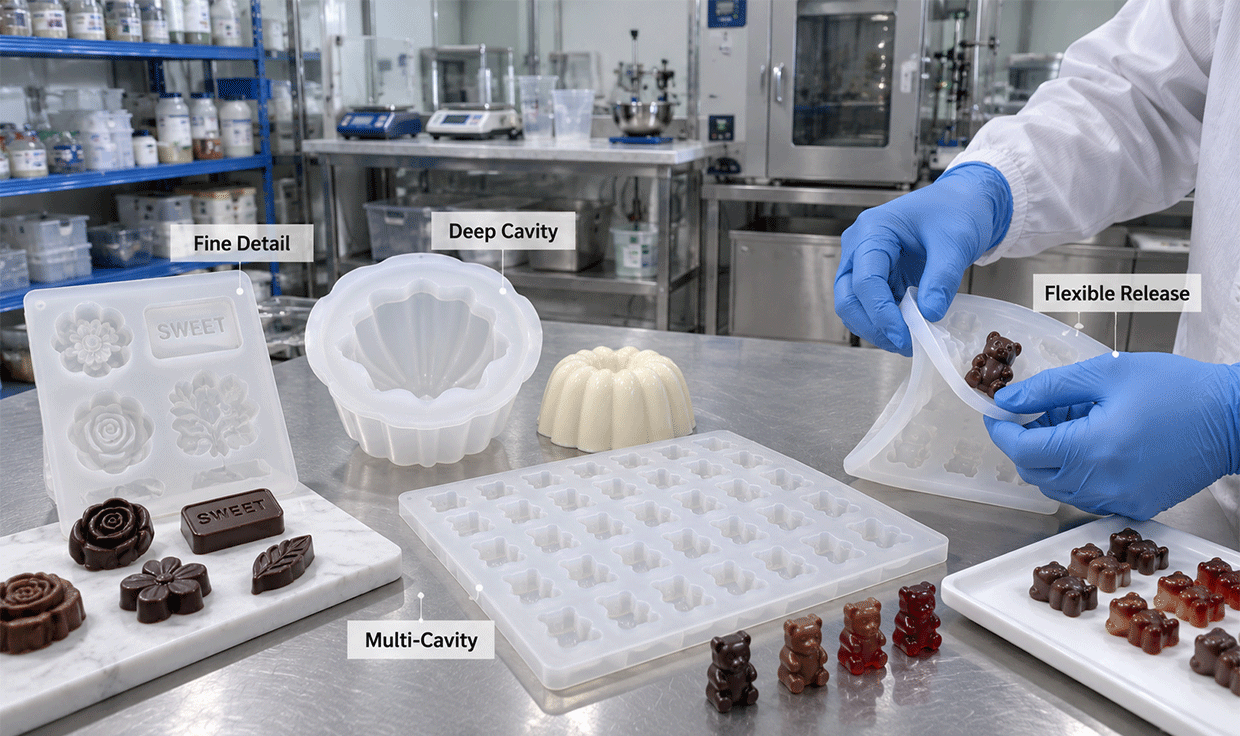
Different food molds have different cavity structures, but the most important requirements are usually the same: clean release, stable cavity shape, clear detail and practical handling.
Flexible Demolding
Chocolate, gummies, fondant decorations and molded desserts may contain thin edges, deep cavities or decorative details. The silicone needs enough flexibility to release these shapes without excessive force or unnecessary distortion.
Stable Cavity Shape
A mold that is too soft may deform when filled, especially in larger trays or deep cavities. Silicone hardness, wall thickness and mold support should therefore be considered together.
Multi-Cavity Stability
Large gummy, candy and chocolate trays may contain many repeated cavities. The mold should remain stable across the full tray so the cavity shape does not change during filling, handling and demolding.
Detail Reproduction
Logos, lettering, patterns and decorative textures need to transfer clearly from the master into the finished mold. Fine detail also requires good material access around recessed or narrow features during mold making.
Food-Contact Documentation
For food-contact applications, supporting test documentation should be reviewed together with the selected material. A US FDA 21 CFR 177.2600 test report is available for the tested silicone sample.
Typical Food Mold Applications
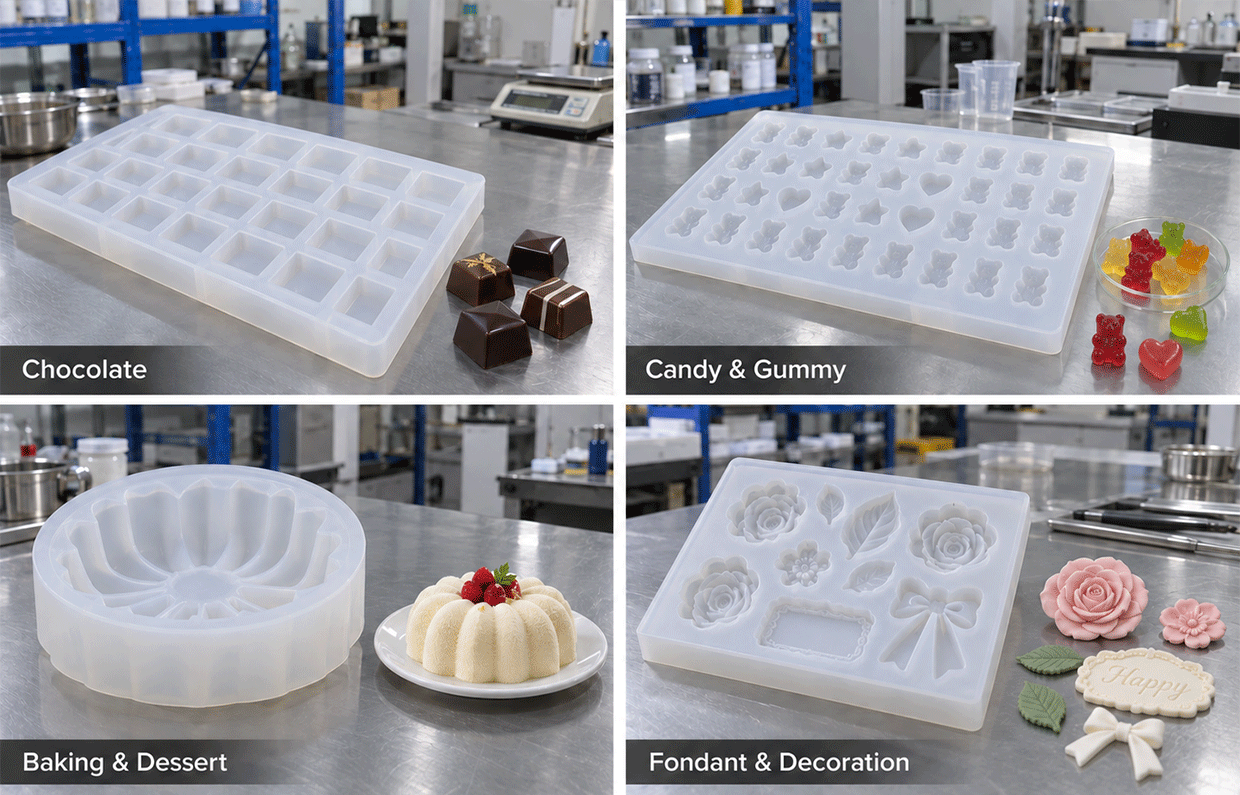
The best silicone for a food mold depends on the cavity design and the way the finished food will be released. Different food products can require very different levels of flexibility and mold support.
Chocolate Molds
For chocolate bars, pralines, truffles and decorative chocolate shapes where clean edges, smooth cavity surfaces and controlled demolding are important.
Candy & Gummy Molds
For single- and multi-cavity molds used for gummies, soft candies and shaped confectionery where flexible release needs to be balanced with tray stability.
Baking & Dessert Molds
For molded cakes, pastries, chilled desserts and decorative baked products where deeper cavities or larger mold sections may require additional support.
Fondant & Decorative Food Molds
For lettering, floral elements, relief patterns and decorative food shapes that need clear detail and flexible removal from the mold.
Ice & Frozen Dessert Molds
For shaped ice and frozen desserts where flexible silicone can make deeper or more complex shapes easier to release.
How to Select Silicone for Food Mold Making
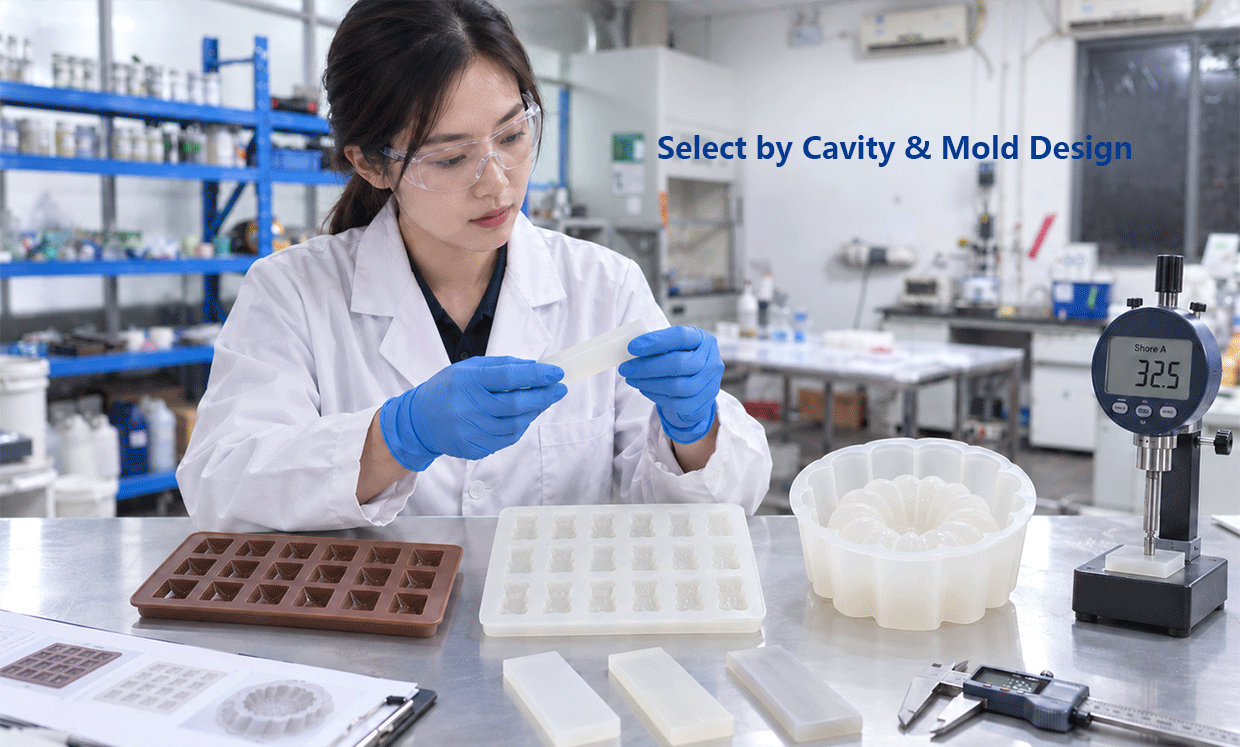
Start with the mold design, not the Shore hardness number. The right silicone should flex enough for easy release while still providing enough support to keep the cavity stable.
1. Check the Cavity Depth
Shallow chocolate and candy cavities normally need less mold deformation during demolding than deep decorative molds. As cavity depth increases, flexibility becomes more important.
2. Check Undercuts & Narrow Openings
Food shapes with strong undercuts, narrow openings or deep relief may require the mold to flex more during removal. A grade that is too firm can make these shapes harder to release.
3. Consider Mold Size
A small individual mold and a large multi-cavity tray may require different levels of support even when the cavity shape is similar. Larger molds normally need more attention to wall thickness and overall stability.
4. Consider the Finished Food
Chocolate, gummies, baked products and frozen desserts do not release in the same way. Mold flexibility should be selected around the actual product geometry and demolding method.
5. Consider Mold Support
A softer silicone can still work well when sufficient wall thickness or a support tray is used. Material hardness and mold structure can therefore be adjusted together.
6. Review Food-Contact Documentation
If the mold will contact food, review the available test report and confirm that the selected material is suitable for the intended application and market requirements.
Selection Guide
| Mold Requirement | Selection Direction |
| Shallow simple cavities | Balanced flexibility and support |
| Deep cavities | Greater demolding flexibility |
| Strong undercuts | Prioritize flexible release |
| Large multi-cavity trays | Increase mold support |
| Fine decorative details | Detail access + flexible release |
| Food-contact application | Review available test documentation |
Recommended Technical Range for Food Mold Applications
Food molds usually need a balance between flexible release and cavity support. Softer grades may be evaluated for deep or complex shapes, while medium and firmer grades can provide additional support for larger molds and trays.
There is no single Shore hardness that is ideal for every chocolate, gummy or baking mold. The preferred range depends on cavity depth, wall thickness, mold size and the way the finished food will be removed.
Selection Reference
| Property | Reference |
| Material System | Platinum Cure / Addition Cure Silicone |
| Mix Ratio | 1:1 |
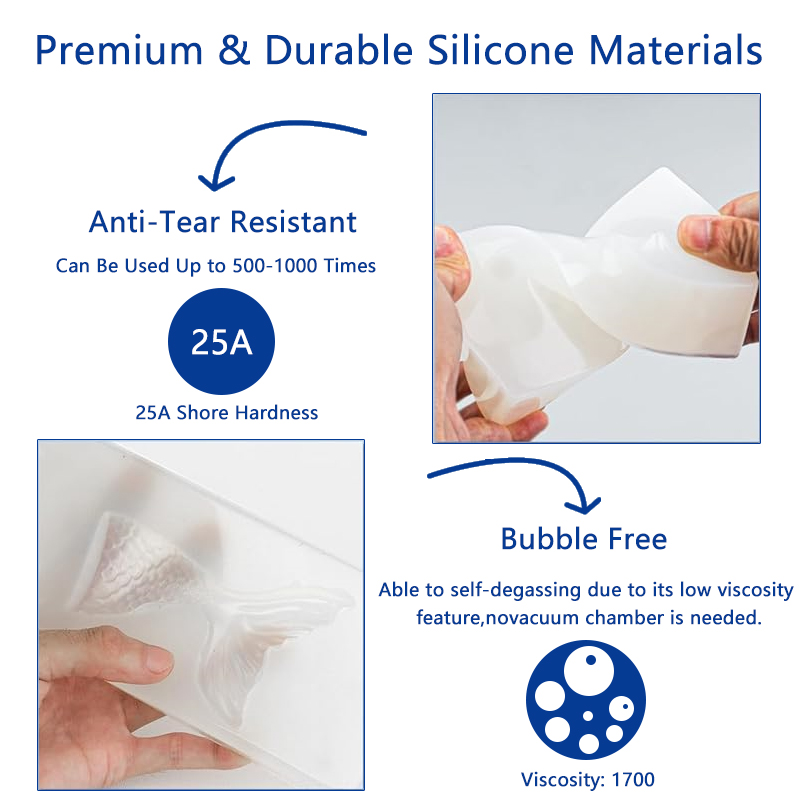
| Available Hardness | Shore A 0–45 |
| Working Time | Approx. 30 min |
| Reference Cure | Approx. 4 h at room temperature |
| FDA Test Report | US FDA 21 CFR 177.2600 |
| Test Result | Pass for tested silicone sample |
View Full 717AB-F Grade Comparison →
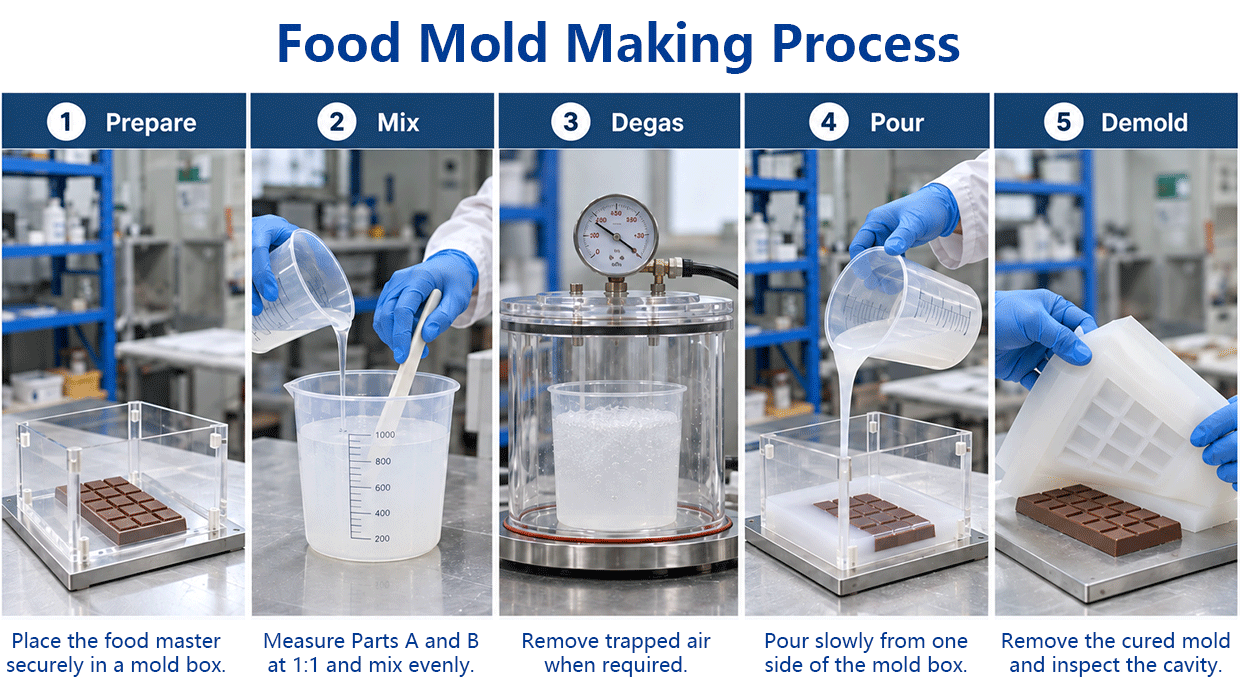
Food Mold Making Process
01 Prepare the Master
Prepare the original master that defines the final food shape. Make sure the surface is clean and inspect cavity edges, decorative details and undercuts before building the mold box.
02 Secure the Master in the Mold Box
Fix the master inside a suitable mold box and leave enough clearance around it for the required silicone wall thickness. The mold box should be high enough to contain the silicone above the highest point of the master.
03 Measure & Mix Parts A and B
Measure Parts A and B at the specified 1:1 ratio and mix thoroughly until uniform. Mix carefully to avoid introducing unnecessary air.
04 Degas When Required
If air is introduced during mixing, vacuum degassing can be used where bubbles may affect cavity surfaces or decorative details.
05 Pour the Silicone
Pour the mixed silicone slowly from one side of the mold box and allow it to flow naturally around and over the master. Avoid pouring directly onto the most detailed areas.
06 Allow the Silicone to Cure
Allow the silicone to cure sufficiently before removing the mold box or disturbing the master.
07 Demold & Inspect
Remove the mold box and carefully separate the cured silicone from the master. Inspect cavity surfaces, edges and decorative details before the mold moves into production use.
View Technical Documentation →
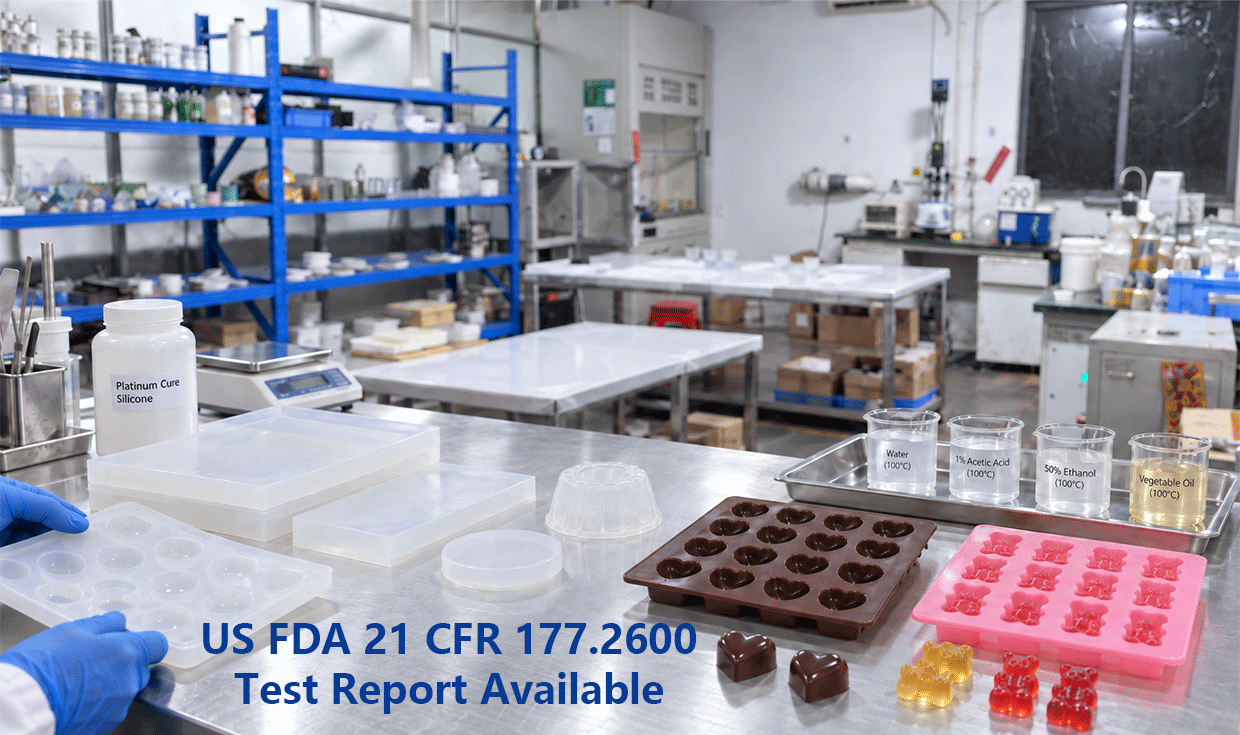
Food-Contact Performance & Compatibility
A food mold should be evaluated as a complete system rather than by silicone hardness alone. The silicone grade, master material, mold design, intended food process and food-contact documentation all need to work together.
The master used to produce the mold must first be compatible with platinum cure silicone. New coatings, modeling compounds, adhesives or release agents should be tested before the full mold is poured because incompatible materials may interfere with curing.
A US FDA 21 CFR 177.2600 test report is available for the tested silicone material. The SGS report identifies the submitted sample as colorless translucent silicone and records a Pass conclusion for the tested requirement.
Because the report does not identify individual Shore hardness grades or specific 717AB-F models, the report should be reviewed together with the selected material before commercial food-contact use.
The actual food process should also be considered. Chocolate molding, gummy production, baking, freezing and other applications can involve different temperatures and handling conditions, so the selected material should be confirmed against the intended process requirements.
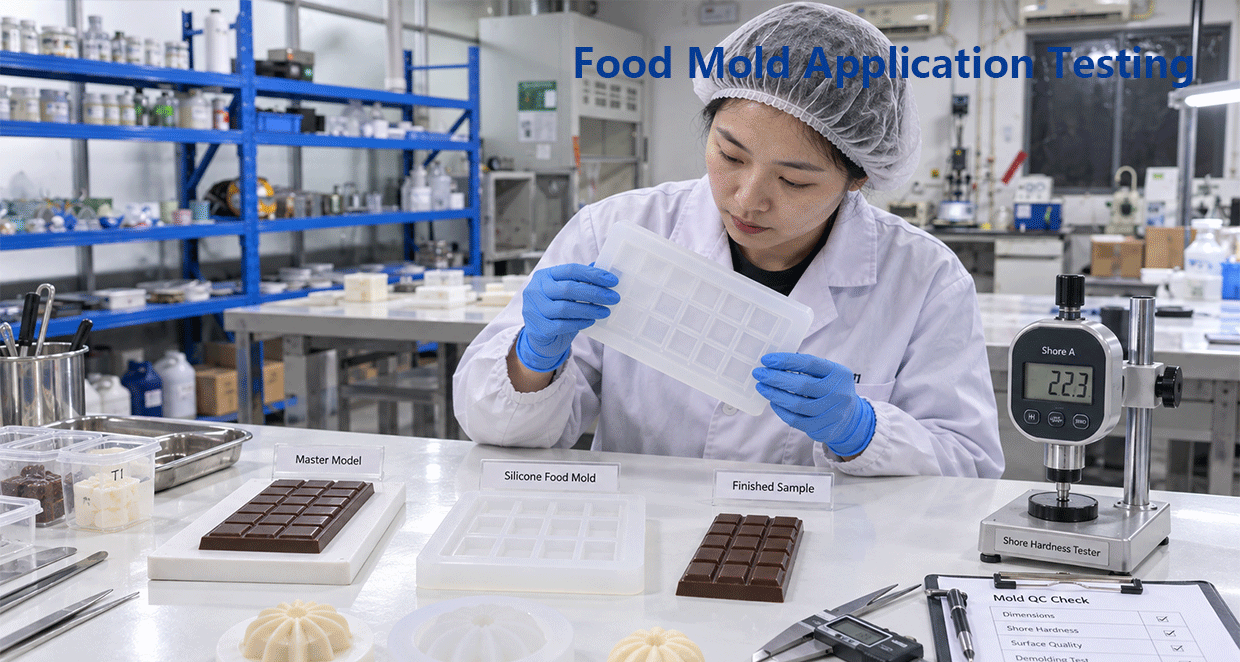
Application Testing & Quality Control for Food Molds
A technical data table cannot show whether a silicone mold will perform well with every food shape. Cavity depth, tray size, detail level and demolding method all influence the finished result.
A representative mold trial can help confirm whether the silicone fills the master correctly, maintains the intended cavity shape and releases the finished product without excessive deformation.
For multi-cavity molds, testing can also show whether the tray remains stable during filling, handling and demolding. This becomes more important as the mold size and number of cavities increase.
Material checks such as viscosity and Shore hardness help verify the selected grade, while an actual mold trial shows whether the material and mold design work together for the intended food application.
This type of evaluation is especially useful when developing a new food shape, increasing cavity depth, enlarging a tray or changing to a different hardness range.
Application Evaluation May Include
Cavity Detail Check
Confirms edges, patterns and decorative features reproduce clearly.
Demolding Evaluation
Checks whether the finished shape can be released without excessive mold distortion.
Mold Support Check
Evaluates whether the mold stays stable during filling and handling.
Master Compatibility Test
Confirms that the silicone cures properly against the actual master surface.
Grade Verification
Uses material checks such as viscosity and Shore hardness when required.
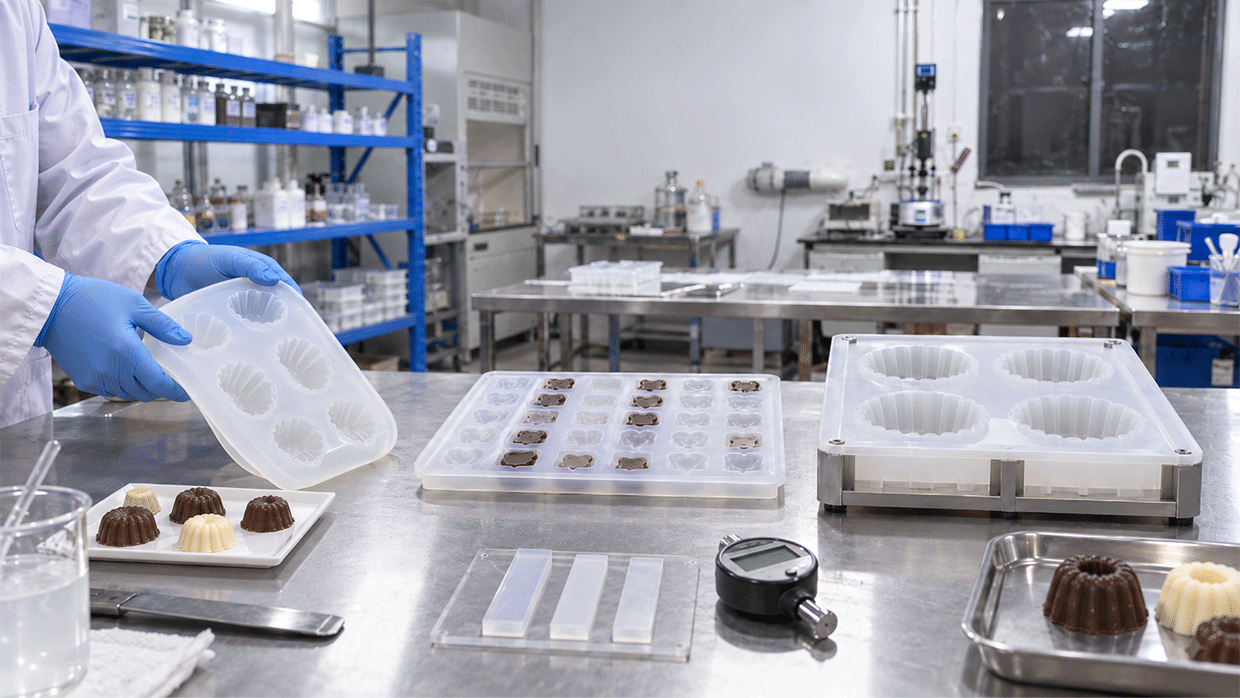
Packaging, Customization & Supply Support
Once a food mold material has been approved, repeat production depends on consistent grade identification, suitable packaging and clear supporting documentation.
Samples can be used to confirm cavity release, mold stability and practical handling before moving to bulk purchasing. This is particularly useful when developing a new food shape, changing cavity depth or increasing the size of a multi-cavity tray.
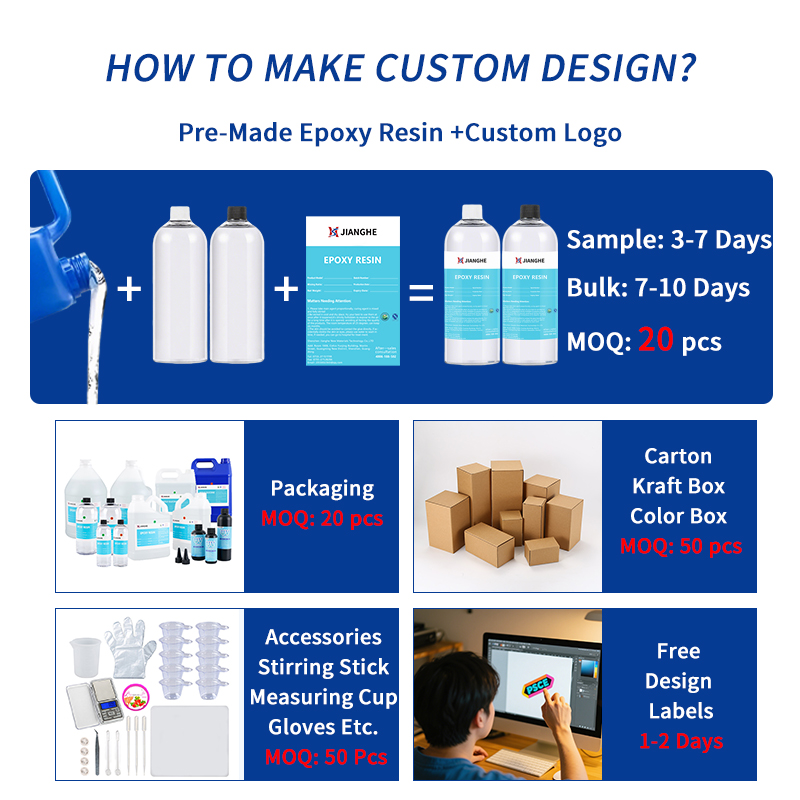
Packaging can be arranged according to order requirements. OEM and private-label options can also be discussed for distributors, brands and qualified food-mold material projects.
For food mold applications, the most useful information to provide is the intended food product, mold dimensions, cavity depth, number of cavities, required flexibility and target market.
The available US FDA 21 CFR 177.2600 test report can also be provided for review where relevant to the intended application.
FAQ:
Q1: Is platinum cure silicone suitable for food mold making?
Platinum cure silicone can be used for food mold applications when the selected material and available test documentation are appropriate for the intended use. A US FDA 21 CFR 177.2600 test report is available for the tested silicone sample.
Q2: Does this silicone meet FDA food-contact requirements?
The tested silicone sample passed the applicable US FDA 21 CFR 177.2600 requirements.
Q3: What hardness should I use for a chocolate mold?
There is no single hardness for every chocolate mold. Shallow bar and praline molds may need less flexibility than deep decorative chocolate shapes. Mold size, cavity depth and support should be considered together.
Q4: What silicone is suitable for gummy molds?
Gummy molds often contain many repeated cavities, so flexible release and tray stability are both important. The selected silicone should allow clean demolding while keeping the mold sufficiently supported during filling and handling.
Q5: Is softer silicone always better for food molds?
No. Softer silicone can make deep or complex shapes easier to demold, but a mold that is too soft may deform when filled. The best choice balances flexible release with cavity support.
Q6: Can the same silicone be used for chocolate, candy and baking molds?
A grade may work across more than one food mold application, but mold geometry and process conditions can differ. Chocolate, gummy and baking molds should be evaluated according to cavity depth, support requirements and actual processing conditions.
Q7: Do multi-cavity food molds need firmer silicone?
Not always. Larger multi-cavity molds usually need more overall support, but silicone hardness, wall thickness and the use of a support tray should be considered together.
Q8: Should I test a sample before bulk production?
A sample trial is recommended when developing a new mold design, using an unfamiliar master or changing cavity depth, tray size or silicone hardness. It helps confirm demolding, mold support and practical handling before a larger order is placed.