Room 1008, Building 1, Cofco Yunjing, Martin Street, Heshui Kou Community, Guangming +86-13418798686 [email protected]
In the specialized field of high-end jewelry manufacturing, the materials you select form the technical foundation of your brand's reputation. Whether you are running a boutique studio on Etsy or managing a small-scale production line, the debate between UV Resin and Epoxy Resin (often referred to as Epoxy AB Glue) is pivotal. Both materials offer distinct chemical behaviors, curing mechanisms, and aesthetic outcomes. At JH Epoxy, we focus on providing industrial-grade clarity and stability for both systems, and understanding their nuances is key to optimizing your workflow.
This comprehensive guide breaks down the technical differences, cost-efficiencies, and application strategies to help you decide which resin system truly belongs on your workbench.
1. The Chemistry of Speed: Understanding UV Resin
UV Resin is a single-component polymer that remains in a liquid state until exposed to specific wavelengths of ultraviolet light. Unlike traditional resins, it does not require a hardener or a complex mixing ratio.
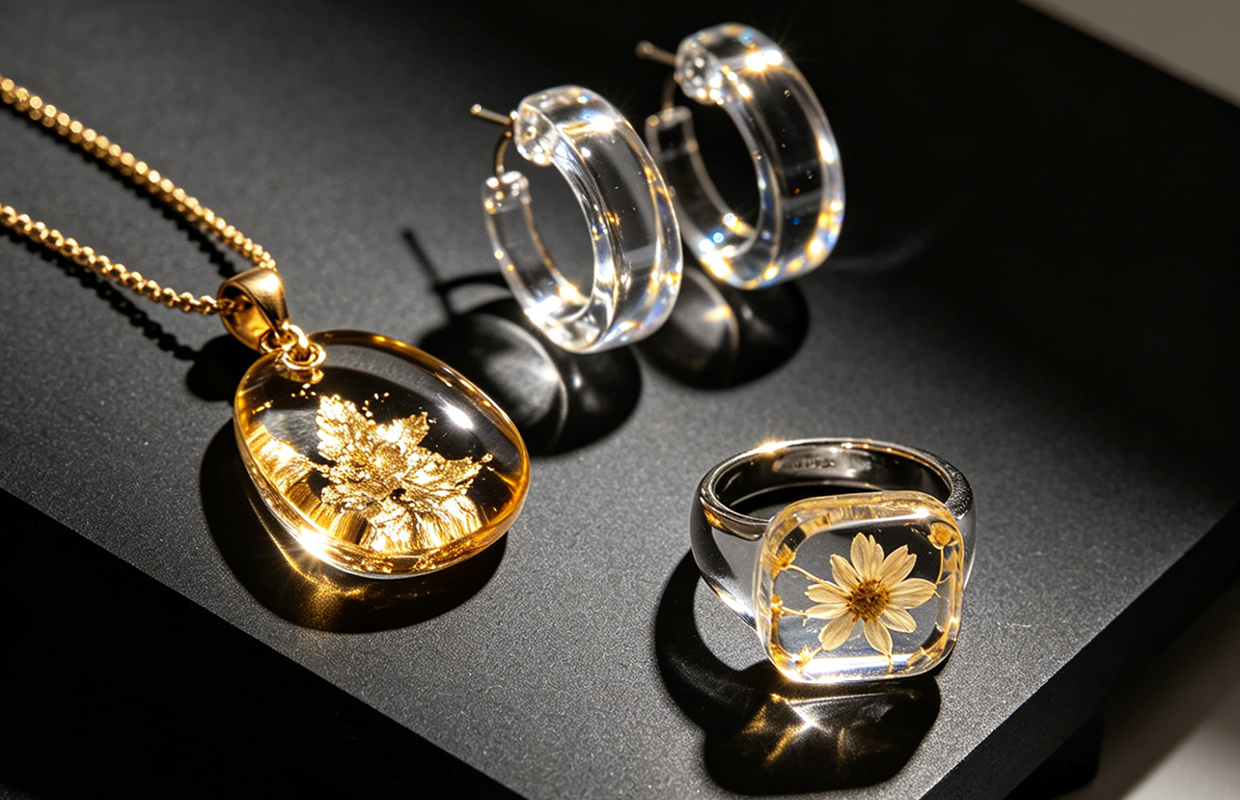
The Workflow Advantage: For a jewelry studio, time is often the most expensive commodity. UV resin offers nearly instantaneous gratification. A small pendant or a pair of earrings can transition from liquid to a rock-hard solid in under 120 seconds under a professional 36W UV lamp. This "zero-waste" material is ideal for applying a glossy "dome" over printed graphics or sealing delicate botanicals in open bezels.
Technical Constraints: However, the fast-curing nature of UV resin comes with physical limitations. Since UV light must penetrate the material to initiate the cross-linking process, it is not suitable for deep-pour applications or large, thick molds. If the light cannot reach the core, the center remains uncured and sticky. Furthermore, UV resin is prone to higher shrinkage rates compared to epoxy systems, which can lead to slight warping in larger geometric pieces.
2. The Foundation of Durability: The Case for Epoxy Resin
Epoxy Resin, a two-part system involving a resin (Part A) and a hardener (Part B), relies on a slower, heat-generating chemical reaction known as an exothermic process.
Superior Physical Properties: When it comes to structural integrity and long-term wearability, epoxy resin is the clear winner. Once the 24-hour curing cycle is complete, the resulting plastic is significantly more resistant to surface scratches and impact than most UV resins. For jewelry items that face daily friction—such as bangles, rings, or heavy pendants—epoxy provides a museum-quality finish that lasts for years without losing its luster.
Large-Scale Production Efficiency: If your studio produces dozens of units per day, epoxy is far more cost-effective. Mixing a large batch of High-Transparency Casting Resin allows you to fill multiple molds in one go. The self-degassing properties of high-quality epoxy formulas, like those developed by JH Epoxy, ensure that micro-bubbles escape naturally during the long pot life, resulting in a finish that mimics optical glass.
3. Critical Factor: Pot Life and Color Blending
For artists who specialize in complex color gradients or "petri dish" effects, pot life (the time the resin remains workable) is the deciding factor.
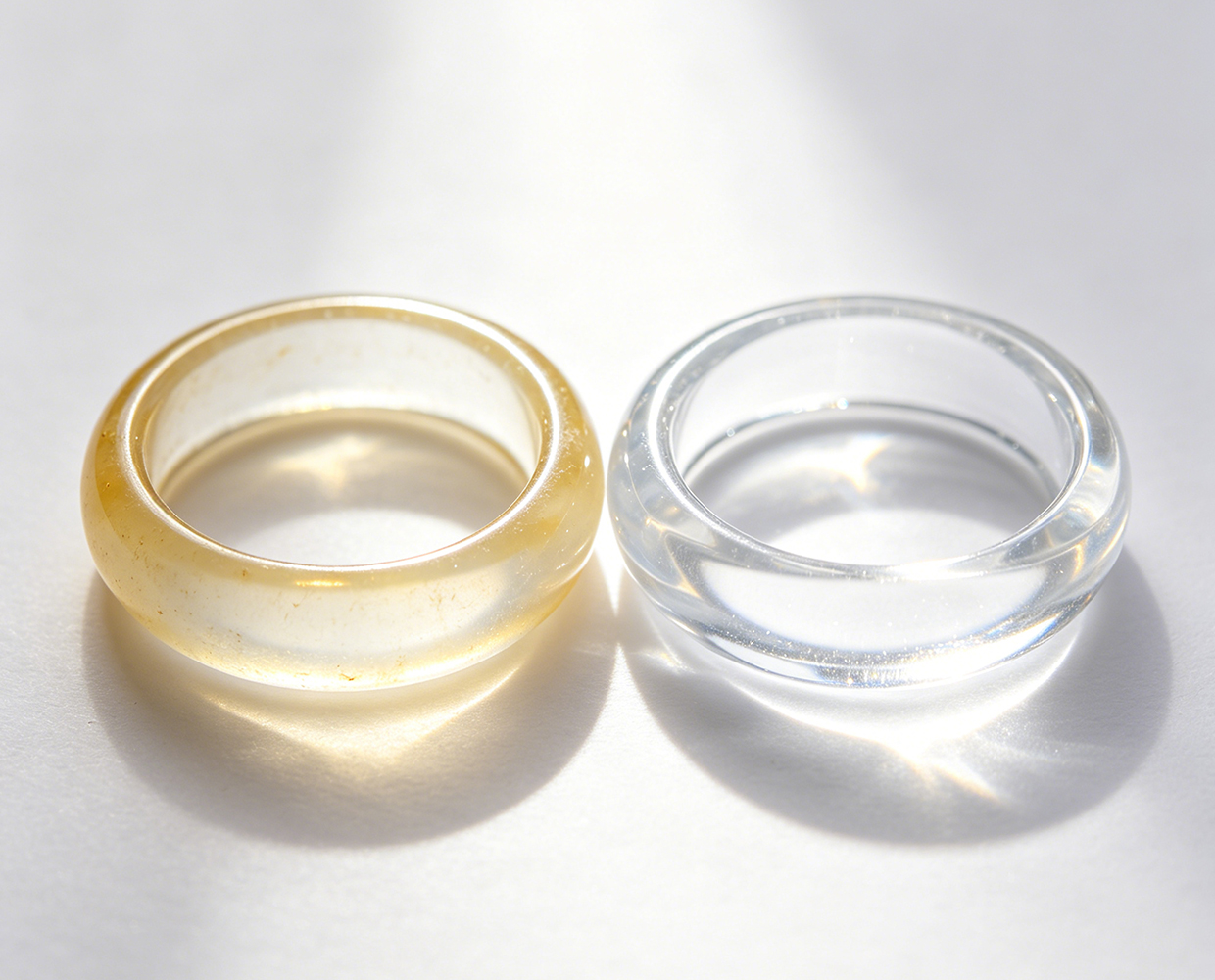
4. Clarity and Long-Term Anti-Yellowing
Jewelry is an investment, and customers expect their pieces to remain crystal clear. Standard resins often turn yellow over time due to UV exposure from the sun.
5. Workspace Considerations: Safety and Equipment
A jewelry studio must be organized around its material choice.
6. The "Hybrid Studio" Strategy: The Professional Choice
Most high-end jewelry manufacturers don't choose just one. Instead, they implement a hybrid workflow:
Conclusion
The choice between UV and Epoxy resin isn't about which is "better"—it's about which serves your specific design goals. If you prioritize speed and small-scale detailing, UV resin is your best ally. If you aim for high-durability, large-batch production, and optical-grade clarity, a professional epoxy system is indispensable.
At JH Epoxy, we manufacture both systems to the highest industrial standards, ensuring that whether you cure in minutes or hours, your jewelry stands the test of time.
 Hot News
Factory-backed material solutions for manufacturers, brands and distributors worldwide. We specialize in liquid silicone rubber, epoxy resin, flooring materials and related products, providing reliable manufacturing, OEM customization and stable global supply.
Copyright © 2026 Shenzhen Jianghe New Materials Technology Co., Ltd.All rights reserved. Privacy Policy
 EN
EN