Room 1008, Building 1, Cofco Yunjing, Martin Street, Heshui Kou Community, Guangming +86-13418798686 [email protected]
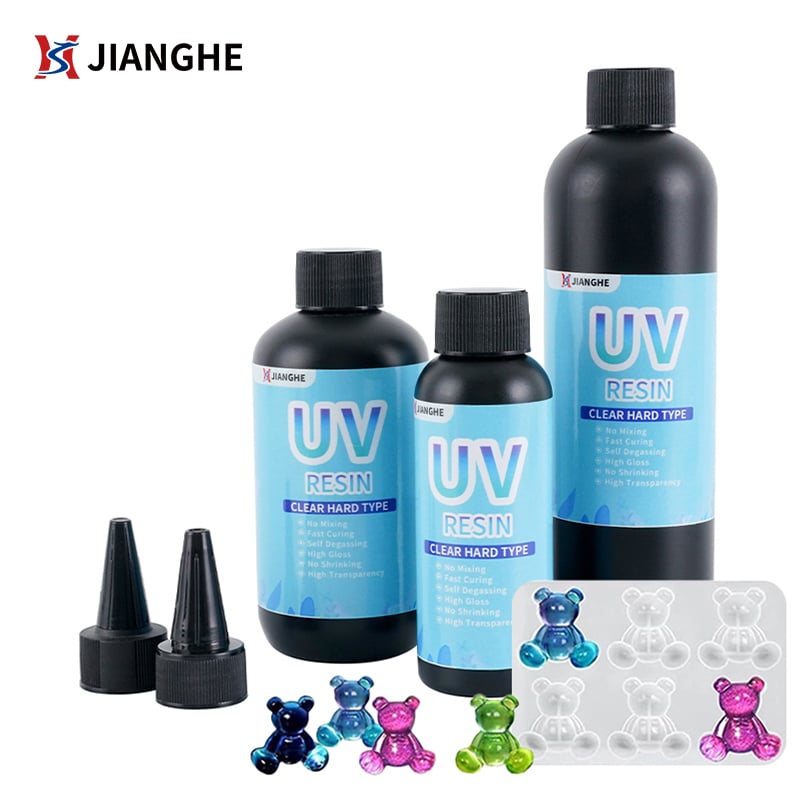
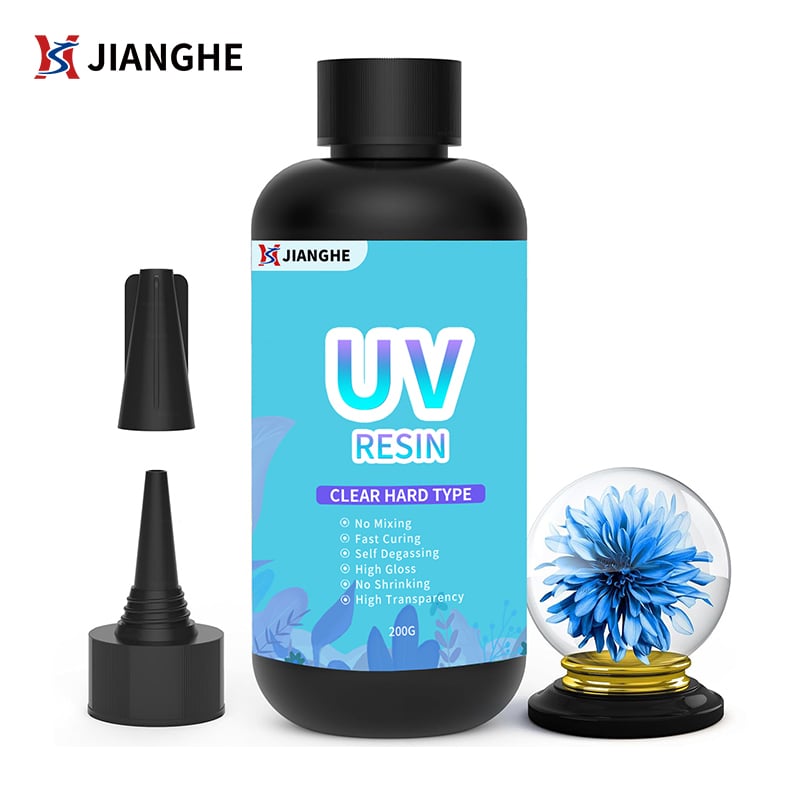
In today's "instant-gratification" global market, UV Resin (Ultraviolet Curing Resin) has revolutionized the production cadence of handmade jewelry, rapid prototyping, and high-precision industrial encapsulation. Its ability to transition from liquid to solid in mere seconds under a UV lamp offers an unparalleled boost to production efficiency. However, for professional B2B users, UV resin is far more than just a "plug-and-play" adhesive. The underlying oxygen inhibition effects, photopolymerization kinetics, and long-term weathering resistance are what ultimately define the commercial value of the finished product.
As a source factory dedicated to the evolution of UV curing technology, JHEPoxy presents this in-depth analysis of how to master the technical heights of UV resin application and avoid common manufacturing pitfalls.
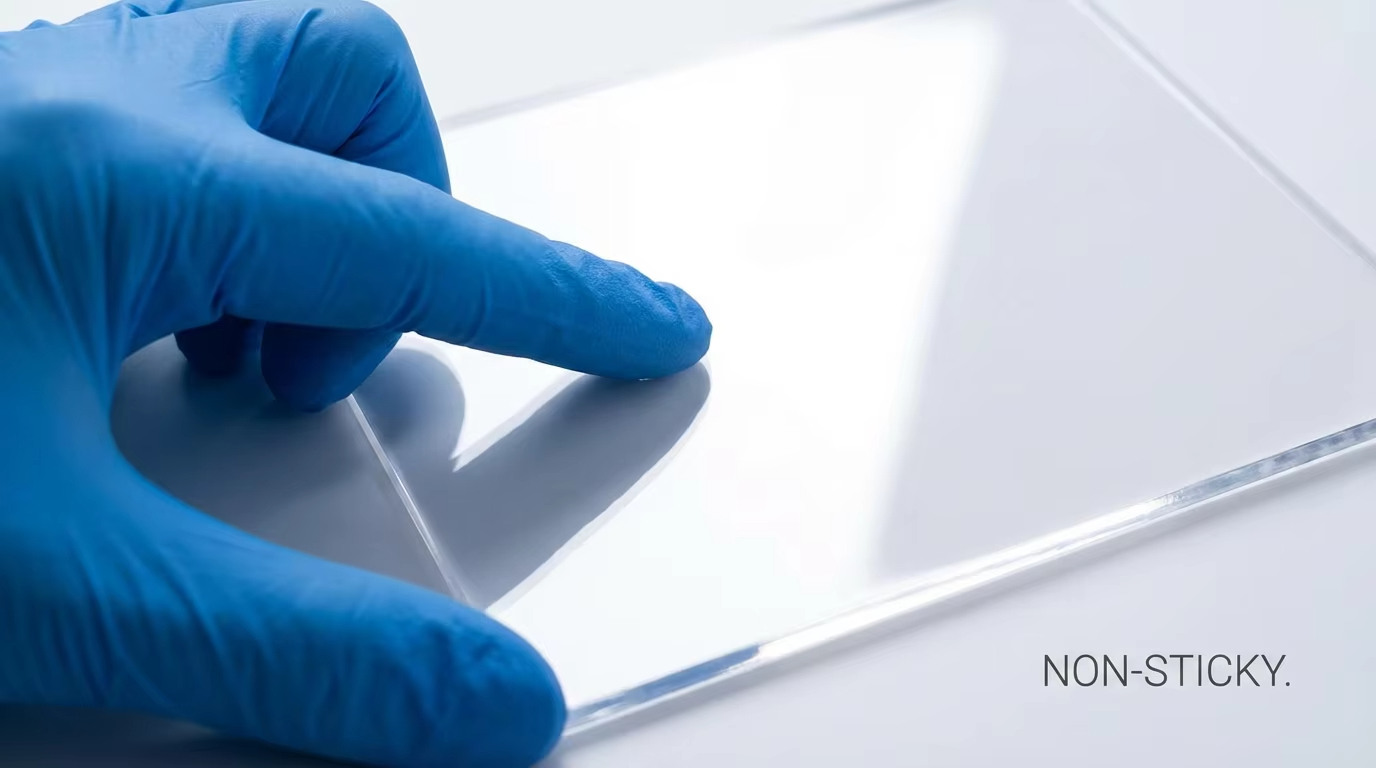
1. Cracking the Code of "Surface Tackiness": Managing the Paradox of Oxygen Inhibition
The most frequent entry in our customer feedback logs is the frustrating question: "Why is my UV resin still sticky after minutes under the lamp?" In the realm of polymer chemistry, this is known as the Oxygen Inhibition Effect.
1.1 The Scientific Reality of Inhibition
When UV light strikes the resin, it activates photo-initiators that produce free radicals, which in turn trigger the polymerization chain. However, oxygen from the surrounding air reacts with these active free radicals 10,000 times faster than the resin monomers do. This forms stable peroxy radicals that effectively terminate the polymer chain growth at the surface layer. The result is a rock-hard core with a thin, uncured, tacky film on top—a catastrophic outcome for any high-end production run.
1.2 The JHEPoxy Technical Solution
Our Fast Curing UV Resin for Industrial Bonding incorporates specialized oxygen-scavenging monomers. These molecular structures possess a higher affinity for oxygen than the main polymerization chain, effectively sacrificing themselves to protect the cross-linking integrity of the surface.
Actual Implementation Guidelines for a Tack-Free Finish:
2. Standards of Anti-Yellowing: From Photo-Initiator Optimization to Light-Stabilization Systems
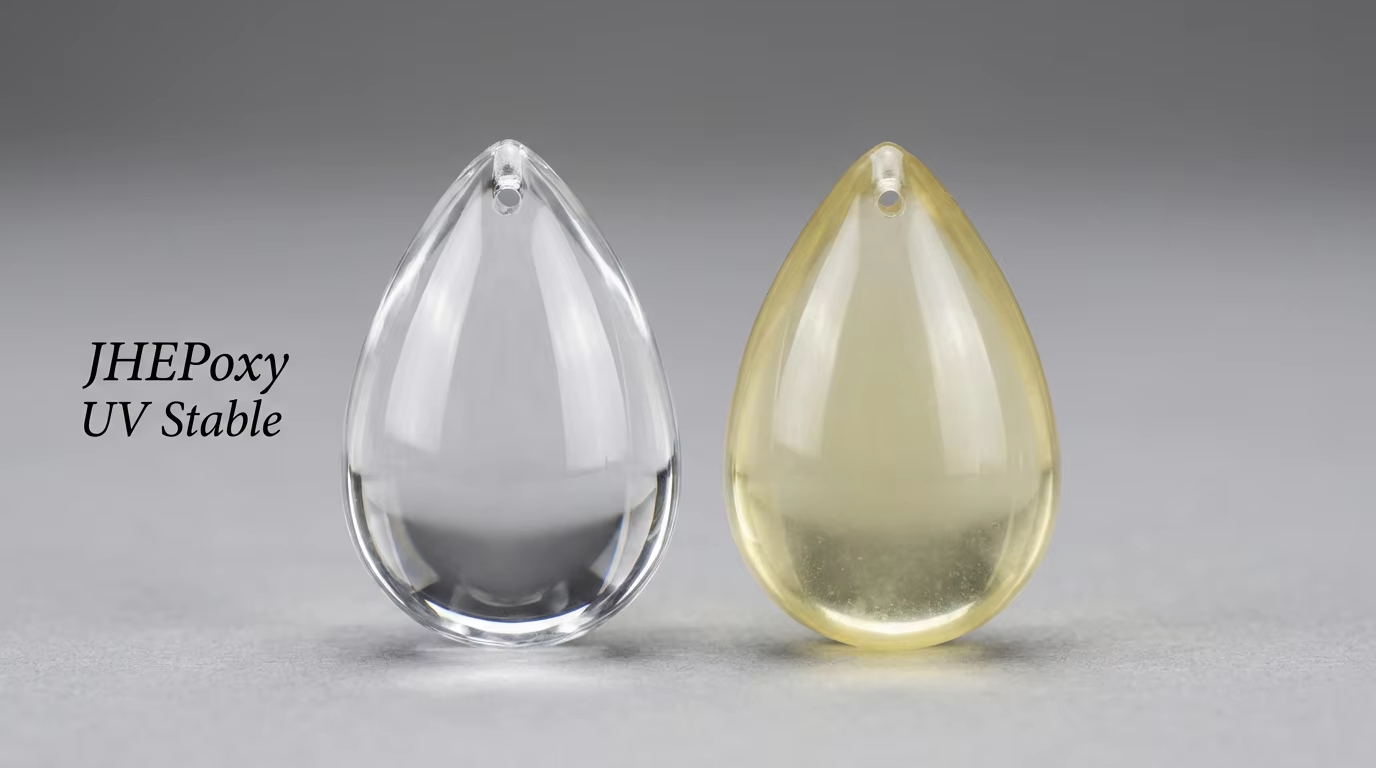
For premium jewelry components or optical-grade prototypes, even the slightest yellow tint can cause a collapse in market value. UV resin, due to its rapid curing nature, is prone to "initial yellowing" caused by the intense exothermic spike during the solidification process, as well as "long-term yellowing" from environmental UV exposure.
2.1 The JHEPoxy Long-Term Anti-Yellowing Ecosystem
Our High Transparency Anti-Yellowing UV Resin utilizes a sophisticated multi-stage protection scheme:
3. Precision Engineering: Managing Shrinkage and Heat in UV Curing
A common industry pain point is the "heat spike" that occurs during the transition from liquid to solid. In UV curing, this happens in seconds, and if not managed, it leads to significant linear shrinkage. This manifests as "shrinkage ripples" on the surface, warping of delicate master pieces, or delamination from the substrate.
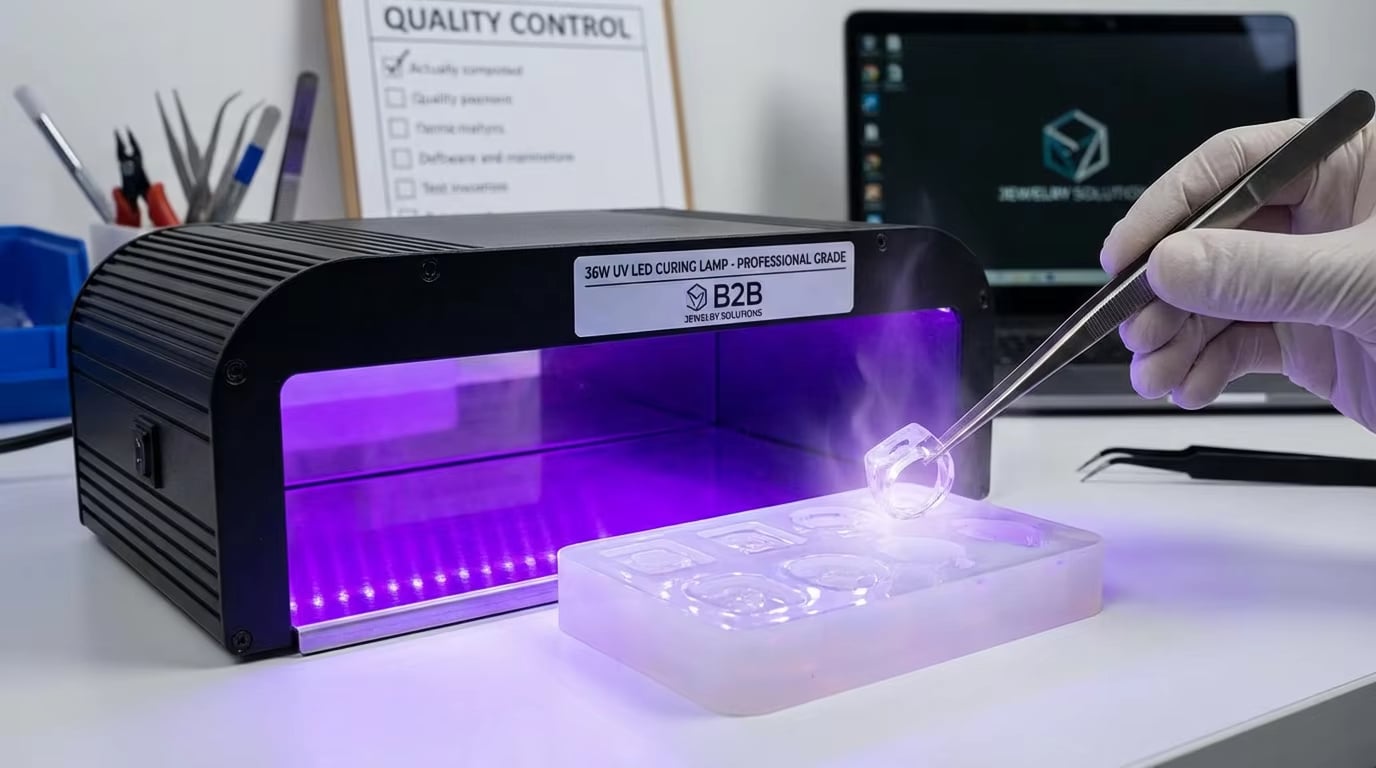
Shrinkage Control Technology: Standard UV resins typically exhibit a linear shrinkage of 3% to 5%. Our industrial-grade formula, however, reduces this to approximately 1.2% by incorporating specific functional prepolymers with a lower cross-link density but higher toughness. This performance is exceptional in Doming applications for micro-electronics and precision replication of intricate jewelry, ensuring a perfect flush fit with the substrate without delamination or stress-cracking.
4. Industrial Standardization: Protocols for B2B Factory Application
To maximize the ROI of UV resin in a production environment, factories must adopt standardized handling procedures:
5. Procurement and Customization: Why Partner with JHEPoxy?
In the competitive landscape of chemical manufacturing, being a "Source Factory" allows us to offer advantages that distributors cannot:
Conclusion
At JHEPoxy, we understand that for our B2B clients, every second of production efficiency counts—but quality is the only currency that lasts. Our UV resin portfolio is engineered to provide industrial-grade reliability paired with the aesthetic brilliance of artisan glass. Contact our technical consultants today to request a sample kit and see how we can accelerate your production cycle while elevating your finish quality.
 Hot News
Factory-backed material solutions for manufacturers, brands and distributors worldwide. We specialize in liquid silicone rubber, epoxy resin, flooring materials and related products, providing reliable manufacturing, OEM customization and stable global supply.
Copyright © 2026 Shenzhen Jianghe New Materials Technology Co., Ltd.All rights reserved. Privacy Policy
 EN
EN