Room 1008, Building 1, Cofco Yunjing, Martin Street, Heshui Kou Community, Guangming +86-13418798686 [email protected]
For B2B procurement managers, technical factory leads, and international decoration engineering firms, the selection of epoxy resin is far more than a simple comparison of visual clarity. It is a high-stakes technical game involving thermodynamic control, photo-stability, and long-term weathering resistance. Whether fabricating a high-value River Table worth tens of thousands of dollars or encapsulating precision electronic components, choosing a sub-standard Epoxy Resin invariably leads to catastrophic rework, significant material waste, and irreversible damage to brand reputation.
As a source factory with over a decade of dedicated R&D in polymer science, JHEPoxy is proud to provide this deep-dive analysis into the industrial standards that define a truly "high-performance" resin.
1. Cracking the Yellowing Code: Achieving "Heirloom Clarity" at the Molecular Level
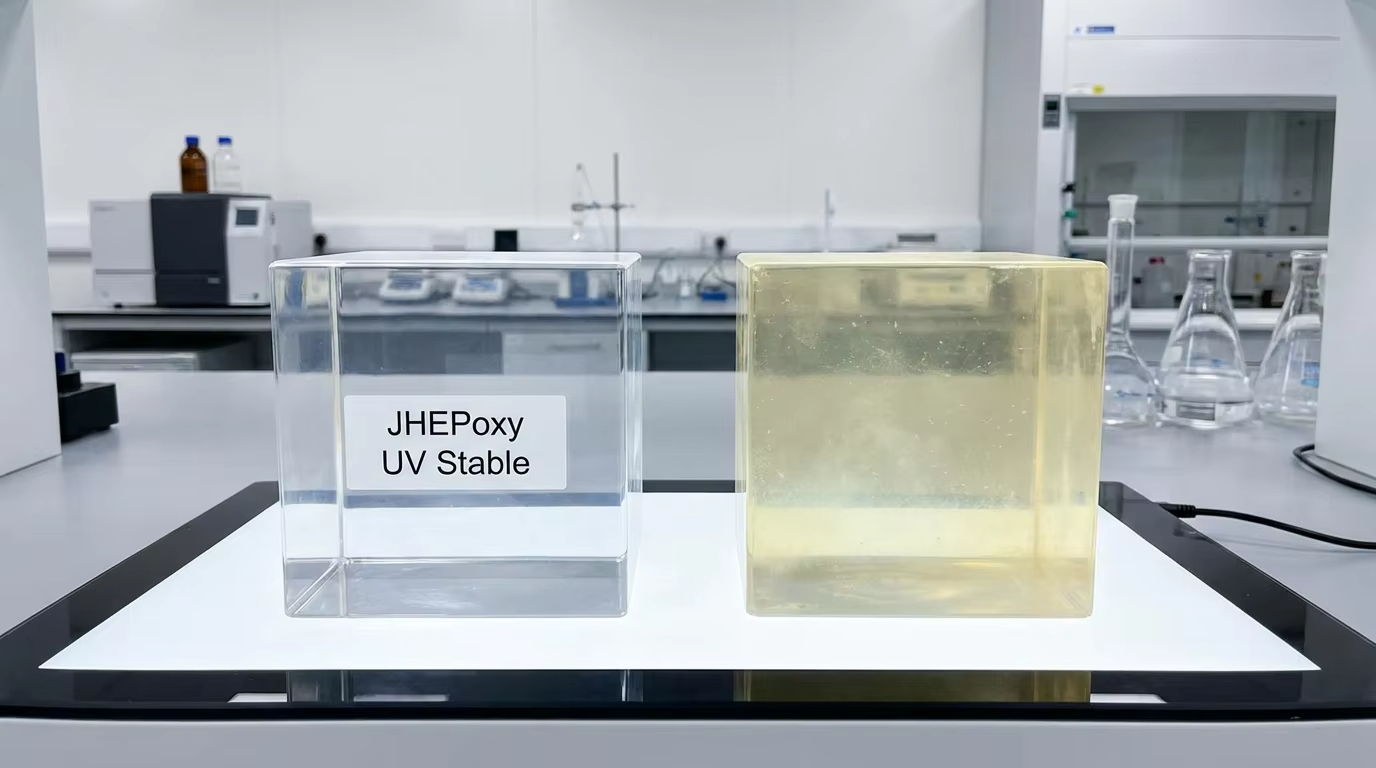
In the chemical industry, the most persistent pain point reported by clients is the gradual amber discoloration of resin 3 to 6 months after completion. This yellowing is, in its essence, a photo-oxidation and degradation process triggered by ultraviolet (UV) energy interacting with the polymer chains.
1.1 The Dual-Defense Mechanism of Advanced Light Stabilizers
Budget resins often contain minimal amounts of cheap UV absorbers to cut costs. In contrast, our High Gloss Anti-Yellowing Epoxy Resin for Jewelry Making utilizes a sophisticated Dual-Defense System:
Laboratory Data Verification: In a 2,000-hour accelerated weathering test (equivalent to over 5 years of intense outdoor exposure), our premium formulas maintain a Yellowness Index (Delta YI) below 1.0, preserving over 98.5% of the original crystal clarity. This ensures that the "water-clear" look of your high-end furniture remains unchanged for decades.
2. Auto-Degassing and Thermal Management: Mitigating the Risks of "Flash Curing"
A common technical hurdle for clients casting depths exceeding 5cm (approx. 2 inches) is "exothermic runaway" or "flash curing"—a phenomenon where the resin smokes, cracks, or even melts the mold due to excessive heat.
2.1 The Peak Exotherm Control Technology
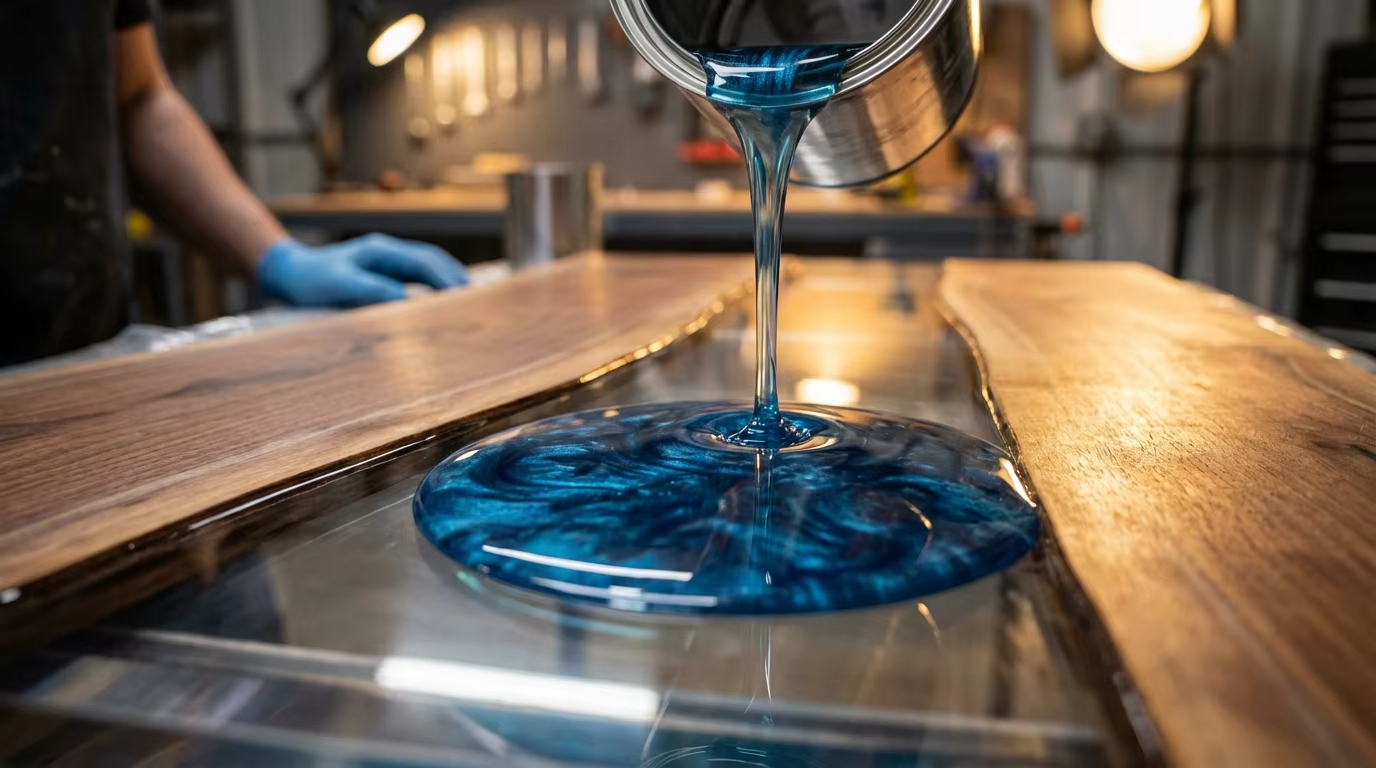
Standard fast-cure resins release their reactive energy in a concentrated burst, causing massive internal stress as the material shrinks rapidly while still hot. JHEPoxy’s deep-pour series optimizes the distribution of molecular functionality to flatten and delay the exothermic peak. This allows for a regulated heat release over 48 to 72 hours. Our testing proves that even when casting a 10cm (4-inch) thick River Table, the internal temperature rise remains within safe parameters (typically below 60°C), totally eliminating the risk of internal cracking or "glass-shattering" fractures.
2.2 The Physio-Chemical Logic of Auto-Degassing
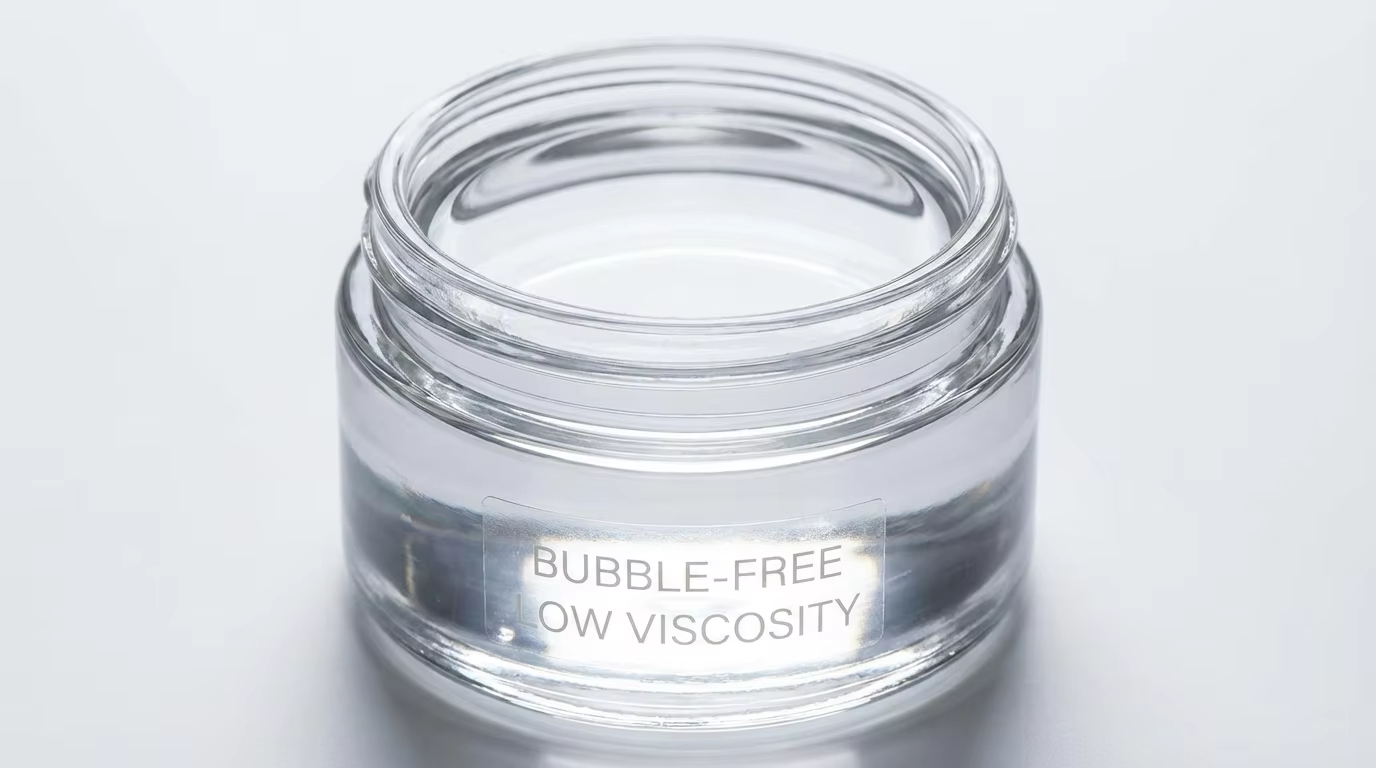
True "bubble-free" performance is not merely about lowering viscosity. Low viscosity is helpful, but surface tension is the real enemy. Our 1:1 Bubble Free Crystal Clear Epoxy Resin incorporates specialized surface tension modifiers (defoamers). These molecules create local pressure differentials around the bubble film, forcing entrapped air to rise rapidly and burst before the resin enters its gel phase. Actual application shows that at 25°C, our resin achieves over 95% self-degassing within 30 minutes without the need for expensive vacuum equipment, saving significant labor time for craft studios.
3. Substrate Interaction: Adhesion and Delamination Prevention
B2B users, particularly furniture manufacturers, frequently encounter the issue of delamination—where the resin separates from the wood or substrate. This is often caused by wood moisture content exceeding 12% or residual oils preventing a proper physical lock.
Technical Strategic Advice:
4. ROI Analysis: The Cost of Quality vs. The Price of Failure
In the B2B world, stable quality is the ultimate cost-saver. A successful procurement strategy looks at the Yield Rate rather than the price per gallon.
5. Advanced Application Protocol: Professional Tips for Large-Scale Projects
Conclusion
In the chemical sector, precision is power. JHEPoxy doesn't just supply epoxy resin; we provide a complete technical ecosystem. From TDS sheets to MSDS and customized formulation services, our team of experts is ready to tailor a solution to your specific industrial needs. Contact us today to discuss how we can stabilize your production and elevate your product quality.
 Hot News
Factory-backed material solutions for manufacturers, brands and distributors worldwide. We specialize in liquid silicone rubber, epoxy resin, flooring materials and related products, providing reliable manufacturing, OEM customization and stable global supply.
Copyright © 2026 Shenzhen Jianghe New Materials Technology Co., Ltd.All rights reserved. Privacy Policy
 EN
EN