Room 1008, Building 1, Cofco Yunjing, Martin Street, Heshui Kou Community, Guangming +86-13418798686 [email protected]
UV resin is often chosen for one main reason: it can cure much faster than conventional epoxy systems when the material, light source and part design are properly matched.
For manufacturers working with small components, decorative parts or short production runs, this can make a noticeable difference to production time. Parts can be cured and handled without waiting for a long room-temperature curing cycle.
However, UV resin is not suitable for every casting or coating application. The light must reach the areas that need to cure, and the resin formulation must be compatible with the lamp being used. Part thickness, colour, mould material and production conditions can all affect the result.
For manufacturers considering UV resin for small-batch production, these factors should be evaluated before investing in materials, moulds and curing equipment.
This guide explains where UV resin is commonly used, what limitations to consider, and which tests can help determine whether it is suitable for your production process.
UV resin is a light-curable material. It contains photoinitiators that respond to light within a specified wavelength range. When exposed to a suitable light source, these photoinitiators initiate a chemical reaction that causes the resin to cure.
Unlike many conventional epoxy systems, which cure through a reaction between two components, UV resin is generally supplied as a ready-to-use formulation that cures when exposed to the appropriate light.
The actual curing performance depends on the resin formulation and the conditions under which it is processed.
Several factors are particularly important.
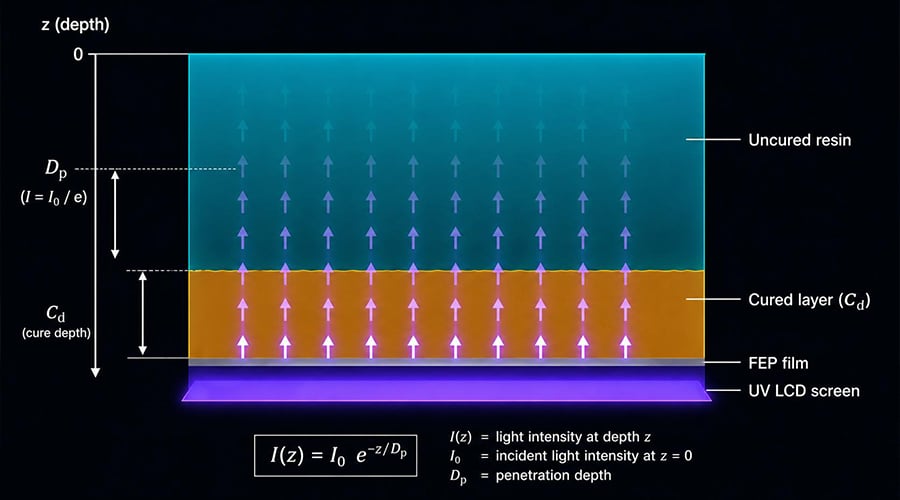
Light needs to reach the resin for the curing reaction to take place. In a thick casting, the surface may cure while the material deeper inside receives insufficient light.
This can leave a soft or partially uncured area inside the finished part, even when the outer surface appears solid.
For this reason, UV resin is generally easier to use in thin sections or parts with relatively simple geometries. Thicker sections require careful evaluation of the resin's light transmission and recommended curing conditions.
Do not assume that increasing exposure time will always solve an incomplete cure. If the light cannot reach the material, a longer exposure may not produce the required result.
Colour affects how light travels through a resin.
Clear and lightly tinted formulations generally allow more light to pass through than heavily pigmented materials. White, opaque and dark-coloured formulations can absorb or scatter light, making it more difficult to cure deeper sections.
This is particularly important when developing coloured UV resin products. A formulation that cures well when clear may behave differently after pigments are added.
Test the actual colour formulation at the intended thickness before approving it for production.
Some UV resin formulations can develop a tacky surface when exposed to air during curing. This is commonly associated with oxygen inhibition, which interferes with the curing reaction at the exposed surface.
The effect varies with the formulation and curing conditions. Depending on the product, it may be addressed through a suitable post-curing method, a different processing environment or an approved surface-finishing step.
If the surface remains sticky after curing, check the manufacturer's processing instructions before changing the lamp settings or applying additional exposure.
UV curing can generate heat as the chemical reaction takes place. The amount of heat depends on the formulation, the volume of resin, the exposure conditions and the geometry of the part.
In some applications, excessive heat may cause deformation, cracking or other defects.
This should be considered when developing larger castings or parts with sections of different thicknesses. A process that works well for a small sample may not produce the same result when the material volume increases.
The mould is an important part of a UV curing process, but it is sometimes overlooked during product development.
If light needs to pass through the mould before reaching the resin, the mould material must transmit the relevant wavelength. An opaque metal mould will block the light, while transparent materials may allow it to pass through to varying degrees.
Silicone moulds are used in many small-part casting applications because they are flexible and can reproduce detailed shapes. However, not every silicone mould has the same optical properties.
The mould's transparency, colour, thickness and condition can affect how much light reaches the resin.
A clear mould may transmit light more effectively than a cloudy or heavily coloured one. Mould thickness and the wavelength of the curing light also need to be considered.
If a mould has been used repeatedly, inspect it for changes in transparency, surface damage and material build-up. These changes may affect the curing process.
If you plan to use a silicone mould with UV resin, test the combination using the actual resin and mould grade.
Different silicone formulations can have different compatibility characteristics. Do not assume that a mould suitable for one UV resin will automatically work with another formulation.
A small trial using the intended mould, resin and curing lamp can help identify problems before production begins.
The shape of the mould also affects curing.
Recesses, deep cavities and undercuts may create areas that receive less light. A lamp positioned directly above an open mould may cure the exposed surface well while leaving shaded areas insufficiently cured.
When evaluating a new part, consider how light will reach the entire resin section, not just the visible surface.
A curing lamp should be selected according to the resin's technical requirements. The wattage printed on a lamp is not enough to determine whether it will cure a particular product.
Before selecting equipment, confirm the following information.
Different UV resin formulations are designed to respond to particular wavelengths.
Common LED curing systems operate around 365 nm, 395 nm or 405 nm, but these wavelengths are not interchangeable for every formulation.
Ask the resin supplier which wavelength range is recommended for the specific product grade. Then check whether the lamp's emission spectrum is suitable.
Light intensity at the working surface affects the amount of energy delivered to the resin.
A lamp's rated output does not necessarily represent the intensity reaching the mould. Distance, lamp design, reflectors and the size of the curing area can all affect the result.
Where production consistency is important, measuring intensity at the actual working position can provide a useful reference.
Exposure time needs to be established through testing with the selected resin, lamp and part geometry.
A longer exposure may help when the light intensity is lower, but it does not compensate for poor light access or an unsuitable wavelength.
For larger parts, check whether the lamp provides consistent coverage across the entire curing area. Uneven exposure may lead to differences in surface hardness or curing performance between the centre and edges of a part.
The output of a curing system can change over time. LED performance, dirty reflectors, damaged components and changes in lamp position may affect the process.
If curing results become inconsistent, check the equipment as well as the resin.
Recording the initial lamp settings and, where possible, the measured intensity gives production teams a reference for future inspections.
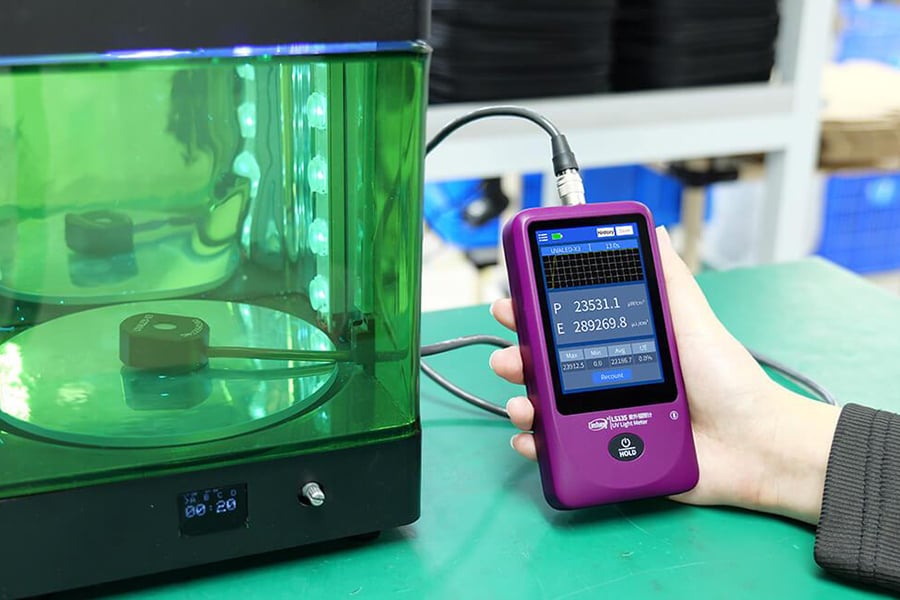
UV resin can be useful in small-batch production when the part design and curing conditions are suitable.
The following applications are worth evaluating.
UV resin may be suitable for small decorative parts, thin plaques, transparent components and other products with sections that allow light to reach the material.
It can also be considered for surface coating and doming applications where the resin layer is relatively thin and the curing equipment can provide suitable exposure.
Manufacturers producing different designs in relatively small quantities may benefit from the short curing cycle.
A suitable UV curing setup can support product sampling, small production runs and custom orders without requiring the same curing arrangements as some longer-curing resin systems.
However, production efficiency still depends on preparation, filling, positioning, curing, inspection and handling time.
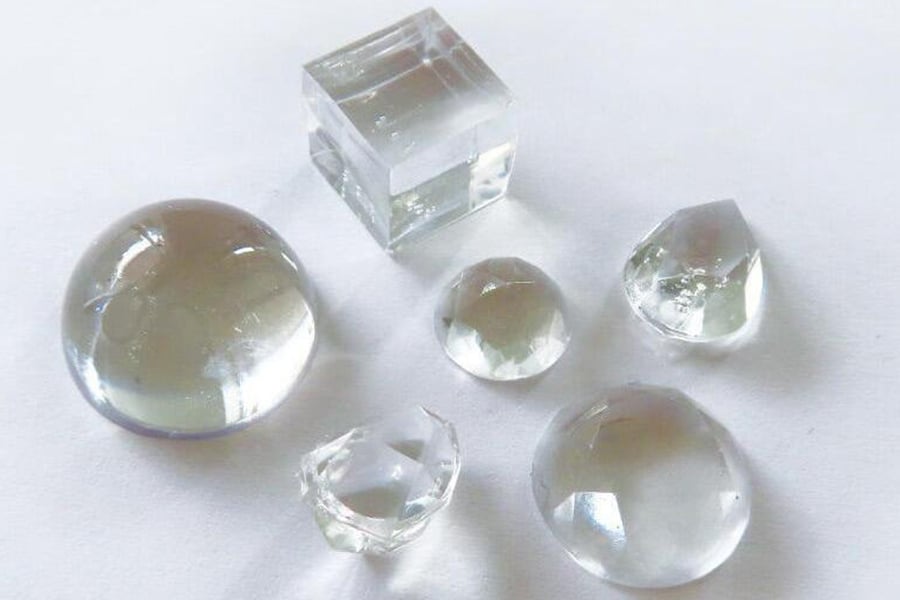
Clear and translucent UV resin formulations are often considered for products where appearance and transparency are important.
Examples include small transparent decorative components, domed labels and selected encapsulation applications.
The finished appearance depends on the formulation, mould condition, surface preparation and curing process. Sample testing is still necessary before production.
UV resin can also be useful when a customer needs to evaluate a sample quickly.
A manufacturer may be able to produce a cured sample within a shorter processing cycle than with some conventional resin systems. This can help with early design reviews and customer approval.
The sample should still be representative of the intended production material and process. A successful prototype does not automatically confirm that a larger or more complex part will cure in the same way.
UV resin has practical limitations. In some applications, another material may be more suitable.
| Application or condition | What to consider | Alternative to evaluate |
|---|---|---|
| Thick castings | Light may not reach the centre of the part | Casting epoxy or suitable PU resin |
| Opaque white or dark colours | Pigments can reduce light penetration | Epoxy or another suitable formulation |
| Large coating areas | Lamp coverage and exposure uniformity may be difficult to control | Self-levelling epoxy systems |
| Deep cavities and complex undercuts | Some areas may remain shaded | A suitable casting resin and mould system |
| Metal or opaque moulds | Light cannot pass through the mould | Change the tooling or curing system |
| Long filling or working time | The material may begin curing before filling is complete | A resin system with a longer working time |
| Applications with specific heat requirements | Performance must be verified against service conditions | Suitable epoxy, PU or silicone grade |
| Structural bonding | Adhesion and mechanical performance need to meet the design requirements | Engineering epoxy or PU adhesive |
The alternatives in this table are starting points for evaluation, not automatic replacements. The final material should be selected according to the part design, required properties and operating conditions.
Colour development requires particular attention when working with UV resin.
Adding pigment changes more than the appearance of the material. It can also affect how much light reaches the resin during curing.
A colour that works in a thin sample may not cure properly in a thicker section. This is especially important for opaque and dark colours.
Before approving a coloured formulation, consider the following:
Test each colour at the intended pigment loading.
Use the actual mould and part thickness planned for production.
Check the curing result throughout the section, not just at the surface.
Record the pigment type and loading used in the approved sample.
Repeat the test if the pigment supplier or grade changes.
Check whether the colour remains consistent after curing and storage.
White and other opaque colours may require more formulation development than transparent or lightly tinted products.
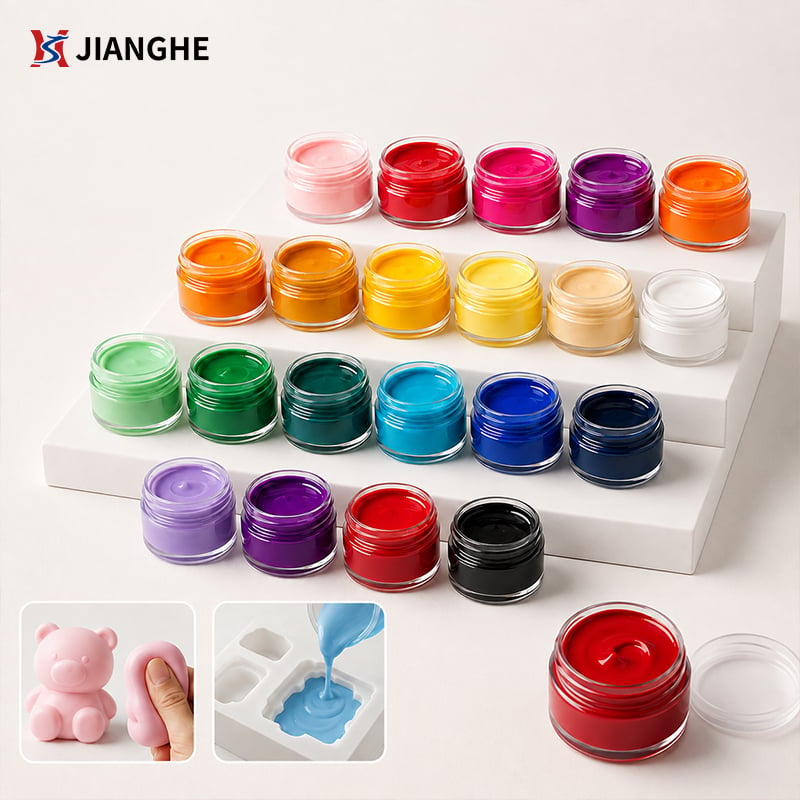
If you produce epoxy resin and liquid silicone rubber as well as UV resin, keep separate colour standards for each material system. The same pigment name does not guarantee identical colour development or compatibility across different formulations.
For clear UV resin products, initial transparency is only one part of product evaluation.
Colour changes can occur during storage or use, depending on the resin formulation, curing conditions and surrounding environment.
Factors that may influence yellowing include the resin's chemical composition, photoinitiator system, exposure to UV light, temperature and service conditions.
For products where appearance is important, do not rely solely on descriptions such as "non-yellowing" or "UV resistant."
Instead, ask the supplier for available colour-stability information and the conditions under which it was evaluated.
You can also prepare representative samples and compare their appearance over a defined period. If the finished product will be exposed to sunlight, include an appropriate exposure test in the product evaluation.
Any marketing claim about yellowing resistance should match the evidence available for the specific product grade.
Safety procedures should be established before UV resin is introduced into a production area.
Many UV-curable resins contain acrylate-based ingredients. Certain acrylates can cause skin sensitisation, and repeated exposure may lead to allergic reactions.
The actual hazards and required precautions depend on the formulation, so always consult the SDS for the product being used.
Production teams should pay attention to:
Skin protection: Use gloves and protective clothing specified by the SDS. Replace contaminated gloves promptly.
Ventilation: Provide suitable ventilation at mixing, filling and curing stations according to the product's handling requirements.
Eye protection: Protect operators from resin splashes and direct or reflected UV exposure.
Light shielding: Use suitable shielding around curing equipment to reduce unnecessary exposure to UV light.
Work instructions: Make sure operators understand safe handling, spill response, cleaning procedures and waste disposal requirements.
For commercial production, these procedures should be included in the workplace's chemical safety and operator training arrangements.
Before placing a larger order or committing to a production schedule, test the complete process using the intended resin, mould and curing equipment.
A useful evaluation should cover more than whether the surface becomes hard.
| Test item | What to check |
|---|---|
| Through-cure | Inspect the thickest section for soft or uncured material |
| Surface cure | Check for persistent tackiness after the specified curing process |
| Dimensional stability | Measure important features against the approved dimensions |
| Surface appearance | Check clarity, bubbles, marks and other visible defects |
| Colour consistency | Compare the cured part with an approved reference |
| Hardness | Measure using the relevant method after the specified cure |
| Mould compatibility | Check for curing problems or visible mould changes |
| Lamp performance | Record the equipment settings and relevant intensity measurements |
| Ageing performance | Evaluate appearance under conditions representative of intended use |
The acceptance criteria should be established before testing. For example, dimensional tolerances and acceptable colour variation depend on the product and customer requirements.
For a new mould or formulation, repeat the evaluation if the part thickness, pigment loading, lamp or mould material changes.
Once the process has been approved, record the product grade, batch information, mixing or filling procedure where applicable, lamp settings, exposure time and inspection results. These records help maintain consistency when the same product is manufactured again.
A supplier supporting production buyers should be able to provide more than a product price and a sample bottle.
Before selecting a UV resin manufacturer, discuss the technical and supply requirements of your application.
Ask for the TDS and SDS of the exact product grade.
Depending on the application, useful information may include viscosity, recommended wavelength, curing conditions, hardness, appearance and other relevant properties.
If your part has a specific thickness or colour requirement, explain this to the supplier so that the proposed grade can be evaluated under realistic conditions.
For repeat production, ask how the supplier controls product quality between batches.
You may also want to confirm whether batch numbers, inspection records and retained samples are available.
The relevant quality checks should be agreed according to the product specification and intended use.
Choose packaging according to your expected consumption and storage arrangements.
Confirm available pack sizes, MOQ, shelf life, storage conditions and production lead time before placing an order.
If you are developing a private-label product, discuss label design, packaging compatibility and documentation requirements at the same time.
Some production projects require a particular viscosity, colour, curing response or packaging format.
Discuss these requirements with the supplier before assuming that an existing standard grade will meet them. Any proposed adjustment should be evaluated through sample testing and an agreed specification.
At Jianghe, the product range includes UV resin, epoxy resin, liquid silicone rubber and colourants. OEM support is available for suitable products, subject to application review, sample evaluation and confirmation of production requirements.
Working with one supplier for related materials may also make it easier to discuss compatibility between the resin, mould and colourant. However, each combination should still be tested before being approved for production.
UV resin can be a practical option for small-batch manufacturing when the part geometry, material formulation and curing equipment are compatible.
Before selecting a product, review the section thickness, colour, mould material and access to light. Then confirm the recommended wavelength and curing conditions with the supplier.
A representative production test is the best way to evaluate whether the material can meet your requirements. Check the cured part throughout its thickness, inspect its surface and dimensions, and record the process conditions before increasing production volume.
Jianghe supplies UV resin and other industrial resin materials for different manufacturing applications. If you are developing a new product or comparing UV resin with epoxy or PU, share your part dimensions, material colour, mould type, target quantity and curing equipment with our team.
We can review the application requirements and discuss suitable product options for sample evaluation.
Request a UV Resin Sample or Technical Consultation
Explore our UV Resin Products
Explore Liquid Silicone Rubber for Mould Making
 Hot News
Factory-backed material solutions for manufacturers, brands and distributors worldwide. We specialize in liquid silicone rubber, epoxy resin, flooring materials and related products, providing reliable manufacturing, OEM customization and stable global supply.
Copyright © 2026 Shenzhen Jianghe New Materials Technology Co., Ltd.All rights reserved. Privacy Policy
 EN