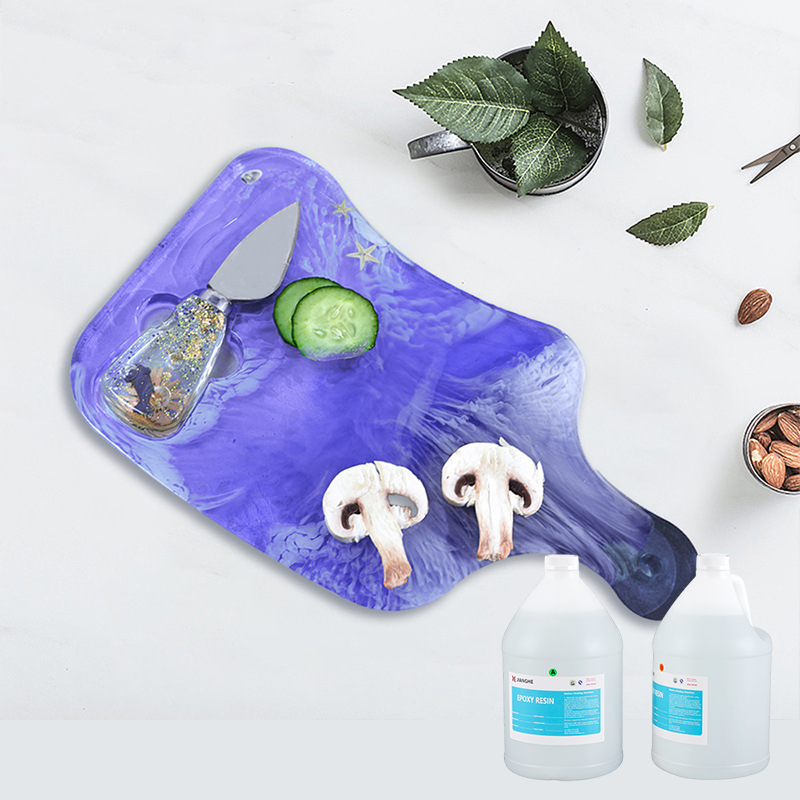
Low Viscosity Epoxy: Advanced Flow Technology for Superior Bonding Performance

All Categories

Get a Tailored Solution

Provide your details below, and our material experts will contact you with a competitive quote and technical support within 24 hours.
Email
Name
Company Name
Message
0/1000

low viscosity epoxy

Low viscosity epoxy represents a revolutionary advancement in adhesive technology, offering exceptional performance characteristics that make it indispensable across multiple industries. This specialized formulation combines the proven durability of traditional epoxy systems with enhanced flow properties, creating a versatile solution for demanding applications. The reduced thickness allows this material to penetrate tight spaces, fill microscopic gaps, and create bonds where conventional adhesives fail to perform adequately. Manufacturing processes benefit significantly from low viscosity epoxy due to its ability to self-level and eliminate air bubbles naturally during application. The chemical composition includes carefully selected resins and hardeners that maintain structural integrity while providing superior workability. Temperature resistance remains exceptional, with many formulations withstanding extreme conditions without degradation or bond failure. Curing mechanisms can be tailored to specific requirements, offering options from room temperature processing to accelerated heat-activated systems. Surface preparation requirements are typically minimal, reducing labor costs and processing time in production environments. The material demonstrates excellent adhesion to diverse substrates including metals, composites, ceramics, and treated plastics. Mechanical properties include high tensile strength, superior shear resistance, and outstanding impact absorption capabilities. Chemical resistance protects against solvents, acids, and environmental exposure that would compromise lesser materials. Quality control benefits from consistent batch-to-batch performance and predictable working characteristics. Storage stability extends product shelf life while maintaining performance specifications. Environmental considerations include low volatile organic compound emissions and compliance with industrial safety standards. Cost-effectiveness emerges through reduced waste, improved yields, and decreased rework requirements. Applications span from precision electronics assembly to heavy industrial construction projects.

Popular Products

Low viscosity epoxy delivers transformative benefits that directly impact operational efficiency and product quality across diverse manufacturing sectors. The primary advantage lies in its exceptional penetration capabilities, allowing technicians to achieve complete coverage in areas previously inaccessible to thicker materials. This penetration ability eliminates voids and air pockets that commonly cause joint failures in critical applications. Processing speed increases dramatically because the material flows easily into complex geometries without requiring mechanical assistance or specialized application equipment. Workers can apply low viscosity epoxy using standard dispensing systems, reducing training requirements and equipment investment costs. The self-leveling properties create uniform bond lines automatically, eliminating the need for manual spreading or tooling operations that introduce variability and increase labor expenses. Cure times can be optimized for specific production schedules, offering flexibility that traditional materials cannot match. Temperature performance exceeds industry standards, providing reliable service in environments where other adhesives deteriorate rapidly. The material maintains bond strength across wide temperature ranges, ensuring consistent performance regardless of seasonal variations or operational conditions. Substrate compatibility eliminates the need for multiple adhesive inventories, simplifying procurement and reducing storage requirements. Chemical resistance protects assemblies from cleaning solvents, process fluids, and environmental contaminants that would attack conventional bonding agents. Rework capabilities allow for disassembly when necessary, providing valuable flexibility in prototype development and field repair situations. Quality improvements result from consistent material properties and predictable performance characteristics that reduce testing requirements and warranty claims. Environmental benefits include reduced volatile emissions and compliance with increasingly strict regulatory requirements. Cost savings accumulate through multiple channels including reduced material waste, faster processing cycles, improved yields, and decreased rejection rates. Long-term reliability reduces maintenance schedules and extends service intervals, providing additional value to end users who depend on consistent performance over extended periods.

Tips And Tricks

How Is Liquid Silicone Rubber Used in Professional Mold Making?

24

Dec

How Is Liquid Silicone Rubber Used in Professional Mold Making?

Practical Applications of Liquid Silicone Rubber in Professional Manufacturing Liquid Silicone Rubber plays a central role in professional making environments where precision, repeatability, and material reliability are critical. In contrast to hobby...
View More
What Advantages Does Floor Coating Epoxy Offer in Warehouses and Factories?

23

Dec

What Advantages Does Floor Coating Epoxy Offer in Warehouses and Factories?

Advantages of Floor Coating Epoxy for Warehouses and Factories Maintaining durable, safe, and efficient flooring in warehouses and factories is a constant challenge. Heavy machinery, forklift traffic, and chemical exposure put extreme stress on concr...
View More
What Makes River Table Epoxy Suitable for Deep-Pour Applications?

24

Dec

What Makes River Table Epoxy Suitable for Deep-Pour Applications?

Understanding the Advantages of River Table Epoxy for Deep-Pour Applications River tables are a striking fusion of natural wood and clear epoxy resin, creating a visually stunning centerpiece. The use of deep-pour epoxy is critical in achieving thick...
View More
Why Is Clear Epoxy Resin More Prone to Yellowing?

10

Jan

Why Is Clear Epoxy Resin More Prone to Yellowing?

Understanding the Yellowing of Clear Epoxy Resin Clear epoxy resin is widely used in flooring, furniture, art, and industrial applications due to its transparency, durability, and glossy finish. However, one common challenge faced by manufacturers, a...
View More

Get a Free Quote

Our representative will contact you soon.
Email
Name
Company Name
Message
0/1000

low viscosity epoxy

Superior Flow and Penetration Technology

Superior Flow and Penetration Technology

The advanced flow characteristics of low viscosity epoxy represent a fundamental breakthrough in adhesive science, delivering unprecedented access to challenging bonding scenarios. This technology enables complete infiltration into hairline cracks, microscopic surface irregularities, and complex geometric configurations that defeat conventional materials. The molecular structure has been engineered to maintain optimal fluidity during application while preserving the mechanical properties essential for structural applications. Manufacturing operations benefit enormously from this capability, as workers can achieve complete coverage without elaborate surface preparation or specialized application techniques. The material flows naturally into threaded connections, overlapping joints, and multi-layer assemblies where air entrapment typically creates weak points. Quality improvements are immediately apparent as void-free bonds eliminate the stress concentrations that initiate failure sequences in critical components. Production efficiency increases because operators spend less time ensuring complete coverage, and rework due to incomplete bonding virtually disappears. The technology particularly excels in repair applications where access is limited and traditional methods prove inadequate. Electronic assemblies benefit from the ability to encapsulate components completely while maintaining precise gap control between sensitive elements. Automotive applications leverage this flow capability for sealing complex castings and joining dissimilar materials with confidence. Aerospace manufacturers rely on the penetration characteristics to ensure complete bonding in honeycomb structures and composite assemblies where incomplete coverage creates safety risks. Marine environments demand complete seal integrity, and the superior flow properties deliver reliable performance even in challenging installation conditions. The consistent flow behavior eliminates application variables that contribute to quality variations, enabling manufacturers to achieve repeatable results across different operators and environmental conditions. This technological advantage translates directly into improved product reliability and customer satisfaction.
Exceptional Mechanical Performance and Durability

Exceptional Mechanical Performance and Durability

Low viscosity epoxy demonstrates remarkable mechanical properties that surpass traditional adhesive solutions while maintaining the processing advantages of fluid application. The cured material exhibits tensile strengths exceeding many structural metals, providing confidence for load-bearing applications in demanding environments. Shear strength characteristics enable reliable performance in dynamic loading situations where conventional adhesives experience gradual degradation over time. Impact resistance protects assemblies from shock loads and vibration cycles that commonly cause bond failure in critical applications. The molecular cross-linking achieved during cure creates a three-dimensional network structure that distributes stress uniformly throughout the bond area. Temperature stability maintains mechanical properties across extreme ranges, from cryogenic applications to elevated service temperatures that would compromise alternative materials. Fatigue resistance ensures long-term reliability under cyclic loading conditions, making low viscosity epoxy ideal for rotating equipment and transportation applications. Chemical compatibility protects mechanical properties from degradation when exposed to process fluids, cleaning agents, and environmental contaminants. Creep resistance maintains dimensional stability under sustained loading, preventing the gradual deformation that compromises precision assemblies over time. The material demonstrates excellent adhesion to diverse substrates without requiring primers or surface treatments that add complexity and cost to manufacturing processes. Flexibility characteristics can be tailored through formulation adjustments, providing options from rigid structural bonds to resilient connections that accommodate thermal expansion. Weather resistance ensures reliable outdoor performance without degradation from ultraviolet exposure, moisture cycling, or temperature fluctuations. These mechanical advantages translate into extended service life for assembled products, reducing maintenance requirements and improving customer satisfaction. The combination of processing ease and superior performance creates value throughout the product lifecycle, from initial manufacturing through field service and eventual replacement cycles.
Versatile Application Methods and Cost Efficiency

Versatile Application Methods and Cost Efficiency

The application versatility of low viscosity epoxy creates significant economic advantages while simplifying manufacturing processes across diverse industry sectors. Standard dispensing equipment handles the material effectively, eliminating the need for specialized heated systems or pressure application devices that increase capital investment and operational complexity. Room temperature processing capabilities allow manufacturers to implement low viscosity epoxy solutions without modifying existing production lines or installing additional curing ovens. The extended working time provides flexibility for complex assemblies while maintaining rapid cure options when production schedules demand faster throughput. Automated dispensing systems integrate seamlessly with existing manufacturing processes, enabling consistent application rates and precise volume control that reduce material waste and improve quality consistency. The material's storage stability extends shelf life significantly compared to alternative systems, reducing inventory turnover requirements and minimizing expired material disposal costs. Cleanup procedures are simplified because uncured material responds to common solvents, while cured bonds resist the same chemicals that facilitate maintenance operations. Training requirements are minimal because application techniques resemble familiar processes, reducing the learning curve for production personnel and maintenance technicians. Quality control procedures benefit from visual confirmation of complete coverage due to the material's flow characteristics, eliminating guesswork and reducing inspection time. Rework capabilities provide valuable flexibility when assemblies require modification or repair, allowing controlled disassembly without damaging expensive components. Environmental compliance is enhanced through reduced volatile organic compound emissions and compatibility with workplace safety requirements. The cost structure delivers value through multiple channels including reduced material consumption, improved process efficiency, decreased rejection rates, and extended equipment service life. Inventory simplification results from the material's compatibility with diverse substrates, reducing the variety of adhesives required for different applications. These economic advantages accumulate throughout the manufacturing process, creating compelling total cost benefits that extend well beyond initial material pricing considerations.

Get Samples & Support

Email
Name
Company Name
Country/Region
What Are You Making
Single Choice
Estimated Monthly Usage
Single Choice
Message
0/1000