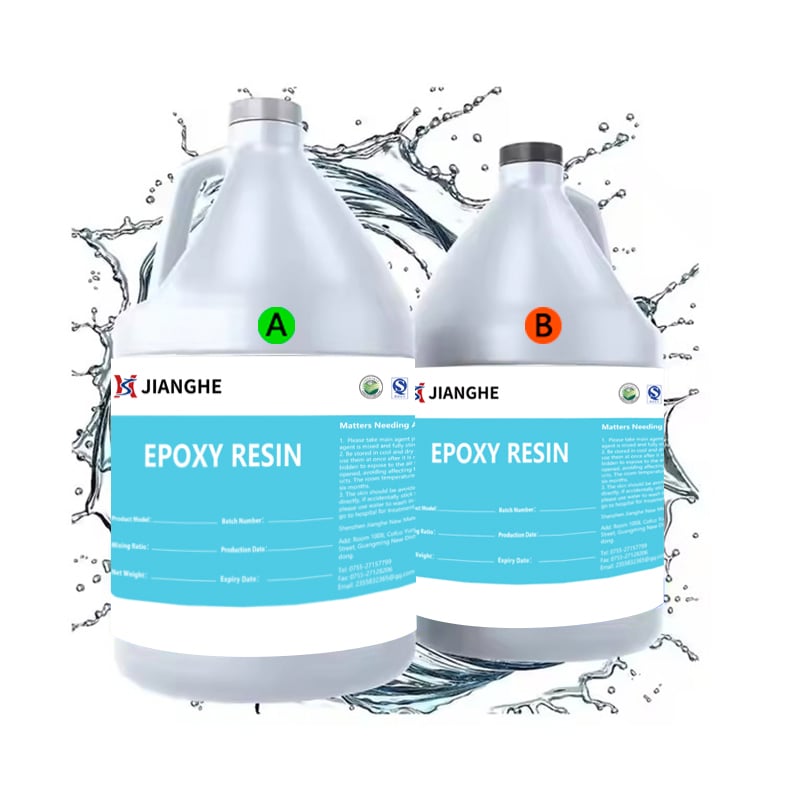
High-Performance Epoxy Resin for Carbon Fiber: Advanced Composite Solutions

All Categories

Get a Tailored Solution

Provide your details below, and our material experts will contact you with a competitive quote and technical support within 24 hours.
Email
Name
Company Name
Message
0/1000

epoxy resin for carbon fiber

Epoxy resin for carbon fiber represents a revolutionary bonding solution that transforms how manufacturers approach high-performance composite materials. This specialized resin system creates an unbreakable bond between individual carbon fiber strands, forming composite structures that exhibit exceptional strength-to-weight ratios. The primary function of epoxy resin for carbon fiber involves acting as a matrix material that binds carbon fibers together while transferring loads throughout the composite structure. Modern epoxy resin for carbon fiber formulations incorporate advanced chemical compounds that cure at specific temperatures, creating cross-linked polymer networks with remarkable mechanical properties. The technological features of epoxy resin for carbon fiber include low viscosity for optimal fiber wet-out, controlled cure rates for manufacturing flexibility, and excellent adhesion characteristics that ensure reliable performance. These resins demonstrate superior chemical resistance, making them suitable for harsh environmental conditions where traditional materials fail. Manufacturing processes utilizing epoxy resin for carbon fiber range from hand lay-up techniques to advanced resin transfer molding systems. The applications for epoxy resin for carbon fiber span multiple industries, including aerospace manufacturing where weight reduction remains critical, automotive sector seeking improved fuel efficiency, and sports equipment demanding maximum performance. Marine applications benefit from the corrosion resistance properties of epoxy resin for carbon fiber composites, while wind energy systems rely on these materials for turbine blade construction. The versatility of epoxy resin for carbon fiber extends to architectural applications, electronic housings, and medical devices where biocompatibility becomes essential. Quality epoxy resin for carbon fiber systems provide predictable curing behavior, enabling manufacturers to maintain consistent production schedules while achieving desired mechanical properties in finished products.

Popular Products

The advantages of epoxy resin for carbon fiber create compelling reasons for manufacturers to choose this advanced material system over traditional alternatives. Superior strength characteristics represent the most significant benefit, as epoxy resin for carbon fiber composites achieve tensile strengths exceeding steel while weighing substantially less. This remarkable strength-to-weight ratio enables designers to create structures that were previously impossible using conventional materials. The lightweight nature of epoxy resin for carbon fiber reduces transportation costs, improves fuel efficiency in vehicles, and allows for easier handling during installation processes. Manufacturers appreciate the excellent dimensional stability provided by epoxy resin for carbon fiber, which maintains precise tolerances even under extreme temperature variations. This stability eliminates the need for frequent adjustments and reduces maintenance requirements throughout the product lifecycle. The chemical resistance properties of epoxy resin for carbon fiber protect against corrosive environments, extending service life and reducing replacement costs. Unlike metals that corrode over time, epoxy resin for carbon fiber composites maintain their structural integrity when exposed to saltwater, acids, and industrial chemicals. Processing advantages include the ability to create complex shapes without expensive tooling modifications, as epoxy resin for carbon fiber can be molded into intricate geometries that would require multiple manufacturing steps with traditional materials. The curing process of epoxy resin for carbon fiber allows manufacturers to control working time, enabling both rapid production runs and careful hand-crafted applications. Quality control becomes more predictable with epoxy resin for carbon fiber systems, as modern formulations provide consistent viscosity, reliable cure times, and repeatable mechanical properties. Cost effectiveness emerges through reduced material waste, as epoxy resin for carbon fiber can be applied precisely where needed without excess material requirements. Energy savings result from the lightweight properties during transportation and the durability that reduces replacement frequency. Manufacturing flexibility allows companies to produce both prototype quantities and large-scale production runs using the same epoxy resin for carbon fiber system, reducing inventory complexity and setup costs.

Tips And Tricks

How Can Buyers Assess Long-Term Reliability of a Resin Manufacturer?

11

Dec

How Can Buyers Assess Long-Term Reliability of a Resin Manufacturer?

Building Confidence in a Sustainable Manufacturing Partner Selecting a reliable Resin Manufacturer is a strategic decision that directly affects product quality, delivery stability, and long-term cooperation efficiency. For buyers sourcing epoxy resi...
View More
What Makes River Table Epoxy Suitable for Deep-Pour Applications?

24

Dec

What Makes River Table Epoxy Suitable for Deep-Pour Applications?

Understanding the Advantages of River Table Epoxy for Deep-Pour Applications River tables are a striking fusion of natural wood and clear epoxy resin, creating a visually stunning centerpiece. The use of deep-pour epoxy is critical in achieving thick...
View More
What Factors Limit the Service Life of Mold Making Silicone?

16

Jan

What Factors Limit the Service Life of Mold Making Silicone?

Understanding the Service Life of Mold Making Silicone Mold making silicone is widely used by manufacturers, artisans, and industrial professionals for its flexibility, durability, and precision. Despite its many advantages, the service life of mold ...
View More
Why Is Floor Coating Epoxy Suitable for Chemical Plants and Warehouses?

22

Jan

Why Is Floor Coating Epoxy Suitable for Chemical Plants and Warehouses?

The Advantages of Floor Coating Epoxy in Industrial Environments Floor coating epoxy has become a preferred choice for chemical plants, warehouses, and other industrial facilities due to its durability, chemical resistance, and ease of maintenance. I...
View More

Get a Free Quote

Our representative will contact you soon.
Email
Name
Company Name
Message
0/1000

epoxy resin for carbon fiber

Unmatched Structural Performance and Durability

Unmatched Structural Performance and Durability

The structural performance delivered by epoxy resin for carbon fiber surpasses conventional materials through its unique combination of mechanical properties and environmental resistance. When properly cured, epoxy resin for carbon fiber creates a monolithic structure where individual carbon fibers work collectively to distribute loads efficiently throughout the composite. This load distribution mechanism prevents stress concentrations that typically cause failure in traditional materials, resulting in components that can withstand extreme loading conditions without compromising safety margins. The durability characteristics of epoxy resin for carbon fiber extend far beyond initial strength values, as these composites maintain their mechanical properties over extended service periods. Unlike metals that experience fatigue degradation, properly formulated epoxy resin for carbon fiber exhibits excellent fatigue resistance, maintaining structural integrity through millions of load cycles. Environmental durability represents another crucial advantage, as epoxy resin for carbon fiber resists moisture absorption, UV degradation, and thermal cycling effects that destroy other materials. The cross-linked polymer structure created during curing provides exceptional chemical inertness, protecting the carbon fiber reinforcement from aggressive environments. Temperature stability allows epoxy resin for carbon fiber composites to function effectively across wide temperature ranges, from cryogenic applications to elevated temperature service conditions. Impact resistance properties enable these composites to absorb energy during sudden loading events, often outperforming metals in crash scenarios. The predictable failure mode of epoxy resin for carbon fiber provides safety advantages, as these materials typically exhibit progressive failure rather than sudden catastrophic collapse. Quality epoxy resin for carbon fiber formulations incorporate toughening agents that enhance impact resistance while maintaining excellent mechanical properties. Long-term testing demonstrates that properly manufactured epoxy resin for carbon fiber composites can provide decades of reliable service with minimal degradation, making them ideal for critical infrastructure applications where replacement costs are prohibitive.
Manufacturing Versatility and Process Efficiency

Manufacturing Versatility and Process Efficiency

Manufacturing versatility represents a cornerstone advantage of epoxy resin for carbon fiber, enabling producers to adapt quickly to changing market demands while maintaining consistent quality standards. The processing characteristics of epoxy resin for carbon fiber accommodate multiple manufacturing techniques, from traditional hand lay-up methods suitable for prototype development to advanced automated processes designed for high-volume production. This flexibility allows manufacturers to scale production efficiently without requiring complete equipment changes when transitioning between different manufacturing volumes. The working time properties of epoxy resin for carbon fiber can be customized through formulation adjustments, providing manufacturers with adequate time for complex part assembly while ensuring predictable cure completion. Temperature control during processing enables manufacturers to optimize cycle times, with some epoxy resin for carbon fiber systems curing at room temperature for field repairs while others require elevated temperatures for maximum performance. The low viscosity characteristics of quality epoxy resin for carbon fiber ensure complete fiber wet-out, eliminating dry spots that compromise structural integrity and creating uniform properties throughout the composite structure. Vacuum processing compatibility allows manufacturers to remove entrapped air and excess resin, producing lightweight components with optimal fiber-to-resin ratios. The shelf life stability of modern epoxy resin for carbon fiber systems provides inventory management advantages, reducing waste from expired materials and enabling bulk purchasing for cost savings. Process monitoring becomes straightforward with epoxy resin for carbon fiber, as manufacturers can track viscosity changes, temperature profiles, and cure progression to ensure consistent results. Quality control integration throughout the manufacturing process helps identify potential issues before they affect final product performance, reducing scrap rates and improving overall efficiency. The tooling compatibility of epoxy resin for carbon fiber extends tool life by generating minimal processing pressures and temperatures, reducing tooling costs and maintenance requirements compared to other composite manufacturing processes.
Cost-Effective Solution with Long-Term Value

Cost-Effective Solution with Long-Term Value

The cost-effectiveness of epoxy resin for carbon fiber extends beyond initial material costs to encompass total lifecycle value, making it an intelligent investment for forward-thinking manufacturers. While the upfront cost of epoxy resin for carbon fiber may exceed traditional materials, the long-term savings become apparent through reduced maintenance requirements, extended service life, and improved performance characteristics. Weight reduction achieved through epoxy resin for carbon fiber composites translates directly into fuel savings for transportation applications, with airlines reporting significant annual savings from carbon fiber aircraft components. The durability properties of epoxy resin for carbon fiber eliminate many maintenance cycles required for metal components, reducing labor costs and equipment downtime throughout the product lifecycle. Manufacturing efficiency improvements result from the ability to create complex geometries in single manufacturing steps, eliminating assembly operations and reducing labor requirements. The precision achievable with epoxy resin for carbon fiber reduces machining and finishing operations, as parts can be molded to near-net shape with excellent surface quality. Inventory advantages emerge from the lightweight nature of epoxy resin for carbon fiber components, reducing storage and handling costs while simplifying logistics operations. The excellent fatigue resistance of properly manufactured epoxy resin for carbon fiber composites extends replacement intervals, reducing both material and installation costs over time. Energy efficiency gains result from lighter structures requiring less energy for acceleration and movement, particularly important in automotive and aerospace applications where fuel consumption directly impacts operating costs. The recyclability potential of modern epoxy resin for carbon fiber systems addresses environmental concerns while providing opportunities for material recovery and reuse. Insurance benefits often accompany the use of epoxy resin for carbon fiber in critical applications, as the predictable performance characteristics and safety margins may qualify for reduced premiums. The rapid prototyping capabilities enabled by epoxy resin for carbon fiber accelerate product development cycles, reducing time-to-market and improving competitive positioning in rapidly evolving markets.

Get Samples & Support

Email
Name
Company Name
Country/Region
What Are You Making
Single Choice
Estimated Monthly Usage
Single Choice
Message
0/1000