
 EN
EN
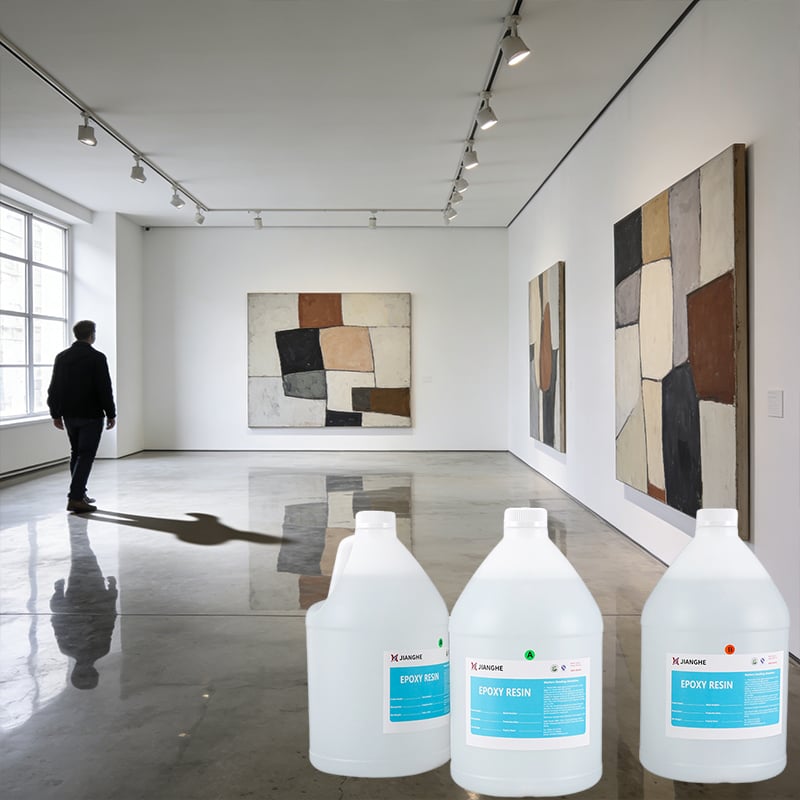
When industrial facilities demand surfaces that can withstand heavy machinery, chemical spills, thermal stress, and constant foot traffic, floor coating epoxy stands out as one of the most reliable and adaptable solutions available. Unlike standard paint or basic sealers, floor coating epoxy forms a hard, chemically bonded layer that fuses directly with the concrete substrate, creating a surface that resists degradation across a wide variety of demanding conditions. Its versatility is not accidental — it results from carefully engineered formulation systems designed to respond to the specific stresses each industrial environment imposes.
The adaptability of floor coating epoxy comes from its modular chemistry. Manufacturers adjust resin grades, curing agents, additives, and aggregate fills to tailor the final coating's hardness, flexibility, chemical resistance, and surface texture. This means a single category of product — floor coating epoxy — can serve vastly different sectors including food processing plants, automotive workshops, warehouses, pharmaceutical facilities, and heavy manufacturing floors. Understanding how these adaptations work helps procurement managers and facility engineers select the right system for their specific operational context.
Formulation Variables That Drive Environmental Adaptation
Resin Grade and Hardener Selection
At the core of every floor coating epoxy system is the pairing of a base resin with a compatible hardener. The ratio and chemistry of this pairing directly determine how the final cured film responds to its surroundings. For environments exposed to strong solvents or acids, formulators select cycloaliphatic or novolac-modified epoxy resins, which offer significantly tighter molecular crosslinking. This tighter network reduces the pathways through which aggressive chemicals can penetrate the floor coating epoxy layer, extending service life considerably. In contrast, environments that experience regular flexural stress — such as floors subjected to repeated heavy forklift cycles — may use a slightly toughened resin system that introduces controlled flexibility without sacrificing surface hardness.
The choice of hardener also regulates cure speed and working temperature range. Floor coating epoxy applied in cold-storage facilities must cure at low ambient temperatures, which requires specially formulated amine hardeners with low-temperature reactivity. Facilities operating in high-humidity tropical conditions require hardeners that resist moisture interference during cure. Every environmental scenario has a corresponding formulation response, which is precisely why floor coating epoxy remains a dominant solution across global industrial flooring markets.
Aggregate Fillers and Surface Profile Engineering
Raw floor coating epoxy in its smooth film form may be insufficient for environments where slip resistance is a safety priority. Industrial kitchens, chemical handling zones, and loading docks require additional traction. By broadcasting quartz sand, aluminum oxide, or silicon carbide grit into the wet floor coating epoxy surface, applicators create anti-slip profiles calibrated to specific safety standards. The aggregate fill also improves compressive strength and impact resistance, making the floor coating epoxy system more capable of handling point loads from dropped tools or pallet edges. This engineering flexibility allows a single coating chemistry to be tuned for both aesthetic cleanroom applications and rugged production floor environments.
Industry-Specific Adaptations in Practice
Chemical and Pharmaceutical Environments
Pharmaceutical manufacturing and chemical processing plants represent some of the most demanding contexts for floor coating epoxy. These environments expose flooring to concentrated acids, bases, solvents, and cleaning agents on a daily basis. Standard floor coating epoxy systems would degrade under such repeated chemical attack, developing blistering, delamination, or surface erosion. To address this, high-build floor coating epoxy systems with thicknesses ranging from two to six millimeters are applied, often using a self-leveling formulation to eliminate joints and crevices where contaminants can accumulate. Coved base detailing, where the floor coating epoxy curves upward at wall junctions, further ensures hygienic encapsulation of the entire floor zone. The result is a monolithic surface that resists both chemical ingress and microbial harboring.
Heavy Industrial and Warehousing Floors
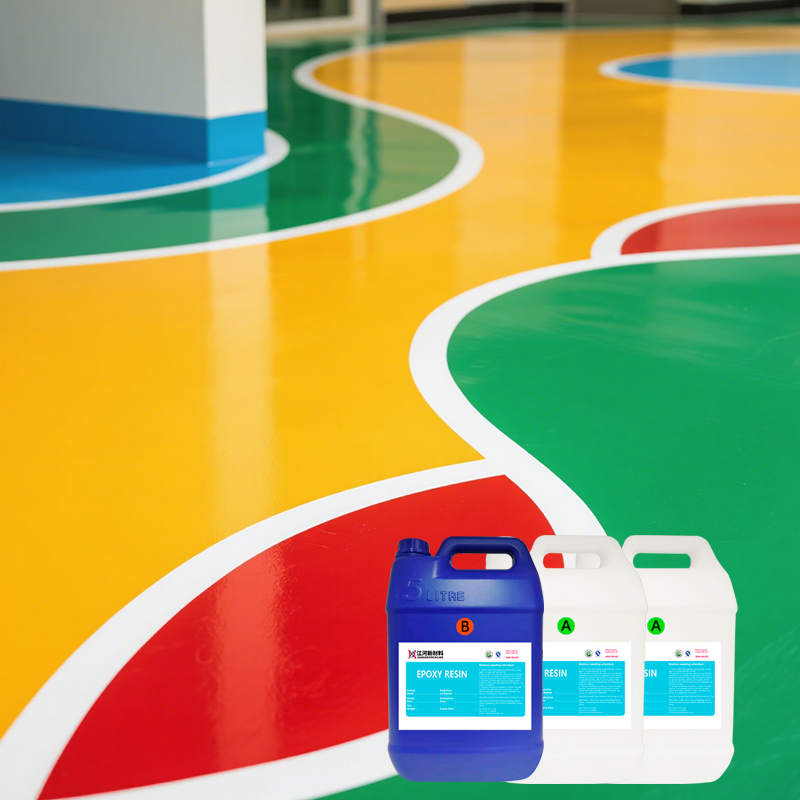
In heavy manufacturing and distribution centers, floor coating epoxy faces mechanical stress that chemical-resistant formulations alone cannot handle. Constant forklift traffic, rack leg point loads, and abrasion from steel-wheeled equipment require floor coating epoxy with exceptional compressive and abrasion-resistant properties. Broadcast aggregate systems and mortar-grade floor coating epoxy — where high-density filler ratios create a near-concrete-hard surface — are standard in these environments. Some facilities apply multi-layer floor coating epoxy systems that combine a primer layer for substrate bonding, an intermediate wear layer for load distribution, and a seal coat that provides surface cleanability and light reflectance. This layered approach allows floor coating epoxy to absorb and distribute mechanical energy rather than concentrating stress at the surface.
Food Processing and Wet Process Areas
Food processing environments present a unique combination of thermal cycling, wet conditions, and mandatory hygiene compliance. Floor coating epoxy in these settings must tolerate steam cleaning at elevated temperatures, exposure to food-grade acids such as lactic and citric acid, and daily sanitizer application. Urethane-modified floor coating epoxy variants or polyurethane-epoxy hybrid systems are often used here, as they provide enhanced thermal shock resistance compared to standard floor coating epoxy. The surface profile must also balance cleanability with slip resistance, ensuring that operators can work safely while floor cleaning protocols remain efficient. Regulatory compliance — including food safety and workplace safety standards — directly influences which floor coating epoxy formulation is specified.
Long-Term Performance and Maintenance Considerations
Surface Maintenance and Recoatability
One of the practical advantages of floor coating epoxy in industrial settings is its recoatability. When the topcoat of a floor coating epoxy system becomes worn, scuffed, or chemically degraded, facilities can apply a fresh seal coat or topcoat without removing the entire system — provided the underlying layers remain structurally sound. This reduces downtime and extends the overall service life of the investment. Regular maintenance protocols, including pH-neutral cleaning agents and immediate spill response, significantly prolong the performance window of floor coating epoxy in any industrial environment.
Substrate Preparation as a Foundation for Adaptability
No floor coating epoxy system performs to its designed specification without proper substrate preparation. Concrete must be mechanically profiled — typically through diamond grinding or shot blasting — to create the surface roughness that allows floor coating epoxy to bond at a mechanical and chemical level simultaneously. Moisture vapor transmission from below the slab is a common failure point; installing moisture mitigation primers before the main floor coating epoxy system prevents osmotic blistering. The quality of surface preparation ultimately determines whether the floor coating epoxy can deliver on its formulation promise in any given industrial environment.
FAQ
What makes floor coating epoxy suitable for chemical exposure areas?
Floor coating epoxy formulated with high-crosslink-density resins, such as novolac or cycloaliphatic variants, resists chemical permeation and surface attack. High-build applications and seamless installation further protect the concrete substrate from chemical ingress, making floor coating epoxy a preferred choice in chemical and pharmaceutical facilities.
How does floor coating epoxy handle temperature fluctuations in industrial settings?
Standard floor coating epoxy can become brittle under frequent thermal cycling. For environments with significant temperature swings, urethane-modified or hybrid floor coating epoxy systems are specified because they maintain flexibility across a broader temperature range, reducing the risk of cracking or delamination under thermal stress.
How long does floor coating epoxy typically last in a heavy industrial environment?
With correct formulation selection, thorough surface preparation, and proper maintenance, floor coating epoxy in heavy industrial settings typically achieves a service life of five to fifteen years. Multi-layer systems and periodic topcoat renewal can extend this range further, making floor coating epoxy a cost-effective long-term flooring investment.