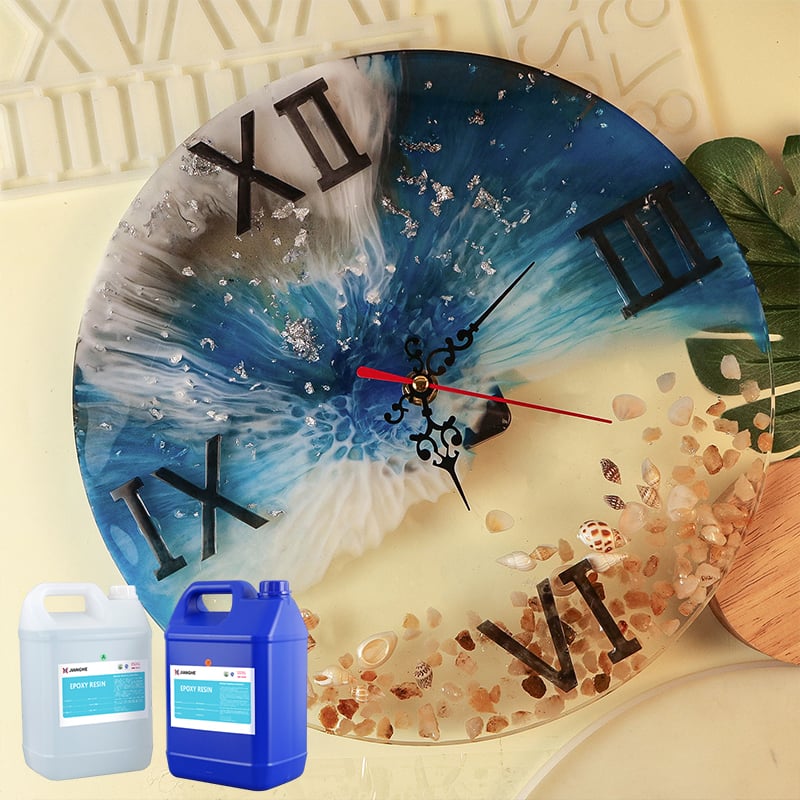
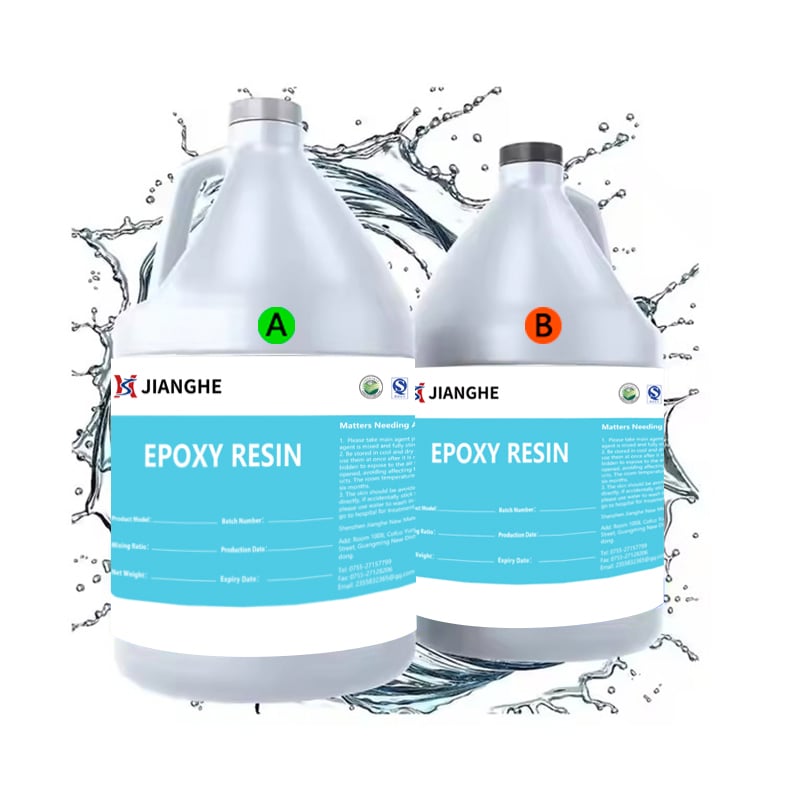
Professional Epoxy Resin and Hardener Solutions - Superior Bonding Performance

All Categories

Get a Tailored Solution

Provide your details below, and our material experts will contact you with a competitive quote and technical support within 24 hours.
Email
Name
Company Name
Message
0/1000

epoxy resin and hardener

Epoxy resin and hardener systems represent one of the most versatile and reliable adhesive solutions in modern manufacturing and construction industries. This two-component system consists of epoxy resin as the primary base material and a compatible hardener that initiates the curing process through chemical cross-linking. When these components combine in precise ratios, they create an exceptionally strong, durable polymer that exhibits outstanding mechanical properties and chemical resistance. The main function of epoxy resin and hardener involves forming permanent bonds between various substrates including metals, composites, concrete, wood, and ceramics. These systems serve critical roles in structural bonding, protective coatings, electrical insulation, and composite manufacturing processes. Technological features include excellent adhesion strength, low shrinkage during curing, superior temperature resistance, and remarkable chemical stability. The curing mechanism allows for controlled working times and predictable performance characteristics across diverse environmental conditions. Applications span aerospace manufacturing where lightweight yet strong bonds are essential, automotive assembly requiring vibration-resistant connections, marine environments demanding waterproof sealing, electronics manufacturing needing reliable insulation, and construction projects requiring structural integrity. The versatility of epoxy resin and hardener formulations enables customization for specific performance requirements including fast-curing variants for rapid production, flexible formulations for dynamic applications, and high-temperature resistant grades for extreme service conditions. Advanced epoxy resin and hardener systems incorporate specialized additives to enhance specific properties such as impact resistance, UV stability, or conductive characteristics. These technological innovations have established epoxy systems as indispensable materials across industries where reliability, performance, and longevity are paramount considerations for successful project outcomes.

New Product Releases

Epoxy resin and hardener combinations deliver exceptional performance advantages that make them the preferred choice for demanding applications across multiple industries. These systems create incredibly strong bonds that often exceed the strength of the materials being joined, ensuring long-lasting connections that withstand mechanical stress, vibration, and thermal cycling. The superior adhesion properties allow epoxy resin and hardener formulations to bond dissimilar materials effectively, eliminating the need for mechanical fasteners in many applications and reducing overall weight while maintaining structural integrity. Chemical resistance stands as another major advantage, with cured epoxy systems showing remarkable stability against acids, bases, solvents, and various industrial chemicals, making them ideal for harsh operating environments. Temperature performance represents a significant benefit, as quality epoxy resin and hardener systems maintain their properties across wide temperature ranges, from cryogenic conditions to elevated service temperatures exceeding 200 degrees Celsius. The low shrinkage characteristics during curing ensure dimensional stability and prevent stress concentration that could lead to bond failure over time. Electrical insulation properties make these systems valuable for electronic applications where reliable performance prevents short circuits and equipment damage. The ease of application provides practical benefits for users, with simple mixing procedures and controllable working times that accommodate various project scales from small repairs to large industrial installations. Epoxy resin and hardener systems offer excellent gap-filling capabilities, allowing them to accommodate surface irregularities while maintaining optimal bond strength. The ability to customize formulations enables manufacturers to tailor properties for specific applications, whether requiring rapid curing for production efficiency or extended working times for complex assemblies. Cost-effectiveness emerges through reduced maintenance requirements, extended service life, and elimination of secondary operations such as drilling or welding. Environmental benefits include solvent-free formulations that reduce volatile organic compound emissions while delivering superior performance. The reliability of epoxy resin and hardener systems reduces warranty claims and enhances product reputation, providing measurable business advantages for manufacturers and contractors who specify these advanced bonding solutions.

Tips And Tricks

What Advantages Does Floor Coating Epoxy Offer in Warehouses and Factories?

23

Dec

What Advantages Does Floor Coating Epoxy Offer in Warehouses and Factories?

Advantages of Floor Coating Epoxy for Warehouses and Factories Maintaining durable, safe, and efficient flooring in warehouses and factories is a constant challenge. Heavy machinery, forklift traffic, and chemical exposure put extreme stress on concr...
View More
What Makes River Table Epoxy Suitable for Deep-Pour Applications?

24

Dec

What Makes River Table Epoxy Suitable for Deep-Pour Applications?

Understanding the Advantages of River Table Epoxy for Deep-Pour Applications River tables are a striking fusion of natural wood and clear epoxy resin, creating a visually stunning centerpiece. The use of deep-pour epoxy is critical in achieving thick...
View More
What Factors Limit the Service Life of Mold Making Silicone?

16

Jan

What Factors Limit the Service Life of Mold Making Silicone?

Understanding the Service Life of Mold Making Silicone Mold making silicone is widely used by manufacturers, artisans, and industrial professionals for its flexibility, durability, and precision. Despite its many advantages, the service life of mold ...
View More
How Does River Table Epoxy Control Exothermic Reaction and Cracking?

28

Jan

How Does River Table Epoxy Control Exothermic Reaction and Cracking?

Managing Exothermic Reactions and Cracking in River Table Epoxy River Table Epoxy has become a favorite material for designers and artisans who create stunning river tables, countertops, and artistic pieces. Its clarity, durability, and versatility m...
View More

Get a Free Quote

Our representative will contact you soon.
Email
Name
Company Name
Message
0/1000

epoxy resin and hardener

Unmatched Structural Bonding Strength and Durability

Unmatched Structural Bonding Strength and Durability

The exceptional structural bonding capabilities of epoxy resin and hardener systems represent their most compelling advantage for engineers and manufacturers seeking reliable, long-term connections. When properly formulated and applied, these systems create molecular bonds that penetrate deep into substrate surfaces, establishing mechanical interlocking combined with chemical adhesion that surpasses traditional fastening methods. The cross-linked polymer network formed during curing develops tensile strengths often exceeding 5000 PSI, while maintaining flexibility to accommodate thermal expansion and mechanical movement without compromising bond integrity. This remarkable strength-to-weight ratio makes epoxy resin and hardener combinations invaluable for aerospace applications where every gram matters, yet structural reliability cannot be compromised. The durability extends beyond initial strength values, with properly cured systems maintaining their properties for decades under normal service conditions and showing excellent fatigue resistance under cyclic loading. Environmental exposure testing demonstrates that quality epoxy resin and hardener formulations resist degradation from UV radiation, moisture cycling, salt spray, and temperature fluctuations that would destroy other bonding methods. The permanent nature of these bonds eliminates concerns about loosening, corrosion, or gradual deterioration common with mechanical fasteners. Advanced formulations incorporate toughening agents that enhance impact resistance while maintaining the fundamental strength characteristics that make epoxy systems indispensable. This combination of initial strength and long-term durability translates directly into reduced maintenance costs, extended service intervals, and enhanced safety margins for critical applications. Manufacturing processes benefit from the ability to create complex assemblies without access holes or protruding hardware, enabling cleaner designs and improved aerodynamics or aesthetics while maintaining structural requirements.
Superior Chemical Resistance and Environmental Stability

Superior Chemical Resistance and Environmental Stability

Epoxy resin and hardener systems demonstrate exceptional chemical resistance that makes them the material of choice for applications exposed to aggressive environments and corrosive substances. The cross-linked molecular structure creates a barrier that resists penetration by most chemicals, including strong acids, caustic solutions, organic solvents, and petroleum products that would quickly degrade other materials. This chemical inertness stems from the dense polymer network formed during curing, which leaves minimal free volume for chemical migration while providing excellent barrier properties against moisture and contaminants. Industrial facilities rely on epoxy resin and hardener formulations for tank linings, pipeline coatings, and structural repairs where exposure to process chemicals demands long-term stability without degradation or loss of protective properties. Marine applications particularly benefit from the outstanding saltwater resistance of these systems, maintaining bond strength and protective characteristics despite constant exposure to corrosive salt spray and immersion conditions that would compromise alternative materials. The temperature stability of cured epoxy systems complements their chemical resistance, maintaining protective properties across service temperature ranges that would cause other materials to soften, become brittle, or lose adhesion. Specialized formulations can withstand continuous exposure to temperatures exceeding 150 degrees Celsius while retaining flexibility and chemical barrier properties essential for demanding applications. Environmental compliance represents another advantage, with many epoxy resin and hardener systems formulated to meet stringent regulations for volatile organic compound emissions while delivering superior performance characteristics. The longevity provided by chemical resistance translates into significant cost savings through reduced maintenance frequency, extended equipment life, and prevention of costly failures that could result from chemical attack or environmental degradation of inferior bonding systems.
Versatile Processing and Application Flexibility

Versatile Processing and Application Flexibility

The remarkable processing versatility of epoxy resin and hardener systems enables their use across an extraordinary range of applications while accommodating diverse manufacturing requirements and operational constraints. Unlike many advanced materials that require specialized equipment or extreme processing conditions, these systems can be applied using conventional tools and techniques, making them accessible to both large manufacturers and small fabrication shops. The ability to control working time through hardener selection allows processors to match cure schedules with production requirements, from rapid-setting formulations that enable high-throughput manufacturing to extended pot life versions that accommodate complex assemblies or large-scale applications. Temperature control during curing provides additional flexibility, with room temperature cure systems eliminating the need for expensive heating equipment while elevated temperature cures can accelerate production schedules when required. Mixing ratios can be precisely controlled to achieve optimal properties, with modern epoxy resin and hardener systems offering wide latitude in ratio tolerances while maintaining excellent performance characteristics. Application methods range from simple brush-on techniques for repair work to sophisticated automated dispensing systems for high-volume production, with consistent results achievable across all application scales. The gap-filling capabilities of these systems accommodate real-world manufacturing tolerances and surface conditions that would challenge rigid adhesives, while maintaining full strength development across bondline thicknesses from virtually zero to several millimeters. Surface preparation requirements remain minimal compared to alternative bonding methods, with proper adhesion achievable on moderately contaminated surfaces that would require extensive cleaning for other systems. The ability to incorporate fillers, reinforcements, and specialized additives enables customization for specific performance requirements without compromising fundamental bonding characteristics. This processing flexibility extends to repair and maintenance applications where existing structures can be reinforced or restored using epoxy resin and hardener systems without disassembly or replacement of major components, providing cost-effective solutions for extending equipment life and maintaining operational capability.

Get Samples & Support

Email
Name
Company Name
Country/Region
What Are You Making
Single Choice
Estimated Monthly Usage
Single Choice
Message
0/1000