Room 1008, Building 1, Cofco Yunjing, Martin Street, Heshui Kou Community, Guangming +86-13418798686 [email protected]
Choosing liquid silicone rubber for a production mold starts with understanding the mold itself. A material that works well for a simple decorative casting may not perform the same way in a mold with deep undercuts, fine surface details, or demanding production requirements.
Before comparing prices or hardness, consider the master model, the material being cast, and the number of parts the mold is expected to produce. These details help narrow down suitable silicone grades and make it easier to compare suppliers on the specifications that matter.
For manufacturers, the decision also affects production time, material consumption, mold replacement, and consistency between batches. The following points can help you select liquid silicone rubber that fits your application and manufacturing process.
The first step is to describe the mold you need to make. A supplier will need more information than simply knowing that the silicone is intended for casting.
Consider the size and shape of the master model, the amount of surface detail, the depth of any undercuts, and the thickness of the mold walls. You should also identify the casting material and estimate how many times the mold will be used.
These details influence the type of silicone, its hardness and viscosity, and the processing conditions required.
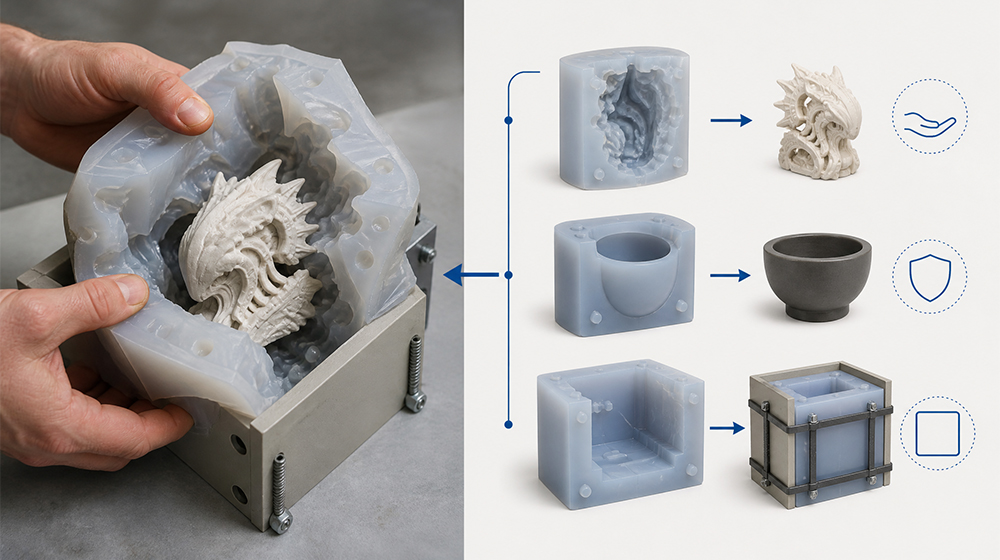
For example, a mold used to produce concrete ornaments may need a different balance of flexibility and mechanical strength from a mold used for detailed resin castings. A large mold may also require a supporting shell to maintain its shape during handling and casting.
It is worth discussing the complete application with your supplier before selecting a grade. The same silicone may perform differently depending on the mold design, casting material, and production method.
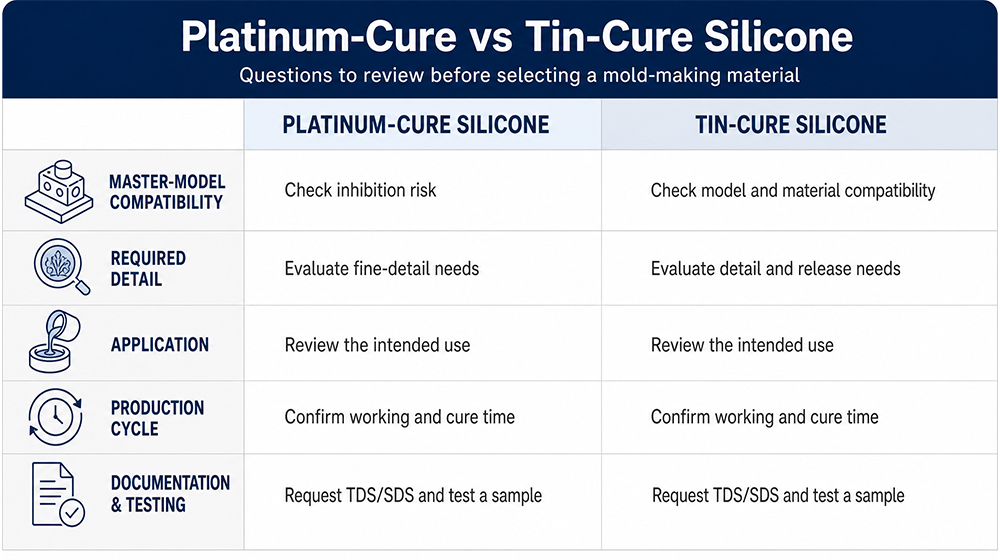
One of the first decisions is whether to use platinum-cure silicone or tin-cure silicone. Both are established options for silicone mold making, but their curing chemistry and processing characteristics differ.
Platinum-cure silicone, also known as addition-cure silicone, is often considered for molds that require good dimensional stability and detailed surface reproduction. Depending on the formulation, it can be suitable for precision casting, prototypes, and repeated production of decorative or technical components.
Its main processing concern is curing inhibition. Certain sulfur-containing materials, some modeling clays, particular 3D-printing materials, amines, and residues from coatings or other chemicals may interfere with curing. The risk depends on the composition of the material in contact with the silicone.
If you are using a new master model, do not assume that the silicone will cure properly simply because the model looks clean. Test a small amount of mixed silicone on a non-critical area first. If the silicone remains sticky or uncured at the contact surface, investigate the model material, coating, contamination, mixing ratio, and curing conditions before making the complete mold.
For production work, this preliminary test can help avoid wasting silicone and preparation time on a mold that cannot be used.
Tin-cure silicone, also known as condensation-cure silicone, is widely used for general-purpose casting molds. Common applications include concrete ornaments, plaster products, decorative stone, and other cast components where the selected grade meets the required performance specifications.
For these applications, tin-cure silicone can offer a practical balance between material cost and mold-making requirements. However, its dimensional stability and mechanical properties depend on the specific formulation and curing conditions. Some condensation-cure products may also change dimension over time.
Tin-cure silicone should not automatically be treated as a replacement for platinum-cure silicone when curing inhibition occurs. The two systems have different compatibility considerations, and the alternative still needs to be tested with the actual master model and casting material.
When comparing the two, look at the product's technical data rather than relying only on the general characteristics of its curing system.
Viscosity affects how easily liquid silicone flows around a master model and reaches its surface details.
A lower-viscosity silicone may flow more readily into fine textures and narrow sections. It can be useful for detailed molds, although the final result still depends on the pouring technique, working time, and mold geometry.
A higher-viscosity material may behave differently during pouring and may require more attention to air removal. That does not automatically make it unsuitable for a detailed mold. The appropriate viscosity depends on the design and the processing method.
Air bubbles are not caused by viscosity alone. They can also result from mixing too aggressively, pouring too quickly, trapped air around undercuts, or an unsuitable mold-filling procedure.
For a complex master model, manufacturers may use a thin initial coat to capture surface detail before pouring the remaining silicone. Vacuum degassing can also help remove entrained air when the product and available equipment are suitable.
The processing method should match the silicone grade. Before production, check the recommended mixing ratio, working time, viscosity, and degassing instructions in the technical data sheet.
Silicone hardness affects how easily a finished casting can be removed and how well the mold maintains its shape during use.
A softer silicone is generally more flexible, which can help when a mold contains deep undercuts or irregular shapes. The trade-off is that a large or thin-walled mold may need additional support to prevent deformation.
A harder silicone may provide more support for certain mold designs, but it can make demolding difficult when the casting has deep undercuts or fragile sections. Excessive force during removal can damage both the mold and the finished part.
Hardness should therefore be considered alongside mold geometry, wall thickness, tear strength, and the need for a rigid support shell.
For example, a small mold with several undercuts may benefit from a more flexible grade, while a large mold used for a relatively simple shape may need a different balance of flexibility and support.
If you are unsure which Shore A hardness to choose, describe the mold dimensions and casting shape to your supplier. Testing a sample that represents the actual mold geometry is more useful than relying on a small, flat test piece alone.
Working time determines how long the mixed silicone remains suitable for pouring and handling. For production molds, it needs to be long enough for the material to be mixed, poured, and distributed around the master model before it begins to cure.
A complex mold may require more time than a simple open mold. If the material starts to thicken before all the details are filled, the finished mold may contain defects or incomplete surface reproduction.
Temperature also matters. Silicone processing can change with the surrounding temperature, so a material that behaves well in one workshop may have a different working time in another environment.
Before ordering, check the following information for the selected grade:
Do not estimate production capacity from curing time alone. The full cycle includes model preparation, mixing, degassing where required, pouring, curing, demolding, inspection, and mold preparation for the next cycle.
If you plan to move from sample testing to regular production, evaluate the material under conditions that are as close as possible to your normal manufacturing environment.
The silicone mold is only one part of the casting process. The material poured into it can affect release, surface finish, mold life, and maintenance requirements.
Liquid silicone rubber molds may be used with epoxy resin, polyurethane systems, plaster, concrete, wax, soap, and other casting materials. These materials do not all behave in the same way, so a silicone grade that works well for one application should not automatically be approved for another.
Before starting production, test the complete combination: the master model, silicone, release agent, casting material, and curing conditions.
After casting, check whether the part releases cleanly and whether the mold shows any visible changes. Look for surface tackiness, staining, color transfer, swelling, softening, tearing around undercuts, or changes in dimensions over repeated casting cycles.
If the casting material generates heat during curing, confirm that the silicone grade is suitable for the expected conditions. Do not assume that every liquid silicone rubber has the same temperature resistance or chemical compatibility.
For food-contact, skin-contact, or other regulated applications, request documentation for the exact product grade and intended use. A general description of silicone rubber does not establish that a particular formulation meets the requirements of a regulated application.
A sample can help you assess whether a silicone grade suits your mold, but it does not tell you everything about future production orders.
For manufacturers, batch consistency is also important. Differences in viscosity, curing behavior, hardness, or other relevant properties can affect processing and the finished mold. When purchasing for repeated production, ask the supplier which specifications are controlled and how the finished product is checked.
Depending on the product and the supplier's quality system, relevant documentation may include a technical data sheet (TDS), safety data sheet (SDS), certificate of analysis (COA), packaging specification, and batch identification information.
It is useful to agree on the key requirements before placing a larger order. These might include the specified hardness, viscosity range, mixing ratio, working time, packaging format, and acceptance criteria for the supplied material.
Keep a record of the approved sample and the specifications used to evaluate it. If a later batch performs differently, this information gives both parties a clearer basis for investigating the issue.
For Jianghe, buyers can discuss the relevant product specifications and available technical documentation with the team before moving from sample evaluation to repeat supply. The inspection items and documentation available should be confirmed for the specific grade being purchased.
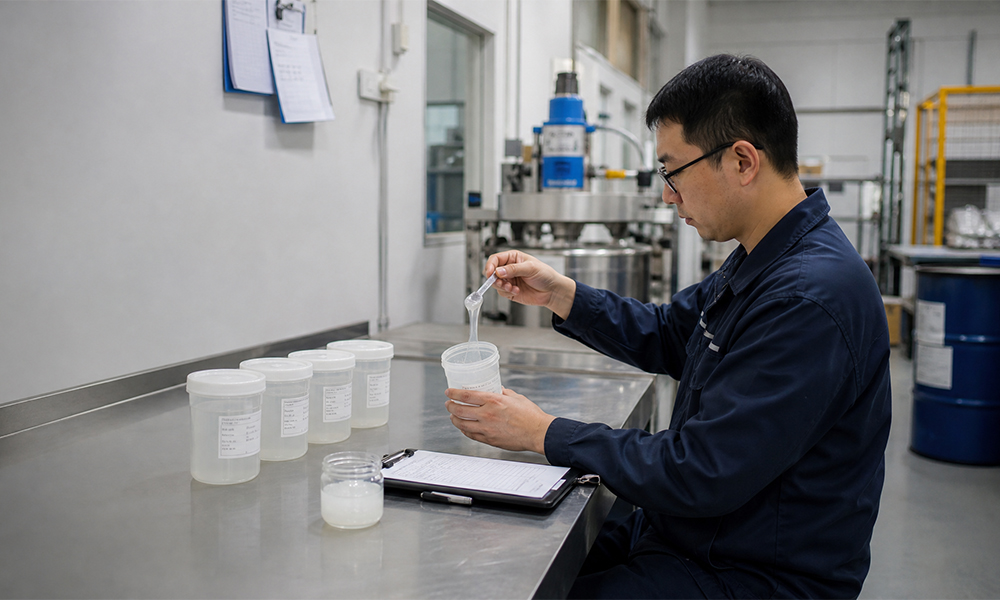
Not every production project needs a completely new silicone formulation. Sometimes the requirement is more straightforward: a different hardness, a particular viscosity, a specific packaging size, or a private-label presentation.
Before requesting a quotation, prepare a brief description of the application. Include the mold design, casting material, target hardness, processing requirements, expected order quantity, packaging preference, and destination market.
This information helps the supplier determine whether an existing grade may be suitable or whether further product evaluation is needed.
If you are sourcing liquid silicone rubber for a brand or manufacturing program, also clarify the expected order frequency, labeling requirements, documentation needs, and target delivery schedule. Customization options, minimum order quantities, costs, and lead times should be confirmed before approval.
A clear specification makes it easier to compare quotations on a like-for-like basis and reduces the risk of approving a sample without defining what future production batches are expected to meet.
Before placing an order, confirm the following points with your supplier:
The aim is not to collect the largest number of specifications. It is to identify the properties that affect your particular mold and make sure the supplier understands them before production begins.
The right liquid silicone rubber is the one that works with your mold design, casting material, and production process. Platinum-cure and tin-cure systems each have suitable applications, but neither should be selected without considering the actual requirements of the job.
Start with the mold geometry and end use, then evaluate cure system, viscosity, hardness, working time, compatibility, and the documentation available for the selected grade. For repeated manufacturing, also consider how the material will be specified and checked across future orders.
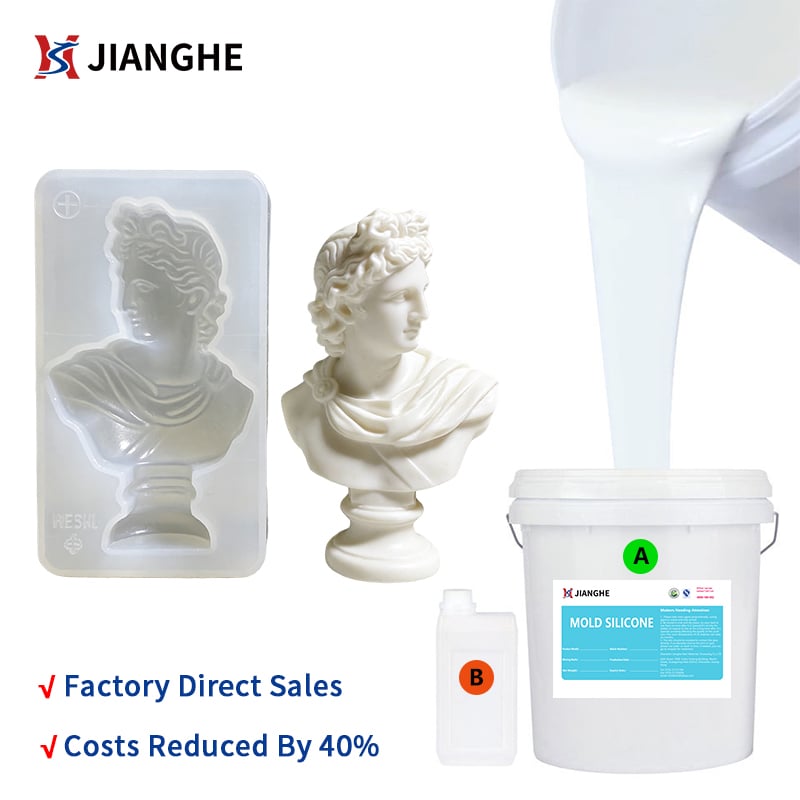
Jianghe supplies liquid silicone rubber for mold-making and related manufacturing applications, including platinum-cure and tin-cure silicone options. If you are sourcing material for a new production mold or a repeat manufacturing program, share your application, mold dimensions, casting material, target specifications, and estimated usage with our team.
We can review your requirements and discuss suitable grades for sample evaluation.
Explore our Liquid Silicone Rubber products or contact Jianghe to discuss your application and supply requirements.
 Hot News
Factory-backed material solutions for manufacturers, brands and distributors worldwide. We specialize in liquid silicone rubber, epoxy resin, flooring materials and related products, providing reliable manufacturing, OEM customization and stable global supply.
Copyright © 2026 Shenzhen Jianghe New Materials Technology Co., Ltd.All rights reserved. Privacy Policy
 EN