Professional UV Resin for Casting - Fast-Cure, High-Detail Polymer Solutions

All Categories

Get a Tailored Solution

Provide your details below, and our material experts will contact you with a competitive quote and technical support within 24 hours.
Email
Name
Company Name
Message
0/1000

uv resin for casting

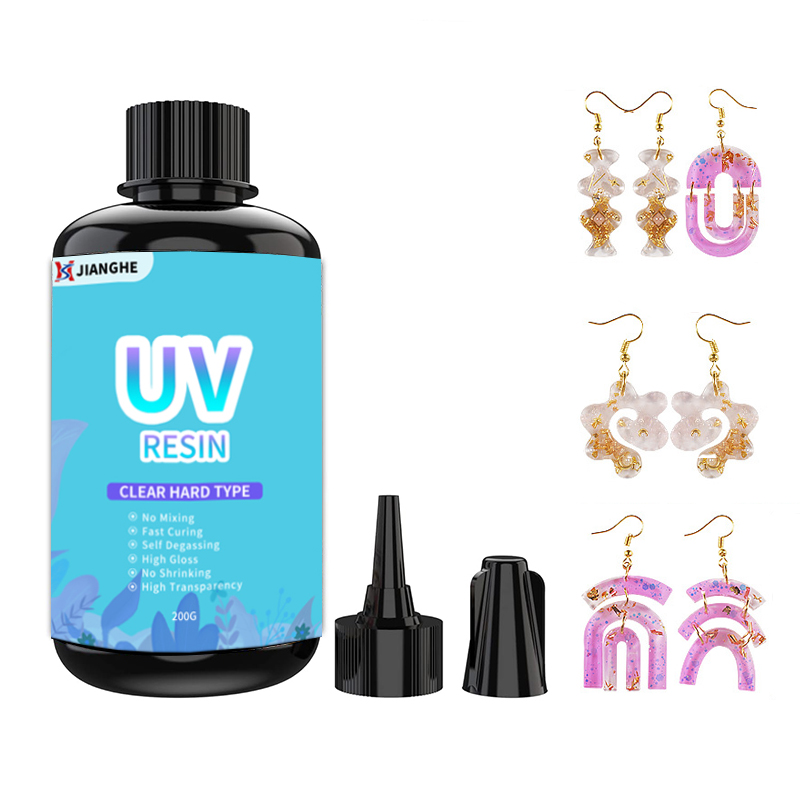
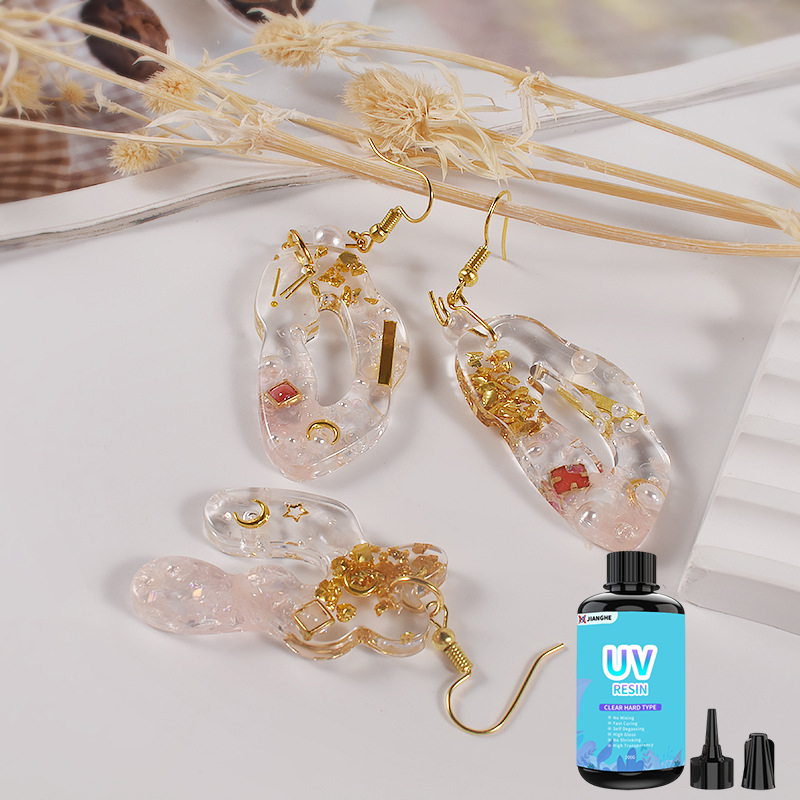
UV resin for casting represents a revolutionary material that has transformed the manufacturing and crafting industries. This photopolymer material cures rapidly when exposed to ultraviolet light, creating durable, transparent, and highly detailed finished products. UV resin for casting offers exceptional versatility for both professional manufacturers and hobbyist creators seeking precision results. The technology behind UV resin for casting utilizes photoinitiators that trigger polymerization reactions under UV exposure, typically requiring wavelengths between 365-405 nanometers. This process eliminates the need for mixing multiple components, reducing waste and simplifying the casting procedure. The main functions of UV resin for casting include creating jewelry components, miniature figurines, decorative items, prototypes, and industrial parts requiring smooth finishes and intricate details. Technological features encompass low viscosity for excellent flow characteristics, minimal shrinkage during curing, superior adhesion properties, and resistance to yellowing over time. The material demonstrates remarkable clarity, allowing light transmission comparable to glass while maintaining flexibility and impact resistance. UV resin for casting applications span numerous industries including automotive, aerospace, electronics, medical devices, and consumer goods manufacturing. Artists and makers utilize this material for creating custom jewelry, replicating antique components, producing small-batch prototypes, and crafting detailed scale models. The casting process requires minimal equipment: UV lights, silicone molds, and basic safety gear. Professional applications benefit from the material's consistent quality, predictable curing times, and ability to capture microscopic surface details from master patterns. UV resin for casting continues evolving with new formulations offering enhanced properties such as improved flexibility, increased temperature resistance, and specialized characteristics for specific applications.

New Product Releases

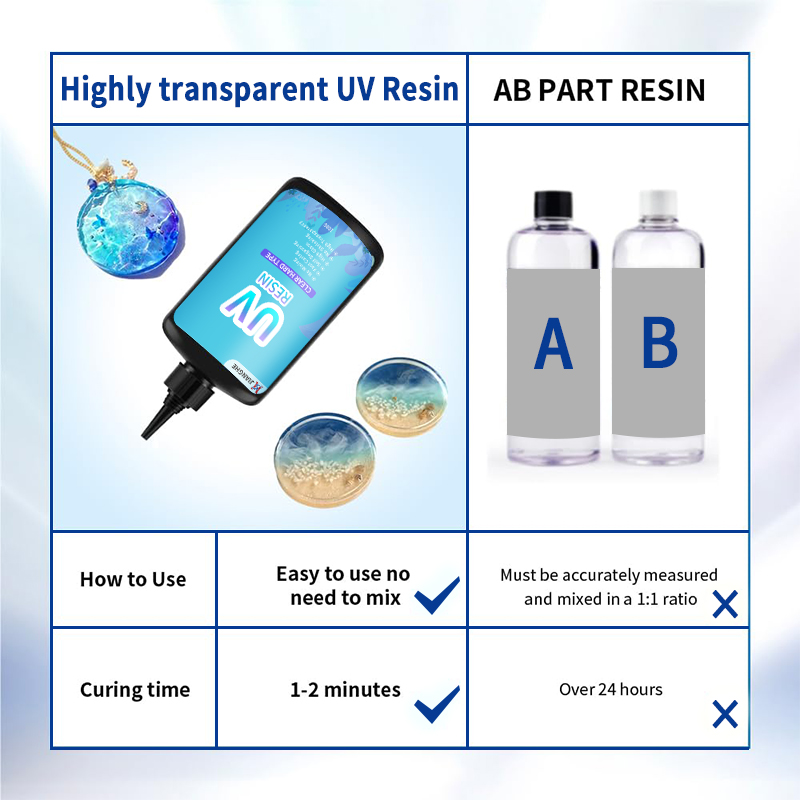
UV resin for casting delivers numerous compelling benefits that make it superior to traditional casting materials in many applications. The most significant advantage is the rapid curing process, which completes within minutes rather than hours required by conventional resins. This speed dramatically increases productivity and allows creators to produce multiple pieces in a single session. UV resin for casting eliminates guesswork associated with mixing ratios, preventing common failures caused by incorrect proportions of base and catalyst materials. The single-component formula ensures consistent results every time, reducing material waste and project failures. Temperature stability represents another crucial benefit, as UV resin for casting performs reliably across various environmental conditions without requiring heated curing chambers or specific ambient temperatures. The material produces exceptional surface quality straight from the mold, often eliminating post-processing steps like sanding or polishing. This characteristic saves considerable time and labor costs in production environments. UV resin for casting demonstrates superior detail reproduction capabilities, capturing intricate textures and fine features that traditional materials might miss or blur. The low odor emission makes it suitable for indoor use without requiring extensive ventilation systems, unlike solvent-based alternatives. Shelf stability is excellent, with unopened containers maintaining quality for extended periods without degradation or separation. The cured material exhibits outstanding dimensional stability, maintaining precise measurements without warping or distortion over time. UV resin for casting offers excellent chemical resistance, withstanding exposure to common solvents, oils, and cleaning agents without deterioration. The transparency levels achievable rival optical glass, making it ideal for applications requiring crystal-clear results. Cleanup procedures are simplified since uncured material washes away easily with isopropyl alcohol, and tools remain reusable after proper cleaning. Cost-effectiveness emerges through reduced labor requirements, minimal waste generation, and elimination of mixing errors that destroy entire batches. Environmental benefits include lower volatile organic compound emissions and reduced energy consumption compared to thermally cured alternatives.

Practical Tips

How Is Liquid Silicone Rubber Used in Professional Mold Making?

24

Dec

How Is Liquid Silicone Rubber Used in Professional Mold Making?

Practical Applications of Liquid Silicone Rubber in Professional Manufacturing Liquid Silicone Rubber plays a central role in professional making environments where precision, repeatability, and material reliability are critical. In contrast to hobby...
View More
How Can Buyers Assess Long-Term Reliability of a Resin Manufacturer?

11

Dec

How Can Buyers Assess Long-Term Reliability of a Resin Manufacturer?

Building Confidence in a Sustainable Manufacturing Partner Selecting a reliable Resin Manufacturer is a strategic decision that directly affects product quality, delivery stability, and long-term cooperation efficiency. For buyers sourcing epoxy resi...
View More
How Does Anti-Yellowing Resin Maintain Long-Term Visual Clarity?

17

Dec

How Does Anti-Yellowing Resin Maintain Long-Term Visual Clarity?

The Importance of Visual Stability in Modern Epoxy Applications Anti-Yellowing Resin has become a critical material choice in epoxy systems where long-term appearance, transparency, and color consistency are as important as mechanical performance. In...
View More
Why Is Clear Epoxy Resin More Prone to Yellowing?

10

Jan

Why Is Clear Epoxy Resin More Prone to Yellowing?

Understanding the Yellowing of Clear Epoxy Resin Clear epoxy resin is widely used in flooring, furniture, art, and industrial applications due to its transparency, durability, and glossy finish. However, one common challenge faced by manufacturers, a...
View More

Get a Free Quote

Our representative will contact you soon.
Email
Name
Company Name
Message
0/1000

uv resin for casting

Instant Curing Technology for Maximum Efficiency

Instant Curing Technology for Maximum Efficiency

The instant curing technology of UV resin for casting revolutionizes production timelines and workflow efficiency in ways that traditional casting materials simply cannot match. This advanced photopolymer system responds immediately to ultraviolet light exposure, completing the polymerization process within 2-5 minutes depending on thickness and UV intensity. Unlike conventional two-part resins that require 24-48 hours for full cure, UV resin for casting enables same-day project completion and rapid iteration cycles. This technology particularly benefits small businesses and independent creators who need quick turnaround times to meet customer demands or explore design variations efficiently. The controlled curing process allows users to work in stages, selectively curing different sections of complex projects while keeping other areas workable. Professional manufacturers leverage this instant curing capability to implement just-in-time production strategies, reducing inventory requirements and warehouse space needs. The technology eliminates concerns about pot life limitations, as UV resin for casting remains stable indefinitely until light exposure occurs. This characteristic proves invaluable for detailed work requiring extended manipulation time or complex multi-step assembly processes. Quality control benefits significantly from instant curing, as defects become immediately apparent, allowing for quick corrections before investing additional time and materials. The predictable curing behavior enables automated production systems where UV exposure timing and intensity can be precisely controlled for consistent results across large production runs. Research and development applications benefit enormously from rapid prototyping capabilities, allowing engineers to test multiple design iterations within single work sessions. Educational environments utilize instant curing technology to maintain student engagement and enable project completion within limited class periods. The energy efficiency of UV curing systems reduces operational costs while supporting sustainability initiatives through lower power consumption compared to thermal curing ovens.
Superior Detail Reproduction and Surface Quality

Superior Detail Reproduction and Surface Quality

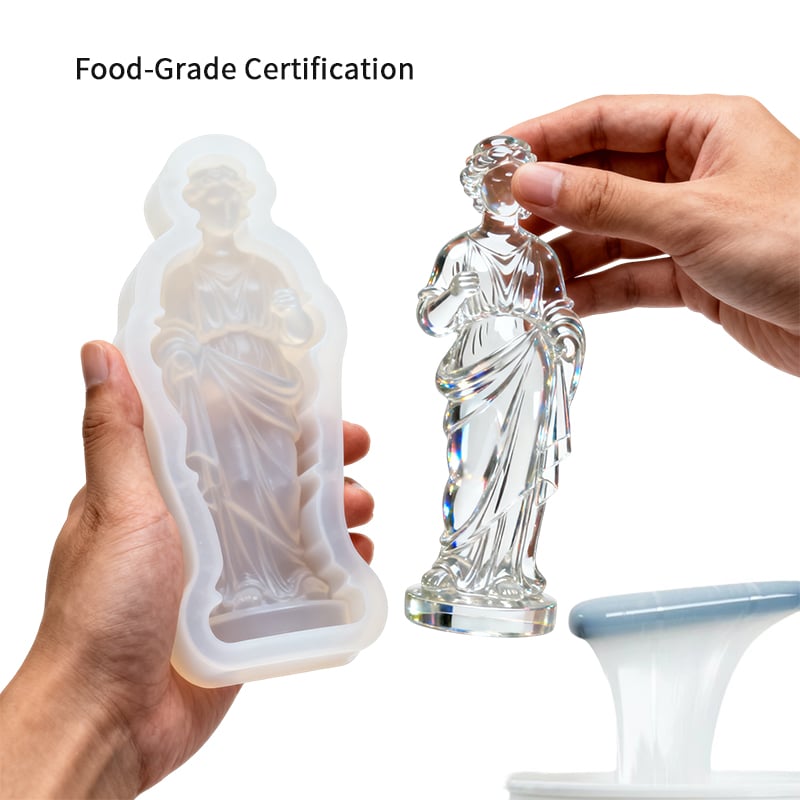
UV resin for casting delivers unmatched detail reproduction capabilities that exceed traditional casting materials in capturing microscopic surface features and complex geometries with exceptional fidelity. The low viscosity characteristics allow the material to flow into the smallest crevices and undercuts of master patterns, eliminating air entrapment and ensuring complete mold filling even in challenging configurations. This superior flow behavior results in castings that perfectly replicate every nuance of the original, from fine textures to sharp edges and delicate filigree work. The molecular structure of cured UV resin for casting creates an incredibly smooth surface finish that often eliminates post-processing requirements, saving significant time and labor costs in production workflows. Professional jewelers particularly value this characteristic for creating pieces that require minimal finishing work while maintaining crisp detail definition throughout the casting process. The material's ability to capture surface details down to sub-micron levels makes it ideal for replicating antique components, creating museum-quality reproductions, and manufacturing precision parts for technical applications. Dental laboratories utilize UV resin for casting to create accurate impressions and models where dimensional precision directly impacts patient comfort and treatment success. The optical clarity achieved surpasses many traditional materials, allowing for transparent castings that showcase internal structures or create stunning visual effects in artistic applications. Surface tension properties ensure even coating distribution across complex surfaces, preventing thickness variations that could compromise structural integrity or aesthetic appeal. The cured surface exhibits excellent release characteristics from silicone molds, preventing damage to intricate details during demolding operations. Aerospace and automotive industries benefit from the superior surface quality for prototyping components where aerodynamic properties or aesthetic considerations are critical. Electronics manufacturers rely on the detail reproduction capabilities for creating housings and connectors that must meet precise dimensional tolerances. The consistency of surface quality across multiple castings enables mass production applications where uniform appearance and performance are essential requirements.
Versatile Applications Across Multiple Industries

Versatile Applications Across Multiple Industries

UV resin for casting demonstrates remarkable versatility across diverse industries and applications, making it an indispensable material for both specialized manufacturing processes and creative endeavors. The jewelry industry has embraced this technology for rapid prototyping, custom piece creation, and small-batch production runs where traditional manufacturing methods prove cost-prohibitive or time-consuming. Dental professionals utilize UV resin for casting to create accurate models, surgical guides, and temporary prosthetics with biocompatible formulations that ensure patient safety and comfort. The automotive sector leverages this material for prototyping interior components, creating custom trim pieces, and manufacturing small production runs of specialized parts that would be expensive to produce through traditional injection molding. Electronics manufacturers rely on UV resin for casting to produce protective housings, lens components, and insulators that require precise dimensional control and excellent optical properties. Art and sculpture applications benefit from the material's ability to capture fine details while providing durability for both indoor and outdoor installations. The miniature modeling community has adopted UV resin for casting as the preferred material for creating detailed figurines, architectural models, and collectible items that demand exceptional surface quality and dimensional accuracy. Medical device manufacturers utilize specialized formulations for creating patient-specific implants, surgical tools, and diagnostic equipment components that must meet stringent regulatory requirements. The aerospace industry employs UV resin for casting in rapid prototyping applications where lightweight, high-strength components are essential for testing aerodynamic properties and structural performance. Educational institutions incorporate this technology into engineering and art programs, providing students with hands-on experience using professional-grade materials and processes. Research laboratories benefit from the quick turnaround times for creating custom equipment components, test fixtures, and specialized tools that support scientific investigations. The restoration industry utilizes UV resin for casting to replicate missing or damaged architectural elements, ensuring historical accuracy while providing modern durability and weather resistance.

Get Samples & Support

Email
Name
Company Name
Country/Region
What Are You Making
Single Choice
Estimated Monthly Usage
Single Choice
Message
0/1000