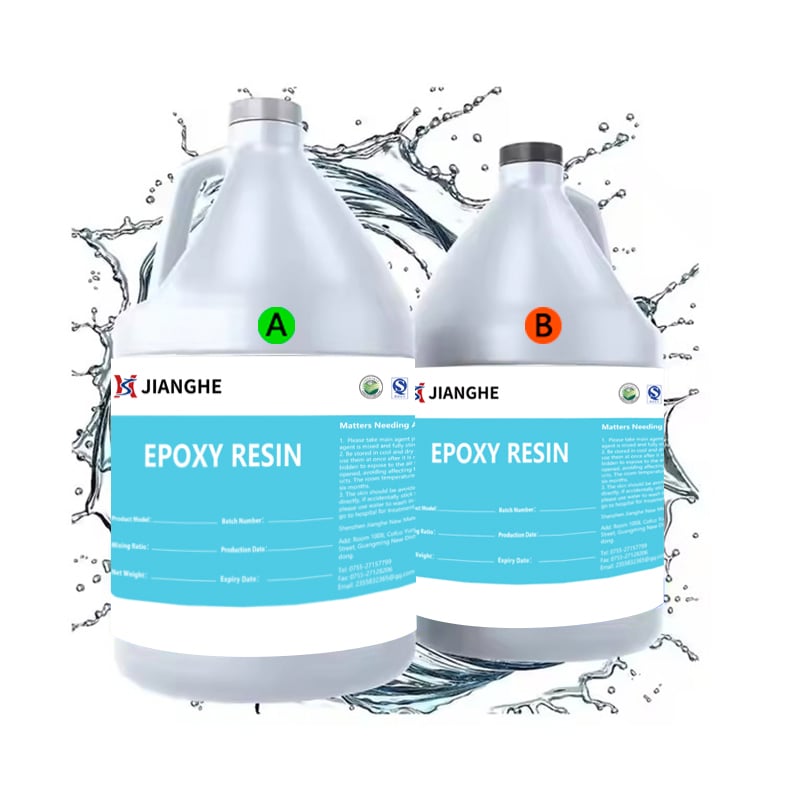
Low Viscosity Epoxy Resin: Superior Flow Technology for Industrial Applications and Structural Bonding Solutions

All Categories

Get a Tailored Solution

Provide your details below, and our material experts will contact you with a competitive quote and technical support within 24 hours.
Email
Name
Company Name
Message
0/1000

low viscosity epoxy resin

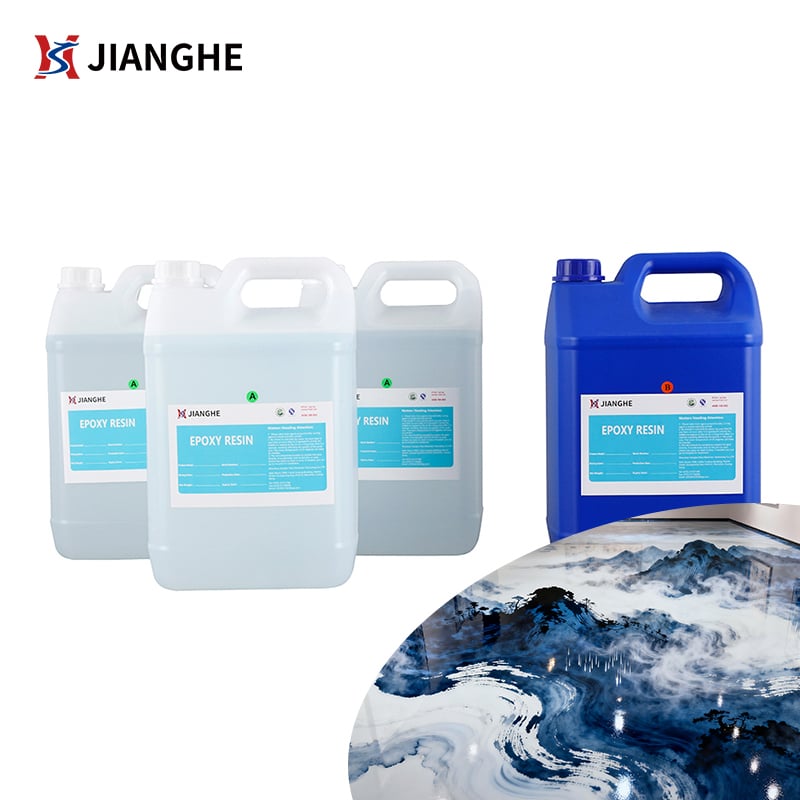
Low viscosity epoxy resin represents a breakthrough in polymer technology, offering exceptional flow characteristics that make it ideal for demanding industrial and commercial applications. This specialized formulation maintains a thin, liquid consistency that allows for superior penetration into tight spaces, complex geometries, and porous materials. Unlike traditional epoxy resins that can be thick and difficult to work with, low viscosity epoxy resin flows effortlessly, ensuring complete coverage and optimal bonding performance. The main functions of low viscosity epoxy resin include structural bonding, surface coating, electrical insulation, and protective sealing. Its technological features encompass rapid curing capabilities, excellent chemical resistance, superior mechanical strength, and outstanding thermal stability. The resin's molecular structure has been engineered to reduce internal friction, resulting in enhanced workability and extended pot life. This makes it particularly valuable for applications requiring precise control and extended working time. Key applications span across aerospace manufacturing, automotive assembly, electronics encapsulation, marine construction, and industrial maintenance. In the aerospace sector, low viscosity epoxy resin is used for composite fabrication and structural repairs where weight reduction and strength are critical. The automotive industry relies on this material for lightweight component bonding and vibration damping applications. Electronics manufacturers utilize its excellent dielectric properties for component potting and circuit board protection. Marine applications benefit from its superior water resistance and corrosion protection capabilities. The resin's versatility extends to construction projects where it serves as a concrete repair material, providing exceptional adhesion to various substrates including metal, concrete, wood, and composites. Manufacturing processes benefit from its self-leveling properties, which eliminate the need for complex application techniques while ensuring uniform thickness distribution across treated surfaces.

Popular Products

Low viscosity epoxy resin delivers significant advantages that directly translate to improved project outcomes and cost savings for users across multiple industries. The primary benefit lies in its exceptional penetration capabilities, which allow the material to reach areas that conventional epoxy resins cannot access effectively. This deep penetration ensures stronger bonds by eliminating air pockets and voids that typically compromise structural integrity. Users experience faster application times due to the resin's excellent flow characteristics, reducing labor costs and project completion schedules. The material requires minimal surface preparation compared to higher viscosity alternatives, as its flowing nature compensates for minor surface irregularities and contamination. Quality control becomes more manageable because the self-leveling properties create consistent coating thickness without specialized equipment or extensive operator training. Temperature tolerance represents another crucial advantage, as low viscosity epoxy resin maintains workability across a broader range of environmental conditions than standard formulations. This flexibility allows for year-round application schedules and reduces weather-related project delays. The cured material exhibits superior impact resistance and flexibility, making it ideal for applications subject to vibration, thermal cycling, and mechanical stress. Users benefit from extended service life due to the resin's excellent UV stability and chemical resistance properties. Maintenance requirements decrease significantly because the smooth, non-porous surface resists dirt accumulation and contamination. Economic benefits include reduced material waste through improved coverage rates and lower rejection rates due to application defects. The resin's compatibility with various additives and fillers provides customization opportunities for specific performance requirements without compromising base properties. Safety advantages include lower volatile organic compound emissions during application, creating healthier work environments. Storage and handling become more convenient due to the material's stability and extended shelf life. Quality assurance improves through predictable curing behavior and consistent mechanical properties, enabling more accurate project planning and specification compliance.

Practical Tips

How Is Liquid Silicone Rubber Used in Professional Mold Making?

24

Dec

How Is Liquid Silicone Rubber Used in Professional Mold Making?

Practical Applications of Liquid Silicone Rubber in Professional Manufacturing Liquid Silicone Rubber plays a central role in professional making environments where precision, repeatability, and material reliability are critical. In contrast to hobby...
View More
Why Is Clear Epoxy Resin More Prone to Yellowing?

10

Jan

Why Is Clear Epoxy Resin More Prone to Yellowing?

Understanding the Yellowing of Clear Epoxy Resin Clear epoxy resin is widely used in flooring, furniture, art, and industrial applications due to its transparency, durability, and glossy finish. However, one common challenge faced by manufacturers, a...
View More
Why Is Floor Coating Epoxy Suitable for Chemical Plants and Warehouses?

22

Jan

Why Is Floor Coating Epoxy Suitable for Chemical Plants and Warehouses?

The Advantages of Floor Coating Epoxy in Industrial Environments Floor coating epoxy has become a preferred choice for chemical plants, warehouses, and other industrial facilities due to its durability, chemical resistance, and ease of maintenance. I...
View More
How Does River Table Epoxy Control Exothermic Reaction and Cracking?

28

Jan

How Does River Table Epoxy Control Exothermic Reaction and Cracking?

Managing Exothermic Reactions and Cracking in River Table Epoxy River Table Epoxy has become a favorite material for designers and artisans who create stunning river tables, countertops, and artistic pieces. Its clarity, durability, and versatility m...
View More

Get a Free Quote

Our representative will contact you soon.
Email
Name
Company Name
Message
0/1000

low viscosity epoxy resin

Superior Flow and Penetration Technology

Superior Flow and Penetration Technology

The advanced molecular engineering behind low viscosity epoxy resin creates unprecedented flow characteristics that revolutionize application processes across industries. This technology enables the resin to achieve viscosity levels significantly lower than conventional epoxy systems while maintaining structural integrity and performance capabilities. The enhanced flow properties result from carefully balanced polymer chains that reduce intermolecular friction, allowing the material to penetrate microscopic surface textures, hairline cracks, and complex geometries that would otherwise remain untreated. This penetration capability proves invaluable in restoration projects where complete substrate saturation is essential for long-term durability. Manufacturing applications benefit tremendously as the resin flows into intricate mold details, ensuring perfect reproduction of complex shapes without air entrapment or incomplete filling. The technology eliminates common application challenges such as brush marks, roller stipple, and thickness variations that plague traditional epoxy applications. Users report significant time savings during surface preparation phases because the resin compensates for minor surface imperfections through its excellent wetting properties. Quality control becomes more predictable as the self-leveling nature produces consistent results regardless of operator skill levels. The penetration technology also enhances bonding strength by creating mechanical interlocks at the molecular level, resulting in adhesive bonds that often exceed the cohesive strength of the substrates themselves. This characteristic makes low viscosity epoxy resin particularly valuable for structural repair applications where bond reliability is critical. Environmental benefits include reduced waste generation through improved coverage efficiency and elimination of rework cycles typically required with conventional materials. The technology's versatility allows for both thin film applications and thick section pours without compromising performance characteristics, providing users with exceptional flexibility in project design and execution.
Exceptional Curing Performance and Durability

Exceptional Curing Performance and Durability

Low viscosity epoxy resin demonstrates remarkable curing characteristics that deliver superior long-term performance across diverse environmental conditions and application requirements. The curing system has been optimized to provide extended working time while maintaining rapid final cure rates, giving users the flexibility to complete complex applications without rushing. This controlled curing profile prevents thermal spikes that can cause internal stress and cracking in thick sections, ensuring uniform properties throughout the cured material. The resulting polymer network exhibits exceptional mechanical properties including high tensile strength, superior flexural modulus, and outstanding impact resistance that surpasses many traditional structural materials. Chemical resistance performance exceeds industry standards, with the cured resin maintaining integrity when exposed to acids, bases, solvents, and aggressive chemicals commonly encountered in industrial environments. Temperature stability ranges from cryogenic conditions to elevated service temperatures, making it suitable for applications spanning arctic installations to high-temperature industrial processes. The material's fatigue resistance ensures reliable performance under cyclic loading conditions, preventing premature failure in dynamic applications such as aerospace components and automotive assemblies. UV stability has been enhanced through advanced stabilizer packages that prevent degradation and maintain appearance properties even under prolonged solar exposure. Moisture resistance capabilities eliminate concerns about hydrolytic degradation, making the material ideal for marine applications and humid environments. The curing process produces minimal shrinkage, reducing internal stresses and maintaining dimensional accuracy critical for precision applications. Electrical properties remain stable throughout the service life, ensuring consistent insulation performance in electronic applications. Quality assurance benefits from predictable curing behavior that allows accurate scheduling and resource allocation. The durability characteristics translate to extended service intervals and reduced maintenance requirements, providing significant lifecycle cost advantages for users investing in low viscosity epoxy resin systems.
Versatile Application Methods and User-Friendly Properties

Versatile Application Methods and User-Friendly Properties

The user-friendly characteristics of low viscosity epoxy resin make it accessible to both professional contractors and skilled technicians, while its versatile application methods accommodate diverse project requirements and equipment capabilities. Multiple application techniques including brushing, rolling, spraying, and injection are all viable options due to the material's excellent flow properties and consistent rheological behavior. Spray applications benefit from reduced overspray and improved transfer efficiency, while brush and roller applications produce smooth, professional finishes without visible tool marks. The extended pot life provides ample working time for large surface areas or complex assemblies, reducing waste from partially mixed batches and allowing for proper surface preparation and application technique. Temperature sensitivity has been minimized through advanced formulation chemistry, enabling successful applications across broader environmental conditions than traditional epoxy systems. The material exhibits excellent shelf stability, maintaining performance characteristics during extended storage periods without degradation or separation. Mixing ratios are designed for accuracy and convenience, reducing the likelihood of ratio errors that compromise performance. Clean-up procedures are simplified through the use of common solvents before curing, while cured material removal can be accomplished through standard mechanical methods. Safety profiles have been optimized to reduce health hazards during handling and application, with lower volatile organic compound content and reduced sensitization potential. Quality control features include color-coded components for mix verification and predictable viscosity changes that indicate proper mixing. The material's compatibility with standard industrial equipment eliminates the need for specialized application tools or extensive operator training. Surface preparation requirements are less stringent than competitive products, accepting minor contamination levels that would compromise other epoxy systems. Thickness control becomes intuitive due to the self-leveling properties, while edge definition remains sharp and consistent. These user-friendly properties translate to reduced application costs, improved success rates, and enhanced project outcomes across all skill levels and application scenarios.

Get Samples & Support

Email
Name
Company Name
Country/Region
What Are You Making
Single Choice
Estimated Monthly Usage
Single Choice
Message
0/1000