Room 1008, Building 1, Cofco Yunjing, Martin Street, Heshui Kou Community, Guangming +86-13418798686 [email protected]
A customer sends you a colour reference. It could be a Pantone or RAL number, a photograph, or a physical sample from an existing product.
You prepare the colour in epoxy resin and get a result close to the reference. Then you use the same colourant in silicone, and the finished material looks different. The colour in UV resin may be different again.
This is a common issue when developing products in more than one material. A colour reference provides a starting point, but it does not guarantee that the same colourant or formulation will produce an identical result in every resin system.
Epoxy resin, liquid silicone rubber and UV resin have different base properties and curing processes. The colourant also behaves differently depending on its carrier, compatibility and concentration.
For manufacturers developing products across several material types, colour matching needs to be tested in the actual material rather than transferred directly from one formulation to another.
This article looks at the main reasons for these differences and explains how to establish a colour standard that can be used for repeat production.
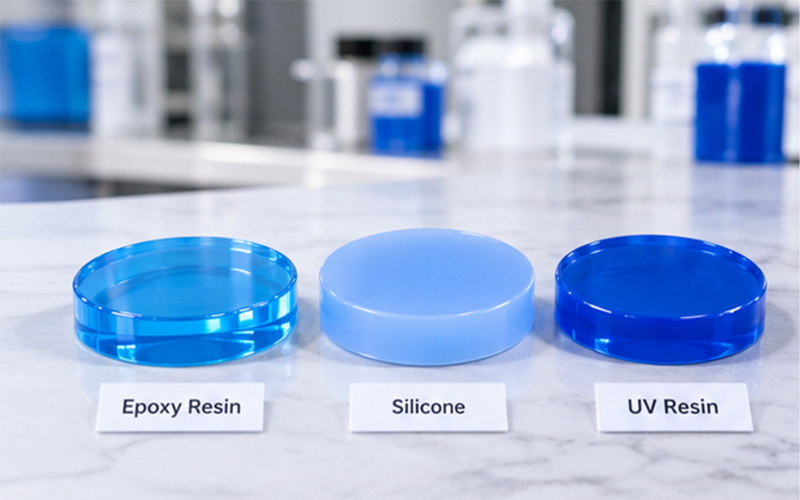
Before adding any colourant, the base material already affects the final appearance.
Transparent materials are not always completely colourless. Some epoxy formulations have a slight natural tint, while silicone rubber may have a translucent or milky appearance. UV resin clarity also varies between formulations.
These differences become more noticeable when the material is poured into thicker sections or viewed against different backgrounds.
For example, a transparent epoxy resin may look nearly clear in a thin coating but show more of its natural colour in a thicker casting. A translucent silicone sample may appear softer or less saturated than a clear resin sample containing a similar colourant.
The surface finish also matters. A glossy surface reflects light differently from a matte or textured one, which can change how the same colour is perceived.
When requesting a colour match, it is therefore useful to specify more than the colour code. The base material, product thickness, surface finish and curing condition should also be included.
A colour approved on a thin epoxy sample should not automatically be used as the standard for a thicker silicone or UV resin product.
Pigments and dyes are both used to colour resin materials, but they work in different ways.
Pigments are generally solid colour particles dispersed throughout a material. Depending on the pigment and its concentration, they can produce opaque, semi-opaque or translucent colours. Titanium dioxide, for example, is widely used when a strong white or opaque appearance is required.
Dyes are colourants that dissolve in a suitable medium. They are often used when a transparent or more saturated appearance is desired.
The choice depends on the finished product. An opaque coloured component may require a pigment-based formulation, while a transparent decorative part may need a suitable dye or transparent colourant.
Light resistance, compatibility and dispersion also need to be considered. Neither pigments nor dyes should be assumed to perform identically in every resin system.
For production, the important point is to specify the type of colourant as well as the target colour. A customer asking for emerald green may expect a transparent green in one product and an opaque green in another.
Confirming this before sample development can prevent unnecessary reformulation.
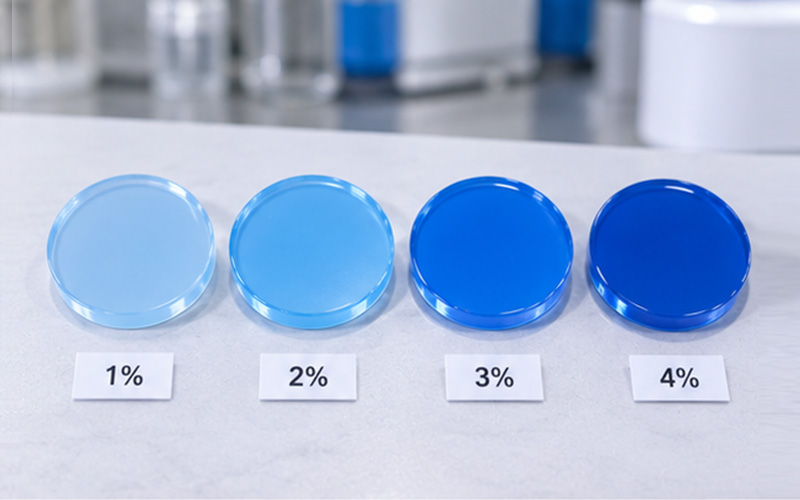
Colourant concentration affects how much material is needed to achieve a target shade.
If a colourant has relatively low colouring strength, a larger amount may be required. Adding too much colourant can change the properties of the base material, depending on the formulation.
Possible effects include changes in viscosity, curing behaviour, hardness and other finished-product properties. In UV resin, excessive pigment loading may also reduce light penetration and affect curing.
Concentrated colourants can help achieve the required shade with a smaller addition, provided they are compatible with the resin system.
For production buyers, three practices are particularly useful:
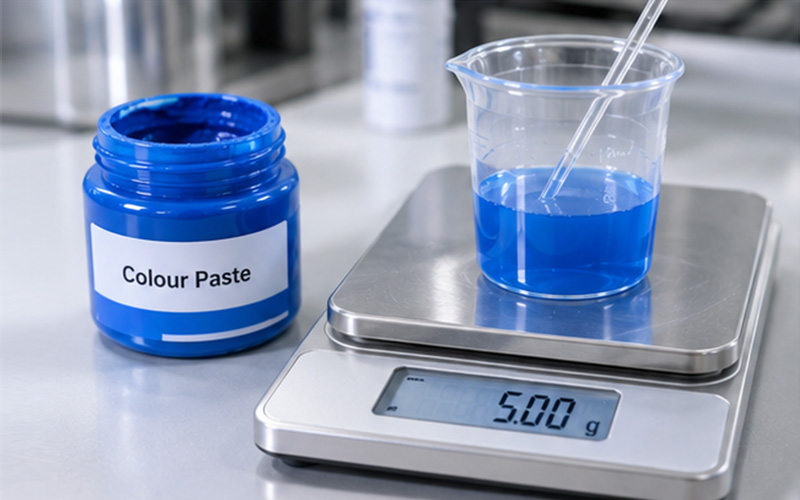
1. Measure by weight.
Avoid relying on drops or visual estimates. Drop size can vary with the colourant's viscosity, the dispensing tool and temperature. Weighing the colourant makes the formulation easier to repeat.
2. Record the addition rate.
Record the colourant type, batch and percentage by weight used in the approved sample. This gives production staff a clear reference when preparing the next batch.
3. Confirm the suitable addition range.
Do not assume that adding more colourant will always produce a better result. The recommended amount depends on the colourant and the base material. Follow the supplier's technical guidance and test the finished material.
When a finished product does not match the approved sample, several factors should be checked before changing the formulation.
Epoxy resin, silicone rubber and UV resin have different natural appearances and optical properties. Even within the same material category, different grades may produce different results.
A colour formulation developed for one product should be tested again if the base resin or silicone grade changes.
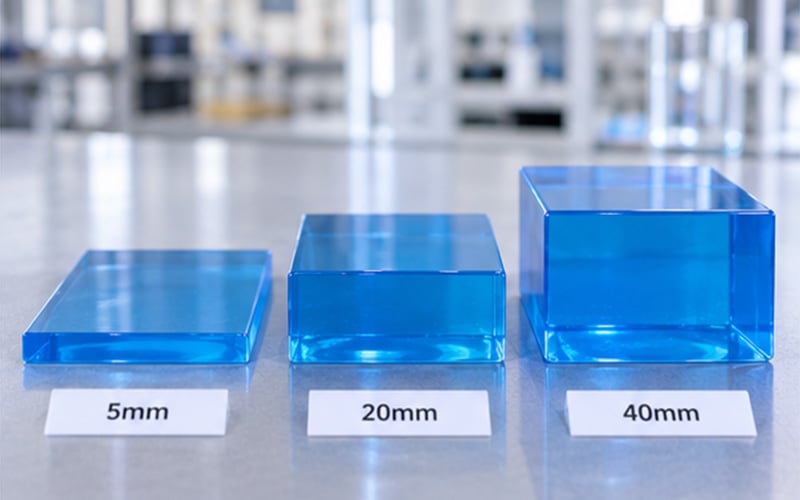
Thickness can influence colour depth, especially in transparent and translucent materials.
A thin sample may appear lighter than a thicker casting made with the same formulation. This is why a small colour coupon may not represent the appearance of the finished product.
Whenever possible, approve the colour using a sample that is close to the actual product thickness.
The type of colourant and the amount added both affect the final shade.
Changing the pigment supplier, grade or addition rate can alter the result, even if the colour name remains the same.
For repeat orders, keep the approved colourant and formulation details together with the reference sample.
Curing conditions may influence the final appearance of some resin systems.
Temperature, curing time and the reaction characteristics of the formulation can affect colour development. This is particularly important when comparing samples made under different production conditions.
Use consistent curing conditions when preparing colour samples for approval.
A colour can look similar under one light source but different under another. This effect is known as metamerism.
For example, two samples may appear close under workshop lighting but show a noticeable difference under daylight.
Surface finish also affects visual perception. A glossy epoxy surface, a matte silicone surface and a textured floor coating may not appear identical even when their measured colour values are close.
For important brand colours, agree on the lighting and viewing conditions used for approval. A standard daylight-simulating light source can help make comparisons more consistent.
Epoxy resin and liquid silicone rubber are different material systems. A colourant that works well in epoxy is not automatically suitable for silicone.
The carrier used in the colourant, its dispersion behaviour and its compatibility with the silicone formulation all need to be considered.
Silicone colourants are commonly supplied in paste form and should be formulated for compatibility with the relevant silicone system.
There are also differences between platinum-cure and tin-cure silicone. Platinum-cure silicone can be sensitive to certain substances that interfere with curing. Depending on the formulation, some pigments, additives or contaminants may cause problems.
If a silicone sample remains sticky or fails to cure properly after a colourant change, check the colourant compatibility as well as the mixing ratio, handling process and surrounding materials.
A small test should be carried out before using a new colourant in a production batch.
The natural translucency of silicone can also affect the appearance of a colour. A shade that looks strong in an opaque epoxy product may appear softer in translucent silicone.
For this reason, approve silicone colours using samples made from the actual silicone grade and colour paste intended for production.
UV resin requires additional attention because colourants can affect the amount of light reaching the material during curing.
Some pigments absorb or scatter light. As pigment loading increases, less light may reach the deeper sections of the resin.
This can become a problem in thicker castings. The surface may appear cured while the material underneath remains soft or incompletely cured.
The effect depends on the UV resin formulation, pigment type, concentration, part thickness and curing equipment.
When developing coloured UV resin products:
Test the actual colour formulation rather than relying on a clear-resin test.
Use the intended product thickness during evaluation.
Check the material through its full section, not only at the surface.
Confirm that the curing lamp's wavelength is suitable for the resin.
Record the pigment type and addition rate used in the approved sample.
Re-test if the pigment or resin grade changes.
White and dark opaque colours deserve particular attention because they can significantly affect light penetration.
If a product requires a thick, opaque section, it may be worth comparing UV resin with another suitable resin system, such as casting epoxy. The decision should be based on the product design and required performance rather than trying to make UV resin work in every situation.
Colour matching in flooring systems involves more than the resin itself.
In colour sand and gravel flooring, the aggregate contributes significantly to the finished appearance. The resin binds the particles together, while the sand or stone provides much of the visible texture and colour.
This means a resin colour sample alone cannot represent the appearance of the completed floor.
The aggregate source, particle size, colour distribution, mixing method and application thickness can all influence the final result.
For this type of project, prepare a mock-up panel using the actual flooring resin and aggregate planned for installation.
For larger areas, also consider how separate batches will meet. Differences between batches may become more visible at working joints or installation transitions.
A useful colour approval sample should therefore include:
The actual resin system
The selected sand or stone
The intended mixing ratio
The planned application thickness
The expected surface finish
This gives the customer a more realistic idea of the finished floor before installation begins.
For manufacturers, a colour standard should contain enough information for the same colour to be reproduced in future production.
Keeping only a Pantone or RAL reference is usually not sufficient, particularly when the product uses a transparent or translucent material.
A practical colour standard should include the following information:
| Item | Information to record |
|---|---|
| Reference colour | Pantone, RAL, customer sample or approved colour reference |
| Base material | Product name and exact grade |
| Colourant | Colourant type, product name and batch |
| Addition rate | Percentage by weight or approved formulation |
| Sample dimensions | Thickness and relevant product geometry |
| Surface finish | Glossy, matte, textured or other finish |
| Curing conditions | Relevant curing time and temperature |
| Viewing conditions | Light source and comparison method |
| Acceptance criteria | Agreed colour tolerance or approval sample |
Keep a physical sample of the approved finished material. Label it with the product grade, colour formulation, batch information and approval date.
Store the sample away from direct sunlight and conditions that could change its appearance over time.
For important customer colours, agree on an acceptable colour difference before production. Where colour measurement equipment is available, measured values can support visual inspection. The measurement method and tolerance should be agreed according to the application.
A retained sample is particularly useful when customers place repeat orders or when production moves between different batches.
The following problems occur in resin and silicone colour development. The cause should be checked against the actual material and process before changing the formulation.
| Problem | Possible cause | What to check |
|---|---|---|
| Finished part looks darker than the approved sample | Different product thickness | Compare samples at the same thickness |
| Colour looks too pale | Different base material or colourant loading | Check the base grade and formulation |
| Silicone surface remains sticky | Possible curing incompatibility | Check colourant compatibility and mixing process |
| UV resin has a soft interior | Insufficient light penetration | Review pigment loading, thickness and lamp conditions |
| Colour varies between batches | Inconsistent dosing or material changes | Check weighing records and raw material batches |
| Samples match indoors but differ outdoors | Different lighting conditions | Compare under an agreed light source |
| Colour appears streaky | Incomplete dispersion or mixing | Review mixing procedure and colourant compatibility |
| Colour changes during use or storage | Possible light or environmental exposure | Review colourant stability and service conditions |
| Flooring colour differs between areas | Aggregate or batch variation | Check aggregate source and installation batches |
| Customer rejects an approved colour | Sample did not represent the finished product | Review sample material, thickness and surface finish |
Many colour problems are related to differences between the approved sample and the actual production process. Keeping the material grade, formulation and sample conditions consistent makes these problems easier to investigate.
If colour accuracy is important to your product, provide the supplier with enough information to understand the application.
A useful colour-matching request should include:
Colour reference: A physical sample, Pantone or RAL number, or an existing product.
Base material: Epoxy resin, liquid silicone rubber, UV resin or another material, including the exact grade where available.
Product thickness: The thickness of the finished part or coating.
Surface finish: Glossy, matte, transparent, translucent or opaque.
Target appearance: Whether the colour should be transparent, semi-transparent or solid.
Order quantity: Estimated quantity per order and expected annual usage.
Application environment: Whether the product will be used indoors, outdoors or under particular service conditions.
Documentation requirements: Any relevant regulatory or market requirements for the colourant.
Cross-material matching: Whether the colour also needs to be used in another material system.
The last point is important for brands that sell related products made from different materials. If the same brand colour needs to appear in epoxy, silicone and UV resin products, each material should have its own approved formulation and reference sample.
Jianghe supplies colourants for resin systems and high-concentration silicone colour paste for silicone applications.
For customers developing products in more than one material, it is useful to discuss the colour reference and base material requirements together. This allows the sample development process to consider the differences between epoxy resin, liquid silicone rubber and UV resin from the beginning.
The final formulation should be confirmed through sample evaluation using the actual material grade and intended production conditions.
If you are developing a new colour, changing colourant suppliers or trying to maintain a consistent shade across several product lines, share your colour reference, material grade, target thickness and application details with our team.
We can review the requirements and discuss suitable colourant options for sample testing.
Request a Colour Matching Sample
Explore Resin Colorants
Explore Silicone Colour Paste
 Hot News
Factory-backed material solutions for manufacturers, brands and distributors worldwide. We specialize in liquid silicone rubber, epoxy resin, flooring materials and related products, providing reliable manufacturing, OEM customization and stable global supply.
Copyright © 2026 Shenzhen Jianghe New Materials Technology Co., Ltd.All rights reserved. Privacy Policy
 EN