Room 1008, Building 1, Cofco Yunjing, Martin Street, Heshui Kou Community, Guangming +86-13418798686 [email protected]
Meta Description: Compare platinum cure and tin cure silicone rubber for mold making. Learn about curing chemistry, shrinkage, compatibility, mold life, and material selection.
When choosing liquid silicone rubber for mold making, the first decision is often whether to use platinum cure silicone or tin cure silicone. Both are widely used for producing flexible molds, but they differ in curing chemistry, material compatibility, dimensional stability, and overall cost.
For manufacturers, mold makers, product brands, and material distributors, the right choice depends on more than the initial price per kilogram. Mold design, casting material, production volume, required detail, and expected mold life all affect the final result.
In this guide, we compare platinum cure silicone and tin cure silicone, explain where each system is commonly used, and outline the factors to consider before selecting a silicone rubber for your production process.
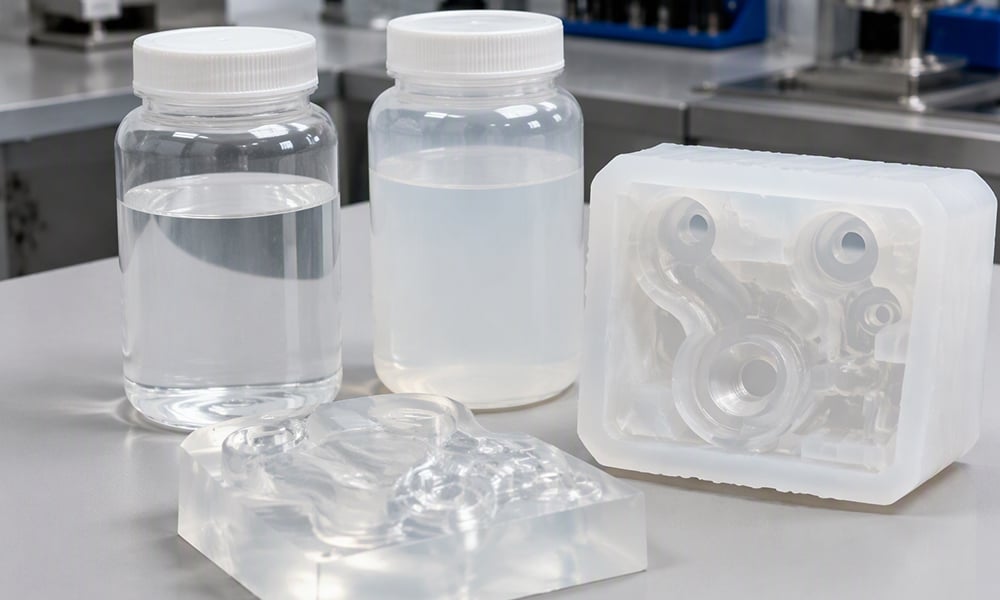
Platinum cure silicone, also called addition cure silicone, is a two-part liquid silicone rubber system that cures through a chemical reaction catalyzed by platinum. The curing reaction does not normally release the small-molecule by-products associated with condensation cure systems.
One of the main reasons manufacturers choose platinum cured silicone rubber is its potential for low shrinkage and good dimensional stability. These properties can be important when producing detailed molds or when the dimensions of the finished casting need to remain consistent across repeated production cycles.
Platinum cure silicone is commonly used for:
Detailed molds for resin casting and decorative products
Prototypes and master-pattern replication
Molds that require good dimensional consistency
Selected applications where low-shrinkage silicone rubber is preferred
Production processes that require a specific combination of flexibility, hardness, and surface detail
The actual performance depends on the formulation and product grade. Hardness, viscosity, tear strength, elongation, curing time, and dimensional stability should be checked against the supplier's technical data sheet.
Platinum cure silicone can be sensitive to certain contaminants. Sulfur-containing materials, some modeling clays, latex, amines, and residues from certain 3D printing materials may interfere with curing, depending on their composition and the silicone formulation.
If the silicone remains sticky or liquid in contact with a master pattern, do not immediately assume the material is defective. Check the mixing ratio, mixing procedure, material compatibility, and curing conditions first.
For a new master pattern or an unfamiliar substrate, a small compatibility test is a sensible step before making a full-size mold.
Tin cure silicone, also known as condensation cure silicone, is another widely used liquid silicone rubber system for mold making. It generally cures through a condensation reaction involving a tin-based catalyst, although the exact chemistry and formulation vary between products.
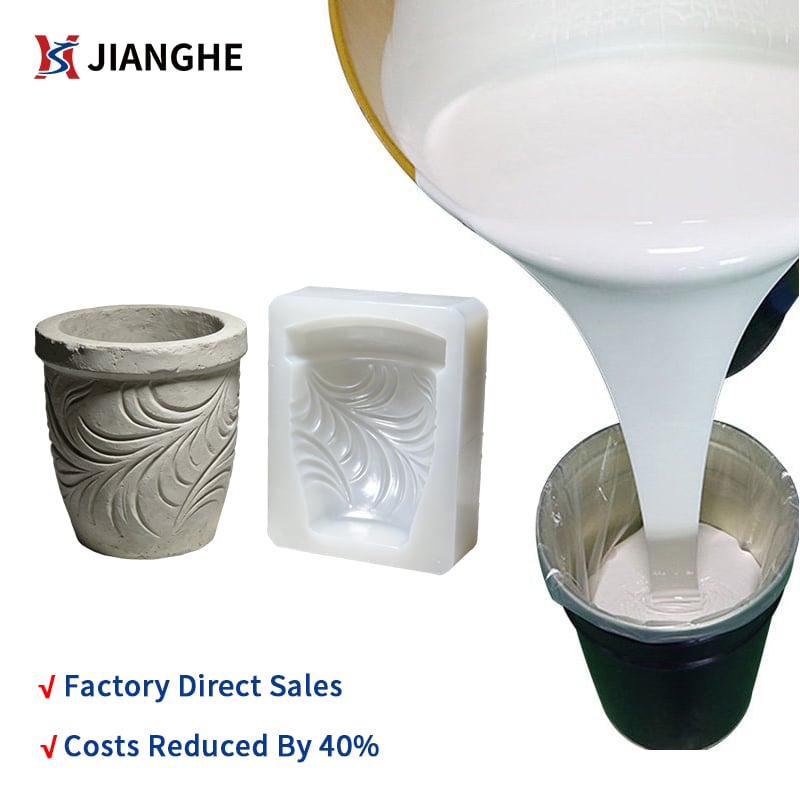
Tin cured silicone rubber is commonly selected for decorative molds, architectural reproductions, concrete casting, plaster products, and other applications where a flexible mold is required at a practical material cost.
Typical applications include:
Concrete and cultured-stone molds
Plaster ornaments and decorative castings
Architectural details and decorative panels
Flowerpot and garden ornament molds
General-purpose molds for resin and other compatible casting materials
For manufacturers producing decorative components or construction-related products, tin cure silicone can be a practical option when the selected grade meets the required mold life, dimensional accuracy, and demolding requirements.
Condensation cure silicone may experience greater shrinkage over time than a comparable addition cure formulation. The amount depends on the specific product, curing conditions, storage environment, and time after curing.
This difference matters when the mold must reproduce precise dimensions or when repeated castings need to fit together consistently.
Tin cure silicone is not automatically the better choice for every large mold, nor is it suitable for every casting resin. The mold geometry, required mechanical properties, casting material, and expected production cycle should all be considered before selecting a grade.
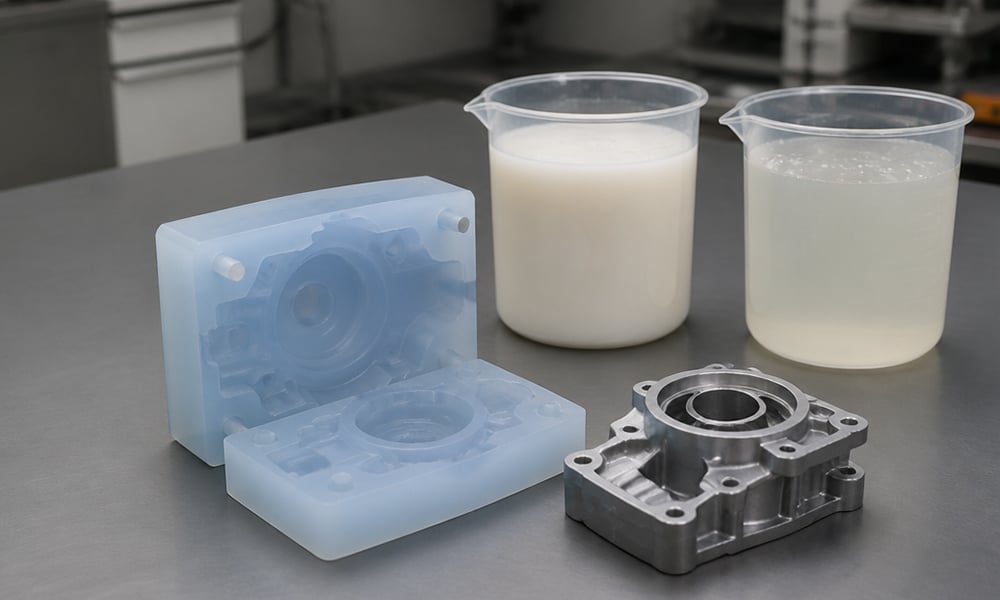
Although both materials are used for silicone mold making, their differences can influence production quality, process reliability, and material cost.
| Comparison factor | Platinum cure silicone | Tin cure silicone |
| Curing system | Addition cure | Condensation cure |
| Curing by-products | Does not normally release low-molecular-weight condensation by-products | Releases condensation by-products during curing |
| Dimensional stability | Often selected for low shrinkage and good dimensional consistency | Shrinkage may be higher and can develop over time |
| Material compatibility | Can be sensitive to certain contaminants that inhibit curing | Has different compatibility considerations; testing is still necessary |
| Typical applications | Detailed molds, precision replication, selected demanding applications | Concrete, plaster, decorative stone, and general-purpose casting molds |
| Material cost | Often higher, depending on formulation and grade | Often more economical, depending on formulation and grade |
| Selection priority | Dimensional requirements, compatibility, and application-specific performance | Cost, application requirements, mold life, and production conditions |
This table describes general characteristics rather than guaranteed performance. Different silicone formulations can vary considerably, so compare the technical data sheets of the actual products you are considering.
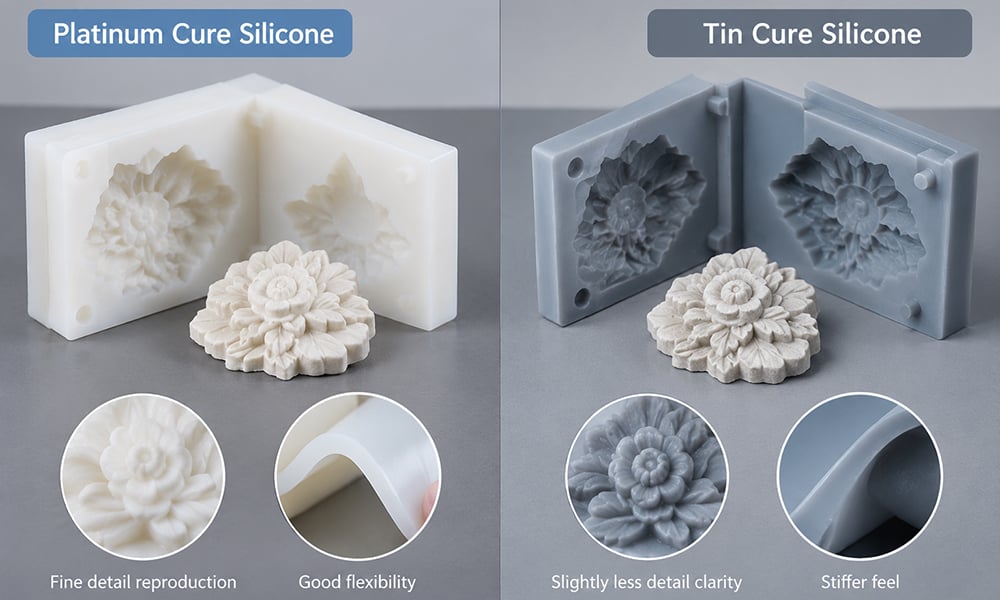
There is no single silicone rubber that is best for every mold. The more useful question is which curing system fits your application and production requirements.
Platinum cure silicone is worth evaluating when the mold must reproduce fine details, maintain consistent dimensions, or support repeated production under controlled conditions.
It may be suitable for resin casting molds, detailed decorative components, and applications where the consequences of dimensional variation are significant.
However, you should confirm that the master pattern, release agent, tools, and surrounding materials are compatible with the selected platinum cure silicone. A small test can help identify potential curing inhibition before production begins.
Tin cure silicone is often worth considering for concrete molds, plaster molds, cultured-stone production, and decorative casting applications where the selected grade meets the required performance specifications.
It can offer a practical balance between material cost and mold-making requirements. For projects involving large molds or frequent casting, however, the initial material price should not be the only deciding factor.
Evaluate the expected number of casting cycles, mold maintenance, dimensional requirements, demolding conditions, and replacement frequency before making a purchasing decision.
Before choosing either type of liquid silicone rubber, ask yourself:
What material will be cast into the mold?
Does the master pattern contain undercuts or fine surface details?
What Shore A hardness is appropriate for the mold design?
Is the mold supported by a rigid outer shell or frame?
How many castings are expected from each mold?
Are there any compatibility concerns with the master pattern or release agent?
What dimensional variation can the finished product tolerate?
Answering these questions will make it easier to compare suitable silicone grades and avoid choosing a material based on price or hardness alone.
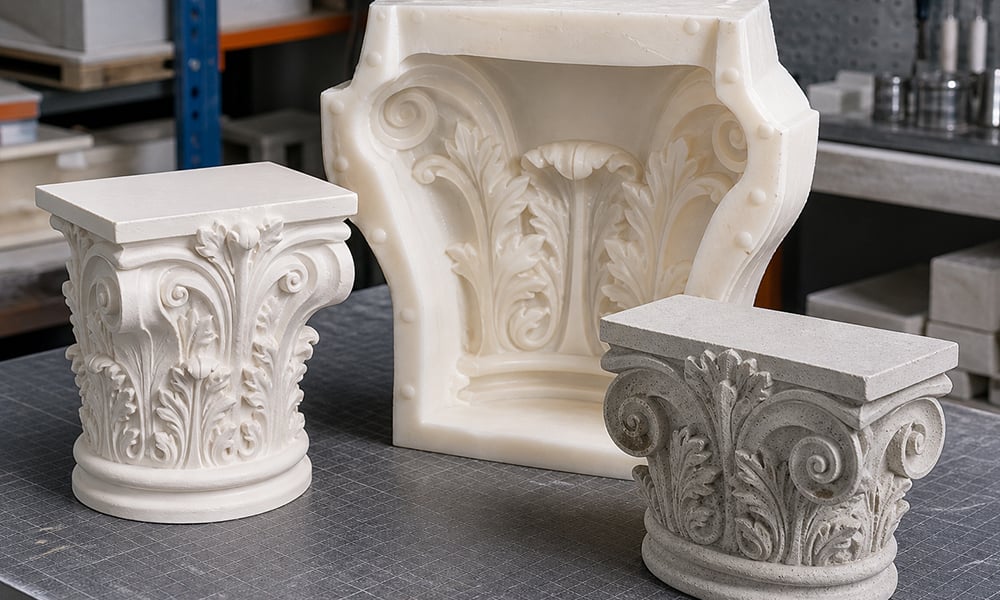
Curing chemistry is only one part of silicone selection. Hardness and viscosity also affect how the material behaves during mold making and use.
Silicone hardness affects flexibility, mold support, and demolding.
A softer silicone may make it easier to remove castings with complex shapes or undercuts. A firmer silicone may provide better support for certain mold geometries, but it can also make demolding more difficult.
The right hardness depends on the shape of the master pattern, mold wall thickness, casting material, and whether the mold requires external support.
Do not select a silicone grade based on hardness alone. Tear strength, elongation, and the overall mold design also influence performance.
Viscosity affects how easily liquid silicone flows around a master pattern and how readily trapped air can escape.
A lower-viscosity silicone may flow more easily into fine details. A higher-viscosity material may require additional attention to mixing, pouring, and air removal.
The best approach depends on the mold design and product formulation. Vacuum degassing may help remove entrained air when the material and equipment are suitable, but it should be performed according to the supplier's processing recommendations.
For production applications, review viscosity together with working time, curing time, hardness, and mechanical properties rather than treating any single specification as the deciding factor.
Both platinum cure and tin cure silicone can produce reliable molds when the material is properly selected and processed. Many common defects, however, can be traced to material incompatibility or process control.
Possible causes include an incorrect mixing ratio, incomplete mixing, contamination, or unsuitable curing conditions. Platinum cure silicone may also be affected by specific inhibitors present on the master pattern or in surrounding materials.
Check the product instructions, inspect the master pattern, and perform a compatibility test where necessary before repeating the process.
Air can become trapped during mixing or pouring, particularly around fine details and complex geometries.
Mix carefully, pour in a controlled manner, and consider vacuum degassing or other suitable air-removal methods where recommended for the selected silicone system.
Mold failure can be related to insufficient tear strength, unsuitable hardness, thin mold walls, undercuts, poor support, or demolding technique.
Review the mold design and the mechanical properties of the silicone grade. A suitable support structure may be necessary for large or complex molds.
Dimensional variation may be affected by the curing system, formulation, storage conditions, mold design, and the material being cast.
If dimensional consistency is important, measure representative molds after curing and during use. Record the results under defined conditions rather than relying only on the general characteristics of the curing chemistry.
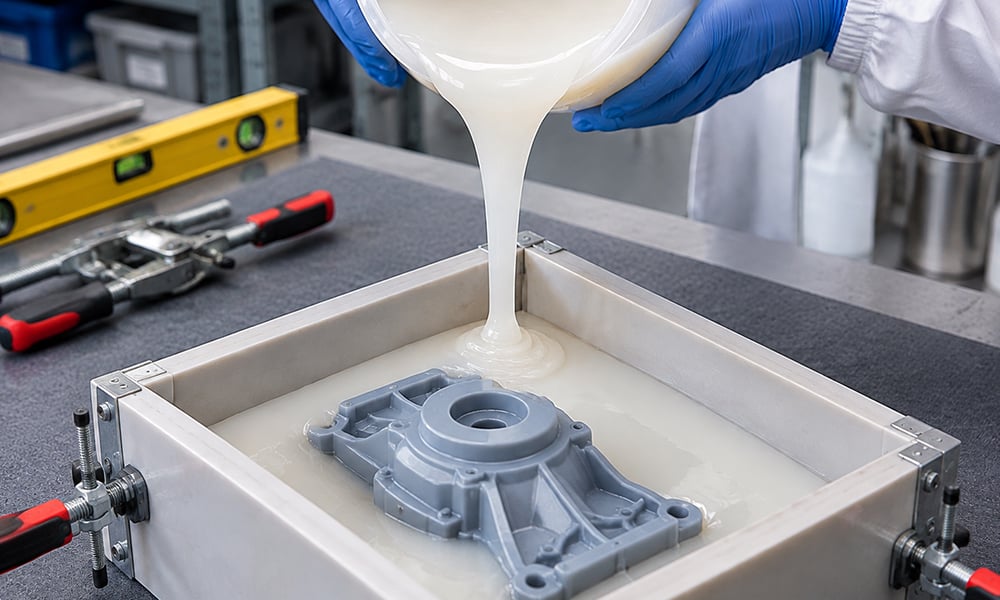
When purchasing liquid silicone rubber for production, the lowest material price does not always result in the lowest cost per finished part.
A useful comparison includes:
Silicone rubber purchase price
Material consumption per mold
Mixing and processing labor
Mold preparation and support requirements
Expected usable mold life
Rejected castings and rework
Mold replacement and production downtime
For example, a higher-priced silicone may be economically justified if its verified performance reduces mold replacement or improves dimensional consistency. On the other hand, a more economical tin cure silicone may be the sensible choice for a decorative casting application when it meets the required specifications and expected mold life.
The best decision comes from comparing actual product data and, where possible, running a small production trial under representative conditions.
If you are sourcing silicone rubber for manufacturing, wholesale distribution, or private-label supply, define your requirements before requesting a quotation.
Provide the supplier with the following information:
Request the technical data sheet for the proposed product and confirm that the specifications match your application. If the mold is used for a regulated application, verify the documentation and intended-use conditions for the specific grade rather than assuming that all platinum cure silicone products share the same certifications.
Platinum cure silicone and tin cure silicone each have a place in mold making. Platinum cure silicone is often considered when low shrinkage, dimensional consistency, and detailed replication are priorities. Tin cure silicone is commonly used for decorative, concrete, plaster, and other casting molds where a suitable balance of cost and performance is required.
The final choice should be based on the specific silicone formulation, mold design, casting material, production requirements, and verified technical data.
At Jianghe, we supply liquid silicone rubber for mold making and related manufacturing applications. Our product range includes platinum cured silicone rubber and tin cured silicone rubber for different material and processing requirements.
If you are comparing silicone rubber for a new mold, improving an existing production process, or sourcing materials for repeat orders, share your application details with our team. We can help you identify suitable product grades for further technical evaluation.
Looking for platinum cure silicone or tin cure silicone for your application?
Contact Jianghe to discuss your mold design, target hardness, casting material, and production requirements.
Explore our products:
Request product information or a sample to evaluate material suitability for your application.
 Hot News
Factory-backed material solutions for manufacturers, brands and distributors worldwide. We specialize in liquid silicone rubber, epoxy resin, flooring materials and related products, providing reliable manufacturing, OEM customization and stable global supply.
Copyright © 2026 Shenzhen Jianghe New Materials Technology Co., Ltd.All rights reserved. Privacy Policy
 EN