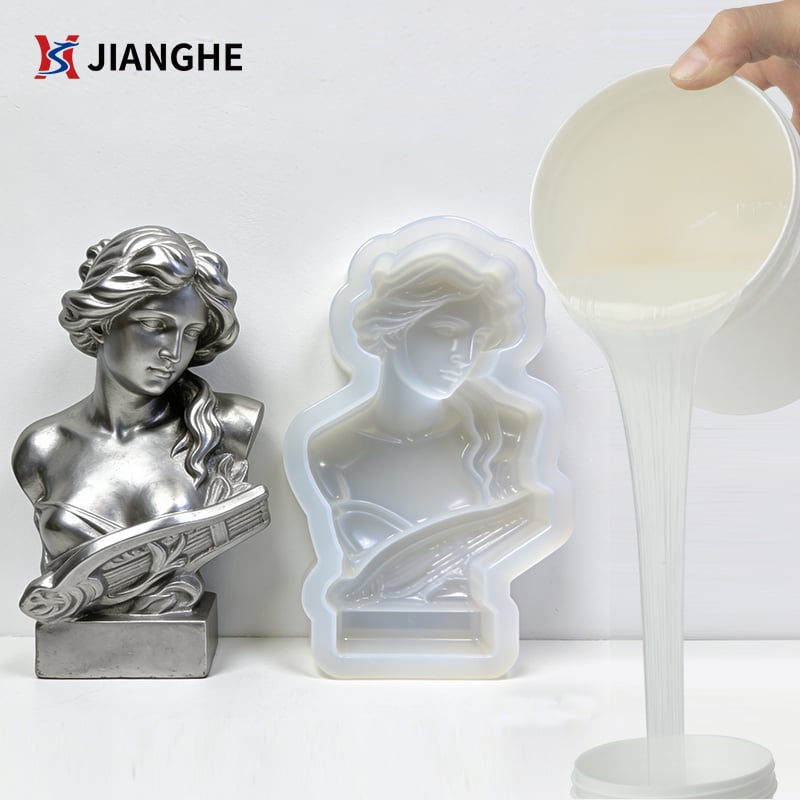
Premium Liquid Silicone Rubber for Mould Making - Professional Grade Solutions

All Categories

Get a Tailored Solution

Provide your details below, and our material experts will contact you with a competitive quote and technical support within 24 hours.
Email
Name
Company Name
Message
0/1000

liquid silicone rubber for mould making

Liquid silicone rubber for mould making represents a revolutionary material that has transformed the manufacturing and prototyping industries. This specialized elastomeric compound consists of two-part platinum-catalyzed silicone systems that cure at room temperature or with mild heat application. The primary functions of liquid silicone rubber for mould making include creating precise reproductions of complex geometries, capturing intricate surface details, and providing flexible casting solutions for various materials. The technological features of this remarkable substance encompass exceptional dimensional stability, maintaining accurate measurements throughout multiple casting cycles without significant shrinkage or expansion. The curing process typically occurs within 24 hours at ambient temperature, though heat acceleration can reduce this timeframe substantially. One of the most impressive characteristics of liquid silicone rubber for mould making involves its ability to reproduce details as fine as 0.001 inches, making it invaluable for applications requiring extraordinary precision. The material exhibits excellent chemical resistance against most solvents, acids, and bases, ensuring longevity even in challenging environments. Temperature resistance ranges from -65°F to 450°F, allowing versatility across diverse operational conditions. Applications for liquid silicone rubber for mould making span numerous industries including aerospace, automotive, medical device manufacturing, jewelry production, and artistic endeavors. In aerospace applications, these moulds create lightweight composite components with complex internal structures. The automotive sector utilizes this technology for rapid prototyping of interior trim pieces, gaskets, and specialized components. Medical device manufacturers rely on liquid silicone rubber for mould making to produce biocompatible parts with precise tolerances. The jewelry industry leverages this material to create intricate casting moulds for precious metals, enabling mass production of detailed ornamental pieces. Artists and sculptors appreciate the material's ability to capture fine textures and subtle surface variations in their creative works.

New Product Releases

The advantages of liquid silicone rubber for mould making extend far beyond basic functionality, offering manufacturers and creators substantial practical benefits that directly impact productivity and quality outcomes. First and foremost, this material delivers exceptional ease of use that eliminates complex preparation procedures typically associated with traditional moulding compounds. Users simply measure the two components according to manufacturer specifications, mix thoroughly, and pour directly onto the master pattern without requiring specialized equipment or extensive training. The self-releasing properties of liquid silicone rubber for mould making eliminate the need for expensive release agents in most applications, reducing material costs while simplifying the production process. This characteristic proves particularly valuable when working with complex geometries where applying release agents uniformly becomes challenging or impossible. The superior flexibility of cured liquid silicone rubber for mould making allows easy removal of cast parts without damaging intricate details or undercut areas that would trap rigid moulds. This flexibility translates directly into reduced breakage rates and extended mould life cycles, providing significant cost savings over time. Another compelling advantage involves the material's excellent chemical compatibility with various casting materials including polyurethanes, epoxies, polyesters, waxes, gypsum, and low-melting-point metals. This versatility eliminates the need for maintaining multiple mould types for different casting materials, streamlining inventory management and reducing storage requirements. The tear strength of quality liquid silicone rubber for mould making typically exceeds 150 pounds per inch, ensuring moulds withstand repeated use without developing cracks or separations that compromise casting quality. Dimensional accuracy represents another crucial advantage, with high-grade formulations maintaining tolerances within 0.002 inches across temperature variations and aging cycles. The rapid turnaround capability enables faster project completion since liquid silicone rubber for mould making requires minimal cure time compared to alternatives like plaster or metal moulds. Cost-effectiveness becomes apparent when considering the total lifecycle expenses, as these moulds often outlast traditional alternatives while requiring minimal maintenance. The non-toxic nature of most formulations ensures safe workplace conditions without requiring extensive ventilation systems or personal protective equipment beyond basic safety measures.

Practical Tips

How Can Buyers Assess Long-Term Reliability of a Resin Manufacturer?

11

Dec

How Can Buyers Assess Long-Term Reliability of a Resin Manufacturer?

Building Confidence in a Sustainable Manufacturing Partner Selecting a reliable Resin Manufacturer is a strategic decision that directly affects product quality, delivery stability, and long-term cooperation efficiency. For buyers sourcing epoxy resi...
View More
What Makes River Table Epoxy Suitable for Deep-Pour Applications?

24

Dec

What Makes River Table Epoxy Suitable for Deep-Pour Applications?

Understanding the Advantages of River Table Epoxy for Deep-Pour Applications River tables are a striking fusion of natural wood and clear epoxy resin, creating a visually stunning centerpiece. The use of deep-pour epoxy is critical in achieving thick...
View More
Why Do Mold Makers Choose Liquid Silicone for Complex Mold Projects?

04

Jan

Why Do Mold Makers Choose Liquid Silicone for Complex Mold Projects?

Liquid Silicone in Modern Mold Making Liquid silicone has become the material of choice for mold makers seeking precision, flexibility, and durability in their projects. Its unique properties allow manufacturers to produce complex molds that traditio...
View More
What Factors Limit the Service Life of Mold Making Silicone?

16

Jan

What Factors Limit the Service Life of Mold Making Silicone?

Understanding the Service Life of Mold Making Silicone Mold making silicone is widely used by manufacturers, artisans, and industrial professionals for its flexibility, durability, and precision. Despite its many advantages, the service life of mold ...
View More

Get a Free Quote

Our representative will contact you soon.
Email
Name
Company Name
Message
0/1000

liquid silicone rubber for mould making

Unmatched Detail Reproduction and Surface Fidelity

Unmatched Detail Reproduction and Surface Fidelity

The exceptional detail reproduction capability of liquid silicone rubber for mould making sets the gold standard for precision manufacturing applications across diverse industries. This remarkable material captures surface textures, fine patterns, and intricate geometries with accuracy levels that surpass traditional moulding materials by significant margins. The molecular structure of liquid silicone rubber for mould making allows it to flow into microscopic surface variations during the curing process, creating perfect negative impressions that translate into flawless positive reproductions. Professional manufacturers consistently achieve detail resolution down to 0.0005 inches, enabling the production of components with extraordinary surface finish requirements. This precision proves invaluable in applications such as optical component manufacturing, where surface irregularities measuring mere thousandths of an inch can compromise performance. The superior wetting characteristics ensure complete contact with master patterns, eliminating air entrapment that typically creates surface defects in inferior moulding materials. Unlike rigid moulding compounds that may bridge across fine details, liquid silicone rubber for mould making maintains fluidity during application, penetrating every crevice and contour of complex patterns. The thixotropic properties of advanced formulations prevent excessive flow while ensuring adequate working time for positioning and air removal. This controlled flow behavior particularly benefits vertical surface applications where material retention becomes critical for uniform thickness distribution. The chemical inertness of cured liquid silicone rubber for mould making prevents interaction with pattern materials, preserving original surface characteristics throughout the moulding process. Temperature stability during curing maintains dimensional integrity, preventing the thermal expansion and contraction cycles that compromise detail fidelity in temperature-sensitive applications. Quality formulations retain flexibility without sacrificing detail retention, allowing repeated use without surface degradation that gradually reduces reproduction quality. The optical clarity available in transparent grades enables visual inspection during casting operations, facilitating quality control procedures that identify potential issues before completion. Professional-grade liquid silicone rubber for mould making maintains surface fidelity through hundreds of casting cycles, providing consistent reproduction quality that justifies initial material investments through extended service life.
Superior Chemical Resistance and Material Compatibility

Superior Chemical Resistance and Material Compatibility

The outstanding chemical resistance properties of liquid silicone rubber for mould making provide manufacturers with unprecedented flexibility in material selection and processing conditions, eliminating compatibility concerns that restrict other moulding technologies. This exceptional resistance stems from the stable siloxane backbone structure that remains unaffected by most industrial chemicals, solvents, and casting materials commonly encountered in manufacturing environments. Unlike polyurethane or latex moulds that degrade when exposed to specific chemicals, liquid silicone rubber for mould making maintains structural integrity and surface quality across extended exposure periods. This chemical stability proves particularly crucial in applications involving aggressive casting materials such as certain epoxies, polyesters, or metal-filled compounds that would rapidly destroy conventional moulds. The non-polar nature of silicone polymers prevents absorption of oils, plasticizers, and other additives commonly found in casting materials, ensuring dimensional stability and preventing contamination that could compromise subsequent castings. Professional formulations of liquid silicone rubber for mould making resist swelling and softening when exposed to hydrocarbon solvents, maintaining precise dimensions essential for high-tolerance applications. The platinum catalyst systems used in premium grades provide superior resistance to sulfur compounds that poison tin-catalyzed alternatives, expanding material compatibility to include sulfur-containing plastics and rubbers. This broad compatibility enables manufacturers to utilize single mould systems across multiple material types, reducing inventory requirements and simplifying production workflows. The temperature resistance of liquid silicone rubber for mould making extends chemical compatibility benefits across elevated temperature applications where thermal stress might accelerate chemical attack in inferior materials. Acid and base resistance allow safe use with metal cleaning solutions, etching compounds, and pH-modified casting materials without mould degradation. The hydrophobic surface characteristics prevent water absorption and related dimensional changes, maintaining accuracy in humid environments or when using water-based systems. Biocompatibility certifications available for medical-grade formulations expand applications into pharmaceutical and food-related manufacturing where regulatory compliance demands proven material safety. The chemical inertness eliminates leaching concerns that could contaminate sensitive products, making liquid silicone rubber for mould making suitable for applications requiring absolute purity standards.
Exceptional Durability and Extended Service Life

Exceptional Durability and Extended Service Life

The remarkable durability characteristics of liquid silicone rubber for mould making translate into exceptional value propositions for manufacturers seeking long-term moulding solutions with minimal maintenance requirements and extended operational lifespans. The inherent resilience of cross-linked silicone networks provides superior resistance to mechanical stress, thermal cycling, and environmental degradation that typically limits the service life of conventional moulding materials. Quality liquid silicone rubber for mould making formulations routinely achieve service lives exceeding 1000 casting cycles under normal operating conditions, with some applications reporting successful use beyond 5000 cycles without significant performance degradation. This extraordinary longevity stems from the thermally stable siloxane bonds that resist oxidative breakdown and maintain flexibility across temperature extremes that would embrittle organic alternatives. The excellent tear resistance, typically exceeding 200 pounds per linear inch for premium grades, ensures moulds withstand the mechanical stresses associated with part removal and handling throughout extended production runs. Unlike plaster or metal moulds that may crack or chip under stress, liquid silicone rubber for mould making exhibits elastic deformation that returns to original dimensions without permanent damage. The fatigue resistance properties enable repeated flexing during demolding operations without developing stress cracks that propagate over time. UV stability in outdoor applications prevents degradation from solar exposure, maintaining mould integrity in architectural casting applications or outdoor manufacturing environments. The hydrolytic stability ensures performance consistency in humid conditions where moisture might compromise alternative materials through swelling or chemical breakdown. Ozone resistance prevents surface cracking and deterioration in environments with elevated ozone concentrations, extending service life in urban or industrial settings. The dimensional stability of liquid silicone rubber for mould making maintains accuracy throughout temperature cycling, preventing the cumulative dimensional drift that affects production tolerances over time. Compression set resistance ensures gasket and sealing applications maintain effectiveness throughout extended service periods without requiring frequent replacement. The self-healing properties of some advanced formulations enable minor surface damage to repair during thermal cycling, further extending operational life. Proper storage and handling procedures can preserve unused liquid silicone rubber for mould making for years without performance deterioration, providing inventory flexibility and reducing waste from expired materials.

Get Samples & Support

Email
Name
Company Name
Country/Region
What Are You Making
Single Choice
Estimated Monthly Usage
Single Choice
Message
0/1000