
 EN
EN
Understanding the Advantages of River Table Epoxy for Deep-Pour Applications
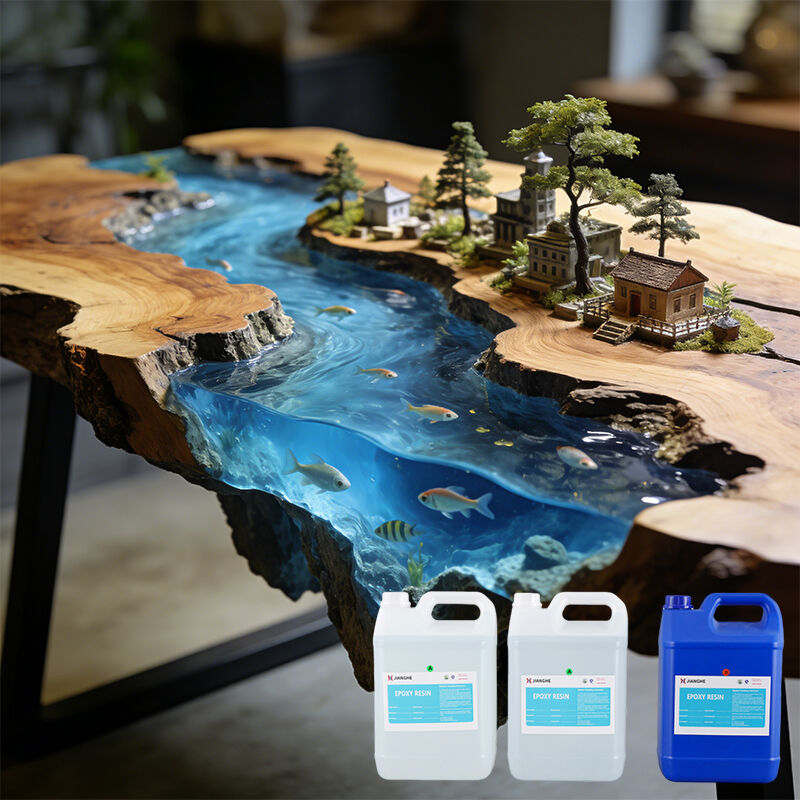
River tables are a striking fusion of natural wood and clear epoxy resin, creating a visually stunning centerpiece. The use of deep-pour epoxy is critical in achieving thick, flawless pours that maintain clarity, avoid air bubbles, and support structural integrity. River table epoxy is formulated specifically to provide the ideal balance of viscosity, curing time, and mechanical strength, ensuring that artisans and manufacturers can create large-scale pours without compromising quality. Its advanced chemical composition allows for long working times, gradual curing, and minimal exotherm, which are essential for deep-pour applications.
Chemical Composition and Performance Characteristics
Specialized Resin Formulations
River table epoxy for deep-pour applications typically features a high-viscosity resin base designed to support thick layers without sagging or generating excessive heat. Unlike standard surface coatings, deep-pour epoxy contains additives that control the exothermic reaction, allowing layers to cure slowly and evenly. These formulations reduce the risk of cracking, yellowing, or internal stress, which are common challenges in thick epoxy layers.
Hardener System Optimization
The hardener used in river table epoxy is carefully balanced to extend pot life and ensure uniform curing in thick sections. Custom amine hardeners provide sufficient working time for artisans to manipulate and level the epoxy, while maintaining chemical resistance and durability. Proper stoichiometry between resin and hardener prevents soft spots or incomplete curing in deep pours.
Mechanical and Optical Properties
Deep-pour river table epoxy exhibits high mechanical strength and excellent adhesion to wood surfaces. Its self-leveling properties ensure a smooth, bubble-free surface. The resin’s clarity and resistance to UV yellowing are crucial for maintaining aesthetic appeal over time, especially when layers exceed several inches in depth.
Processing Techniques for River Table Epoxy
Layered Pouring Methodology
Deep-pour epoxy applications often require multiple layers poured sequentially to manage heat generation and prevent defects. Each layer is carefully degassed and leveled before the next pour. Controlled environmental conditions, such as temperature and humidity, contribute to optimal curing and prevent bubble formation.
Mixing and Degassing
Accurate mixing of resin and hardener is critical to achieve uniform curing. Mechanical mixers ensure even distribution, while vacuum chambers or pressure pots remove trapped air bubbles. River table epoxy formulations are optimized to tolerate minor air entrainment while maintaining clarity in thick pours.
Temperature and Curing Control
Maintaining an appropriate ambient temperature is essential during deep-pour applications. Excessive heat can accelerate the reaction and cause cracking, whereas too low temperatures can extend curing time and reduce adhesion. River table epoxy systems are engineered to accommodate temperature fluctuations while sustaining consistent cure and performance.
Design Considerations for River Tables
Wood Selection and Preparation
The choice of wood significantly affects epoxy adhesion and stability. Proper sealing and moisture control of the wood prevent resin discoloration and void formation. River table epoxy interacts seamlessly with a variety of hardwoods, ensuring a strong bond and minimal warping.
Mold Construction and Support
Deep-pour epoxy requires molds that can support high volumes of resin without leaking. Materials such as silicone or laminated melamine boards are commonly used. Proper mold design ensures structural integrity during curing and facilitates demolding once the epoxy has fully hardened.
Additive Integration
Artists may integrate pigments, metallic powders, or dyes into the epoxy to achieve custom visual effects. Deep-pour epoxy maintains consistent color dispersion across thick layers, preventing settling or streaking. This compatibility with additives allows for creative freedom without sacrificing mechanical performance.
Troubleshooting and Best Practices
Common Challenges in Deep-Pour Applications
Issues such as overheating, bubble entrapment, and uneven curing are common in thick pours. River table epoxy’s low exotherm and extended pot life minimize these risks, allowing for larger single-layer pours. Maintaining recommended layer thickness and environmental control is critical for achieving optimal results.
Surface Finishing Techniques
Once cured, river table epoxy can be sanded and polished to achieve a flawless, high-gloss finish. Proper surface preparation and gradual sanding prevent scratching and enhance optical clarity. Specialized polishing compounds are compatible with the resin, ensuring a durable, glass-like surface.
Long-Term Durability
River table epoxy resists yellowing, cracking, and moisture penetration over time. Its chemical and UV resistance make it suitable for functional furniture pieces and decorative installations, providing both structural support and aesthetic appeal.
FAQ
What is the recommended maximum thickness for a single deep-pour layer of river table epoxy
River table epoxy formulations are designed for thick pours, often up to 8–10cm per layer, depending on ambient temperature and resin type. Larger volumes may require multiple layers to manage heat and prevent cracking.
How long does river table epoxy take to cure fully in deep-pour applications
Full cure time can range from 24 hours for surface hardness to 7–14 days for complete mechanical strength. Factors affecting cure time include ambient temperature, layer thickness, and hardener selection.
Can pigments and additives be mixed into deep-pour epoxy without affecting clarity
Yes, specialized pigments and metallic powders are compatible with river table epoxy. Formulations are optimized to maintain consistent dispersion, prevent settling, and retain clarity even in thick layers.
How should wood surfaces be prepared for deep-pour epoxy applications
Wood should be properly sealed, moisture content stabilized, and sanded smooth before epoxy application. This ensures strong adhesion, prevents air release, and minimizes defects in the cured resin.
Table of Contents
- Understanding the Advantages of River Table Epoxy for Deep-Pour Applications
- Chemical Composition and Performance Characteristics
- Processing Techniques for River Table Epoxy
- Design Considerations for River Tables
- Troubleshooting and Best Practices
-
FAQ
- What is the recommended maximum thickness for a single deep-pour layer of river table epoxy
- How long does river table epoxy take to cure fully in deep-pour applications
- Can pigments and additives be mixed into deep-pour epoxy without affecting clarity
- How should wood surfaces be prepared for deep-pour epoxy applications