
 EN
EN
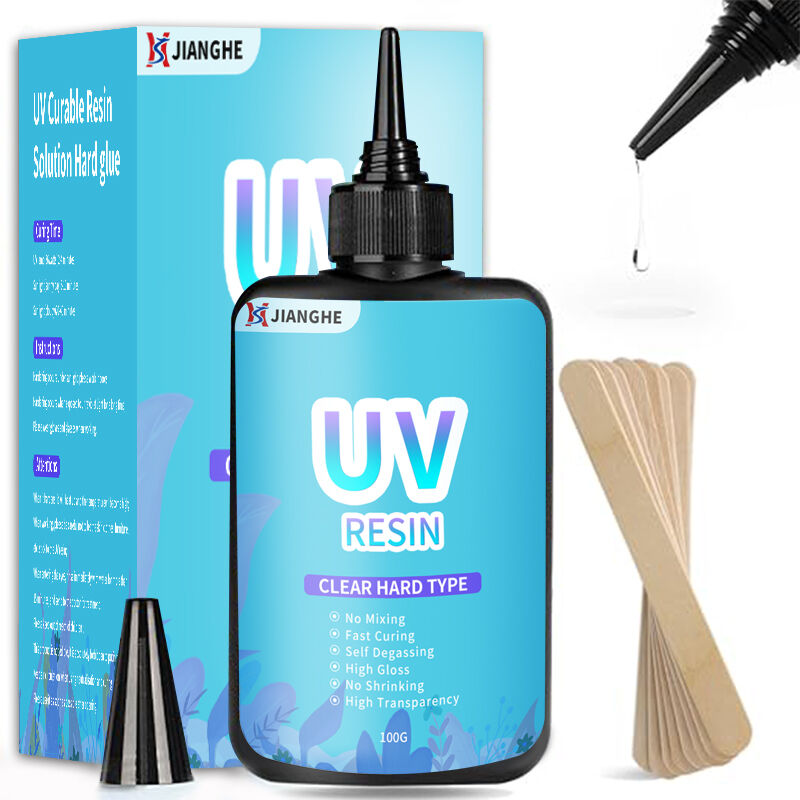
Understanding the UV Curing Advantage
In the landscape of modern manufacturing, production speed and efficiency are paramount. Ultraviolet (UV) resin solutions have emerged as a transformative technology, offering curing times measured in seconds rather than hours. This fundamental shift is driven by photoinitiators within the resin that react instantly when exposed to UV light, creating a cross-linked polymer network almost immediately. Unlike traditional thermal or two-part systems, this on-demand curing eliminates lengthy waiting periods, reduces work-in-progress inventory, and allows for faster throughput. For businesses seeking to optimize their production lines, understanding where this technology provides the most significant return on investment is the key to unlocking its full potential.
High-Speed Manufacturing and Assembly Lines
The most immediate beneficiaries of UV resin technology are high-volume production environments. In industries like electronics assembly, where components such as microchips, connectors, and displays need to be bonded or encapsulated, speed is critical. UV-curable adhesives and coatings can be applied and fixed in seconds as products move down a conveyor belt, a process that would create a severe bottleneck with slower-curing alternatives. This rapid processing allows for leaner manufacturing flows, reduced floor space dedicated to curing areas, and just-in-time production capabilities. For manufacturers in these fast-paced sectors, integrating a reliable UV resin system from a specialized supplier can be a direct driver of increased output and lower operational costs.
Applications Requiring Instant Handling and Processing
Beyond simple assembly, many production scenarios require immediate handling of a part after bonding or coating. Consider the manufacturing of optical lenses or medical devices. A UV-curable coating can be applied and cured instantly, allowing the part to be packaged or proceed to the next stage of assembly without delay. Similarly, in the fast-growing field of 3D printing, UV resins are the cornerstone of technologies like stereolithography (SLA) and digital light processing (DLP). Each layer is cured instantly upon exposure to a UV light source, building complex geometries with precision and speed that would be impossible with other materials. This instant-on-demand curing is not just an efficiency; it is an enabler of the entire production process.
Precision Coating and Potting for Sensitive Components
UV resins excel in applications that demand pinpoint accuracy and protection of sensitive components. Conformal coatings for printed circuit boards (PCBs) must be applied precisely and cured without the heat that could damage delicate electronics. UV-curable formulations provide a solvent-free solution that cures in seconds under a directed light source, creating a robust protective layer against moisture, dust, and chemicals. Furthermore, in the potting of sensors, connectors, and other electronic modules, UV resins offer the advantage of a controlled, rapid cure that minimizes stress on the components and ensures long-term reliability even in harsh environments. The ability to tailor the viscosity and cured properties of the resin through expert Formula & Performance Customization makes it an ideal match for these demanding technical specifications.
High-Clarity and Aesthetic Finishes
For products where visual appeal is as important as function, UV resins are unparalleled. They can be formulated to be water-clear and are highly resistant to yellowing over time, even when exposed to sunlight. This makes them the material of choice for high-end decorative coatings on flooring, furniture, and luxury goods. In the production of jewelry, decorative artifacts, and promotional items, UV-curable casting resins allow artisans and studios to create flawless, crystal-clear pieces in a fraction of the time required for traditional casting. The instant curing also means that pigments, dyes, and embedded objects remain precisely in place, offering creators tremendous artistic freedom. For businesses like online sellers or small studios, Shenzhen Jianghe provides easy-to-use, ready-made resin kits perfect for these applications, allowing creators to focus on design rather than complex material chemistry.
Custom Manufacturing and Private Label Opportunities
The versatility of UV resins extends to the business model itself. For companies looking to enter the resin market or expand their product lines, the ability to offer customized solutions is a powerful advantage. The production of custom-colored gels, nail polishes for the beauty industry, or specialized adhesives for niche industrial applications all benefit from the fast formulation and testing cycles enabled by UV technology. A strategic partner can provide OEM/ODM Customization Services, allowing a business to build its brand with private labeling and integrated kits. This transforms a raw material into a market-ready product, complete with tailored packaging and branding. By leveraging a supplier's expertise in Appearance & Packaging Customization, companies can quickly bring bespoke UV resin products to market, capturing new opportunities and strengthening customer loyalty.
FAQ
What types of industries commonly use UV resin in production?
UV resin is extensively used across a wide spectrum of industries. Key sectors include electronics (for coatings, adhesives, and encapsulation), automotive (for headlamps and interior trim), medical devices (for bonding and sealing), optics (for lens coating), 3D printing, packaging, and the creative arts for coatings and jewelry making.
How does the curing speed of UV resin compare to traditional two-part epoxy?
UV resin cures almost instantaneously upon exposure to UV light, typically in seconds to a minute. In contrast, traditional two-part epoxies can take anywhere from several minutes to hours for initial set and days to achieve full structural cure. This speed is UV resin's defining advantage for high-throughput production.
Can UV resin be used for outdoor applications?
Yes, but it requires proper formulation. Standard UV resins can degrade with prolonged exposure to sunlight. However, specially formulated UV resins with UV stabilizers and light-resistant additives are available for outdoor applications, providing excellent durability and resistance to yellowing. Consulting with a material expert is crucial for selecting the right grade.
Is special equipment needed to work with UV resins in a production setting?
Yes, the primary requirement is a UV light source with the appropriate wavelength and intensity to cure the specific resin. This can range from simple handheld lamps for small-scale work to industrial conveyor systems with integrated UV lamps for high-volume manufacturing. The choice of equipment depends on the scale and nature of the production scenario.