
 EN
EN
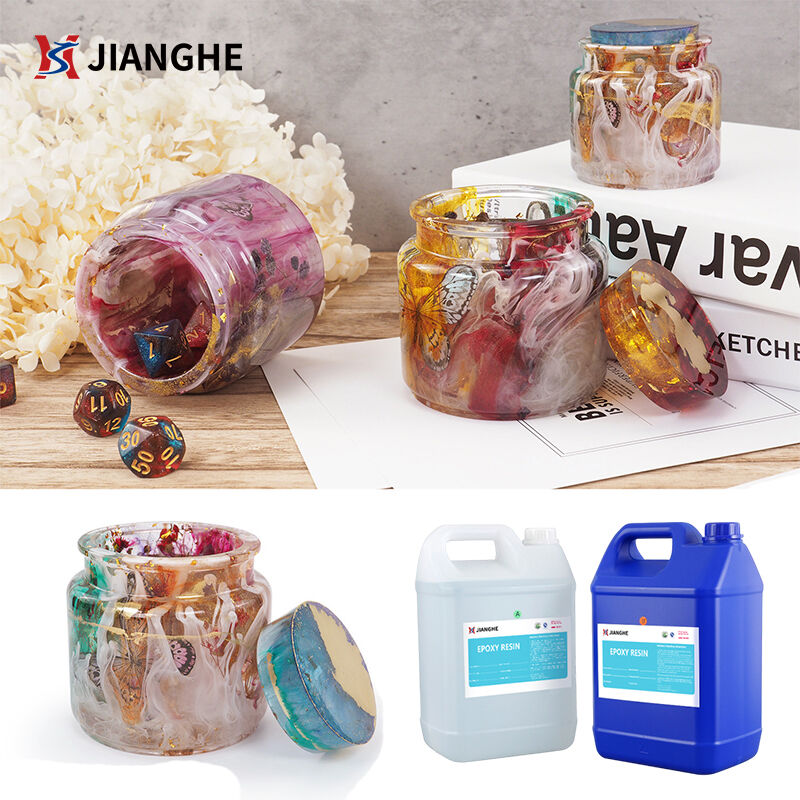
Developing a custom resin formulation is a precise, multi-stage process that demands scientific rigor, application-specific thinking, and iterative refinement. Whether you are creating a specialty adhesive, a high-performance coating, or a craft-grade casting product, the pathway from concept to commercially viable formula follows a structured sequence of technical decisions. Understanding these stages helps manufacturers, product developers, and procurement specialists make smarter choices, reduce costly trial-and-error, and ultimately deliver a resin product that performs reliably in real-world conditions.
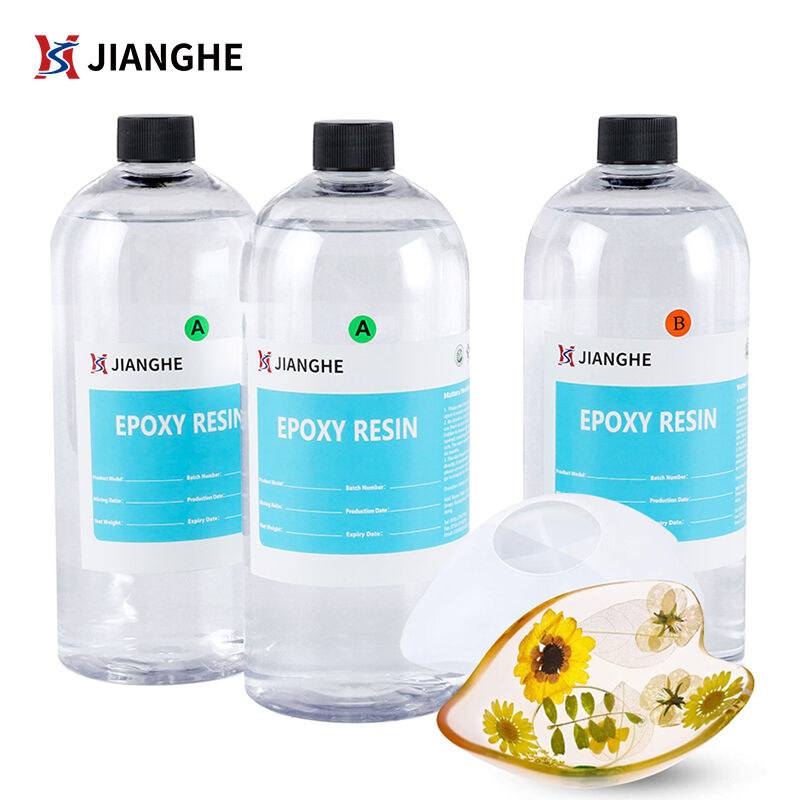
The journey of custom resin formulation development is rarely linear. It involves feedback loops, performance benchmarking, regulatory review, and scale-up engineering before a formula is deemed production-ready. Each stage introduces variables that can significantly affect the final product's clarity, viscosity, cure time, mechanical strength, and chemical resistance. By breaking the process into clearly defined stages, developers can isolate problems more effectively and ensure that no critical performance parameter is overlooked during the design phase.
Stage One: Defining Application Requirements and Performance Targets
Establishing the End-Use Context
Every successful custom resin formulation project begins with a thorough definition of how the finished product will be used. Will the resin be applied to wood surfaces, embedded with pigments, cast into thick molds, or used as a structural adhesive? The answers to these questions directly influence which base resin chemistry is selected, which hardeners or crosslinkers are appropriate, and what performance benchmarks the formula must achieve. This stage is often overlooked by teams eager to move to the lab, but investing time here prevents costly reformulation later.
Application requirements extend beyond simple mechanical properties. Factors such as temperature range during cure, working time, pot life, shrinkage behavior, and desired surface finish all form part of the requirements profile. For example, a custom resin formulation intended for craft and art applications must prioritize optical clarity, low yellowing over time, and user-friendly handling at ambient temperatures — requirements quite different from an industrial floor coating or a marine composite resin.
Documenting these requirements in a formal specification sheet at the outset creates a reference standard that every subsequent development stage can be measured against. This document typically includes physical property targets, processing conditions, substrate compatibility notes, and any relevant regulatory or safety benchmarks. Without it, development teams risk drifting away from the original intent as the project progresses.
Identifying Constraints and Boundaries
Alongside performance targets, developers must identify the constraints that will shape the formulation. These include raw material availability, cost ceilings, regulatory compliance requirements (such as VOC limits or food-contact safety standards), and shelf-life targets. A custom resin formulation that meets all technical goals but relies on a restricted chemical substance, for instance, will face significant commercialization barriers. Identifying these constraints early prevents expensive reformulation at advanced stages.
Environmental considerations are increasingly part of the boundary-setting process. Many industries now require formulations to meet specific sustainability criteria, including low-toxicity hardener systems, bio-based resin components, or recyclability considerations. Understanding these boundaries before laboratory work begins means that the formulation strategy is designed with the full commercial and regulatory context in mind from the start.
Stage Two: Raw Material Selection and Preliminary Formulation Design
Choosing the Base Resin Chemistry
The selection of a base resin system is one of the most consequential decisions in custom resin formulation development. Epoxy resins, polyurethanes, polyesters, acrylics, and silicones each offer distinct performance profiles. Epoxy-based systems, for example, are prized for their exceptional adhesion, chemical resistance, and low shrinkage upon cure, making them popular in both industrial and decorative applications. Polyurethane systems offer greater flexibility and impact resistance, while silicone resins excel in high-temperature environments.
Within each resin family, there are further choices to be made. For epoxy systems, the molecular weight of the base epoxy resin, the epoxide equivalent weight, and the specific amine or anhydride hardener all profoundly influence the cured network's properties. A lower-viscosity liquid epoxy resin may be chosen for deep-pour casting applications to allow air bubble escape, while a higher-functionality epoxy resin may be selected for high-strength structural bonding. The custom resin formulation process involves balancing these chemistry choices against the performance requirements established in Stage One.
Hardener or curing agent selection follows immediately from the base resin choice. The curing agent determines the cure speed, the cured network's glass transition temperature (Tg), and its chemical resistance. Aliphatic amines provide fast ambient-temperature cure with good color stability, while aromatic amines or anhydrides are often selected for higher-temperature curing systems requiring superior chemical resistance. Each choice carries implications for the formulator's safety profile and regulatory compliance posture.
Designing the Preliminary Formulation Matrix
With base chemistry selected, the formulator builds an initial formulation matrix. This is essentially a documented recipe that specifies stoichiometric ratios, optional additives, fillers, reactive diluents, and processing aids. Stoichiometry is critical in custom resin formulation: too much or too little hardener relative to the resin will result in an incomplete cure network, degrading mechanical, chemical, and optical properties. Getting this ratio right is foundational.
Additives serve specific functional roles: defoamers minimize bubble formation during mixing and pouring; UV stabilizers protect the cured resin from yellowing under sun exposure; wetting agents improve substrate adhesion; and flexibilizers adjust the brittleness of the cured film. Each additive must be carefully chosen for compatibility with the base system to avoid phase separation, cloudiness, or inhibited cure. The preliminary formulation matrix typically specifies a range of concentrations for each component to allow systematic optimization in the next stage.
Stage Three: Laboratory Synthesis and Iterative Testing
Small-Scale Laboratory Batches
Once the preliminary formulation matrix is defined, development moves into the laboratory synthesis phase. Small-scale batches — typically ranging from 100 grams to a few kilograms — are prepared under controlled conditions to evaluate how the formulation performs against the specification established in Stage One. This is where the custom resin formulation process becomes highly iterative, as rarely does the first batch meet all performance targets simultaneously.
Laboratory testing at this stage evaluates a broad range of properties: viscosity before and after mixing, pot life (working time), gel time, exothermic temperature profile during cure, and initial mechanical properties after a standard cure schedule. For clarity-critical applications, optical measurements such as color (APHA or Gardner scale), haze, and yellowing resistance under UV exposure are also conducted. Each data point feeds directly back into the formulation adjustment process.
One of the most important skills in custom resin formulation development is the ability to interpret test data and trace performance deviations back to specific formulation variables. If, for instance, a batch shows excessive surface tack after 24-hour ambient cure, the formulator must determine whether the issue stems from off-stoichiometry, hardener volatility, or surface amine blush caused by atmospheric humidity. This diagnostic capability separates experienced formulators from novices and is what drives efficient iteration cycles.
Systematic Variable Optimization
Rather than making random adjustments, professional custom resin formulation laboratories use design-of-experiments (DoE) methodologies to systematically vary formulation parameters and measure their effect on performance outputs. This approach allows multiple variables to be evaluated efficiently across a matrix of test formulations, reducing the number of experiments needed while maximizing the information gained. DoE is particularly valuable when two or more formulation variables interact in complex ways.
During optimization, it is common to discover performance trade-offs that were not anticipated at the requirements stage. For example, increasing reactive diluent content to reduce mix viscosity may also reduce the cured network's glass transition temperature, potentially compromising performance at elevated use temperatures. Identifying and resolving these trade-offs is a core challenge in custom resin formulation development, requiring both technical knowledge and practical judgment about which performance attributes are truly critical for the end-use application.
Stage Four: Scale-Up Validation and Process Engineering
Transitioning from Lab to Pilot Scale
Once a laboratory-optimized formula achieves the target specification, development moves to pilot-scale validation. This stage replicates the formulation at batch sizes that are closer to commercial production volumes — typically ranging from tens to hundreds of kilograms. Scale-up is a critical and often underestimated phase in custom resin formulation development because mixing dynamics, heat dissipation, and raw material homogeneity can differ substantially between laboratory and production scales.
Exothermic reactions, for example, are well-managed at laboratory scale due to the high surface-area-to-volume ratio of small containers. At larger batch sizes, the same reaction chemistry can generate significantly higher peak exotherm temperatures, risking thermal degradation of the resin, premature gel, or even a runaway exotherm in extreme cases. Pilot-scale testing confirms that the cure profile remains safe and controllable at production volumes and validates that mixing equipment can achieve the required homogeneity within the working time of the formulation.
Process Parameter Definition
Scale-up validation also defines the processing parameters that production teams will need to follow. These include recommended mixing speeds, mixing times, temperature conditioning for both components, maximum batch sizes, and transfer procedures. For a custom resin formulation intended for two-component packaging, this stage also validates the accuracy of the mixing ratio across practical dispensing equipment, ensuring that end-users reliably achieve the correct stoichiometry during application.
Packaging compatibility testing is conducted at this stage as well. The resin and hardener components are placed in the intended packaging materials — whether metal cans, HDPE cartridges, or PET bottles — and stored under accelerated aging conditions to confirm that there is no chemical interaction between the formulation and the package, and that shelf life targets are achievable. This is an often-overlooked but commercially vital aspect of custom resin formulation readiness.
Stage Five: Regulatory Review, Documentation, and Commercial Launch Preparation
Safety Data Sheets and Regulatory Compliance
Before a custom resin formulation can be brought to market, it must pass through a rigorous regulatory and documentation phase. This includes the preparation of Safety Data Sheets (SDS) in compliance with GHS or regional equivalents, classification of the formulation under relevant chemical hazard frameworks, and — where applicable — registration or notification under chemical regulatory schemes such as REACH in Europe or TSCA in the United States. For products intended for consumer use, additional safety assessments related to skin sensitization, eye irritation, and inhalation risk are typically required.
Label development is also part of this phase. The product label must accurately reflect the hazard classification, include all required precautionary statements, and provide clear application and safety instructions appropriate for the intended user base. For custom resin formulation products entering the craft, hobby, or art market, consumer-friendly language and clear mixing ratio communication are particularly important to ensure safe and successful use by non-industrial customers.
Technical Documentation and Quality Control Protocols
Alongside regulatory documentation, the development team prepares the technical data sheet (TDS), which summarizes the formulation's key performance properties, mixing and application instructions, cure schedules, and storage conditions. The TDS serves as the primary technical communication tool between the manufacturer and the customer, and its accuracy directly affects customer satisfaction and product performance in the field.
Quality control protocols define the incoming raw material specifications, in-process testing requirements, and finished goods release criteria that production batches must meet. These protocols ensure batch-to-batch consistency for the custom resin formulation, which is essential for customer trust and repeat business. Release testing typically includes viscosity, color, density, and reactive group content measurements that can be completed quickly and serve as reliable indicators of formulation correctness before any batch is shipped.
The commercial launch preparation phase also includes training for sales and customer support teams so they can accurately communicate the formulation's performance attributes, limitations, and proper handling requirements. A technically excellent custom resin formulation can underperform in the market if customers receive inadequate guidance on how to mix, apply, and cure it correctly. End-user education is therefore an integral part of a successful product launch strategy.
FAQ
How long does the custom resin formulation development process typically take?
The timeline for custom resin formulation development varies significantly depending on application complexity, regulatory requirements, and performance targets. A straightforward craft resin formulation might be developed and validated within three to six months, while a specialized industrial or structural adhesive formulation requiring extensive durability testing and regulatory submissions could take twelve to twenty-four months from initial concept to commercial launch.
What is the most critical stage in custom resin formulation development?
While every stage is important, the application requirements definition stage at the beginning of the custom resin formulation process is arguably the most critical. A clear, comprehensive requirements specification ensures that all subsequent technical decisions — from base chemistry selection to additive choice — are aligned with the actual end-use context. Poorly defined requirements at the start are the single most common root cause of costly reformulation late in the development cycle.
Can an existing standard resin formula be modified to create a custom formulation?
Yes, starting from an existing standard formulation is a common and practical approach to custom resin formulation development. Modifying a proven base formula by adjusting additive packages, changing stoichiometry, or incorporating specialty components is often faster and lower risk than building a formulation entirely from scratch. However, developers must rigorously re-test the modified formulation because even small changes in additive type or concentration can produce unexpected shifts in cure behavior, mechanical properties, or long-term stability.
What role does scale-up play in custom resin formulation success?
Scale-up validation is a decisive factor in whether a custom resin formulation succeeds commercially. Many formulations that perform flawlessly at laboratory scale encounter unexpected issues at production volume — particularly related to exotherm management, mixing homogeneity, and batch-to-batch raw material variability. Investing in thorough pilot-scale testing and clear process parameter documentation ensures that the formulation is not only technically excellent but also manufacturable consistently at the volumes needed to serve the market.
Table of Contents
- Stage One: Defining Application Requirements and Performance Targets
- Stage Two: Raw Material Selection and Preliminary Formulation Design
- Stage Three: Laboratory Synthesis and Iterative Testing
- Stage Four: Scale-Up Validation and Process Engineering
- Stage Five: Regulatory Review, Documentation, and Commercial Launch Preparation
-
FAQ
- How long does the custom resin formulation development process typically take?
- What is the most critical stage in custom resin formulation development?
- Can an existing standard resin formula be modified to create a custom formulation?
- What role does scale-up play in custom resin formulation success?