
 EN
EN
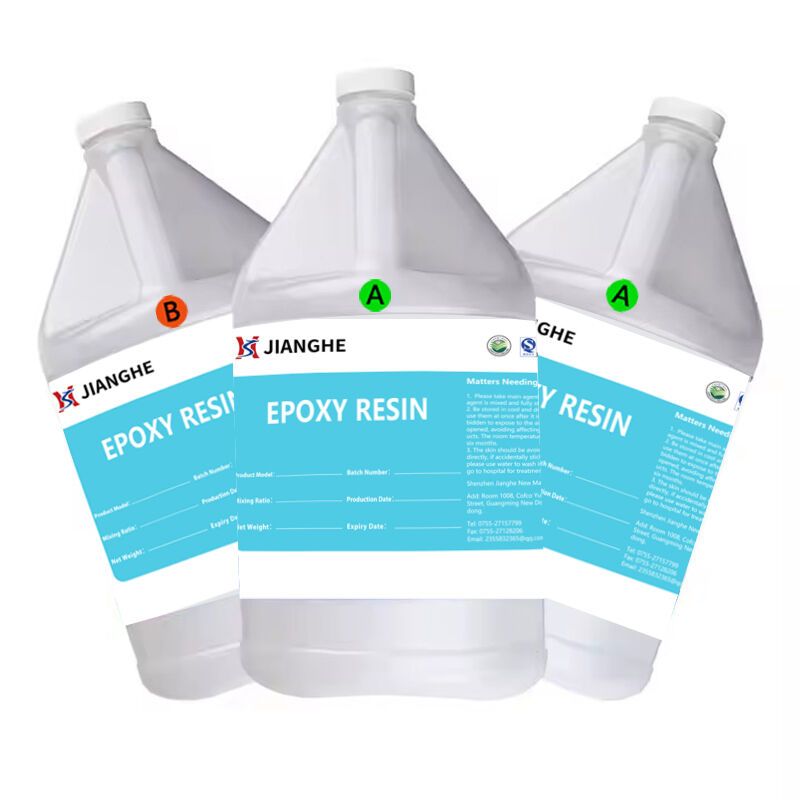
When businesses approach a resin manufacturer for a custom formulation or a specialized coating solution, they are placing enormous trust in that supplier's technical foundation. The ability to deliver consistent, application-specific epoxy resin products is not simply a matter of mixing chemicals — it requires a deeply embedded research and development culture, a skilled team of polymer chemists, and a systematic process for translating customer requirements into reliable material solutions. Understanding how a manufacturer's R&D capability actually supports customer projects helps procurement managers, product developers, and engineers make far better sourcing decisions.
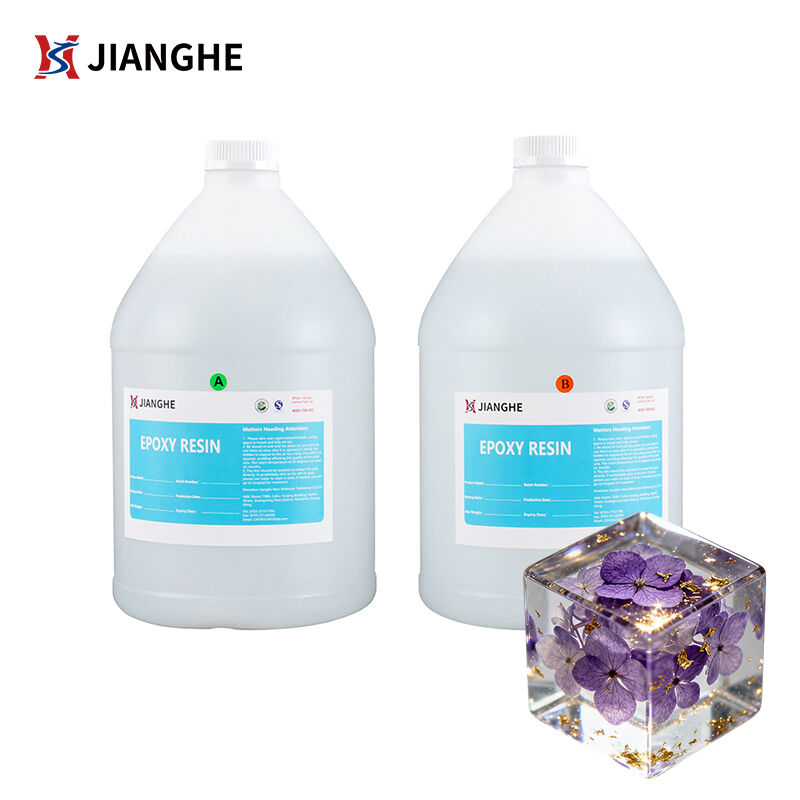
This question becomes especially important as end-use demands grow more complex. Whether the application involves high-clarity tabletop casting, electronics encapsulation, marine coatings, or precision art and craft production, the customer ultimately needs an epoxy resin formulation that performs predictably within their specific process environment. A manufacturer with strong R&D capability can bridge the gap between standard catalog products and truly fit-for-purpose material solutions — and that distinction can make or break a customer project.
The Role of Formulation Science in Custom Epoxy Resin Development
Translating Customer Requirements into Molecular Design
One of the most direct ways R&D capability supports customer projects is through formulation science. When a customer approaches a manufacturer with a specific performance requirement — such as achieving a bubble-free, optically clear cure, or a particular Shore hardness after curing — the R&D team must work backward from that target to engineer an appropriate epoxy resin system. This requires an understanding of base resin chemistry, curing agent selection, reactive diluent behavior, and the interaction effects between all components.
A strong R&D team does not simply pull an existing formulation from a shelf. Instead, they evaluate the customer's application environment, substrate compatibility, processing temperature range, pot life requirements, and final physical properties. This multi-variable analysis allows the team to develop a formulation that genuinely fits the customer's production workflow rather than one that merely approximates the requirements. Precision at this stage dramatically reduces the downstream risk of reformulation delays and project failures.
The depth of formulation knowledge within a manufacturer's R&D department also determines how effectively they can modify existing epoxy resin systems without introducing unintended trade-offs. Adjusting viscosity, for example, often affects cure speed, shrinkage, and mechanical strength in ways that require careful counterbalancing. Experienced chemists understand these interdependencies and can navigate them efficiently to protect the customer's timeline and outcome.
Testing Protocols That Validate Performance Before Scale-Up
R&D capability is not just about formulation — it is equally about verification. Manufacturers with mature R&D functions operate structured testing protocols that simulate the customer's intended use environment before any product is scaled for production. For an epoxy resin destined for clear casting applications, this might include accelerated yellowing tests, deep-pour thermal monitoring, bubble migration analysis, and surface hardness tracking over extended cure cycles.
These validation steps give customers documented evidence that the formulation behaves as expected, not just under ideal laboratory conditions but under the realistic variations present in actual production. Customers benefit enormously from this rigor because it compresses the time between prototype approval and production readiness. Rather than discovering performance gaps after mass procurement, they receive data-backed assurance before committing to volume orders.
Manufacturers who invest in modern analytical instrumentation — such as differential scanning calorimetry, rheometers, and optical clarity meters — are able to characterize epoxy resin performance with a level of specificity that supports confident customer decision-making. The availability of this data transforms what might otherwise be a supplier relationship into a genuine technical partnership.
How R&D Drives Customization Beyond Standard Product Lines
Building Application-Specific Variants for Niche Customer Needs
Many customers come to resin manufacturers with needs that fall outside standard catalog offerings. A craft-focused business may need an epoxy resin that pours exceptionally thin without air entrapment, while an industrial customer may need a system that cures fully at lower ambient temperatures. These niche requirements cannot be met by a manufacturer whose product range is static — only an active R&D function can generate and validate new variants to address them.
R&D-capable manufacturers maintain what might be described as a formulation library — a structured archive of tested chemistry combinations that can serve as starting points for new customer-specific developments. This library accelerates response time considerably. Rather than starting from scratch for every inquiry, the R&D team can identify a closely matching baseline and iterate from there, reducing both development time and material waste during the sampling phase.
This capacity for intelligent customization also gives customers access to an epoxy resin that genuinely fits their production process rather than forcing them to adapt their process to accommodate a standard product. That alignment between material behavior and process parameters is a competitive advantage that R&D-backed manufacturers can consistently deliver, while those without comparable capability simply cannot.
Iterative Refinement Based on Customer Feedback
Customer projects rarely follow a linear path from specification to approval. There are typically multiple rounds of feedback — a cured sample may be slightly too rigid, or the working time may be too short for the customer's assembly sequence, or the surface finish may show micro-texture that the end application cannot tolerate. R&D capability determines how quickly and effectively a manufacturer can respond to these iterative signals.
A manufacturer with a responsive R&D function treats each round of customer feedback as actionable formulation intelligence. The team analyzes the feedback, hypothesizes the root cause at a chemical or process level, and proposes a targeted modification rather than a broad reformulation. This structured approach to iteration is efficient and reduces the frustration that customers often experience when working with suppliers who lack the internal expertise to diagnose and correct performance shortcomings.
For customers developing a product line that depends on a specific epoxy resin behavior — such as a completely clear, self-leveling surface coat — iterative refinement is not optional, it is a necessary part of the development journey. Having a manufacturer who can accompany that journey with technical precision rather than guesswork is what separates a capable supplier from a commodity vendor.
Technical Support Infrastructure That Extends Beyond the Laboratory
Application Engineering and Process Advisory
Strong R&D capability at a resin manufacturer rarely stays confined to the laboratory. The most customer-supportive manufacturers extend their technical expertise into application engineering — advising customers not just on material selection but on how to deploy the epoxy resin most effectively within their specific environment. This includes guidance on mixing ratios, surface preparation, environmental controls, curing schedules, and post-cure finishing.
This advisory dimension is particularly valuable for customers who are new to working with a specific resin system or who are transitioning from a previous supplier's product. Even when the core chemistry is well understood, differences in viscosity behavior, exotherm profile, or cure rate between formulations can introduce processing challenges. An R&D-experienced technical support team can anticipate and pre-empt these challenges with practical, experience-based guidance.
When a manufacturer provides this level of application engineering support alongside their epoxy resin products, they effectively reduce the customer's total cost of development. Fewer failed batches, shorter learning curves, and faster time-to-production represent tangible financial value — value that is directly enabled by the manufacturer's investment in technical knowledge and communication infrastructure.
Regulatory and Compliance Expertise as a Customer Resource
Modern customer projects increasingly require that materials meet specific regulatory standards — whether for food contact suitability, low-VOC emissions, REACH compliance, or RoHS alignment. R&D-capable manufacturers invest in staying current with evolving regulatory landscapes and building compliant formulations proactively rather than reactively. This benefits customers who operate in regulated end-use markets and need documentation to support their own compliance obligations.
For an epoxy resin used in consumer craft applications, for example, safety data compliance and skin sensitization classification are non-negotiable. An R&D team that understands the regulatory context can design formulations that minimize hazardous components without sacrificing performance, and can produce the required safety documentation in formats that customers can use directly in their own product registration or distribution processes.
This regulatory competence is not a peripheral feature — it is a core component of R&D capability that directly protects customers from compliance risk. Manufacturers who cannot provide this support leave customers exposed to potential liability and market access restrictions, which can be far more costly than any short-term savings on material price.
Long-Term Value of Choosing an R&D-Driven Resin Manufacturer
Consistency Across Production Batches
One aspect of R&D capability that customers often underestimate is its role in maintaining batch-to-batch consistency. Developing a great epoxy resin formulation is one challenge; reproducing it reliably at scale, across different raw material lots and seasonal environmental conditions, is another. R&D teams with strong process chemistry knowledge establish tight specification windows and in-process quality controls that preserve the performance characteristics customers validated during development.
This consistency is commercially critical for customers who have built their own product quality promises around the behavior of a specific resin. If the epoxy resin they source shows meaningful variation in viscosity, cure time, or final hardness from batch to batch, their own production quality becomes unreliable. R&D-backed manufacturers have both the technical tools and the systematic discipline to prevent this kind of variation from reaching the customer.
Investing in a epoxy resin from a manufacturer with robust R&D infrastructure means investing in a supply relationship that can scale with your project rather than becoming a bottleneck as your volume and performance demands increase.
Collaborative Innovation as a Competitive Advantage
Perhaps the highest-value aspect of partnering with an R&D-capable resin manufacturer is the potential for genuine co-development. Customers who share their product roadmaps and performance targets with their resin supplier can gain access to emerging formulation technologies before they become available on the open market. This kind of collaborative innovation is only possible when the manufacturer has the R&D depth to understand the customer's technical vision and translate it into achievable chemistry.
For businesses competing in fast-moving markets — such as the consumer craft sector, specialty coatings, or functional composites — being the first to market with a superior epoxy resin-enabled product can define a brand's position. Partnering with a manufacturer whose R&D team is actively developing next-generation formulations provides a pathway to that kind of differentiation that no amount of post-purchase modification can replicate.
The relationship between a customer's project ambition and a manufacturer's R&D capability is not merely transactional. It is a technical alliance that, when well-matched, generates compounding value for both parties over time. Choosing a manufacturer based on R&D depth rather than price alone is one of the most impactful procurement decisions a product development team can make.
FAQ
How does a manufacturer's R&D team handle highly specific epoxy resin viscosity requirements?
R&D chemists address viscosity requirements by selecting appropriate reactive diluents and adjusting molecular weight distribution within the epoxy resin base. They use rheometric testing to verify the target viscosity range under the customer's application conditions, including temperature and shear rate, ensuring the formulation behaves correctly throughout the customer's actual process rather than only in controlled laboratory settings.
Can a resin manufacturer's R&D capability support rapid prototyping timelines?
Yes. Manufacturers with established formulation libraries and experienced R&D teams can significantly compress development timelines by starting from a closely matched baseline rather than designing from scratch. When paired with efficient internal testing protocols, this approach allows customers to receive validated epoxy resin samples within weeks rather than months, which is critical for project schedules that cannot accommodate extended material development cycles.
What documentation should customers expect from an R&D-capable epoxy resin manufacturer?
Customers should expect comprehensive technical data sheets, safety data sheets aligned with current regulatory standards, cure performance curves, and application processing guidelines. R&D-capable manufacturers can also provide custom testing reports specific to the customer's application scenario — including optical clarity measurements, mechanical property summaries, and yellowing resistance data — giving customers the evidence base they need for internal qualification and end-use compliance.
How does R&D investment protect customers from supply chain disruptions in epoxy resin sourcing?
Manufacturers with strong R&D capabilities maintain alternative raw material qualifications, meaning they have tested and approved multiple equivalent inputs for each formulation component. If a primary raw material becomes unavailable, the R&D team can transition to a qualified alternative without altering the epoxy resin's performance profile. This supply chain resilience is a direct product of R&D investment and provides customers with a degree of continuity protection that commodity suppliers simply cannot offer.
Table of Contents
- The Role of Formulation Science in Custom Epoxy Resin Development
- How R&D Drives Customization Beyond Standard Product Lines
- Technical Support Infrastructure That Extends Beyond the Laboratory
- Long-Term Value of Choosing an R&D-Driven Resin Manufacturer
-
FAQ
- How does a manufacturer's R&D team handle highly specific epoxy resin viscosity requirements?
- Can a resin manufacturer's R&D capability support rapid prototyping timelines?
- What documentation should customers expect from an R&D-capable epoxy resin manufacturer?
- How does R&D investment protect customers from supply chain disruptions in epoxy resin sourcing?