
 EN
EN
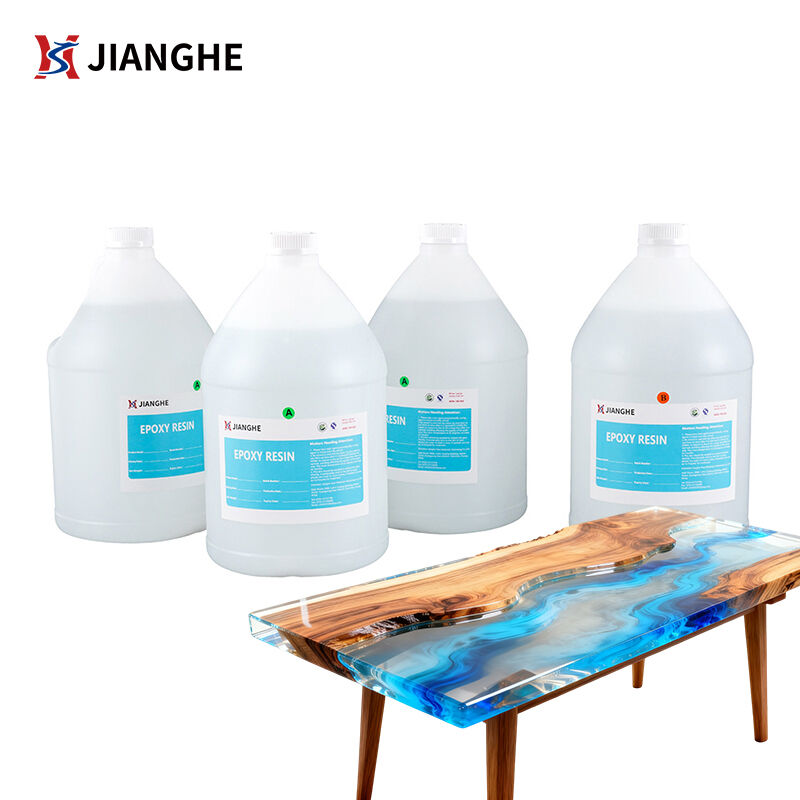
When craftsmen and furniture makers set out to create a stunning river table, the single most critical factor that separates an impressive piece from a mediocre one is the optical quality of the resin used to fill the live-edge slab. river table epoxy must achieve a level of transparency so pure that the finished pour resembles flowing water, glass, or liquid crystal suspended inside wood. Understanding how modern formulations accomplish this extraordinary visual clarity is essential knowledge for any woodworker, designer, or manufacturer aiming to produce professional-quality results.
High transparency in river table epoxy is not accidental. It is the result of carefully engineered chemistry, refined raw material selection, meticulous formulation balancing, and controlled curing conditions. Each variable in the process either contributes to optical brilliance or introduces distortion. This article walks through the precise mechanisms by which a well-engineered river table epoxy system achieves the crystal-clear appearance that defines premium river table craftsmanship, helping you make more informed decisions about materials and technique.
The Chemistry Behind Optical Clarity in River Table Epoxy
Resin and Hardener Purity as the Foundation of Transparency
The starting point for visual clarity in any river table epoxy is the purity of the base epoxy resin and the hardener used in the formulation. Bisphenol A epoxy resin, when refined to a high degree, naturally transmits visible light with minimal scattering or absorption. Impurities introduced during synthesis or raw material sourcing directly translate into cloudiness, yellow tinting, or haze in the cured material. Premium-grade river table epoxy relies on resins that have been processed to remove trace contaminants that would otherwise disrupt light transmission at the molecular level.
The hardener component plays an equally critical role. Amine-based hardeners, which are the most common curing agents for river table epoxy, vary widely in their optical characteristics depending on their molecular structure and purity. Cycloaliphatic amines and modified aliphatic amines are particularly favored in high-clarity formulations because they produce a cured network that interacts minimally with UV light and visible wavelengths. When a manufacturer selects a hardener system specifically for optical performance, the result is a river table epoxy that cures to a glass-like, water-white appearance rather than an amber or yellowish tone.
Refractive Index Matching and Light Transmission
One of the more technically sophisticated aspects of achieving high visual clarity involves controlling the refractive index of the cured epoxy system. Refractive index refers to how much a material bends light as it passes through. For river table epoxy to appear truly transparent, its refractive index must be highly uniform throughout the cured mass. Variations in refractive index, which can occur due to incomplete mixing, temperature gradients during cure, or phase separation between resin and hardener, produce visible distortions that undermine clarity.
Well-formulated river table epoxy systems are designed so that the resin and hardener components, once properly combined, create a homogeneous polymer network with a consistent refractive index across the entire cured volume. This consistency is what allows light to pass through a thick river table pour without bending, scattering, or diffracting in ways that would create visual noise. Achieving this requires not only the right chemistry but also accurate mixing ratios, which is why professional-grade river table epoxy systems specify precise volumetric or weight ratios that must be followed closely.
How Deep Pour Capability Influences Visual Clarity
Managing Exothermic Heat in Thick Pours
River table projects frequently require pours several inches deep to fill the natural void between live-edge slabs. This depth requirement introduces a significant technical challenge: the exothermic reaction. All epoxy curing reactions generate heat as the resin and hardener crosslink. In shallow pours, this heat dissipates quickly and causes no visual problems. In deep pours, however, heat accumulates within the mass. If that heat rises too high, it can cause the river table epoxy to yellow, crack, or develop internal stress patterns that permanently compromise transparency.
Professional deep-pour river table epoxy formulations are specifically engineered with slower, lower-exotherm hardener systems that extend the gel time and allow heat to dissipate gradually. This controlled curing profile is essential because it prevents the thermal damage that leads to optical degradation. A river table epoxy capable of being poured at depths of two to four inches in a single session, without yellowing or crazing, requires a hardener system that balances reactivity with thermal management. The result is a pour that remains optically pristine from surface to base.
Bubble Elimination and Surface Tension Control
Micro-bubbles trapped within a cured river table epoxy pour are among the most common causes of reduced clarity. Bubbles scatter incoming light in unpredictable directions, creating a milky or foggy appearance that is immediately visible. High-quality river table epoxy formulations incorporate surface-active additives that reduce the surface tension of the liquid resin mixture, allowing air bubbles introduced during mixing to rise freely to the surface and escape before the material begins to gel.
The viscosity profile of the river table epoxy also plays a direct role in bubble release. Lower initial viscosity allows bubbles to travel upward more easily before the resin thickens. This is why deep-pour river table epoxy tends to have a noticeably lower viscosity than surface-coating epoxy systems. The trade-off is that lower viscosity can allow pigments or suspended particles to settle unevenly, but in clear river table applications, this low-viscosity design is purely beneficial. Applying gentle heat with a heat gun or torch over the surface shortly after pouring also assists bubble release without damaging the optical quality of the underlying mass.
UV Stability and Long-Term Optical Performance
The Role of UV Absorbers and Stabilizers
Transparency at the time of curing is only half the story. A river table epoxy that achieves perfect clarity on day one but yellows noticeably within six months is commercially and aesthetically unacceptable. UV radiation from ambient light sources, including sunlight through windows, is the primary driver of long-term yellowing in epoxy systems. When UV photons interact with the epoxy polymer network without protection, they trigger photooxidation reactions that generate yellow chromophores within the material.
Premium river table epoxy formulations incorporate UV absorbers, which are molecules that capture UV photons and dissipate their energy as harmless heat before the photons can damage the polymer chain. Hindered amine light stabilizers, commonly known as HALS, work alongside UV absorbers to interrupt the radical chain reactions that lead to yellowing. Together, these additives extend the window of optical clarity significantly, allowing a river table epoxy finish to maintain its water-white transparency for years rather than months, even under regular indoor lighting exposure.
Yellowing Resistance as a Formulation Target
Beyond additive packages, the base chemistry of a river table epoxy determines its inherent yellowing resistance. Aromatic epoxy systems, which include some standard bisphenol A resins cured with aromatic amines, are inherently prone to yellowing due to the chromophore-generating potential of aromatic rings under UV exposure. Aliphatic or cycloaliphatic hardeners significantly reduce this risk because they do not contain the aromatic structures that most readily absorb and react to UV radiation.
Manufacturers who prioritize long-term optical performance in their river table epoxy products often specify cycloaliphatic hardener systems explicitly on their technical data sheets. This is a meaningful differentiator between decorative-grade and professional-grade river table epoxy. When evaluating a product for a high-value project, checking whether the formulation uses aliphatic or cycloaliphatic hardeners is a practical way to predict long-term clarity performance beyond the initial cure.
Mixing Technique and Application Practices That Protect Clarity
Achieving Complete Homogenization Without Introducing Air
Even the most chemically advanced river table epoxy system will fail to achieve its designed clarity if mixing is performed incorrectly. Incomplete mixing leaves pockets of unreacted resin or hardener within the liquid mass. These pockets cure differently, producing localized variations in the polymer network that manifest as streaks, soft spots, or cloudy regions in the finished river table pour. Thorough, deliberate mixing is therefore a non-negotiable step in achieving the transparency that premium river table epoxy is capable of delivering.
The technique that protects clarity during mixing involves combining the components slowly, scraping the sides and bottom of the container consistently, and mixing for the full duration recommended by the manufacturer, which is typically three to five minutes for a standard batch. Using a low-speed paddle mixer rather than hand stirring is preferred for larger volumes because it delivers more consistent shear without introducing air at high speed. Pouring the mixed river table epoxy into a second clean container and mixing briefly again, a process known as double-potting, further ensures complete homogenization and minimizes the risk of unmixed material being poured into the project.
Temperature Management During Pouring and Curing
Ambient and substrate temperature directly influence how river table epoxy flows, self-levels, and ultimately cures. Cold temperatures increase viscosity, slow the release of trapped air, and can cause phase separation or incomplete crosslinking, all of which reduce clarity. Excessively hot temperatures accelerate the exothermic reaction, potentially causing yellowing or cracking in deep pours. The optimal working temperature range for most river table epoxy products falls between 65°F and 80°F, with the substrate ideally at or slightly above room temperature.
Warming the resin component gently before use, by placing the container in warm water for ten to fifteen minutes, reduces its viscosity and improves flow without triggering premature reaction. This practice is particularly beneficial when working in cooler workshop environments where river table epoxy might otherwise be sluggish. Maintaining a consistent temperature throughout the curing period, typically twenty-four to seventy-two hours depending on the formulation, prevents thermal gradients that can create internal stress and associated optical distortion in the finished pour.
FAQ
Why does river table epoxy sometimes appear cloudy after curing?
Cloudiness in cured river table epoxy most commonly results from one of three causes: trapped micro-bubbles that were not released before gelation, incomplete mixing that left unreacted material creating localized haze, or moisture contamination from the wood surface or ambient humidity during the pour. Ensuring that wood is fully dried before pouring, mixing thoroughly for the recommended duration, and applying gentle surface heat to assist bubble release are the primary preventive measures. In some cases, cold working conditions also cause cloudiness by increasing viscosity and slowing bubble escape.
How thick can a single river table epoxy pour be without losing clarity?
The maximum pour depth for a single clear river table epoxy application depends on the specific formulation. Standard deep-pour river table epoxy products are typically designed for pours of two to four inches in a single session. Exceeding the recommended depth generates excessive internal heat during the exothermic cure, which can cause yellowing, cracking, or internal stress that reduces transparency. For deeper fills, multiple sequential pours with adequate cure time between layers is the recommended approach to preserve optical clarity throughout the full depth of the river table channel.
Does tinting river table epoxy affect its transparency?
Adding colorants to river table epoxy does not inherently reduce transparency, provided that transparent dye-based colorants are used rather than opaque pigment pastes. Transparent dyes dissolve into the epoxy system at the molecular level without creating particulate scattering that would reduce clarity. The result is a colored but still transparent river effect, often used to simulate the appearance of turquoise water or deep blue rivers within the table. Opaque pigments, by contrast, scatter light and will reduce or eliminate transparency depending on concentration, which may be a deliberate aesthetic choice rather than a defect.
How long does river table epoxy maintain its clarity over time?
A high-quality river table epoxy formulated with UV absorbers, HALS stabilizers, and cycloaliphatic or aliphatic hardener systems can maintain excellent optical clarity for many years under typical indoor conditions. The exact lifespan depends on UV exposure levels, the quality of the UV stabilization package in the specific product, and whether a UV-protective topcoat is applied over the cured epoxy surface. Tables placed near south-facing windows with direct sunlight exposure will experience more yellowing pressure than those in diffuse interior lighting. Applying a UV-resistant clear topcoat as a final protective layer is a practical strategy for extending the long-term clarity of any river table epoxy project.