
 EN
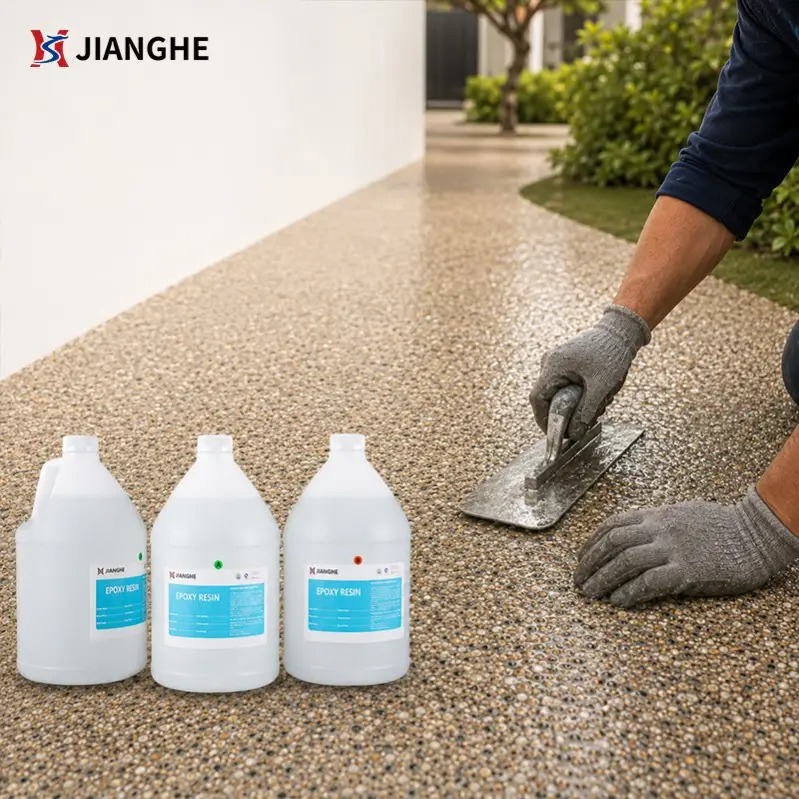
Outdoor pathways face constant environmental challenges, and drainage performance directly impacts their longevity and safety. When selecting materials for gravel-based surfaces, understanding how epoxy resin influences water flow becomes essential for property owners and landscape designers. The choice of binding material can either enhance or compromise drainage efficiency, affecting everything from surface stability to long-term maintenance requirements.
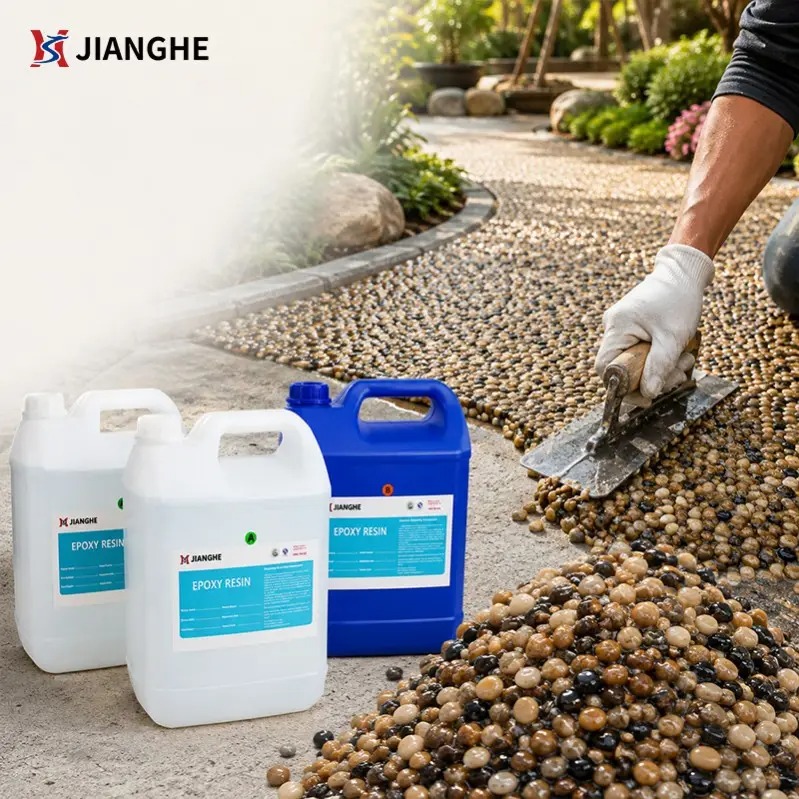
The short answer is that drainage is decided by the binder system, not by the aggregate alone. A correctly specified resin preserves the open, water-shedding character of the gravel; a cheap or badly applied one fills every void and leaves you with a slick, pooling, cracked surface within a season. This article examines how epoxy resin interacts with water in outdoor gravel pathways, what resin formulation, application thickness and aggregate grading have to do with it, and how to specify a system that keeps draining reliably over its service life.
How Epoxy Resin Affects Water Permeability
The drainage behavior of epoxy resin in gravel pathways depends on several factors working together: resin formulation, applied thickness, aggregate composition and the base beneath the surface. Understanding these dynamics helps professionals make informed decisions about material selection and installation methods for outdoor surfaces that need both visual appeal and reliable drainage characteristics.
Resin Density and Permeability Relationship
Clear epoxy resin works as a binding bridge between individual stones. It coats the aggregate and holds it in place — but it does not have to fill the space between stones. Whether it does is largely a question of formulation and application rate.
A low-viscosity clear casting resin penetrates and wets the grain surfaces, then cures as a thin film at the contact points between aggregates. The voids in between stay open, so water moves through the matrix instead of running off it. A high-viscosity or heavily filled casting resin sits on top of the bed rather than bridging it: it fills the voids and cures into a continuous, water-shedding skin. In that case, drainage has to be handled entirely by surface slope and the base layer beneath.
This distinction matters far more than any single "permeability rating" on a marketing page. It is why a specification sheet should state the resin's mixed viscosity and recommended spread rate — the two numbers that actually determine whether the cured layer bridges or fills. Anti-yellowing resin formulations protect those properties over time, because UV-driven degradation is what eventually breaks the binder film and lets fines migrate into the water channels.
Thickness Considerations and Water Flow
Application thickness is the second lever. A thin, evenly applied bonding film leaves the surface open, textured and free-draining, so water penetrates the wearing layer quickly. Pushing thickness upward increases the chance that resin pools in low spots, closes the voids, and cures into an impermeable crust with puddles standing on top of it.
For most decorative gravel pathways, the target is the minimum resin loading that still locks the aggregate in place, spread as evenly as possible. Excess clear casting resin buys nothing except a glossier, more slippery, less permeable surface — and, on a slope, a layer that will creep under summer heat. Anti-yellowing resin formulations applied at the specified loading rate keep both appearance and drainage behavior stable across seasons.
Drainage Performance Under Different Weather Conditions
Heavy Rainfall and Surface Runoff
During intense rainfall events, the drainage characteristics of an epoxy resin-bound pathway become immediately apparent. If the binder bridges the aggregate and the base beneath is free-draining, water passes down through the surface layer and into the sub-base, and the path stays firm and walkable. If the surface is effectively sealed, every drop has to leave by slope and surface runoff — which works only when the fall is consistent and there is somewhere for the water to go.
Quality casting resin that wets the aggregate without flooding the voids keeps the surface open, so peak rainfall infiltrates rather than sheeting across. Anti-yellowing resin specifications matter here too: a binder that stays intact through UV exposure and seasonal weathering keeps the same void structure working year after year, instead of breaking down and releasing fines that clog the channels.
The best-performing combination is a clear casting resin film over a well-graded, compacted, free-draining base with a controlled cross-fall. Together they shed peak flows without eroding the edges or saturating the sub-grade.
Freeze-Thaw Cycles and Drainage Integrity
Colder climates test the binder differently. When water sits inside the surface layer and then freezes, it expands — and that expansion pries apart whatever is holding the matrix together. A resin that is too rigid and too thick will crack; once cracked, the pathway loses both its structural continuity and its drainage channels.
Flexible, well-formulated clear epoxy resin tolerates movement across temperature swings without fracturing the bond between stones. Anti-yellowing resin systems developed for northern climates resist the brittleness and micro-cracking that let water pool and then freeze in place. In freeze-thaw regions, the priority is a slightly more flexible binder, a thinner bonding film, and a base that removes water quickly so it never has the chance to sit within the matrix.
Optimizing Drainage With Proper Resin Selection
Material Specifications for Maximum Permeability
Selecting the right casting resin formulation requires understanding the drainage requirement of each pathway project. Practical specifications to confirm before ordering:
- Mixed viscosity — low viscosity wets the aggregate and bridges contact points rather than flooding voids.
- Recommended spread rate / resin-to-aggregate ratio — the single biggest determinant of whether the surface stays open.
- Flexibility and elongation — critical in freeze-thaw climates and over flexible substrates.
- UV and anti-yellowing performance — a clear epoxy resin that stays clear also stays structurally intact.
- Water absorption — a low value indicates a well-cured, dimensionally stable binder.
Clear epoxy resin products marketed as UV-stable or anti-yellowing resin typically carry additive packages that slow degradation of the binder film. Some systems also include micro-aggregate fillers that create intentional void space within the cured layer. Where permeability is a hard project requirement, the material datasheet should state a tested infiltration figure — measured, for example, in millimetres per hour — rather than leaving it to inference.
| Specification | Why it matters for drainage | What to look for |
|---|---|---|
| Mixed viscosity | Decides whether resin bridges contact points or floods voids | Documented value on the TDS |
| Spread rate | Directly sets how much void space survives curing | Stated kg/m² or resin:aggregate ratio |
| Flexibility | Prevents cracking that destroys drainage channels | Grade suited to local climate |
| Anti-yellowing / UV | Keeps binder and void structure intact long term | Stated UV additive system |
| Water absorption | Reflects cure quality and surface stability | Low value on the TDS |
Installation Practices That Support Drainage
Proper application techniques directly impact how epoxy resin performs in drainage scenarios. Clear casting resin must be applied over adequately prepared, well-draining gravel bases to maximize overall pathway drainage. The base layer composition, resin thickness and surface slope all work together to optimize water flow.
- Build a free-draining base first. A compacted, permeable sub-base carries away the water that the surface lets through. If the base is impermeable, no surface formulation will save the pathway.
- Grade the aggregate consistently. A narrow, single-size grading produces an open structure; a broad grading with excess fines fills the voids before the resin even arrives.
- Apply to a prepared, dry, stable bed. Surface moisture, dust and loose material compromise adhesion and create an uneven bond film.
- Control the resin loading. Work in small batches at the specified spread rate and mix thoroughly so the hardener is fully distributed.
- Set and maintain fall. Even a permeable layer benefits from a consistent cross-fall, so runoff and capillary action do not have to carry the whole load.
- Respect cure conditions. Correct mixing ratios, pot life and cure temperature deliver a consistent cure — and a consistent cure delivers predictable drainage.
Using quality clear epoxy resin with appropriate hardeners ensures consistent cure characteristics. Anti-yellowing resin formulations applied with correct mixing ratios and cure times establish the drainage foundation needed for long-term outdoor performance.
FAQ
Does epoxy resin completely block drainage in pathways?
Not necessarily — but this is a formulation and application question, not a fixed property of "epoxy resin" as a material category. A thin-film clear epoxy resin that bridges aggregate contact points leaves the voids between stones open, and water passes through. A heavily filled, high-viscosity or over-applied casting resin cures into a continuous skin and does block infiltration; drainage then depends entirely on slope and runoff. The determining factors are resin viscosity, spread rate, aggregate grading and base design.
What drainage rate should outdoor epoxy resin pathways achieve?
Resin-bound surfaces are not inherently high-infiltration systems. Where permeability is a project requirement — paths over planting beds, sites prone to standing water, locations on heavy clay — the permeable design has to come from the whole build-up: open-graded aggregate, a permeable sub-base, and a resin loading low enough to leave voids open. Any infiltration figure quoted should come from a tested datasheet for the specific system rather than a generic rule of thumb, and should be confirmed through site-specific engineering assessment.
Can anti-yellowing resin improve overall pathway drainage performance?
Indirectly, yes — for a straightforward reason. Anti-yellowing resin keeps the binder film chemically and physically intact under UV. A binder that stays intact keeps its bond to the aggregate, so the matrix does not loosen and release fines into the void structure. It is the migration of those fines that gradually seals an otherwise open, free-draining surface. A clear epoxy resin with proper UV stabilisation therefore protects drainage performance across the service life rather than restoring it after the fact.
Is clear casting resin the right choice for an outdoor pathway?
Clear casting resins are formulated for casting and coating work where clarity, self-levelling and thin-pour performance matter. For an outdoor pathway, choose a resin specified for outdoor exposure — with documented UV and anti-yellowing performance, flexibility matched to the local climate, and a viscosity and spread rate suited to an aggregate-bonded application. Where clarity is not a design requirement, a dedicated gravel or aggregate-binding resin is usually the more appropriate product.