 EN
EN


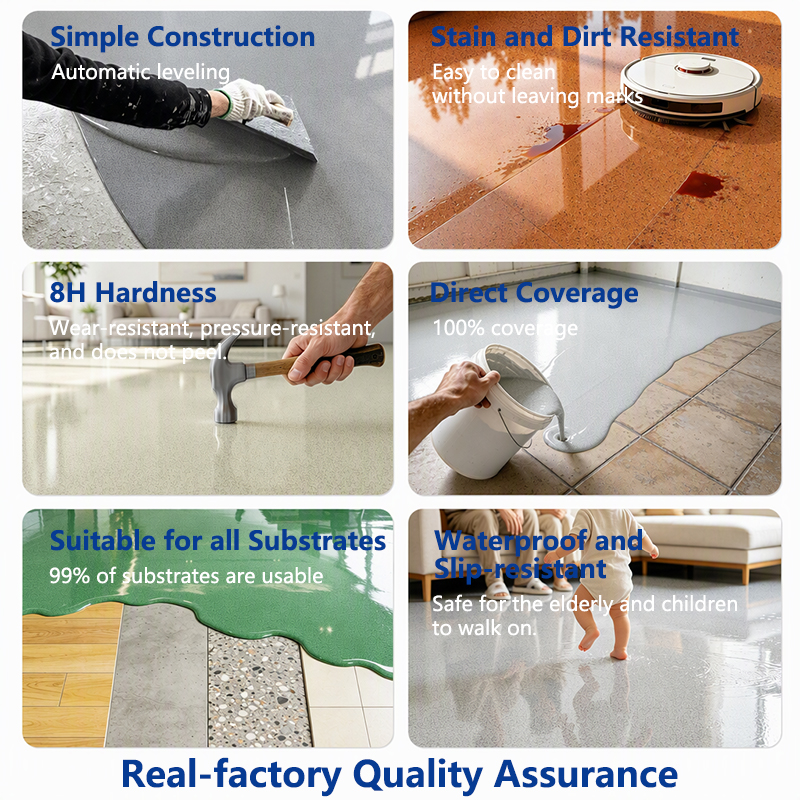
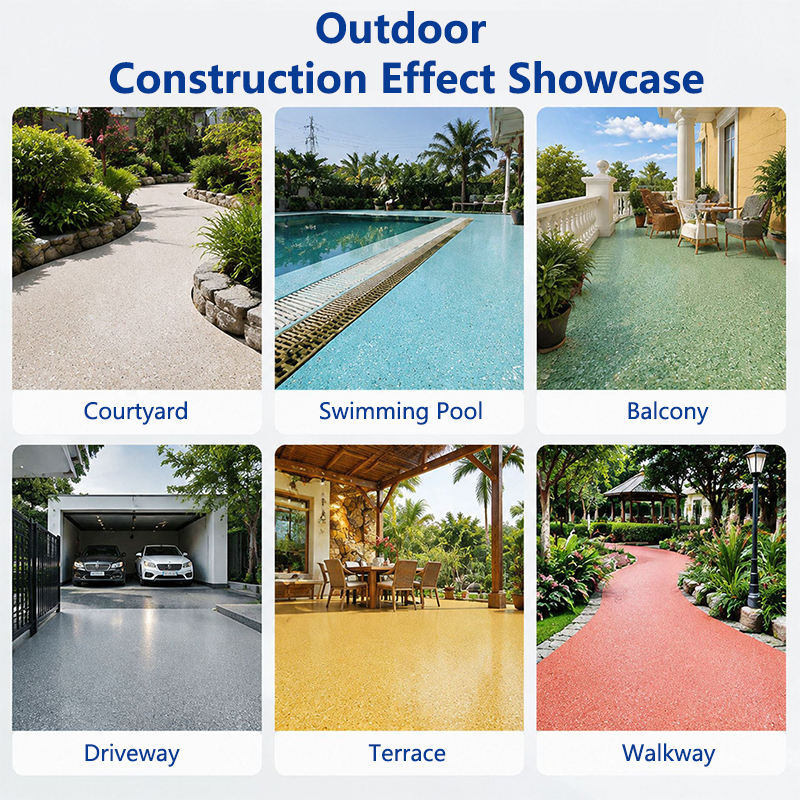

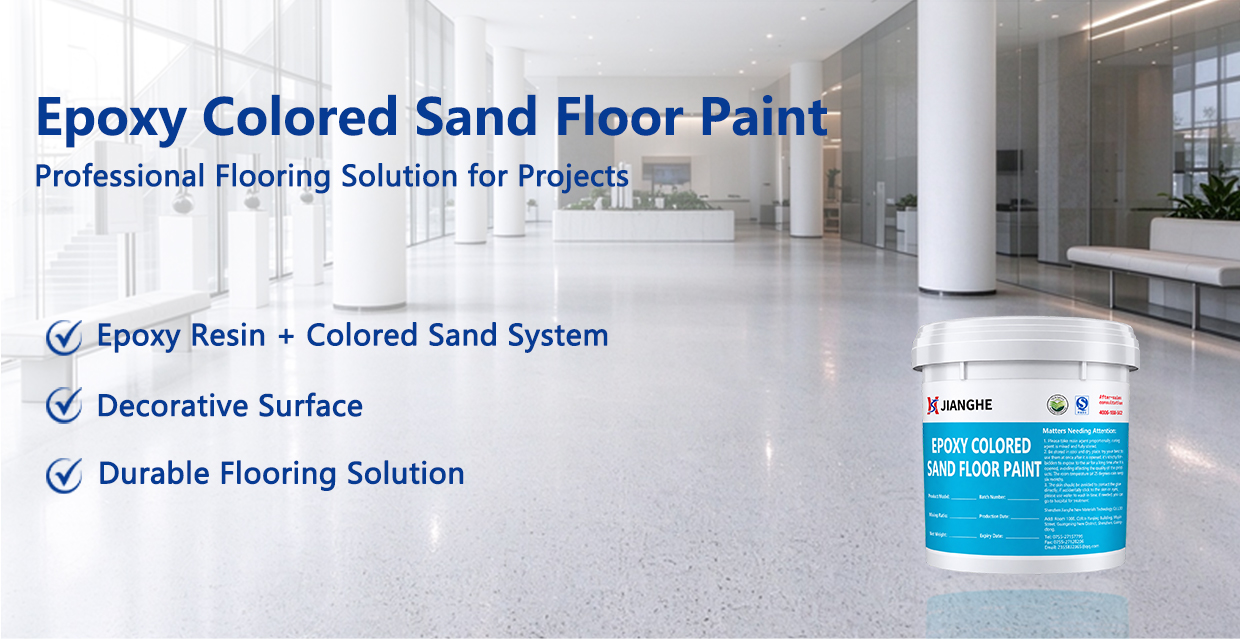
Colored Quartz Sand Epoxy Flooring Resin for Decorative Floors
Model: Jh6110 Mix Ratio: A:B = 8:1 by Weight
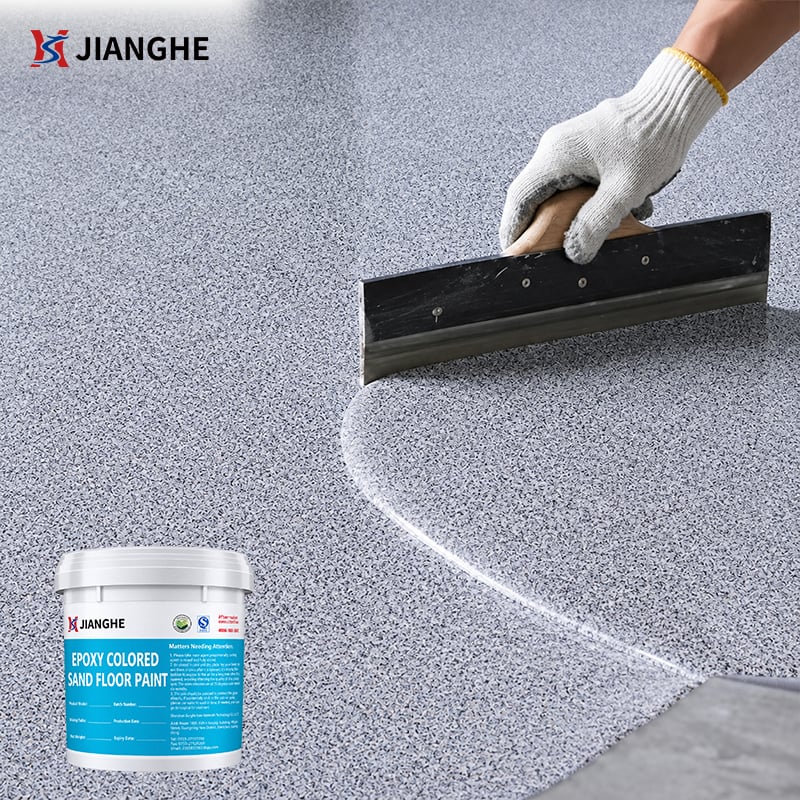
A two-component epoxy flooring system combining colored quartz sand with an epoxy binder to create a seamless decorative floor surface with visible mineral texture. Designed for commercial interiors, showrooms, hotels and selected industrial flooring applications.
Key Product Features:
- Colored Quartz Sand Decorative Finish
- Surface Dry 4–6 h / Full Dry Approx. 24 h
- Approx. 1.8–2.0 mm Application Thickness
- Tested VOC & Heavy Metal Compliance
Typical Applications:
Shopping Malls · Brand Showrooms · Hotels · Electronics Workshops · Pharmaceutical Facilities · Selected Industrial Areas

- Overview
- Recommended Products
- Decorative mineral texture
- Seamless floor appearance
- Epoxy-based flooring structure
- Multiple color options
- Commercial and selected industrial applications
- Colored quartz or colored sand texture is required
- A seamless decorative floor appearance is preferred
- An approximate 1.8–2.0 ±0.2 mm application thickness fits the project
- Commercial or selected industrial flooring is planned
- Substrate and environmental conditions can be properly controlled
- Transparent decorative flooring
- Plain gray industrial coating
- Gravel or pebble aggregate flooring
- A substantially thicker floor build
- Specialized performance not covered by this flooring system
- Substrate porosity
- Surface profile
- Floor level deviation
- Application loss
- Required finished texture
- Target system thickness
- Mixing consistency
- Colored sand distribution
- Curing behavior
- Surface uniformity
- Finished sample appearance
- Project area
- Substrate type
- Expected traffic level
- Preferred color
- Target thickness
- Estimated quantity
- Surface drying: approximately 4–6 hours
- Full drying: approximately 24 hours
- Foot traffic: approximately 48 hours
- Vehicle traffic: approximately 72 hours
01 What Is Colored Sand Epoxy Flooring?
Colored Quartz Sand Epoxy System for Decorative Flooring
Colored sand epoxy flooring combines epoxy resin with colored quartz or mineral sand to create a continuous floor surface with visible texture and color variation.
Unlike a conventional solid-color epoxy floor, the colored sand becomes part of the finished visual design, creating a more natural and textured appearance while maintaining the structure of an epoxy flooring system.
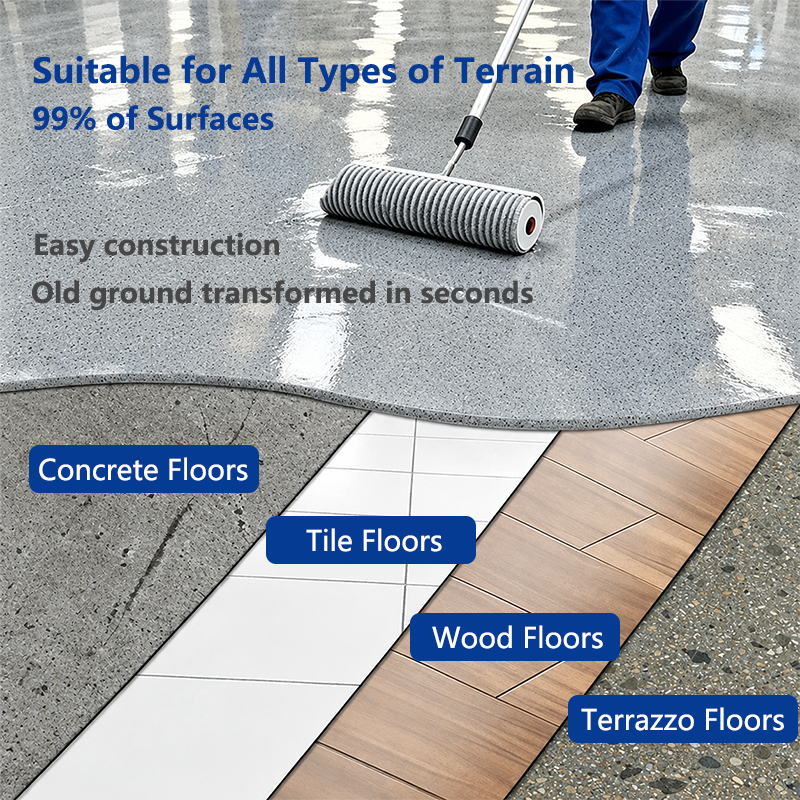
The system is designed for commercial interiors, showrooms, hotels and selected industrial environments where decorative appearance and practical floor performance are both important.
The mixing ratio is A:B = 8:1 by weight, with a recommended application thickness of approximately 1.8–2.0 ±0.2 mm.
02 Why Choose Colored Sand Epoxy Flooring?
More Than a Plain Solid-Color Epoxy Floor
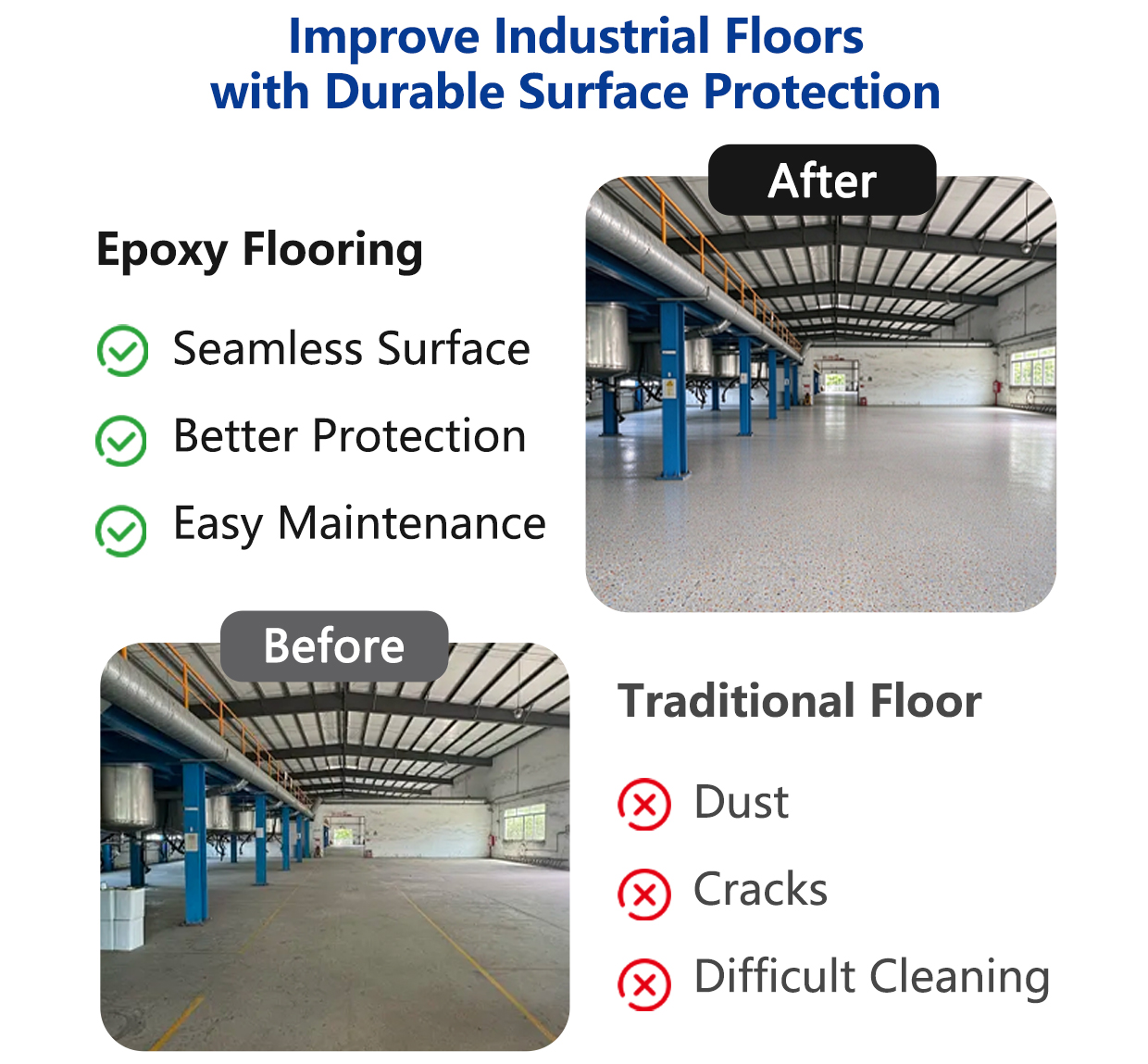
Colored sand flooring is chosen when the floor needs to contribute to the overall appearance of a space rather than provide only a uniform solid-color finish.
Colored quartz particles create visible mineral texture and color variation across the floor, making the surface more decorative than a conventional plain epoxy coating.
The seamless floor structure also creates a continuous visual appearance without conventional tile joints, making the system suitable for commercial spaces where floor appearance and routine maintenance both matter.
The main benefits come from the combination of:
Different flooring systems are still appropriate for different requirements. Transparent decorative floors, plain industrial coatings and thicker aggregate flooring systems should be evaluated according to the specific project requirements.
03 Performance & Technical Properties
Performance Designed for Practical Flooring Use
Decorative appearance alone is not enough when selecting a commercial or industrial flooring system. Buyers also need to consider curing behavior, solids content, environmental conditions and the actual service requirements of the project.
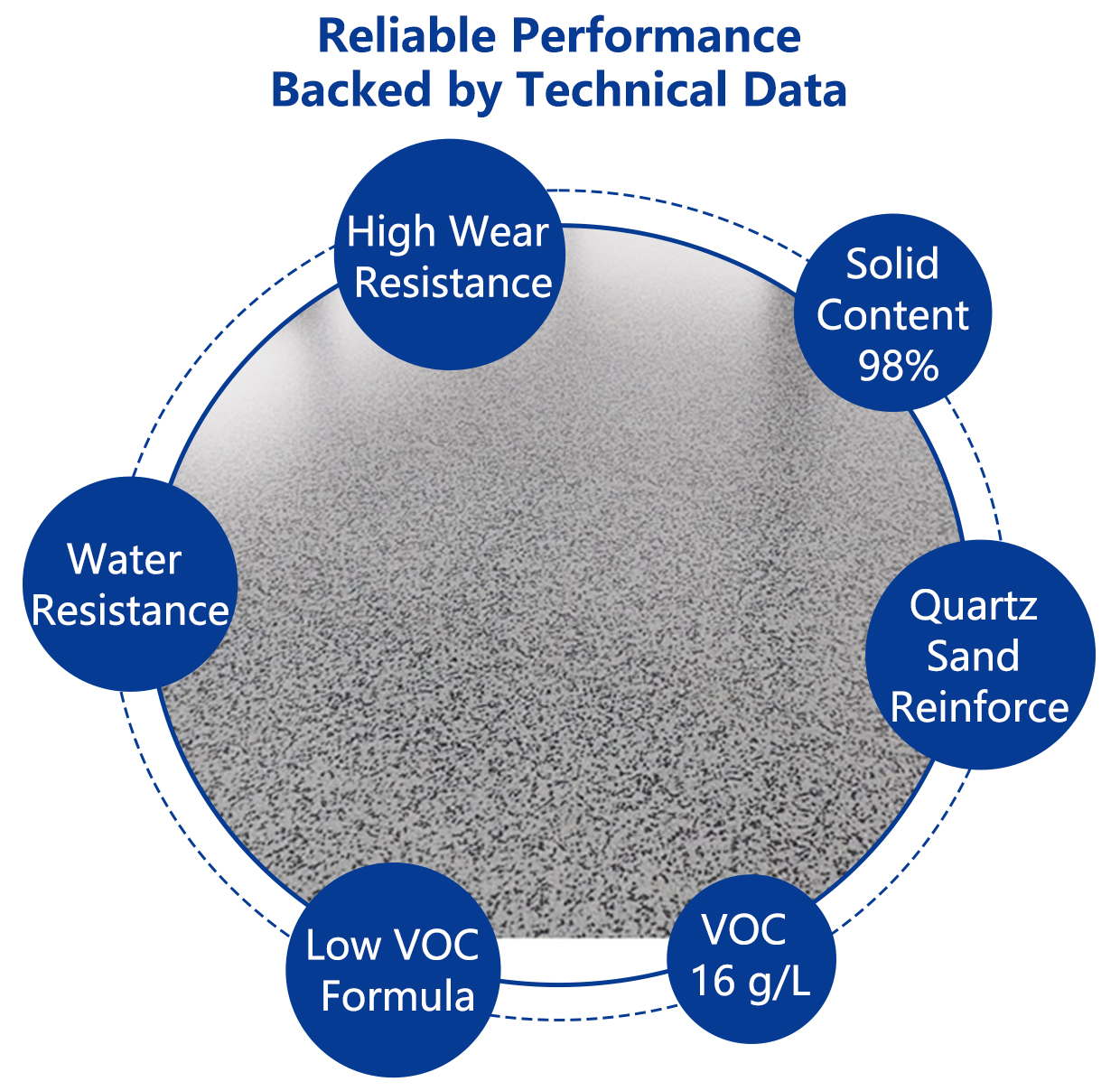
The formulation has approximately 98% solid content, supporting the intended floor build with a high-solids epoxy system.
The tested VOC value is 16 g/L.
The tested material also showed no detectable mercury, lead, chromium or cadmium under the applicable test method.
The surface drying time is approximately 4–6 hours, with full drying at approximately 24 hours under suitable application conditions.
The floor should remain protected during the initial curing period before pedestrian or vehicle traffic is permitted.
04 Where Can Colored Sand Flooring Be Used?
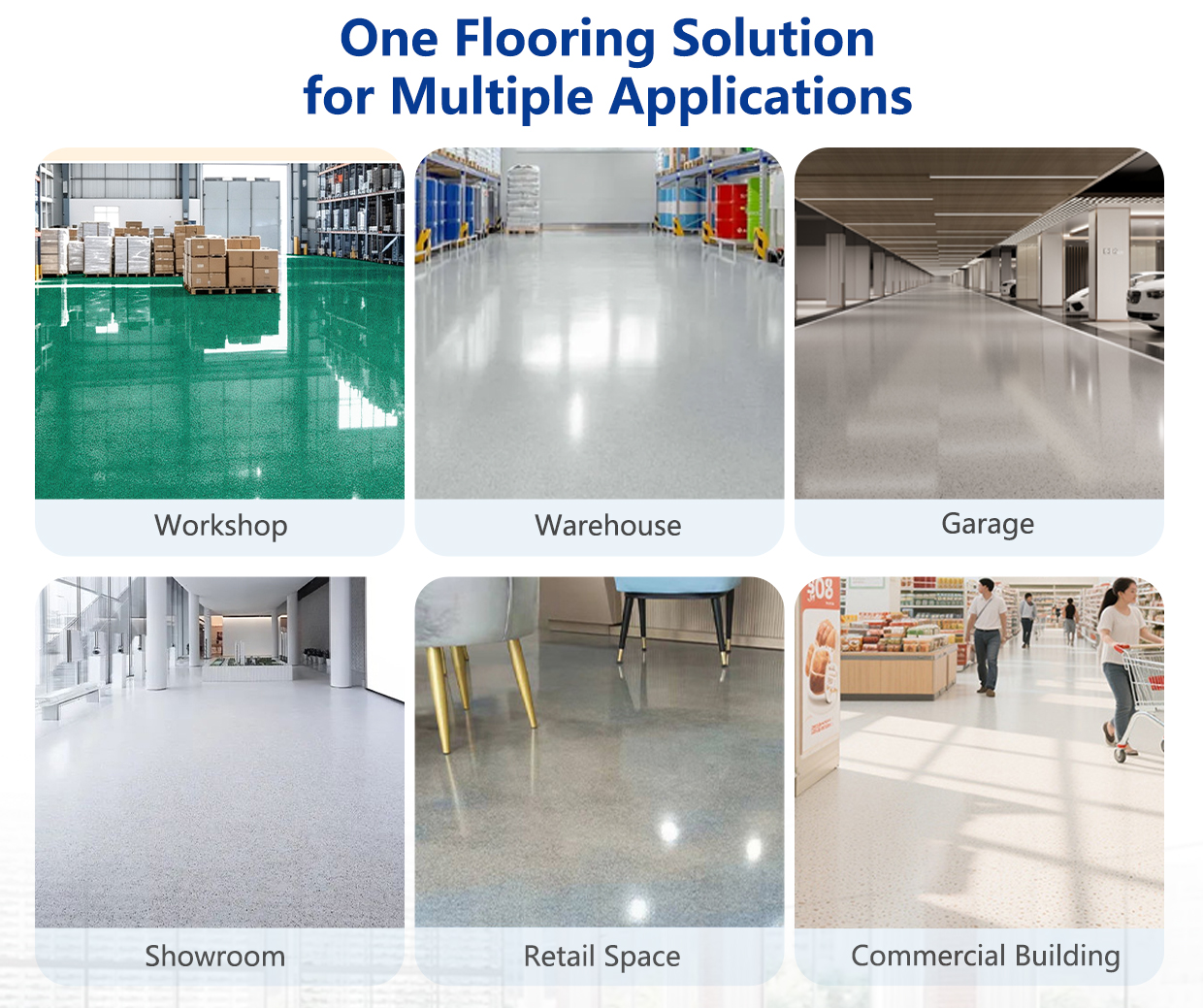
Colored sand epoxy flooring is best considered for environments where decorative appearance and practical flooring performance need to be evaluated together.
Shopping Malls
Colored quartz texture provides more visual variation than a plain solid-color floor and can support decorative commercial interiors.
Brand Showrooms
The floor can become part of the overall visual design of display and showroom spaces where surface appearance and consistency are important.
Hotels & Commercial Interiors
The system can be considered where a decorative mineral appearance is preferred over a conventional plain epoxy finish.
Electronics Workshops
Electronics workshops can be considered for this flooring system where the required floor specification matches the product characteristics.
Pharmaceutical Facilities
Pharmaceutical workshop environments can also be considered, subject to the project's actual flooring specification, hygiene requirements and applicable regulations.
Garages & Selected Industrial Areas
The system can be evaluated for areas requiring a seamless decorative floor, subject to substrate condition, traffic requirements and project specifications.
05 Is Colored Sand Epoxy Flooring Right for Your Project?
Colored sand epoxy flooring is most suitable when the project requires visible colored quartz or mineral texture together with a seamless epoxy-based floor surface.
Choose this system when:
Consider another flooring system when the project requires:
06 What Substrate Conditions Are Required?
A good flooring result starts with the substrate.
The substrate should have a strength of at least C20 and a moisture content of no more than 8%.
Before application, the surface should be properly prepared by removing dust, loose particles, oil and other contaminants. Cracks, holes and other surface defects should be repaired before the flooring system is applied.
The substrate should be sufficiently flat, dry and stable. Excessive moisture, contamination or substrate movement can affect adhesion, surface appearance and final flooring performance.
For commercial and industrial projects, substrate inspection should be completed before material quantity and installation schedules are finalized.
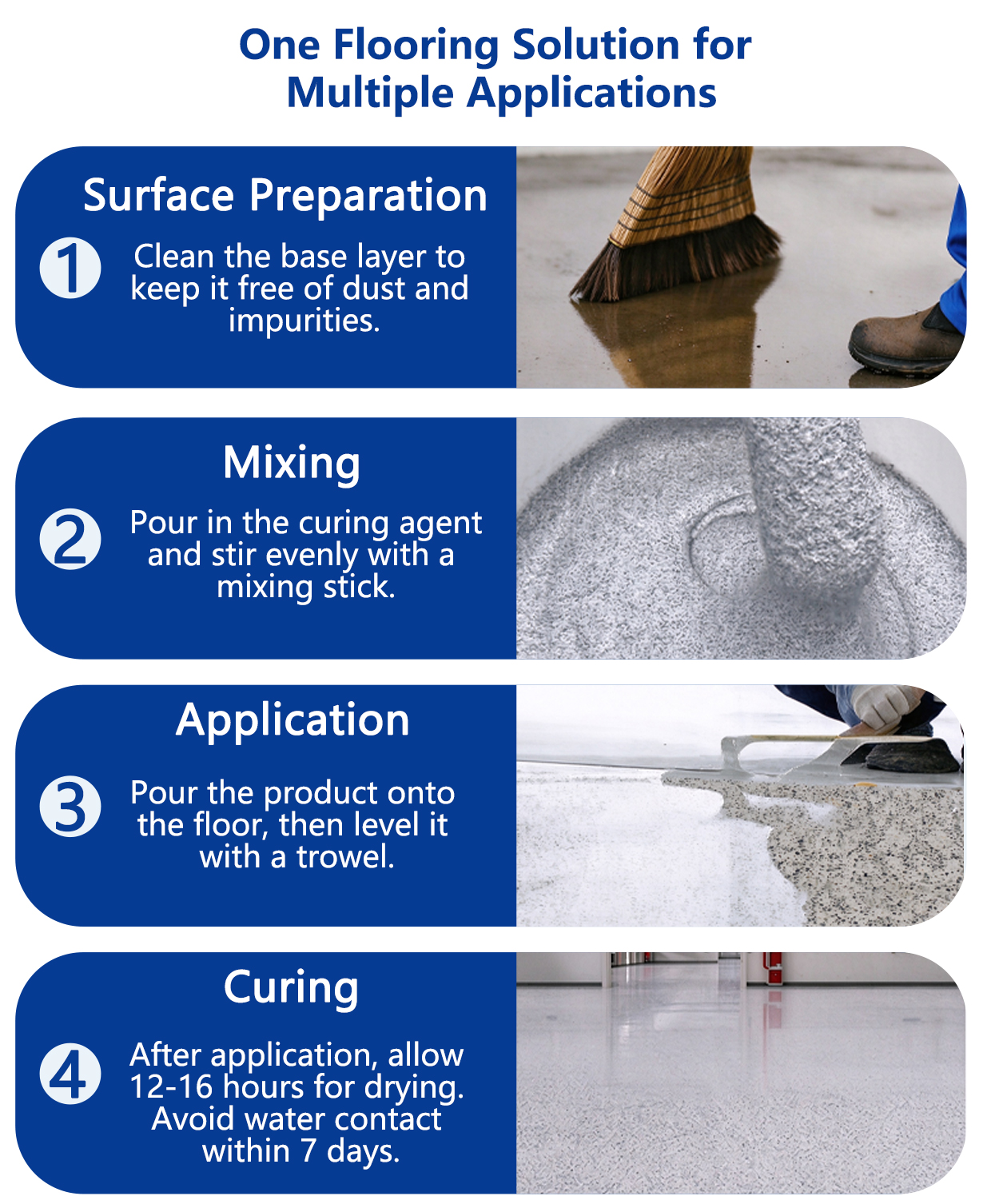
07 How to Apply Colored Sand Epoxy Flooring?
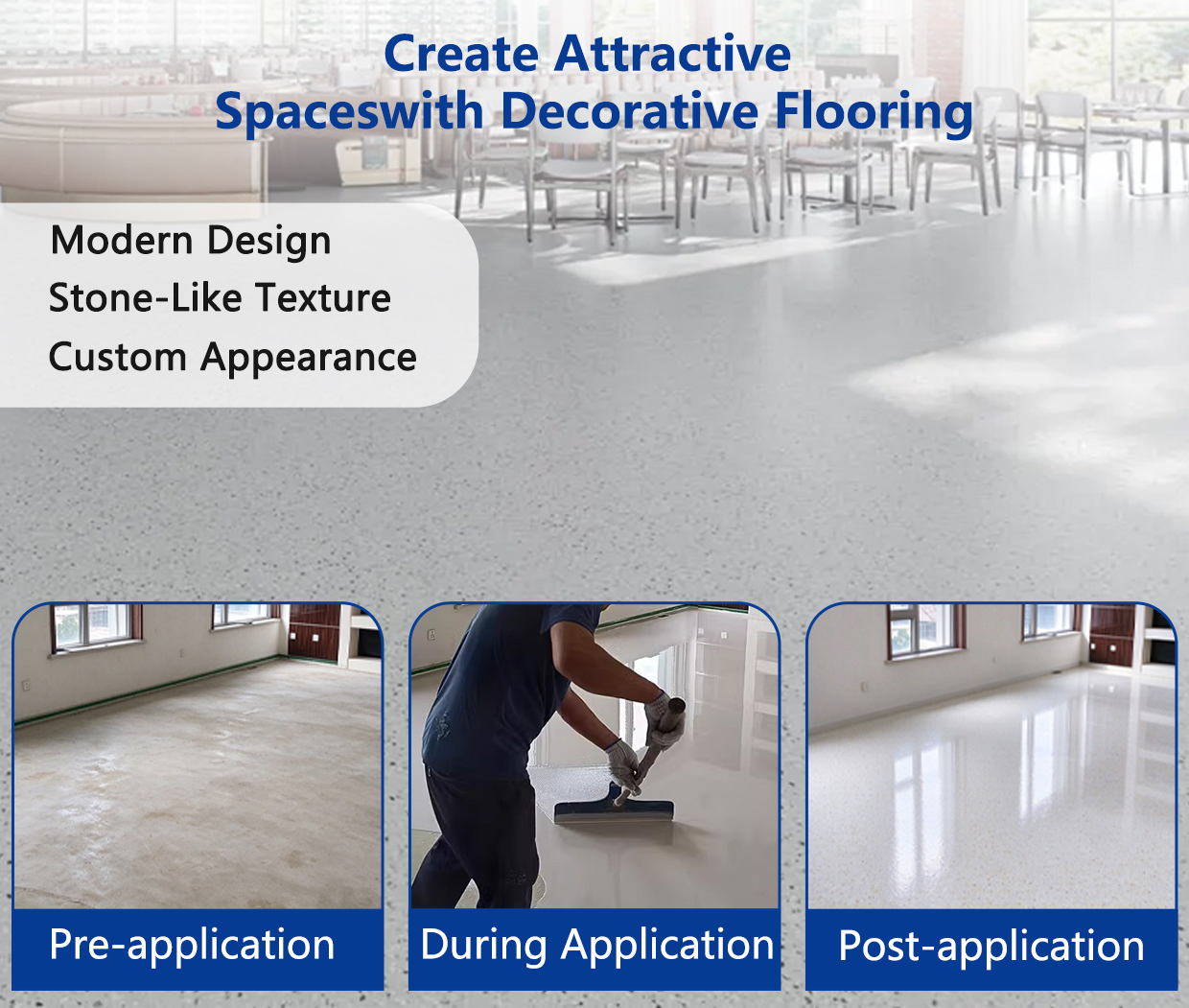
a. Substrate Preparation
Sand and clean the substrate to remove dust, dirt, loose particles and other contaminants. Repair cracks and surface defects before application.
b. Accurate Component Mixing
Mix Part A and Part B at an A:B ratio of 8:1 by weight.
Mechanical mixing is recommended for approximately 2–3 minutes, or until the material becomes uniform and has suitable fluidity.
Accurate proportioning is important for consistent curing and finished surface quality.
c. Material Placement
Apply the mixed material using the specified spreading method and maintain a reference thickness of approximately 1.8–2.0 ±0.2 mm.
Even application helps maintain consistent floor thickness, color and surface texture.
d. Curing & Protection
The mixed material should be used within approximately 50 minutes.
After application, protect the finished floor during the initial curing stage. Actual working and curing time can vary with temperature, humidity, mixed quantity and site conditions.
08 Coverage, Thickness & Technical Data
Material Planning
Material consumption should not be calculated from floor area alone.
A reference consumption of approximately 2–3 kg of mixed material per square meter can be used for initial project planning.
Actual consumption can vary according to:
For larger commercial or industrial projects, material planning should consider:
Project Area + Substrate Condition + Target Thickness + Surface Effect
before finalizing the order quantity.
Technical Data
| Property | Typical / Reference Value |
|---|---|
| Product Type | Colored Sand Epoxy Flooring System |
| Mix Ratio | A:B = 8:1 |
| Solid Content | Approx. 98% |
| VOC | Test Result 16 g/L |
| Recommended Thickness | Approx. 1.8–2.0 ±0.2 mm |
| Surface Drying Time | Approx. 4–6 h |
| Full Drying Time | Approx. 24 h |
| Pedestrian Access | Approx. 48 h |
| Vehicle Access | Approx. 72 h |
| ApplicationTemperature | 5–35°C |
| Relative Humidity | ≤85% |
| Mixed Material Use Time | Approx. 50 min |
| Base Strength | ≥C20 |
| Substrate Moisture | ≤8% |
| Shelf Life | 24 months |
Technical Note
Values are provided for product evaluation and project planning. Actual processing and finished floor performance may vary with substrate condition, material quantity, temperature, humidity, application method and project environment.
09 Quality Control & Project Supply Support
For colored sand flooring systems, quality control should focus on the characteristics that directly affect the finished floor.
Key quality considerations include:
For customers evaluating a new flooring project, sample testing is recommended before full-scale application.
A project sample allows buyers and installers to evaluate the actual surface appearance, color, curing behavior, adhesion and material consumption under representative conditions.
Jianghe supports project buyers, distributors and flooring suppliers with sample evaluation, technical information and bulk material supply.

10 Packaging, Storage & Technical Support
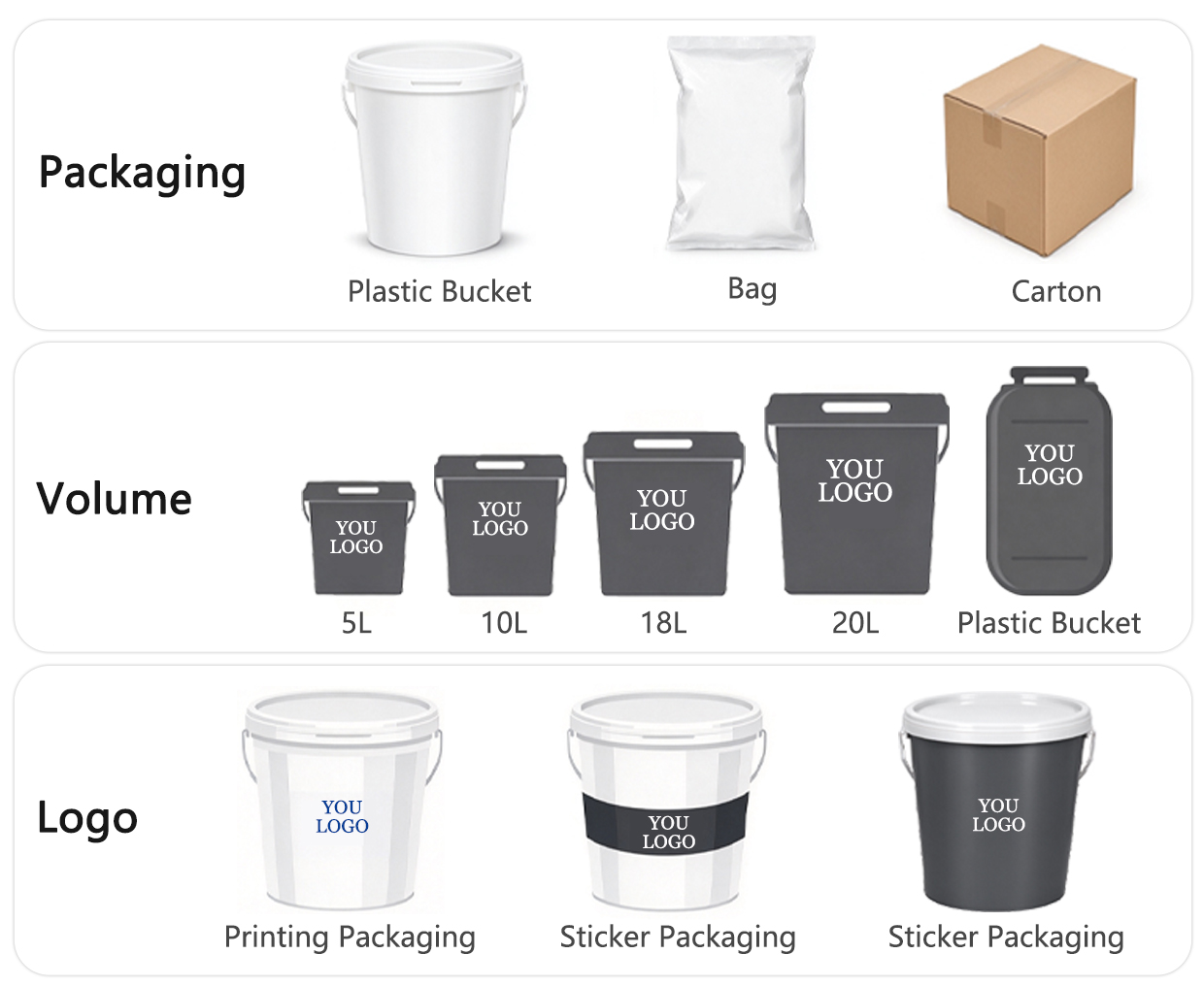
Packaging
Use the current commercial packaging information here once the final package specification has been confirmed.
If the current package is 22.5 kg/set (20 kg + 2.5 kg), the page can state:
Packaging: 22.5 kg/set (20 kg + 2.5 kg)
Storage
Keep the product properly sealed and store it away from direct sunlight, fire and heat sources.
The shelf life is 24 months from the production date when stored under recommended conditions.
Technical Support
Before bulk purchasing, customers are encouraged to provide:
This information helps evaluate material requirements and determine whether the flooring system is appropriate for the project.
FAQ
Q1. What is colored sand epoxy flooring?
Colored sand epoxy flooring is a two-component epoxy flooring system that combines epoxy resin with colored quartz or mineral sand to create a seamless decorative floor surface with visible texture and color variation.
Q2. How is it different from a plain epoxy floor?
A plain epoxy floor generally provides a uniform solid-color surface. Colored sand epoxy flooring incorporates colored mineral particles into the finished system, creating a more textured and visually varied appearance.
Q3. What is the mixing ratio?
The mixing ratio is A:B = 8:1 by weight.
Accurate proportioning is important for consistent curing and finished surface quality.
Q4. What substrate conditions are required?
The substrate should have a strength of at least C20 and moisture content of no more than 8%.
It should also be clean, dry, stable and properly repaired before application.
Q5. What application thickness is recommended?
The recommended application thickness is approximately 1.8–2.0 ±0.2 mm.
The final system thickness should be determined according to substrate condition and project requirements.
Q6. How long before the floor can be used?
The reference drying and access schedule is:
Actual curing time may vary with temperature, humidity, thickness and site conditions.
Q7. Can the color be customized?
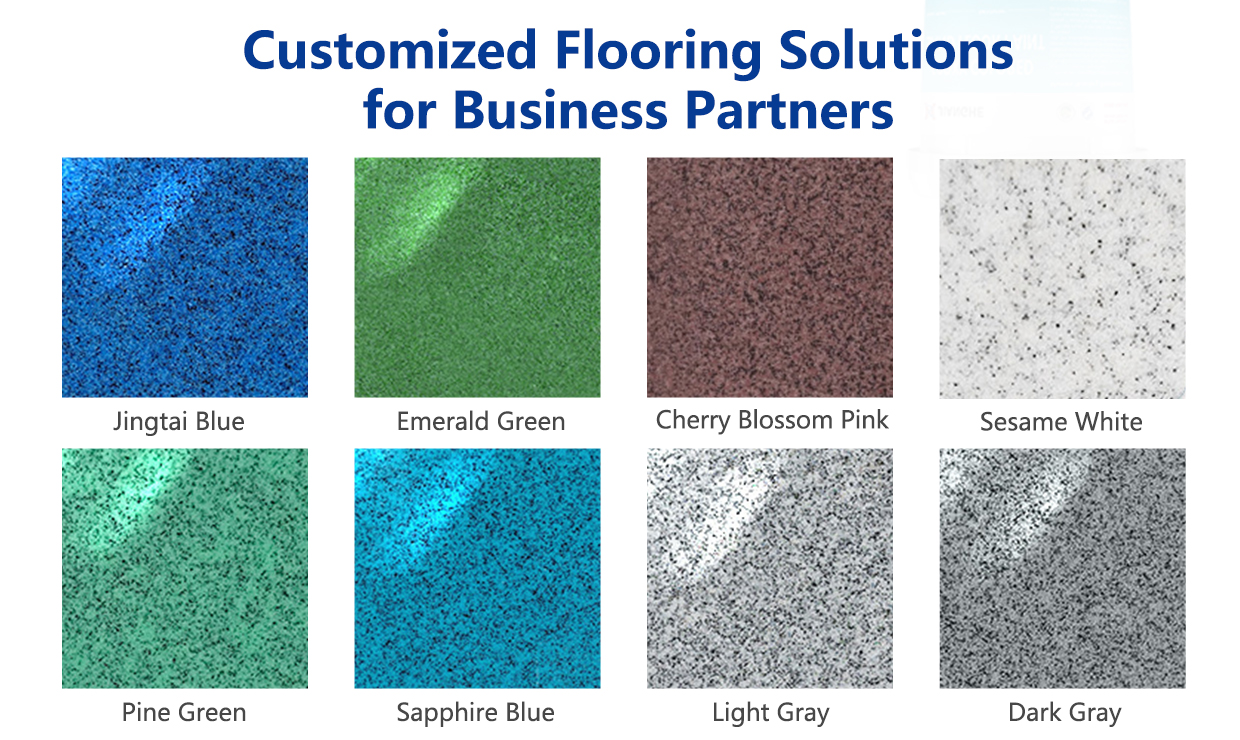
Yes. Standard colors are available, and customized colors can be discussed according to project requirements.
For larger projects, a color sample should be confirmed before bulk production.