
 EN
EN
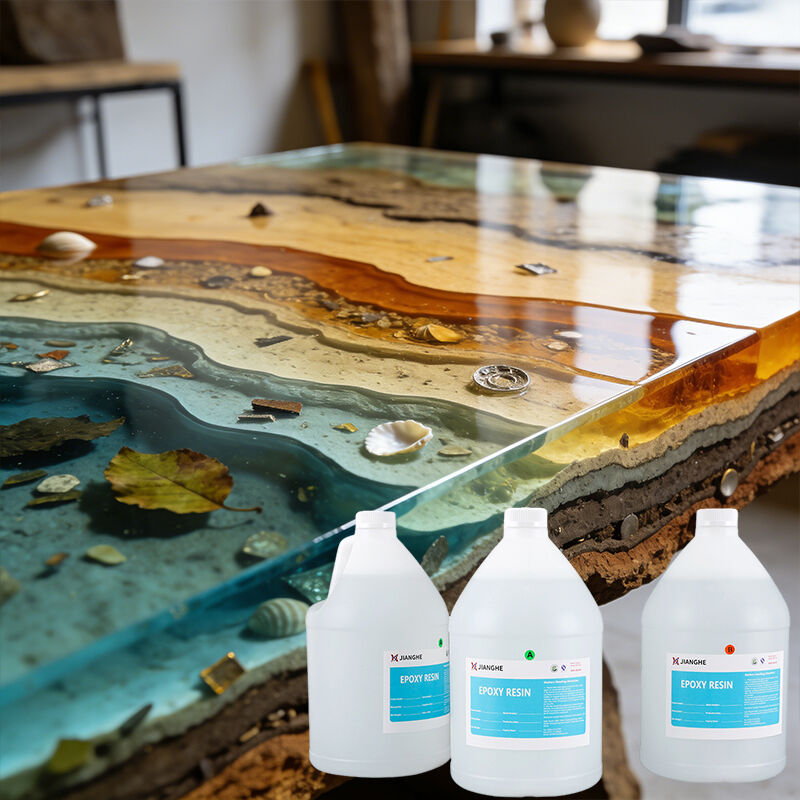
The Unique Demands of Large-Volume Casting
Creating a stunning river table or a large epoxy casting is a project that captivates both woodworkers and designers. However, the scale of these projects introduces a unique set of technical challenges that go far beyond small resin jewelry or coatings. Pouring large volumes of epoxy generates significant heat, creates immense stress on the material, and requires a flawless, bubble-free finish. Standard resins, not engineered for this purpose, are prone to overheating, cracking, or yellowing, leading to costly failures. This is where a purpose-built river table epoxy becomes essential. Its formulation is specifically designed to manage the physics of mass, ensuring that large, ambitious projects cure safely and result in a stunning, durable piece.
Managing Exothermic Heat for Safe, Deep Pours
The most critical factor in large-volume casting is managing the exothermic reaction. As epoxy cures, it generates heat. In a deep pour, this heat can become trapped and accelerate the reaction, creating a dangerous feedback loop. Temperatures can spike high enough to cause the resin to crack, smoke, or even ignite. A high-quality river table epoxy is specifically formulated with a slower, more controlled reaction profile. This allows heat to dissipate gradually, preventing dangerous temperature spikes. This characteristic, a result of careful Formula & Performance Customization, enables casters to pour depths of two inches or more in a single layer with confidence. This controlled cure is the foundation of any successful large-scale casting, preserving the integrity of the wood and the resin itself.
Ensuring Crystal Clarity and UV Stability
The visual appeal of a river table lies in its depth and clarity. The epoxy must cure water-clear to allow the eye to penetrate to the heart of the piece, showcasing the beauty of the wood grain and any embedded objects. Moreover, this clarity must be permanent. Tables are often placed in living spaces with significant sunlight exposure. A standard resin can yellow over time, ruining the aesthetic. A premium river table epoxy incorporates advanced UV stabilizers to resist yellowing, ensuring that the "river" remains crystal clear and the colors vibrant for years. This focus on long-term optical performance is a hallmark of a material designed for heirloom-quality furniture and is often achieved through expert Performance Optimization.
Minimizing Shrinkage and Internal Stress
As any liquid cures into a solid, it undergoes volumetric shrinkage. In a thin coating, this shrinkage is negligible. In a deep casting, however, it can generate tremendous internal stress. This stress can pull the wood apart, cause the resin to crack, or lead to "crazing"—fine internal fractures that cloud the material. Specialized river table epoxies are formulated to exhibit extremely low shrinkage during cure. This minimizes internal stress, ensuring a strong, lasting bond with the wood and a flawless, stress-free casting. This dimensional stability is critical for maintaining the structural integrity of large pieces, especially those combining different materials with varying expansion rates.
Long Working Time and Bubble Release
Large castings are complex, time-consuming operations. Mixing large batches, tinting colors, and carefully pouring the resin into intricate forms cannot be rushed. A fast-curing epoxy would become unworkable or would start gelling before the pour is complete, trapping air bubbles and leading to an uneven finish. River table epoxies are designed with an extended pot life, giving creators the necessary working time to execute their vision meticulously. This longer open time also allows air bubbles introduced during mixing to rise to the surface and pop naturally. Combined with the epoxy's inherent low viscosity, this ensures a perfectly clear, bubble-free result, which is essential for a professional, high-end finish.
Partnering with a Specialized Material Supplier
Success in large-volume casting is not just about technique; it's fundamentally about the material. Relying on a generic epoxy is a significant risk. For creators, from individual artists to large studios, partnering with a supplier who specializes in high-performance materials is key. A company like Shenzhen Jianghe offers more than just a product; they provide the expertise and reliability essential for ambitious projects. As a source for reliable raw materials, they ensure that every batch of their epoxy delivers consistent, predictable performance. For businesses looking to scale, such as retailers or distributors, they also offer OEM/ODM Customization Services, including private labeling and the creation of integrated, ready-to-sell river table kits. This comprehensive support, from formula to final packaging, empowers creators at every level to bring their most ambitious designs to life with confidence.
FAQ
What is the maximum pour depth for a single layer of river table epoxy?
This depends on the specific formulation, but high-quality river table epoxies are typically designed for deep pours of 1.5 to 2 inches or more per layer. Always consult the manufacturer's technical data sheet for the precise maximum depth, as exceeding it can lead to overheating and cracking.
Why is UV resistance important for a river table?
River tables are often placed in living areas with natural light. Without UV inhibitors in the resin, prolonged exposure to sunlight will cause the epoxy to yellow over time, diminishing the piece's clarity and visual appeal. UV-resistant formulations protect against this, ensuring long-lasting beauty.
Can I use a deep-pour epoxy for a thin coating project?
While it's technically possible, it's not recommended. Deep-pour epoxies are formulated with slower reactions and may remain slightly softer or take much longer to achieve full hardness in a thin film. For best results, use a product designed for your specific application thickness.
How do I prevent bubbles in a large river table casting?
Prevention involves a multi-step approach: use a pressure pot to degas the resin after mixing, pour slowly and in a thin stream to minimize air entrainment, and use a torch or heat gun gently on the surface after pouring to pop any bubbles that have risen. A formulation with a long pot life also gives bubbles more time to escape naturally.